
FATHER | FAMILY | FATHER & DAUGHTER
My Father, the Good, and the Bad
Though my eyes
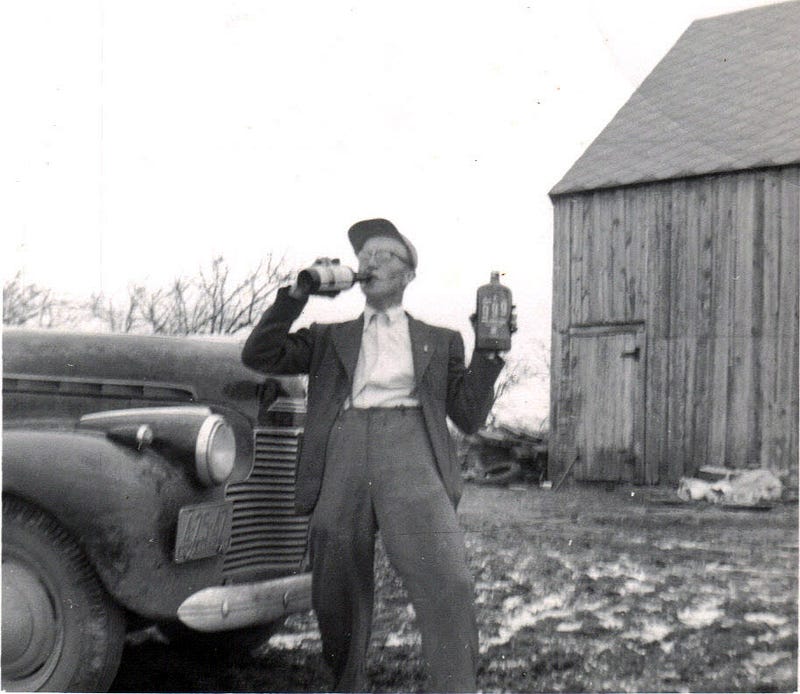
My father was born in 1919. There are no baby pictures of him.
His mother, Rebecca married his father, Artemis, in Dec 1918. My father was born that following February.
His mother died the following year, on April 09, 1920, when my father was 14 months old.
I have never visited her grave or know where it is, or if there even is a grave marker.
I grew up hearing that she died in childbirth. But as an adult, I found her death certificate. She died of Tuberculosis. I figured it had been something the family wanted to keep secret.
My father’s father then married another woman and had many other children. He never saw his first-born son again until he was in old age and dying. It was then that my father also met all his half-siblings.
I am named Barbara after my father’s maternal grandmother who raised him.
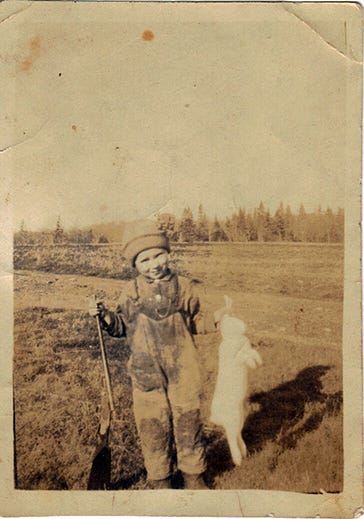
This is the only picture I have of my father when he was young. He said he was posing with a live rabbit.
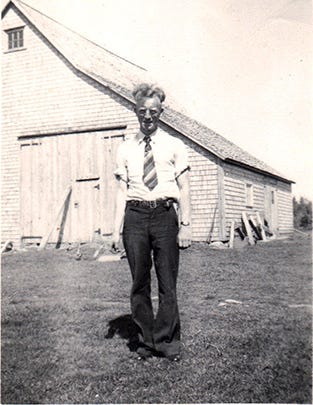
My father was a small thin man, weighing only 110 pounds.
He grew up in Newburne, Nova Scotia, Canada, as did my mother. Near a lake surrounded by woods.
On August 12, 1947, my 28-year-old father married my 21-year-old mother. They lived with her parents until they finally found their forever home in Oakland, Nova Scotia, a house by the sea.
It would be over 11 years before I was born.
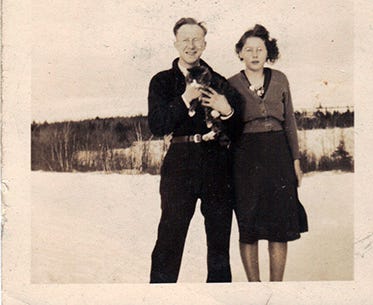
He would go off to work in the woods, logging, as many of the young men did in the community where they lived.
My mother’s family grew most of their own food. They also had cows, pigs, and chickens.
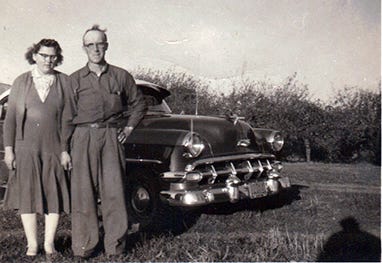
I was told my father owned the first car in my mother’s family.
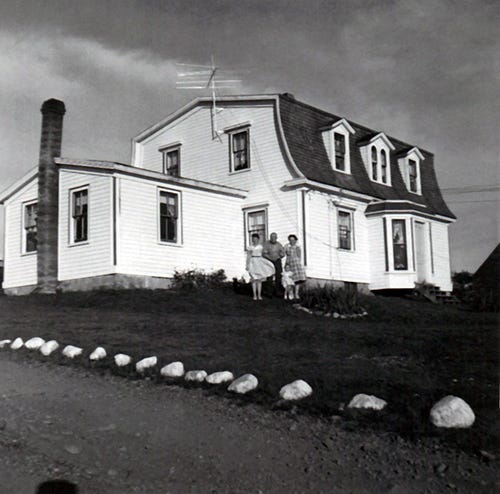
This is the home I grew up in and the home my father would die in at age 73. After his death, my mother never slept in the bedroom he died in ever again.
This home was everything to my mother. But at age 89, when she fell and hit her head, she ended up in the hospital and never got to come home again. She died 8 months later in hospital while waiting for an opening in a nursing home.
Growing up my sister was Daddy’s girl. I think he related to her more because my sister was adopted. They had that underlying loss in common.
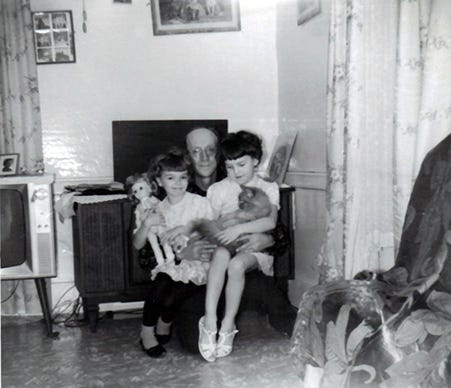
My mother loved a house full of people. The more the better. She took in elderly boarders and children. Three cousins also grew up in our family. Our home was a noisy and chaotic place.
From an early age, I had difficulty with all the noise and lack of privacy in our home. I had lots of headaches and temper tantrums. To solve this my father built me a “playhouse” where I could be alone.
My father understood this need in me. He often stormed out of the house angry. His safe place was his garage — a former boathouse. The building that I would renovate as a 20-year-old and make my home.
He built my playhouse out of scraps he brought home from where he worked in a shipyard as a truck driver and night watchman.
When I was 10 years old I moved into the 8 x 10 foot playhouse. Dad even installed an oil heater for me to stay warm in the winter months.
I stayed there during the day but was too scared to sleep there at night.
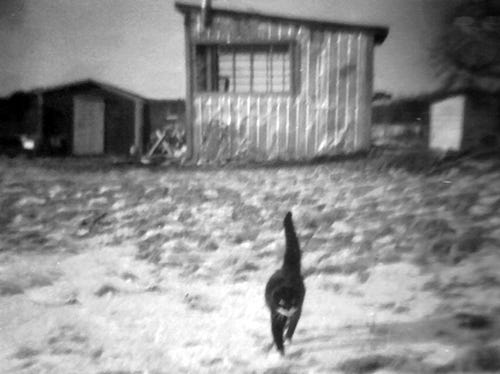
In my teens, I wanted to go off to study art. But my mother did everything she could to keep me at home. To satisfy my growing needs, my father moved a building from one end of our property to a more private area away from my mother’s prying eyes.
They paid for me to take a correspondence art course and gave me the larger living space instead of supporting me in leaving home. At seventeen it seemed like all the freedom I needed.
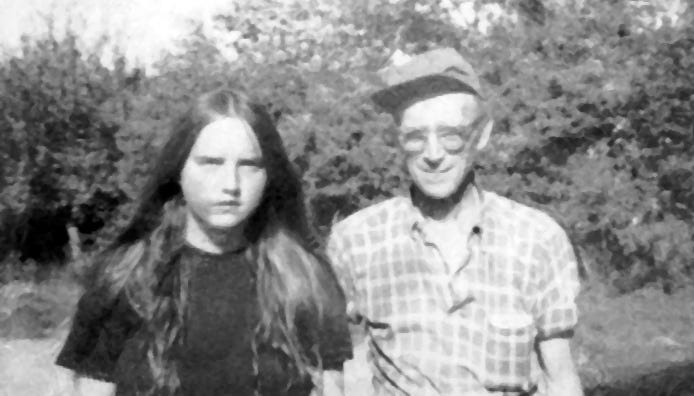
This photo was taken when my father took me to buy used furniture and an Instamatic camera from a woman in the neighbourhood. She took this photo of my father and me to show us how the camera worked.
I took photos to document my reality.
My father never fought in WWll and I think he felt a lot of shame about it. While all the men in his small community marched off to war he remained at home.
As a child all my parents had ever said about his not going to war was that he hadn’t been healthy enough.
It wasn’t until I cleaned out my childhood home that I found the document listing the reason — defective vision: corneal scars.
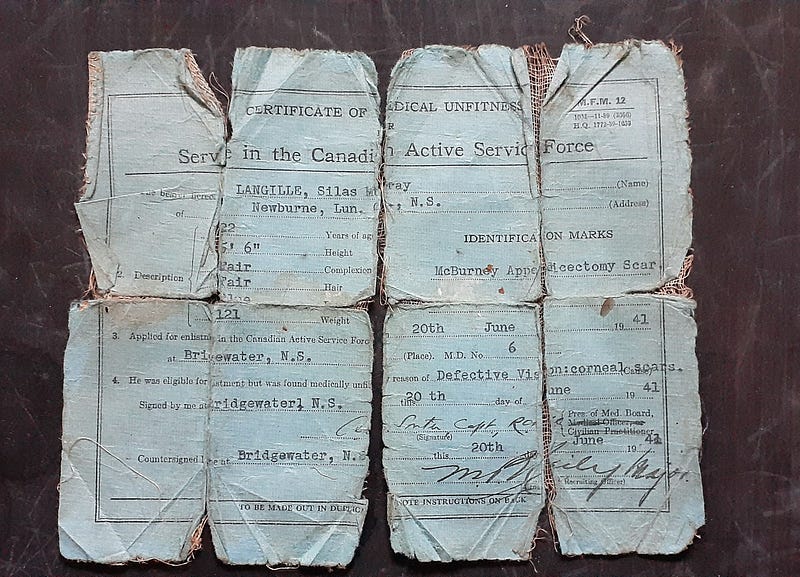
I found the document in a bureau drawer full of my mother's clothes. She was very disorganized and I never knew what I’d find, or where.
The document is folded like he’d once carried it in his wallet. Maybe to take it out as proof he had tried to go to war. As proof it wasn’t his fault. As proof he wasn’t a coward.
My father wasn’t around a lot. He went to work and came home, had an evening meal, and often went off to his bedroom. Years later I’d learn just how much alcohol was a part of his life. He kept a bottle under his side of the mattress.
During my childhood, because his drinking was kept secret, I never connected his violent outbursts to alcohol. I just knew we had to tip-toe around so as to not trigger his bad moods, which our mother always blamed on us.
Despite my father’s bad points, he was the parent who came to my aid. Besides building me the playhouse, he was the one who overruled my mother and allowed us to swim. Though we lived by the ocean, we were not permitted to play on the beach or go in the water.
Around age 10, city girls visiting next door in the summer taught my sister and me how to swim. Our mother was furious. But our father allowed us in the water. In my teens, he even built us a raft to dive off of and anchored it so we could do so at low tide.
When my parents found out my sister and I were smoking cigarettes, it was our father, also a smoker, who once again overruled our mother and allowed us to smoke.
My father was the one who stood up for me at age 15 and made my mother promise not to hide any more letters from my boyfriend. Though I would find out years later that she still hid the letters anyway.
I did a lot of my drinking before I was ever of legal age to drink. My father, once again supported my drinking.
Growing up I had accepted the version of my father that was presented to me. The poor suffering man. Always ill. Always in pain.
Around the time I first got my period at age 11, my father was in the hospital having a tumour and one-third of his lung removed.
We had all feared he might die and I was very concerned about how our family would survive without him. I didn’t trust our mother could hold it all together without our father, and I’d seen enough kids from broken homes that I didn’t want to end up being like one of them.
After the surgery, my father stopped smoking for a while but soon went back to it. He also tried chewing tobacco and smoking a pipe.
By the time my father was in his 50s, he had to stop working because of back problems.
Pain and misery seemed to follow my father throughout his life.
So, it was easy to see him as the victim, never a villain.
My mother always made excuses for his anger and upset. His actions were never his fault. In her eyes, someone else always caused the problem.
But after my father’s death, I started to view my father in a different light.
The men my mother became interested in physically resembled my father and it had me curious if their personalities were also similar.
What upset me most about these men was the vibe that came from them. I didn’t trust them. Didn’t like how they talked and acted. I sensed they didn’t see me as a person but as a sexual object.
How I saw these men was the way a teenage female friend of mine felt about my father.
Had the fact he was my father blinded me to this other side of him?
After my father’s death, many unanswered questions remained. Like who he was as a person. Many of his actions in past situations led me to question if he’d also been a sexual abuser.
There had once been a 15-year-old girl who came to visit our house and stay with us all weekend. She was a girl who knew my father from walking by his workplace on her way home from school. I loved spending time with this girl until I overheard the women in the house talking about her trying to steal my father away from my mother. I chased her from our home that day.
As an adult, I have to look at the facts. A 15-year-old girl is a child. If my father was indeed involved with her, it would make him a child molester.
There were also so many other clues. Too many to list here. But eight years after his death the three cousins who grew up in our home alleged sexual abuse.
So the truth is there are many parts of my father. Many parts I don’t know.
At times he was a good man. At other times, I believe, a bad man. Which ties in with: good people can do bad things and bad people can do good things.
For years, I struggled with anger at my father. Rage at who he was and for not being who he might have been.
But age has softened me.
He chose to tell no one he was dying. He died in silence with his family so close. He died without saying goodbye to us. That speaks of a man who felt utterly alone. Maybe ashamed. Maybe someone who felt he didn’t deserve love.
Sadness is what I feel about my father now. I’m the age my mother was when he died. I’m only eight years away from the age he was when he died.
I understand that people are not so easily summed up. That people are complicated and there are many questions we may never find answers to.
All we have are small pieces of those we love.
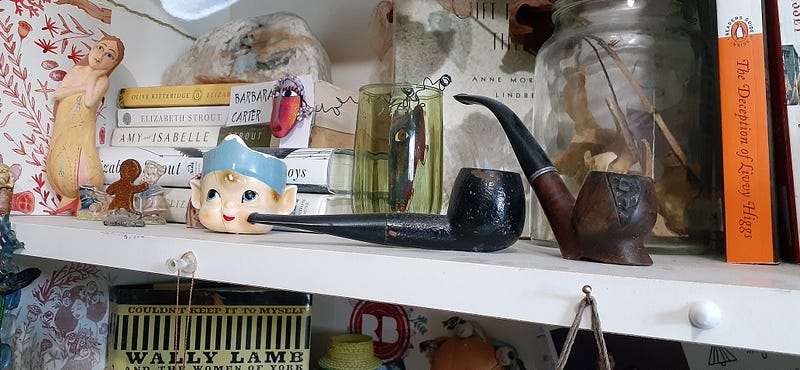
I’ll end with two of his pipes that sit on my bookshelf in my writing room.
Thanks to Marilyn Flower for this Father’s Day week’s Middle-Pause Pump-Priming Prompt: What kind of man was your father? What kind of dad? Or even, what kind of grandfather for your kids?
Barbara Carter: Artist and writer with a focus on healing from childhood trauma, alcohol addiction, and living her best authentic life.
Likes to take walks, read, watch TV dramas, and practice Qi-gong, and work on her memoir series BARBARA By The BAY.


