
My 5 Criteria for Meaningful Sustainable Work (And 3 Companies That Fit All of Them)

In early 2021, my partner and I were both searching for new jobs. Both women working in product in tech, we wanted to work in a different problem space that meant 1. We were working on something meaningful that we were passionate about; 2. That was feasible and clearly defined; and 3. Let us feel more like ourselves. We figured we’d start with a long list and narrow it down.
That list ended up being surprisingly small.
At the time, I had been dealing with some major health issues, left my full-time job at Google, and really questioned what my North Star is and what I want to put my energy into and why in a more focused way than I had ever done before. I was at a point where I wasn’t happy and was dealing with some major setbacks. I felt like this was my only option.
This exercise was not only the catalyst to me starting my own company, Conscious Product Development and publishing “A Call for More Conscious Products” that articulates my thoughts on HOW to make more conscious decisions about the products we build — it also led to me thinking a lot more deeply about what my criteria were for meaningful sustainable work and why.
My criteria evolved to be the following:
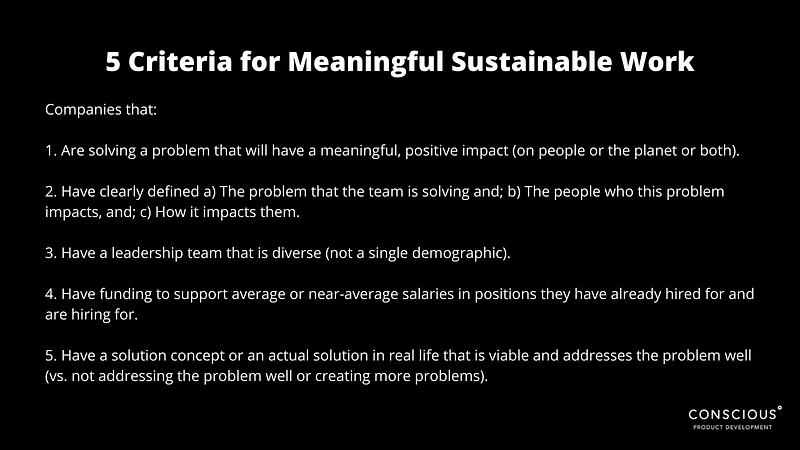
Here are three stellar companies I have found that fit all five of these criteria:
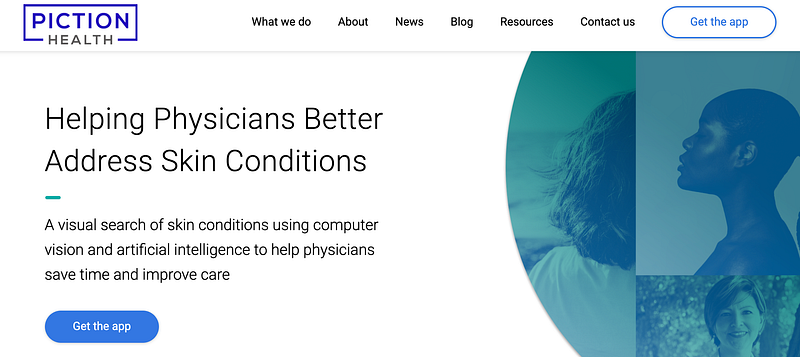
1. Piction Health (Formerly “LuminDx”): “Helping Physicians Better Address Skin Conditions”
(Website)
🤔 Problem:
Each year, 2.3 billion people seek help for skin issues worldwide, with two-thirds of these cases evaluated by primary care physicians rather than dermatologists (who patients must often wait long periods of time to see). In the U.S. 46 million Americans are misdiagnosed and mistreated for skin conditions annually. This prevents patients from getting the right care at the right time, places incredible pressure on non-specialist primary care physicians, and the repercussions of misdiagnosis or long wait times to get a diagnosis places additional burden on the healthcare system.
There are two users impacted here by this problem (three if you count the healthcare system):
- The primary care physician who is diagnosing skin issues, which are notoriously difficult to diagnose. Dermatologists often have long wait lists so non-specialist physicians and general practitioners are forced to fill in gaps.
- The patient, who has a skin issue that needs to be diagnosed and triaged accordingly in a timely manner in case urgent treatment is required. If left untreated by waiting or if misdiagnosed, the patient may not get the care they need and may face more difficult or potentially deadly outcomes.
🛠 Solution:
A smartphone app that uses artificial intelligence and machine learning to help primary care physicians triage and diagnose skin conditions quickly and accurately. More on this here.
🌱 Origin Story:
Founder and CEO Susan Conover planted the seeds for Piction Health (originally LuminDx) during her Master’s degree at MIT after having melanoma three times. After going through the system herself firsthand to get a diagnosis, understanding how scary and frustrating it can be for patients, and doing some market research, Conover founded LuminDx in 2017 to address the issue.
🧩 Leadership Team:
- Founder and CEO: Susan Conover
- Co-Founder and CTO: Pranav Kuber
💰 Funding:
Piction is post-initial product launch and the team has raised $2.4 million to date. Piction is currently in the middle of a seed round now to help with product validation with current customers.
📰 More info:
- Company Website
- Susan Conover Profile by Forbes
- LuminDx Closes Oversubscribed Pre-Seed Round To Build AI Platform
- Meet the Female CEOs Who Are Driving Real Change in the Healthcare Industry
- AI Explainability is now available in the Piction Health app
- LuminDx Announces Name Change to Piction Health
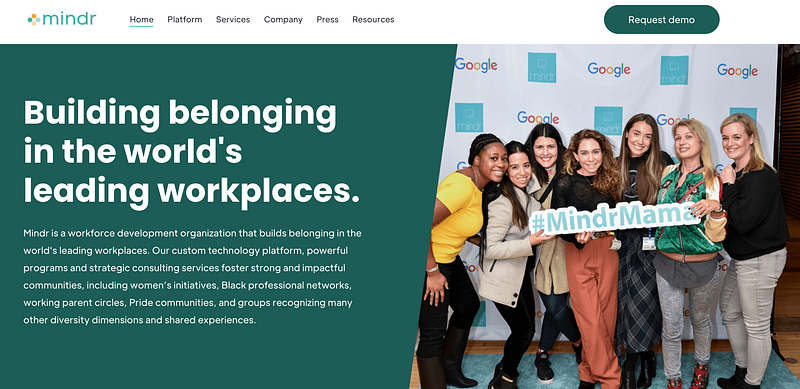
2. Mindr: “Building belonging in the world’s leading workplaces”
(Website)
🤔 Problem:
40% of people say that they feel isolated at work despite U.S. businesses spending $8 billion annually on diversity and inclusion training. The repercussions of this have been lower organizational commitment and engagement, lower job performance, higher turnover, more sick days, and money lost. According to a study by BetterUp, workers feeling like they belong is linked to 56% increase in job performance, a 50% drop in turnover risk, and a 75% reduction in sick days, and an average savings of $52 million for a 10,000 person company.
🛠 Solution(s):
Mindr’s solution is to focus on building strong employee communities — including women’s initiatives, black professional networks, working parents circles, pride communities, and tying together the common threads that often make individuals feel “othered” even though they aren’t alone — to increase individuals’ sense of belonging in the workplace. Mindr approaches this from several angles:
- Platform: Mindr Connect is software that enables companies to set up employee communities, create events, spark meaningful engagement, and recognize and celebrate contributions to building a better culture of belonging, all while collecting data on belonging and inclusion to measure progress, provide companies with transparency, and show areas for improvement.
- Programs and Consulting Services: Mindr offers programs and services including internal mentorship programs, inclusive leadership training and certification, strategy initiatives including virtual employee community leadership retreats, and training for launching new communities and internal employee resource groups to help build stronger communities firsthand.
🌱 Origin Story:
At the graduation ceremony for her public policy Master’s Degree at Columbia University, Mindr Founder and CEO Sarah Lux-Lee was 34 weeks pregnant. After her daughter, Ella, was born, she felt like she had passed a turning point. She was now a mother, which meant that, according to recent research done by Princeton, she would be perceived as less competent than she was before, there would likely be a pay gap to look forward to as mother’s lost about 7% of their earning ability for every child and are offered about $11,000 less for a starting salary than identically qualified people without children, paid 71 cents for every dollar paid to fathers (who are also parents), are less likely to be hired, passed over for promotion, and less likely to be invested in for training and upskilling. Sarah refused to accept that “the motherhood penalty” was her bar and decided to do something about it. She organized a talk with a group of 40 new parents (and their babies) with a special guest professor from Columbia University. Everyone walked away from the engaging discussion feeling a little bit better supported and a little bit wiser. The experiment kept growing and Mindr was founded in 2016. Since then clients have included The United Nations, NASA, Google, Amazon, Microsoft, and Facebook. (See the text from Lux-Lee’s TEDX talk here).
🧩 Leadership Team:
- Founder and CEO: Sarah Lux-Lee
- Director of Engineering: Brian Nguyen
- Director of Program Operations: Florencia Giordano
💰 Funding:
Mindr is bootstrapped on revenue and is looking at raising a Series A later this year.
📰 More info:
- Company Website
- The Value of Belonging At Work
- Ostracism More Damaging Than Bullying in the Workplace
- You Are Not the Only Lonely Worker’: Our Readers on Making Friends at Work
- The Value of Belonging at Work: Investing in Workplace Inclusion
- Lux-Lee’s Tedx Talk: Motherhood’s Big Secret, and Why We Need to Talk About It
- Talking Arms Control with Babes in Arms
- Mothers Face Penalties in Hiring, Starting Salaries, and Perceived Competence While Fathers Can Benefit from Being a Parent
- Children and Gender Equality
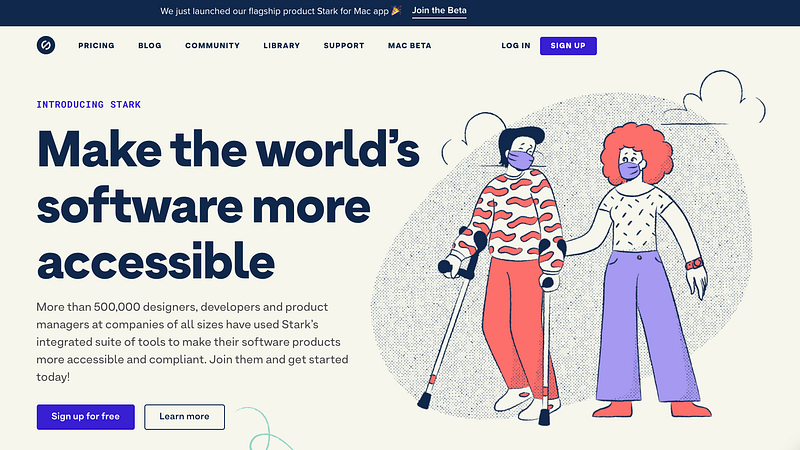
3. Stark: “Making the world’s products accessible.”
(Website)
🤔 Problem:
An estimated 32.2 million adults in the U.S. alone (13% of the population) report they either have trouble seeing, even when wearing glasses or contact lenses, or that they are blind or unable to see at all. This is a large percentage of most tech markets, yet designers working at tech companies don’t have an easy way to make sure their creations are accessible and inclusive for people who are visually impaired. In Founder and CEO Cat Noone’s words, “As humans, we’ve landed objects on the moon and have self-driving cars but we still haven’t standardized catering to people with diverse capabilities.”
🛠 Solution:
“The Grammarly of accessible design”. An Integrated suite of tools, including plug-ins for apps like Adobe XD, Figma, Sketch, and Google Chrome and a recently launched app for Mac, which offer checks and suggestions to make sure that visual materials meet accessibility standards for visually impaired people.
🌱 Origin Story:
Seeing all of the things we are able to do with tech, but frustrated with the fact that people with disabilities are much less likely to use technology, designer and entrepreneur Cat Noone, who was raised by her grandparents and developed an awareness for the people who “often get forgotten in life — the people who have big voices but aren’t always listened to” used empathy and awareness to kickstart researching where accessibility fits in our now very tech-driven world. Stark, driven by genuinely caring about people who are differently abled and wanting them to be part of the world’s latest innovations vs. being forced to be bystanders, was born in 2017. Since then, the company has garnered over 500,000 users, including clients like Microsoft, Pfizer, Instagram and ESPN, started a community for people interested in accessible design, and a public library of accessibility resources that is one of the largest in existence.
🧩 Leadership Team:
- Founder and CEO: Cat Noone
- CTO: Michael Fouquet
💰 Funding:
Stark has raised $1.5 million in pre-seed funding. Notably, the company has gotten a lot of investor attention because of its traction — both in number of users and also in the accessibility and inclusion community it is building.
📰 More info:
- Company Website
- Stark, A Hub for Accessible Software Design, Launches a Mac App in Beta
- Stark CEO Cat Noone on Accessibility, Design, and Leaving the World a Better Place
- Stark Raises $1.5 Million for A Toolkit That Helps Developers and Others Create More Inclusive Design
- Statistical Snapshots from the American Foundation for the Blind
- Facts and Figures on Adults with Vision Loss
- Americans with disabilities less likely than those without to own some digital devices
Thanks for reading! I’m still on the hunt for any companies that fit these 5 criteria and will continue to write follow-ups featuring new additions, so if you know of any please let me know.
-Lisa ✨
Follow me on Twitter: @lisazane15
🧠 Join 800+ people interested in building products and their product careers more consciously: https://www.consciousproductdevelopment.com/newsletter
🧭 If you’re ready for a role transition or just want to make more conscious career moves going forward, check out The Product Manager’s Career Guide that I just launched: https://www.consciousproductdevelopment.com/the-product-managers-career-guide
Related:
- What It Takes to Bring A New Product From 0 to 1
- What Product Teams Can Learn From The Mayo Clinic’s Care Model
- “How Can I Build Tech Knowledge In A Specific Domain as a PM?”
- “How Do I Improve My Storytelling Skills as a PM?”
- A Call for More Conscious Products
- “How Should I Approach Product Strategy?”
- What It Takes To Be An Exceptional Product Manager
- Cultivating An Exceptional Team