
Essential Guide to Protecting Your Investments in the Stock Market and Avoiding Total Losses
The returns of our portfolio can be broken down into 2 parts, i.e. first the profiting making part, and the second the losing part. It sounds naïve, while that’s a 100% true statement, and I am sure that many investors forget the second part.
In order to maximize the gain, there are 2 approaches, i.e. 1) Increase the profit-making, and 2) reduce the loss. It implies that we are able to make more profit by limiting the loss.
It makes sense, and naïve again! However, I would like to highlight that most of the investors only consider the upside, and forget the downside.
For example, how many times have you seen people asking, “Will GME rebound today?”, compared with “Will GME drop to $0.00 today?”. So, which one is more in Reddit? It’s obvious that we have a blue sky scenario bias most of the time.
Luckily, forgetting to focus on loss is just a blind spot. We can fix it and let’s try our best to fix it.
Pls join our real time market update via Telegram! https://t.me/+W03xzPl3C9c5OGE1
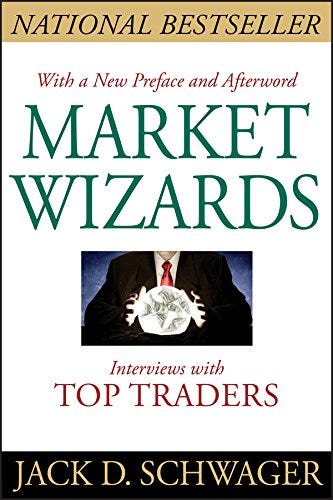
Every investor, even gurus in Market Wizards, has suffered moss from making investments, no matter in equity, commodities, or derivatives market.
As an individual investor, it’s impossible for me to claim that “It’s sure to win”, or “All in!” for a single investment.
Not making a loss in investment is impossible, at least it’s impossible for me. What I need to do is try to minimize the loss. To be more precise, the topic that I would like to share in this post is, how to limit or try to control the loss.
Don’t Be Greedy

“Earth provides enough to satisfy every man’s needs, but not every man’s greed.” ― Mahatma Gandhi
If you are looking for 10 times the returns of an investment or even 30% annual returns (it’s around 15% annualized return for SPX in the past decade), then you need an excellent skill set and deep understanding of the market, otherwise, it’s greedy.
When the goal has been adjusted to an acceptable level, then the investment goal becomes achievable.
👍 For more stories, pls follow my Future Playbook facebook page! 👍
Pls follow my medium if you like my articles
What’s the “Acceptable” Level?

To help find the acceptable level, let’s refer to the top investor’s guide. Warren Buffet, Phil Fisher, and Bill Ackman all highlighted the importance of Sleep.
“The financial calculus that Charlie and I employ would never permit our trading a good night’s sleep for a shot at a few extra percentage points of return” - Warren Buffett
“Conservative investors sleep well” - Phil Fisher
“Our approach to risk management at Pershing Square relies in part on what I have deemed the ‘Sleep at Night Test” - Bill Ackman
In short, if the risk is able to be managed, which means that your portfolio won’t suffer from huge losses during market volatility, then you are able to sleep well. On the other hand, there are risk exposures.
Personally, I would like to set the acceptable investment goal as better than holding cash. At a 1% interest rate environment, holding $1 million is able to generate $10k a year or $830 a month. It’s not bad to make around 5% returns ($830 x 5 = $4150 per month) through making investments. It is able to offset the cost of your daily expenditure, i.e. foods, children’s school fee, and insurance.
Portfolio Setup
Here are some suggested considerations when constructing a portfolio, which helps you to achieve the sleep well goal.
Diversification via multiple assets, stocks, and locations
Mitigate risks by holding multiple less-correlated asset classes, such as equities, bonds, currencies, and real estates
Try to eliminate unsystematic risk
“Unsystematic risk is the risk that is unique to a specific company or industry. It’s also known as nonsystematic risk, specific risk, diversifiable risk, or residual risk. In the context of an investment portfolio, unsystematic risk can be reduced through diversification — while systematic risk is the risk that’s inherent in the market.” - Unsystematic Risk, Investopedia
To eliminate unsystematic risk or company risk, the easiest way is buying more than one company in your portfolio, rather than concentrating on a few single names, especially in the same industry.
For example, there are 2 portfolios, and an equal weight of the holdings
- Tesla, NIO, XPENG
- Tesla, Microsoft, Coke
The first portfolio is EV autos maker. It could be benefited from high growth, given President Biden's infrastructure policy and the adoption of EVs, however, they have the same risk exposure to any related policy change.
The second portfolio is EV, Technology, and dividend stock combination. They are in different industries and have different growth drivers. In case there is a change in EV adoption rate, only 1/3 of the portfolio suffered.
Geographical Diversification

Investing across different sectors and regions can help reduces concentration risk.
“Faster-growing economies may also involve elevated political risk, currency risk, and general market risk compared with developed economies.” - Geographical Diversification, Investopedia
The trade war between the US and China has never stopped since late 2018. Holding Chinese ADR could be benefited from the growth of emerging internet names, such as Tencent, Meituan, Baba, etc. However, that investment suffered from the political risk and regulatory change imposed by both governments.
It’s the best lesson for understanding geopolitical risk. Our portfolio could invest in multiple countries, either in the developed or emerging market.
Dollar-Cost Averaging (DCA)
Investing equal amounts regularly can help lower the total average cost and avoid timing risk
Dollar-cost averaging is a strategy of investing a fixed amount of money at regular intervals, regardless of the price of the investment. This strategy can help investors reduce their exposure to market volatility and avoid the pitfalls of market timing.
For example, suppose an investor wants to invest $10,000 in a stock over the next 10 months. Instead of investing the entire amount at once, the investor could use dollar-cost averaging by investing $1,000 each month for 10 months. This strategy would ensure that the investor is buying the stock at different prices over time, reducing the risk of investing a large sum at a market peak.
Dollar-cost averaging is particularly useful for investors who do not have a large amount of money to invest upfront. By investing a fixed amount at regular intervals, investors can build a diversified portfolio over time, without having to make large lump sum investments.
The strategy can also help investors avoid making emotional investment decisions based on market fluctuations. By investing a fixed amount regularly, investors are less likely to be swayed by short-term market movements and are more likely to stay invested for the long-term.
However, dollar-cost averaging is not a foolproof strategy and may not be appropriate for all investors. In a rising market, the strategy may result in missing out on potential gains if the investment price continues to increase. Additionally, if the investor is paying transaction fees for each investment, dollar-cost averaging may not be cost-effective for smaller amounts of investment.
Overall, dollar-cost averaging can be a useful strategy for long-term investors who want to build a diversified portfolio over time and avoid the pitfalls of market timing. However, investors should carefully consider their financial goals, risk tolerance, and transaction costs before implementing the strategy.
“Dollar-cost averaging is a strategy to reduce the impact of volatility by spreading out your stock or fund purchases over time so you’re not buying shares at a high point for prices.” - What Is Dollar-Cost Averaging and When To Use It?, Nerdwallet
The benefit of dollar-cost averaging is that more shares would be bought when they are an adjustment for the single stock or market. It turns out the average cost of holding is lower in long run. It’s a common way for institutional funds to outperform benchmarks.
Here are the key references and worked examples for DCA:
- Medium top writer Cody Collins published Why I Will Dollar-Cost Average Every Investment Going Forward is worth having a look.
- The worked example can be found at What Is Dollar-Cost Averaging and When To Use It?
Final Thoughts
There is no perfect solution to eliminate loss while minimizing it is possible. This post shares key considerations of constructing a portfolio that focuses on downside risk management. Sleeping well is a key barometer to measure the risk that you are able to afford.
*** This article is NOT investment advice.