
Must Civilization be Saved by Neoshamans?
Where social progress and distractions meet the lingering existential predicament
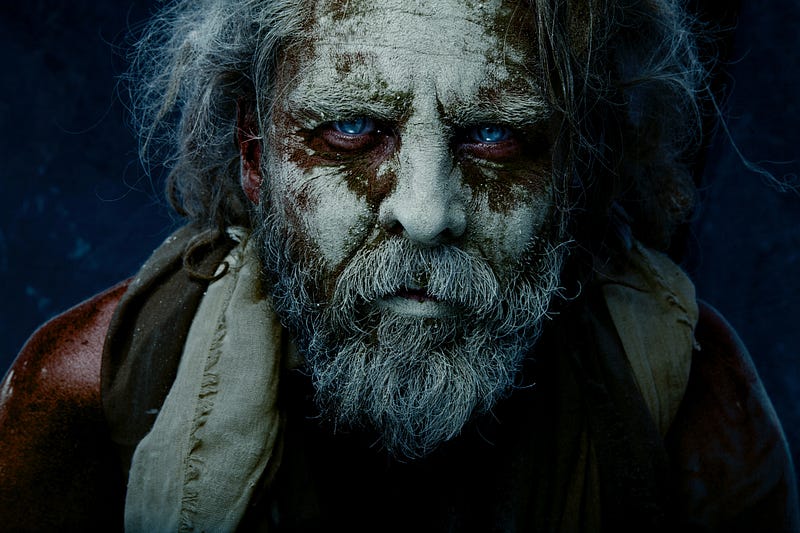
Do we live to socialize and to relish the benefits of civilization, or to reckon with a primordial problem, with the fact that we and the universe exist?
Shamanic individualists
At first glance, these two life trajectories seem exclusive because for many thousands of years our species was preoccupied with existential wonder, and only relatively recently did we manage to treat ourselves to a thousand distractions from the existential mystery.
In prehistory, the shaman probably led the way in confronting that mystery. “A shaman is one who serves his people by acting as an intermediary to the spirit world.” According to anthropologist Ivar Lissner,
The essential characteristic of the shaman is his excitement, his ecstasy and trancelike condition…[This ecstasy amounts to] a form of self-severance from mundane existence, a state of heightened sensibility, and spiritual awareness. The shaman loses outward consciousness and becomes inspired or enraptured. While in this state of enthusiasm, he sees dreamlike apparitions, hears voices, and receives visions of truth. More than that, his soul sometimes leaves his body to go wandering.
Virtually all the later themes of organized religions derive from shamanism: if religions are the universe, shamanism is the gravitational singularity that birthed them.
In effect, the prehistoric tribe would scapegoat its members that are oversensitive, introverted, charismatic, creative, or mentally disordered. As the shaman would have rationalized this higher calling in a dream state, the “spirits” invite him to sacrifice his chance at mundane happiness to act as a divine intermediary, as he negotiates with the spirit world on the group’s behalf. The shaman was thus the prototype for the dying and rising god mytheme.
As Thomas McEvilley points out in The Shape of Ancient Thought, “The shamanic profession was a one-man operation,” and this was so not just because shamanism was “scaled to service a small clientele,” but because it was a way to mediate between society and certain individuals’ “psychosis,” and to “turn their psychosis into a profession.”
The shaman’s “power dreams were his alone; his relationships with the spirit allies were his alone. Powers that arise in part from inner sources are hard to share with colleagues, each of whom is a shaman, too, with his own relationship system in the power realms, and no two systems quite alike.”
Religious experience derives from shamanism, and specifically from the ritual use of psychoactive plants. Prayer, magic, and miracles are pale imitations of the shaman’s perceived ability to negotiate directly with what was presumed to be the world beyond death, but which was more probably the turbocharging of the shaman’s unconscious mind.
From small tribes to large societies
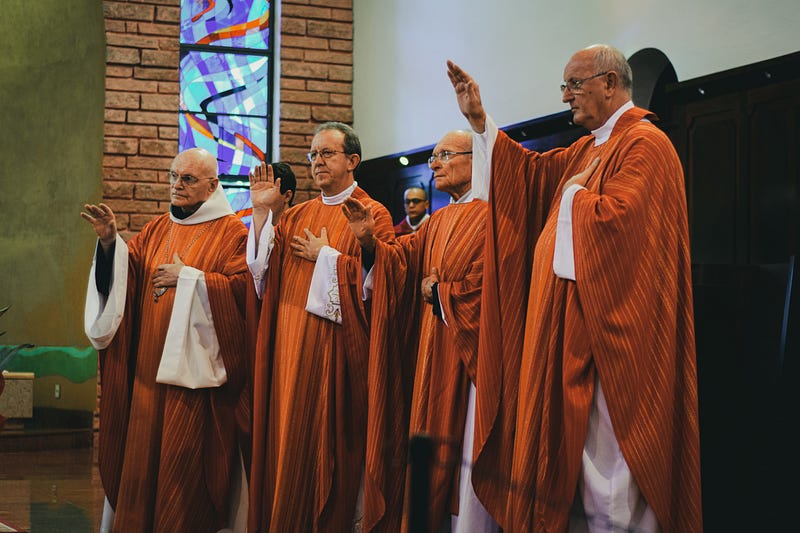
But with the rise of large, sedentary societies, shamanism became archaic, and professional priests took over the shaman’s social function. As McEvilley says, the shaman’s power relationship with spirits “was externalized to lessen its uncontrollability and generalized to a cast of people to eliminate” the shaman’s vocation.
This is the moment when shamanic individualism began to give way to the priestly profession. In a priestly college there is a hierarchy, and each individual is not free to assert his or her own model of the whole. A society’s transition from shaman to priest involves, therefore, the abandonment of the individual power vision in favor of a doctrine codified by the leaders of the priesthood.
Large societies partly assimilated and partly excluded shamanism:
The shamanic lore of spirit-journeys and encounters could be sublimated into priestly myths and doctrines reoriented to serve the emerging state. Similarly, the drug-taking aspect of shamanic practice could be frozen into a communal ritual…Alternatively, shamanism could be hidden in a special esoteric cult out of public view or, finally, shamanism could be cast out. [Historian Mircea Eliade] says that shamans “go underground” at this time. Presumably he means that vestigial shamanism becomes an asocial stream of activity cut off from the established religions of the emerging states, not unlike the Cynics and Orphics in Greece…
The lines between the functions of the shamanic individualist and of the politicized priesthood are blurred in this early civilized period:
a free play entered the teaching as the [esoteric] practitioners adopted elements from the official religions and philosophies of the states round which they moved as wanderers and partial outcasts. Thus vestigial shamanic ways could begin to overlap with the birth of philosophy and to exercise influence upon it…Traditions about early “philosophers” in both Greece and India involve vestigial shamanic traits very prominently — wind and fire magic, raising the dead, sorcerers’ duels, flying, bilocation, and so on.

Is shamanism archaic?
Again, then, prehistoric shamans wrestled directly with the existential condition by using psychoactive drugs to confront their unconscious fears and insights, and they were able to do so because there were yet few social distractions.
All of that changed when a gamut of specializations and diversions accumulated in cities, kingdoms, empires, and civilizations. As dramatized in the myth of the hero’s journey, we might say that the classic conflict between the individual and society is present in the transition from shamans to priests or more generally, from prehistory to history.
That is, contrary to the Enlightenment ideology that “modern” folks should be liberated as individuals because of our inherent human right to express ourselves as rational, autonomous persons, individualism reigned in prehistory, not in the age of industrial societies.
Unless we’re among the few exceptions in large societies, as in recluses, antisocial parasites, or neoshamanic ascetics, we’re beholden to our social functions. Developed societies plan out our life for us: we live to play as children, learn our manners, educate ourselves in school, get a job, start a family, work hard, take vacations, and perhaps distinguish ourselves in our field, becoming an upstanding member of the social order. By the twenty-first century, practically every facet of life has been professionalized, as globalized civilizations overflow with knowledge, techniques, and opportunities.
We could put this in Heideggerian terms by saying that we’ve forgotten about Being because we’re swarmed by myriad beings. If you want to know about chemistry, psychology, medicine, law, history, politics, religion, fashion, cuisine, sports, or countless other fields, you can consult whole libraries devoted to each of them. Even more, as if that weren’t convenient enough, we can now ask quasi-intelligent algorithms on the internet for instructions on how to do everything from unclogging a toilet to writing a screenplay.
It seems reasonable to presume, then, that the abandonment of shamanism was progressive, that shamans became obsolete because societies made a business or a science out of anything that was worth preserving in shamanism. The emergent social hierarchies and specialized professions acted like sponges, absorbing everything of value not just from archaic societies but from the wilderness that lies beyond society’s borders.
Civilized progress
Let’s face the question squarely: Is there still an existential problem, and if so, is this problem better left in the hands of neoshamans (withdrawn gurus, philosophers, artists, and the like) or of established professionals, from priests and celebrities to scientists and politicians?
The anti-shamanic argument practically writes itself.
Prehistoric tribes had no other recourse but to trust the ravings of drug-addled, mentally unbalanced individuals because those groups lacked the advantages of a technologically developed society. They interpreted the world animistically because they naively trusted their intuitions and their social instincts. The members who seemed to hear voices or to hallucinate and who were perhaps rhetorically gifted were deemed able to commune with those spirits, so these liminal individuals took on that role.
But this was a matter of making do with truly meager resources when humans lived as much like animals as like domesticated people. Surely, shamans could have known nothing more about the human condition than psychologists, physicians, historians, physicists, and all the other professionals combined, nor could shamans have solved social problems more reliably than the free market, democratic government, or industrial applications of science.
Indeed, if the existential problem is wholly an empirical question, the question would seem more easily and fully answered by the resources of civilization. Scientists can even explore the inner reaches of psychedelic states by studying the effects of various drugs. And of course, science corrects itself since scientists are skeptical, so they perform independent tests of their assumptions.
What else could this so-called existential condition be than a general problem that calls for scientific analysis and for the solutions that emerge from a free-thinking society that pools all its social sectors and accumulated knowledge?
The existential condition
Well, the existential condition is just what it’s like to exist as an intelligent, self-conscious, autonomous, potentially powerful, creative animal — which is to say as a “person” — in an impersonal world.
We can each speak to this condition, depending on our interests and specialty. We can emphasize this or that aspect, and we can prescribe some remedy to suit certain circumstances. If you exist as a man, for instance, rather than as a woman, then you should be aware of such and such obstacles. If you’re rich rather than poor, you’ll face certain challenges, and if you live in one period rather than another, again the context will differ so the existential problem will manifest in those distinct ways.
But this rational analysis already begins to miss the point. What’s existential about these more specific situations is something that doesn’t vary because it’s universal for our species. Men and women, the rich and the poor, the ancients and the moderns all have been intelligent mammals who faced an inhuman world, an environment’s that’s been something apart from them.
Science outcompetes shamans when it comes to explaining the empirical circumstances of human life, and large societies provide much greater know-how than the shaman could hope to summon, as in techniques for pursuing various goals. But there are two dimensions of the universal problem that aren’t best left to civilization, namely the ethical and the aesthetic ones.
True, society is replete with prescriptions, but excellence in ethics doesn’t reliably emerge in free competitions or in autocracies. On the contrary, that competition for empowerment or concentration of power is more likely to corrupt the winners or dominators than to ennoble them.
Likewise, while some superstar artists are great, the path to greatness in civilization is indirect since professional artistry is a business, and in capitalism we’re concerned with making a profit, and thus with exploiting customers and resources, not strictly with aesthetic principles or visions. Artists who excel in a large society must be two-faced since they must have talent (or extraordinary luck) and business acumen.
The issue, then, isn’t that some of us should return to prehistoric shamanism itself since that would be impossible, short of a postapocalyptic scenario. No, the question is whether neo-shamans might still have an important role in large societies. Those who are poised to be neoshamans are social outsiders since they’re forced to fall back on themselves as individuals. “Individuality” here is almost a euphemism for “alienation.” As I explain elsewhere, large societies renew themselves by stirring up countercultures which are often led by shaman-like visionaries.

Neoshamanism vs social diversions
The problem is that there are still two sets of values, the ethics and the aesthetic standards that address our existential condition, and those that satisfy mass society. Think of it this way: the existential condition is most prominent when we’re alone in the wilderness, which was closer to the condition of prehistoric people. In prehistory, there was hardly anywhere to hide from the environment’s naturalness, regardless of how early people tried to soften the blow with quasi-religious personifications.
But with the advent of artificial habitats, social problems practically replaced the existential perspective. We no longer face our mortality directly since we’re so easily preoccupied with a plethora of pastimes and duties. We cater now to our artificial environment and to its problems. We want to excel in social terms, to attract certain customers or to please a constituency. We want to impress our peers and to best our rivals.
So, it’s not just that professionals can outperform shamans, but that we’re liable to forget the primordial conflict that led to the weirdness of shamanic rituals. And while shamans may be archaic, the existential condition is hardly outmoded. As much as we’ve progressed from prehistoric to modern times, we’re still intelligent mammals struggling to excel somehow in a wider, alien wilderness.
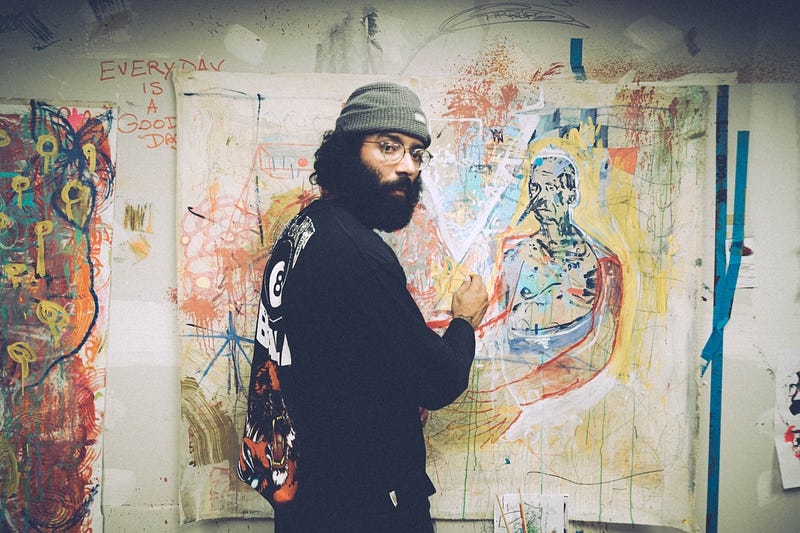
If the character development and the artistic skills that deal unflinchingly with the existential perspective are likely to clash with those that are needed to flourish in civilizational terms, the former call for neoshamans in the sense of social outsiders who manage to sublimate their alienation with creativity. Like shamans of old, neoshamans within large societies would channel the resources of their unconscious mind, building up a muse or a daemon, an inner voice, inspiration, or vision that speaks to them in dreams or moments of solitude.
Neoshamans would sublimate these voices to bring an outsider’s perspective to society’s presumptions. Lacking many social obligations, these outsiders would be purists, idealists, and intellectuals in that they’d care more about ideas than social status, more about absolute values than workability. They’d live largely in the dreamworld of their imagination since that’s the battleground between mindless reality and the awakened person.
The techniques that an industrial society can bring to bear are foolish if we don’t have a worthy long-term plan. Neoshamans would work on that plan since the collective enterprise shouldn’t bear the cynical, hypocritical trademark of America, Google, or Modernity. The plan for our species should be the same as the plan for each of us, and it should be the best answer to our existential, universal predicament.
Who’s to say which existential plan is best? Society with its artificial distractions from that foundational condition? Or psychonauts who explore the condition directly in the wilderness of alienation, dying symbolically countless times as outcasts and as humbled thinkers and creators who sacrifice their chance at happiness for the sake of their sacred work?
I collect my Medium writings in paperback and eBook forms, and I put them up on Amazon. Check them out if you’d like to have them handy and to support my writing in that way. The newest one is Questing for Epiphanies in a Haunted House, and its 600 pages include 99 recent, wide-ranging articles of mine.


