
Motherlines: A Memoir on Lineage, Loss and Secrets
I have my mother’s hands, but not all of her stories
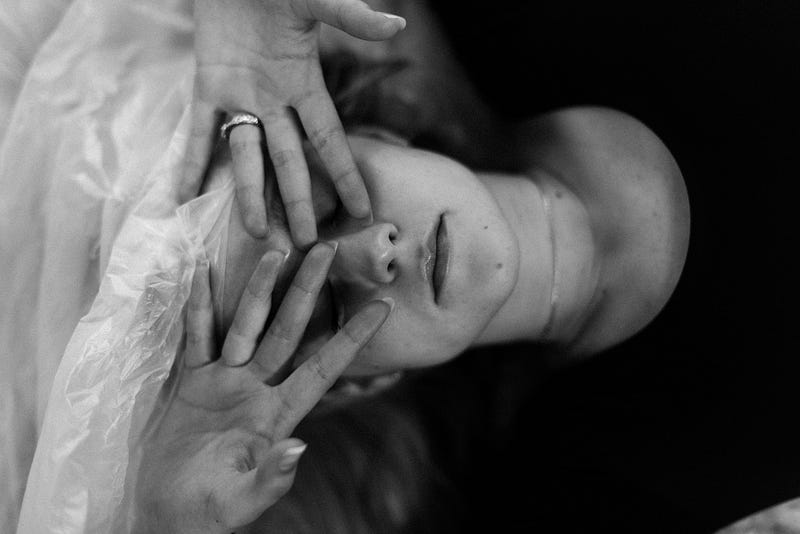
I have my mother’s hands.
My memory of the day this was discovered is vivid; drenched in sunlight, in the midst of eternal-seeming summer holidays. I was fourteen.
My mother and I had weathered the long drive down the Queensland coast with nothing but the glare and the radio for company. As with every visit, we just managed not to miss the sign and the gravel-spattered road that limped off the highway. Lumbering like a wombat for hours over ditches and uneven rises, through clouds of cloying dust, the road finally gave way to a wild and mostly undiscovered coastal landscape.
My aunt and uncle had built a house here over the course of several years, determinedly self-sufficient, with a huge rain-water tank and a power generator. Perched on a peninsula, the view from three balconies was of topaz-blue ocean.
Our secret summer place. Where slowly we adapted, becoming less like city-dwellers and more like the unruly, resilient pandanus palms, sprawling everywhere amongst the scrub; we grew wild, with salt-tinged hair and sun-singed skin.
On this day, my mother and I had followed the kangaroo-trails through spiky spinifex grass to our favourite sunbaking beach. Laid out on our towels, we stretched up our arms and placed our hands palm to palm, middle finger to middle finger, to shield our eyes from the sun. They were a perfect match. Slender, fragile fingers. Nails that were long, strong and oval-shaped. Tanned, fine skin, gleaming tightly over knuckles, and, on the inside of the palms, myriad of deep lines, veined like sycamore leaves.
People had often been startled by the insides of my hands, at the depth and profusion of lines, etched tracings of a life I could not have possibly lived yet. Old-soul hands.
”There are many stories here”, a palm-reader had once said to me, “Many stories”.
If my hands held the imprints of many stories, then so also did my mother’s. I had always been proud of the fact that I was my mother’s confidante. Ever since I was five, it had felt like she shared everything with me; that between my mother and myself, there was no such thing as a story untold.
“You’ll get all of my rings when I die,” she’d said that day on the beach as she turned her face towards mine. As if the similarity of our hands had decided it for her, rather than the fact that I was her first-born, and only, daughter. Reflected in her sunglasses, I could see two tiny replicas of me.
“Don’t say that, Mum.” Secretly, I felt guilty because a greedy part of me wanted those rings.
And I remembered sneaking into her bedroom, an inquisitive five year-old, to open her jewelry box and marvel at the sparkling stones and shiny beaded necklaces coiled inside. There sat my favourite ring, a piece of blue topaz, cut from a clear summer sky and set on a band of gold. Far too large for my tiny finger, the band slid off if I didn’t hold it carefully. When I placed the ring on my middle finger, it felt heavy. Heavy as an untold secret.
Recalling this memory, I dug my toes into the sand as if my feet were shovels, and lifted my legs into the air, letting the cool chunks of sand fall over both of us. Why was she talking about death? The idea seemed ridiculous on such a perfect day.
She must have sensed my mood darken.
“We all have to die sometime”, she said, as she smiled at me.
Although I already knew the details, I asked her to tell me the story of the blue topaz ring, of how my father had given it to her when they were still courting. Our joined hands plaited the sky and my mother’s story into a ribbon of blue above us. A ribbon of story, suspended in the haze of that summer day.
Now, as an adult woman, I contemplate the black-and-white framed photograph of my mother, taken when she was about nineteen. It’s a close-up of her face, with her hands gracefully folded together, resting against her right cheek. In this picture, there is no sign of the arthritis that later gripped her knuckles. Those hands seem too still, for when I picture my mother, her hands are nearly always in motion. For her, doing made life meaningful.
Her hands wrote thousands of shopping lists, soothed my forehead when I was fevered from bronchitis, created works of art on the canvases of thousands of women’s faces, were relentless in their need to wash, shine and polish.
Her hands churned oceans of chocolate cake mixture, wrote funny notes with smiley faces, hiding them in my school lunch box, hacked a live taipan snake into pieces in the back yard with a hoe, sewed my school uniforms and flannel floral nighties for the five weeks of Queensland winter.
Her hands fluttered around her, emphasizing the beats as she cooked to music, smudged her face with wet mascara after she left my father, massaged other women’s hands for a living, smelt of sweet milky hand cream and black coffee.
Her hands conjured decadent Indian curry feasts for special occasions, saved paw-paw seeds on a saucer and magicked them into a tree, were careful not to tremble as she told me of the lump growing in her breast, tapped impatiently on the steering wheel at red lights.
Her hands applauded with pride when I directed my first play, covered her scarred chest after the mastectomy as I helped her to dress, dipped toast into her soft-boiled egg, little finger held delicately askew, etched sophisticated cheekbones into my face for my Year Twelve formal.
Her hands cooked casseroles and spaghetti sauce for the homeless, lay strangely still against the starched hospital sheets after the chemotherapy, wrote long letters and sent extravagant parcels in my first year at University, covered her face in fear that she would not beat the cancer.
Her hands hugged me, tight and tighter, after the brain tumour was discovered. Her hands remained perfectly manicured, although she could no longer write. Her hands cradled mine as a mouth cradles words when she could no longer speak.
Her hands would not grasp the rose that I lay on her breast as she lay in her coffin.
Now the blue topaz ring sits firmly on my middle finger. Like my mother, I wear it when I go out, but not when I am working. Blue topazes, I discovered, are traditionally worn for protection. So I wear it when I need a little extra courage, and I feel as if I carry a part of her into my day. And a precious fragment of long-ago tropical summers.
Sometimes I think of my mother’s ashes, scattered on that beach by her sister as she requested, carried out on the waves; eternally suspended in the haze of a summer day.
I have my mother’s hands, although my lines tell of different stories. Yet, within my own stories are traces of her stories. Like a palm-reader, I scour the lines on my own hand for clues.
We are connected, my mother and I. By blood. And by lineage.
I see these lines on my mother’s hands, extending into space, trailing across time, spanning that which separates the living from the dead. Sticky with story and fate, her lines alight on my palms, merging with my own.
Lineage: any persons in a line of descent from a common ancestor.
We are connected, my mother and I.
I remember her hands in seeing my own. When I cook a recipe from her hand-written cookbook, and it transports me back to my mother’s kitchen, I feel this connection.
I have my mother’s hands, but now I know I do not have all of her stories. Sometimes I ask myself: if the lump in her breast could have spoken, what sorrows might it have told?
For her hands wrote not a word in the diary she bequeathed to me of the daughter she gave birth to, nine years before my own birth.
This story I did not hear from my mother. This story which enfolds many stories. And in my imagination, some lines etched in my mother’s palms are now no longer merely lines, but scars.
Unhealed scars from untold stories. Furrowed deep with sorrow and shame. Jagged with decades of silence.
I am not the first-born, and only, daughter of my mother.
In every scar, there lies the story of the wounding. And for every wound, there exists, somewhere, the medicine. How should I begin to turn scar into story?
I see myself returning to our secret summer place, seating myself on that beach, pen in hand. I’ll look up into the endless blue of the sky.
“Mum?”, I’ll whisper. “Tell me a story.”
“There are many stories here,” a palm-reader once said to me, “Many stories.”
In loving memory of my mother, Kay Denise Coffey (1943–1991) who, like some mothers, had secrets, and like all mothers, found meaning and courage by doing.
Motherlines was previously published in Stew and Sinkers (2013), an anthology of Australian short stories, edited by David Vernon & was awarded Highly Commended in the Stringybark “Times Past” Short Fiction Awards. This version is slightly revised.
Follow Melissa Coffey for thoughtful essays and provocative poetry & fiction. Not a Medium member? Join with my referral link for just $5 a month to access all my stories & so much more. Find your voice & others you’ll want to hear.
More from this Writer:


