
May the Short Story Live Long
An account of my life-long affair with short stories
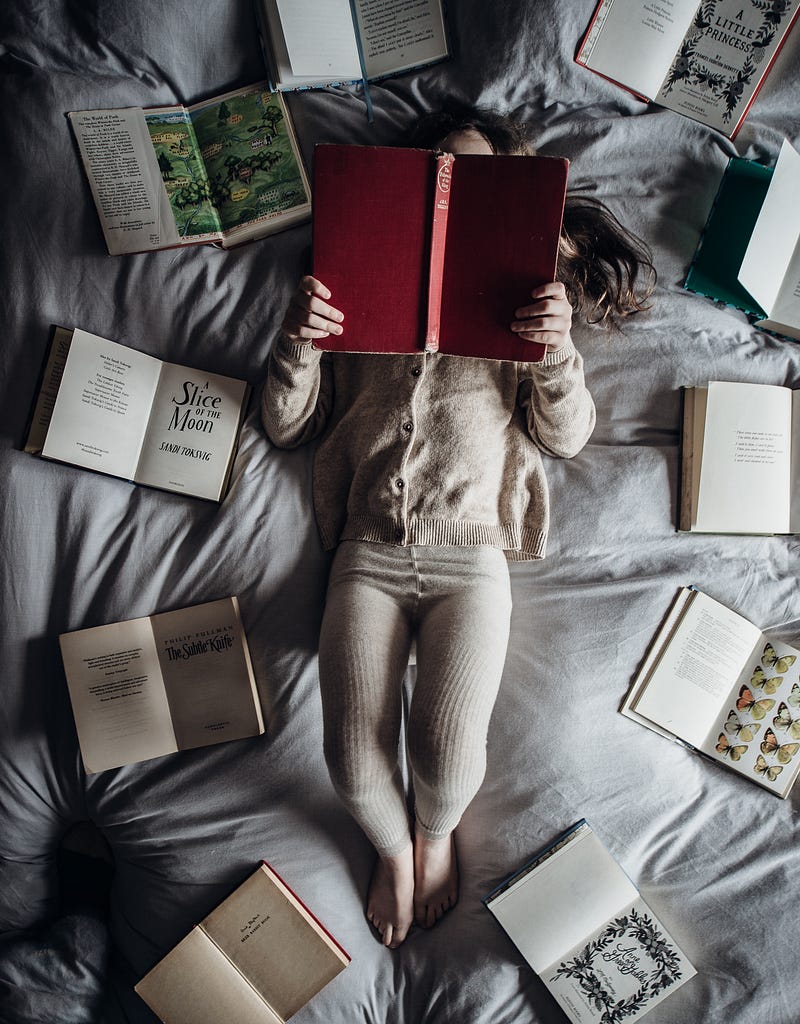
Once upon a time, there was a little girl who opened a book of short stories. She began reading, and fell into another world. Her bed disappeared, then her room. As she discovered other times and places, she was no longer quite herself. Even when she closed the book, she knew the stories had changed her. She was not the little girl she was yesterday. And so she kept reading …
Short stories were one of my first fiction loves. I learnt to read a little earlier than was usual; soon it seemed I couldn’t get enough words inside me. As a child and teenager, my reading habits bordered on addictive, and maybe that’s why I loved short stories.
Their brevity and the fact that they were a complete experience in themselves meant I could consume more stories in the amount of stolen time I had to read: under the desk at school while it was officially maths; beneath the bedclothes with a torch long after my parents thought I was asleep; following my mother around the supermarket. Sometimes I’d lose my mother, but never my place in my story.
Myth and fairy tale intrigued me as a little girl, and they still intrigue me now. I don’t think it was ever the happy endings I craved, but more the sense of magic and the uncanny. Before I ever knew the words archetype or symbol, I sensed the wicked witch was more than she appeared to be, and that forests were governed by different lore and logic to houses or towns. Upon entering these story-worlds, I realized the world didn’t stop at the end of my street. As the wonderfully imaginative writer Neil Gaiman observes:
“A short story is the ultimate close-up magic trick — a couple of thousand words to take you around the universe or break your heart.”
I could visit other times, places, civilizations, and planets. I could be a gypsy or princess, Persephone or Thumbelina — all without leaving my back yard, returning home in time for dinner.
When I was eleven, I won first prize for a short story competition. All that short story reading was inspiring me to the point where output was inevitable. I wrote a few decent short stories at high school, getting some published in the annual school magazine. As a teenager, I developed other reading tastes — science fiction, mystery, the macabre and the absurd. I devoured the short stories of Ray Bradbury, Edgar Allen Poe, Roald Dahl and Stephen King. All of these authors approached the short story with their own style and signatures of their era, and taught me something about the qualities of powerful short story writing.
Fiction for a fast-paced world
When it came to short stories and my obsessive devouring of them, I guess you could say I was greedy. Writer Ali Smith expresses this idea succinctly, with a wry twist of logic:
“Short stories consume you faster. They’re connected to brevity. With the short story, you are up against mortality.”
We don’t just consume short stories; they consume us. It’s an interesting idea. Even at five years old, I seemed to sense I’d only have so long to read in my lifetime, so I’d better get to it.
Now, in a world where both the types of media and entertainment available and their possible channels for consumption have proliferated dramatically, the idea that the time we ”spend” with our entertainment is time we never actually get back is a sobering thought, and incentive to give more consideration to the quality of what we consume. Do we really need to watch re-runs of Friends for the fourth or fifth time, or is there something more constructive we can be engaging with for intellectual or personal growth?
Maintaining attention and a sense of continuity to read a novel in stolen moments may just be too difficult in the busier times in our lives. Writer Lorrie Moore makes apt distinctions between the short story and the novel:
“A short story is a love affair; a novel is a marriage. A short story is a photograph; a novel is a film.”
Listening to podcasts is one solution, but having some short story collections (by a single author) and anthologies (by multiple authors) on our bedside table or our reading devices is another. A short story can generally be enjoyed in a single sitting. But the best of them have the potential to stay with us for years.
Reflections of reality
Writer Andre Dubus professes that he loves short stories because “they are the way we live. They are what our friends tell us, in their pain and joy, their passion and rage, their yearning and their cry against injustice.” For certain styles and subjects of short stories, I think he’s right.
We live our lives day by day, and a short story is an apt framework to capture what happens to us, or our lover, or a neighbour in the commute to work, or late one night, or over a week. Short stories don’t just encapsulate how we live, but the way we recount how we live to others:
“A strange thing happened on the train to work today.”
“So, I met this guy last weekend at my local cafe when I accidentally spilt my take-away coffee over his shoes.”
These kinds of short stories are close relatives to the conversational anecdote. If they’re good stories, they will inevitably play with tension between the everyday and the profound, the trivial and the significant. The teller is not quite the same person they were before the story happened. And they will have that same potential for the listener.
A diversity of voices, styles & subjects
In On Writing, author Stephen King observed: “The trick is to teach yourself to read in small sips as well as long swallows.” I’d like to think he had short stories at least partly in mind when he wrote this.
Over my four decades of reading life, the number of short stories I’ve read would have to be in the thousands; maybe even the tens of thousands. I’ve always believed in the importance of reading widely — not just keeping to contemporary authors, but reading work from different cultures and historical periods to learn something of the journey of humanity and challenge your vocabulary.
Below is a list of ten short story authors that have inspired or intrigued me:
- Ray Bradbury
- Roald Dahl
- Edgar Allen Poe
- Franz Kafka
- Anton Chekhov
- Angela Carter
- Daphne du Maurier
- Patrick White
- Charlotte Perkins Gilman
- Anais Nin
Some authors, such as Perkins Gilman (The Yellow Wallpaper) and Kafka (Metamorphosis) are there for singular, stand-out stories. Others listed, such as Bradbury, Poe and Carter, are because I’ve read many of their short stories, often returning to them again and again.
I’ve also read many anthologies, attracted more to a genre or theme than a particular author’s voice. Ghost stories, Australian short stories (we’re pretty good at them as a nation), stories about the ocean, stories by women authors. Because anthologies are hand-picked by an editor, they’re a great way to experience a diversity of interesting story-telling styles and voices.
Try making a list of your own short fiction inspirations — just for fun, or for those of you who are fiction writers, to consider who your influences might be.
At this point in life, I’ve gained three different perspectives into the short story: as a life-long reader, a published writer, and most recently, a developmental editor. In future posts, I hope to share some of those different perspectives on the short story: what makes a stand-out short story, and how to improve your writing of them.
From Creative Café to PS I Love You to The Junction, Medium houses a plethora of publications that feature short fiction: both micro-fiction (flash) and short stories. Coming only recently to this platform as a writer, I’ve been enjoying discovering new short story writers such as Anna Breslin & Ravyne Hawke. I’d love to hear about your favourite authors, both on Medium and beyond.
I’ll end with one of my favourite quotes about short stories, by the prolific Stephen King:
“A short story is a different thing altogether — a short story is like a quick kiss in the dark from a stranger.” ― Skeleton Crew
May the short story live long …
Melissa Coffey is an Australian writer, editor & poet. Her short stories and poetry are published in numerous international & Australian literary journals &anthologies (sometimes incognito).
Follow Melissa Coffey for thoughtful essays and provocative poetry & fiction. Not a Medium member? Join with my referral link for just $5 a month to access all my stories & so much more. Find your voice & others you’ll want to hear.
Read some of my short stories:


