avatarEashan Kotha

Free AI web copilot to create summaries, insights and extended knowledge, download it at here

2000

Abstract

llapse to a singular value. <b>Congratulations</b>, you’ve just read a basic explanation of wave function collapse.</p><p id="cbfc">Essentially, Schrödinger’s fault was with the strict interpretation of the expression. The strict interpretation meant that this would apply to microscopic systems as well as macroscopic ones (consisting of big things like cats and objects). In Schrodinger’s thought experiment, the cat’s status is uncertain. If we run with the Copenhagen interpretation, we are assuming we know all the possible states of the cat (and we don’t). Therefore, it’s ridiculous to assume the cat will be alive and dead at the same time. Albert Einstein had a great example, stating <i>“Do you really believe the moon exists only when you look at it?”</i></p><p id="3050">In the vein of this interesting paradox would be if I asked you to tell me the mass of a moon rock out of your sight. Of course, you’d be able to have a range of where the rock’s mass would have to fall under. However, it is not correct to state that the rock is simultaneously occupying an infinite number of masses in our range. Schrödinger’s thought experiment serves to describe the danger of extrapolating quantum physics to macroscopic systems. There is still no grand unifying theory that is consistent with the microscopic and macroscopic systems in our universe.</p><h2 id="d775">Below are some twists on the experiment.</h2><p id="c9bc">If we film what happens inside the box, is the state of the cat indeterminate until we view the film? If so what’s on the film. Do the quantum state of the film and the cat change when we develop it?</p><p id="bcdf">Suppose the Geiger counter is wired to open the box, at which time the cat runs to the physicist’s office. Is the system indeterminate until the cat gets to the physicist? Does the cat travel to the physicist’s office as some abstract and ethereal wave function?</p><p id="15c2">More: Say hi on <a href="https://twitter.com/eashankotha">Twitter</a> — Joi

Options

n my <a href="https://eashanreddykotha.com/join">email list</a>.</p><div id="3043" class="link-block"> <a href="https://readmedium.com/the-simulation-hypothesis-simply-explained-c445f1dd2acf"> <div> <div> <h2>The Simulation Hypothesis, Simply Explained</h2> <div><h3>You could be a simulation, but how does this work?</h3></div> <div><p>medium.com</p></div> </div> <div> <div style="background-image: url(https://miro.readmedium.com/v2/resize:fit:320/0*HqDXJZpgvgkxQXAZ)"></div> </div> </div> </a> </div><div id="70f0" class="link-block"> <a href="https://readmedium.com/smokey-bears-conundrum-should-we-let-forest-fires-burn-illuminations-e9c0dae7390"> <div> <div> <h2>Smokey Bear’s Conundrum: Should We Let Forest Fires Burn?</h2> <div><h3>Do you think forest fires be put out immediately? If yes, maybe it’s time to reconsider…</h3></div> <div><p>medium.com</p></div> </div> <div> <div style="background-image: url(https://miro.readmedium.com/v2/resize:fit:320/1*qEnY8DBpwYzW8pwaXujcDQ.png)"></div> </div> </div> </a> </div><p id="b46a">Serendipity?</p><div id="de45" class="link-block"> <a href="https://readmedium.com/temps-i-think-poetry-french-english-poems4e9d2b69ec9c-4e9d2b69ec9c"> <div> <div> <h2>temps, I think</h2> <div><h3>A poem in two languages — French and English</h3></div> <div><p>medium.com</p></div> </div> <div> <div style="background-image: url(https://miro.readmedium.com/v2/resize:fit:320/0*Qf99wyJzBC9oVHks)"></div> </div> </div> </a> </div></article></body>

Theories, Simplified

Misunderstanding Schrödinger’s Cat

What you might be getting wrong about THIS famous principle

Photo by Manja Vitolic on Unsplash

We’re all familiar with the Schrödinger Cat experiment. Yes, the one that talks about the cat in the box with poison. There’s a chance the poison will be released killing the cat. However, there is also a probability that the cat is perfectly fine. Many people think the point of the thought experiment was to indicate that the cat would be dead and alive at the same time. The only way to force an outcome (that is if it is dead or alive) is to actually open the box and observe what’s inside. Before we proceed, let’s be clear. The thesis (ha) is that the cat is NOT dead and alive at the same time!
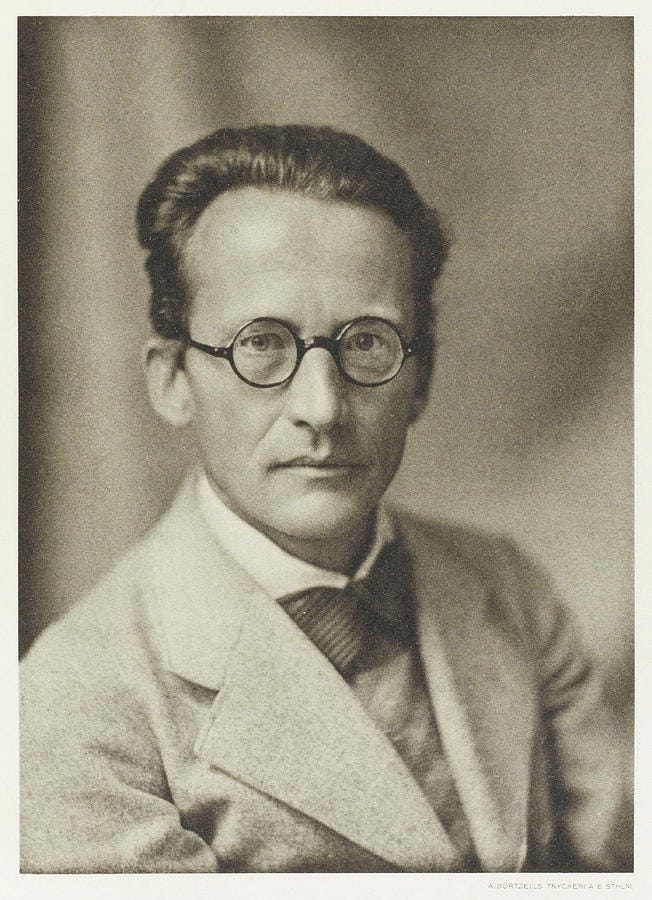
Photo of Erwin Schrödinger courtesy of Wikimedia Commons

You see, to understand what Erwin Schrödinger was trying to say, we have to first understand the Copenhagen interpretation. No, this interpretation was not thought of by a man/woman named Copenhagen, rather, it was devised largely by Niels Bohr and Werner Heisenberg (two very significant physicists). The Copenhagen interpretation suggests that physical entities don’t have any definite properties until they are measured. Quantum mechanics is about figuring the probability that a measurement will yield a specific result. The very act of measuring affects the probabilities, causing your ‘observed system’ to collapse to a singular value. Congratulations, you’ve just read a basic explanation of wave function collapse.

Essentially, Schrödinger’s fault was with the strict interpretation of the expression. The strict interpretation meant that this would apply to microscopic systems as well as macroscopic ones (consisting of big things like cats and objects). In Schrodinger’s thought experiment, the cat’s status is uncertain. If we run with the Copenhagen interpretation, we are assuming we know all the possible states of the cat (and we don’t). Therefore, it’s ridiculous to assume the cat will be alive and dead at the same time. Albert Einstein had a great example, stating “Do you really believe the moon exists only when you look at it?”

In the vein of this interesting paradox would be if I asked you to tell me the mass of a moon rock out of your sight. Of course, you’d be able to have a range of where the rock’s mass would have to fall under. However, it is not correct to state that the rock is simultaneously occupying an infinite number of masses in our range. Schrödinger’s thought experiment serves to describe the danger of extrapolating quantum physics to macroscopic systems. There is still no grand unifying theory that is consistent with the microscopic and macroscopic systems in our universe.

Below are some twists on the experiment.

If we film what happens inside the box, is the state of the cat indeterminate until we view the film? If so what’s on the film. Do the quantum state of the film and the cat change when we develop it?

Suppose the Geiger counter is wired to open the box, at which time the cat runs to the physicist’s office. Is the system indeterminate until the cat gets to the physicist? Does the cat travel to the physicist’s office as some abstract and ethereal wave function?

More: Say hi on Twitter — Join my email list.

Serendipity?

Physics
Education
Learning
Serendipity
Critical Thinking
Recommended from ReadMedium