Fire in California, In Depth
Smokey Bear’s Conundrum: Should We Let Forest Fires Burn?
If you answered no, you should reconsider…
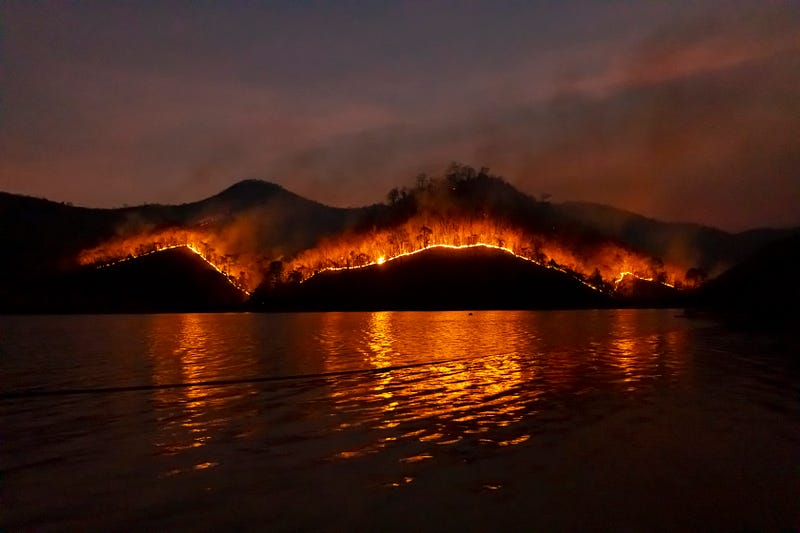
Fire is dichotomous in nature. It can not only be employed by nature to devasting effect by incinerating anything in its path, but it can also be utilized to provide warmth and safety among other things.
The prevalent belief in popular opinion regarding wildfires is to extinguish them as soon as possible. It seems painfully obvious to many; fire must be suppressed. In terms of putting out fires, we’ve done quite a good job statistically speaking. In the U.S., 98 percent of these fires are suppressed early. This is before those fires reach 300 acres. What’s the problem then? The measly-sounding two percent that isn’t successfully contained accounts for around 97 percent of firefighting costs and area burned.
This partly feeds into the push by some to increase spending on fighting these fires. However, this is not the optimal way to deal with every forest fire. Unfortunately, it seems the greater the effort we put into extinguishing these wildfires, the more extreme they seem to get. The size and intensity of fires, year over year, have increased significantly. As a matter of fact, six of the worst fire seasons in history have occurred since 2000.
Environments that are fire-prone are more likely experience wetter winters and longer droughts during the summer (*cough* California *cough*). The water from the considerably wetter season fosters the growth of plants in the Spring. During the droughts, this population of fledgling plants now has the risk of drying out and becoming highly flammable.
As far back as 125 million years ago, it’s possible to find the consequences of fire in plant genomes. Grasslands and shrublands are more susceptible to fire since the plant stems are thinner. In places such as the savannahs of Africa, fires are quick, moving swiftly through the grasses minimally affecting the soil below. Due to such minimal temperature increase of the ground, the plants’ root systems are able to survive. The burned areas experience a rapid regrowth of grasses. Various life forms are usually able to survive the fires, and return when the burned areas begin restoring. The young, fresh vegetation summons the grazing herbivores to begin rebuilding an ecosystem in the grasslands (secondary succession!). Without the fires tempering the growth of the vegetation, succession occurs. Trees would eventually, in a sense, take over the ecosystem. The grasses we mentioned earlier? In a stable ecosystem, they wouldn’t be able to compete with the trees for resources. In an area with frequent fires such as the savannah, the gradually growing tree sapling would have minimal chance to survive.
Nonetheless, it is important to consider that not all forest ecosystems are adversely affected by fires. In fact, there are some that are fire-adapted (meaning they thrive in these seemingly grueling conditions). The Ponderosa forests (found in the western US and Canada) contain pine trees with thick bark that offers the tissue within protection from the heat. The branches also drop when at risk to prevent the canopy from catching fire. For these forests, natural fires flow through every five to 25 years. In some areas, this figure can go past a hundred years like in the Alaskan tundra, or Olympic National Forest. This is an essential event for the forests since the fire burns low growing plants and leaf litter, preventing a buildup of forest-floor vegetation.
There are several species dependent on fire as well. The heat released by the flames could stimulate certain fungi to release spores. The ramifications are compounded near the top of the food chain since larger organisms, like predators, rely on these smaller ones (biomagnification!). Fire suppression could also endanger species such as the Kirtland’s Warbler. This songbird hails from Michigan and inhabits young jack pine forests. The pines’ cones only spread their seeds in a fire. Thus, no fire means less habitable locations for the warbler.
Early firefighters would exhaust resources and funding trying to suppress every fire. However, we eventually recognized that we were making fires worse through this suppression. Older forests usually contain a greater population of black spruce (or a stand of black spruce) which are readily available to catch aflame. These fires are much worse and pose an even greater challenge to control as they can cause more property damage. That’s the way things were done before 1988 when modern plans were developed.
Individual forest fires were originally fought with funds appropriated by congressional appropriations as well as emergency funding. This was problematic because the budget for fuel breaks and prescribed burns is taken out of a separate, limited budget reserved for each national forest.
To add fuel to the fire, the “suppress everything” stance proves to be problematic. Dead plants and dry wood accumulate on the forest floor. With each suppression, the underbrush gets thicker. When they catch fire, and they do eventually, they will fuel a stronger fire, much harder to control. Bark boring beetles are one of the major pests that thrive due to a large amount of large unhealthy trees left standing. Wildfires are responsible for keeping these trees out of commission and keep the ecosystem stable.
A stand is “An aggregation of trees or other growth occupying a specific area and sufficiently uniform in species composition, size, age, arrangement, and condition as to be distinguished from the forest or other growth on adjoining areas.”
It has also come to light that fire is critical in Alaskan forests for incumbent wildlife populations. Since fire burns unevenly across the landscape, it yields significantly more biodiversity and habitat opportunity. While spruce may be more prone to catch fire, trees such as the willow, birch, and aspen among others may grow in burned areas because they are more fire resistant.
These trees are like natural fuel breaks that slow the next fire’s advance, helping diminish its intensity. Speaking of which, fuel breaks have to be built to enable firefighters to protect more property and people. Some of the more recent suggested changes include implementing prescribed burns, tree thinning and less suppression of fires in certain circumstances.
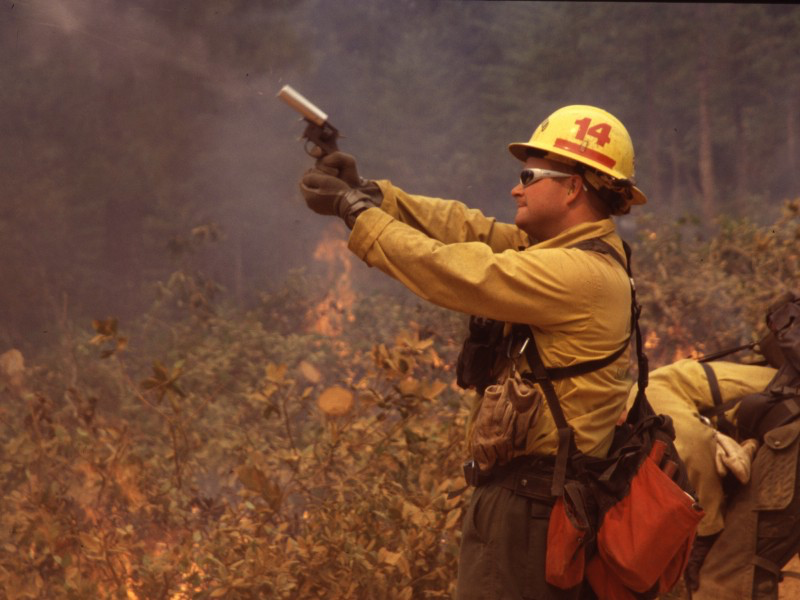
As a result of all of this, recently there has been more funding placed towards complete suppression rather than prevention via the methods of prescribed burns and fuel breaks. Prescribed burns are when a fire is actually used to burn off the vegetation that could potentially accumulate and cause more intense fires. It helps clear out thick, dry brush. Tree thinning is when the branches of trees are removed to reduce crown density (read more here). Parks Canada is often cited as an example of this type of fire management by splitting up the land into different zones, making it easier to control. These methods will hopefully restore forests to their natural state. That way, the burden of more intense fires would be far less frequent and likely.
So what’s the takeaway?
Contrary to popular belief, fires are a naturally occurring event that can be beneficial for their environment. However, one should not be careless when it comes to fire safety. We must take precautions to make sure that the only fires ripping through the forests are natural and do not pose a significant threat to our society. Some of the suggested changes implemented have been useful, but it’s an ongoing battle. Smokey Bear is still right, he was created to warn of the dangers of carelessness in starting fires, but sometimes, fires are natural and should be left to run free unless they infringe upon human establishments.
Hope you enjoyed reading! read more: Say hi on Twitter — Join my email list.
Wish to read something different?