avatarBill Myers

Summary

The article discusses the complexities surrounding Mississippi's abortion laws and the potential for the Supreme Court to address the issue without directly modifying Roe v. Wade, suggesting that the real issue is the lack of specific constitutional grounding and the imposition of what some view as a form of slavery on women.

Abstract

The article titled "Mississippi: Abortion’s Just the Symptom, Nobody’s Touched the Real Issue" argues that the Supreme Court's handling of Roe v. Wade was flawed due to its lack of reference to a specific constitutional amendment, such as the 13th Amendment, which abolished slavery. It posits that the debate over abortion is fundamentally about the imposition of involuntary servitude on women, particularly through restrictive abortion laws that force them into motherhood without adequate support. The article criticizes the current provisions of Roe v. Wade for their ambiguity, especially regarding the middle trimester of pregnancy. It also points out the lack of female representation on the Supreme Court and the hypocrisy of those who advocate for gun rights while supporting government control over women's bodies. The author proposes a hard cutoff point for abortion rights at 4 1/2 months, the elimination of the vague 4th to 6th month provision, and the taxation of churches for child support. The article warns that allowing Mississippi's law to stand could pave the way for even more draconian laws, such as the one in Texas, which it equates to legalized extortion and torture.

Opinions

  • The author believes that the current debate over abortion laws is a symptom of a larger issue, which is the lack of clear constitutional guidance, specifically citing the 13th Amendment as relevant to the discussion of bodily autonomy.
  • The article suggests that restrictive abortion laws are akin to slavery, as they force women into involuntary servitude by mandating pregnancy and childbirth without their full consent.
  • It criticizes the inconsistency in Roe v. Wade's trimester framework, particularly the lack of clarity in the second trimester, which it argues leaves too much discretion to doctors.
  • The author highlights a double standard among those who oppose government intervention in gun ownership but support it in the context of women's reproductive rights.
  • The piece advocates for concrete changes to abortion law, including a clear 4 1/2 month cutoff for abortion access and the removal of the ambiguous middle trimester provisions.
  • It proposes taxing churches to contribute to child support, suggesting that institutions advocating for the birth of children should also share in the financial responsibility.
  • The author expresses concern that upholding Mississippi's abortion law could lead to the validation of even more extreme laws, such as the one in Texas, which could redefine legal standards in a way that is detrimental to women's rights and autonomy.

Abortion

Mississippi: Abortion’s Just the Symptom, Nobody’s Touched the Real Issue

Any Mississippi’s law decision without properly modifying Roe v. Wade won’t solve anything
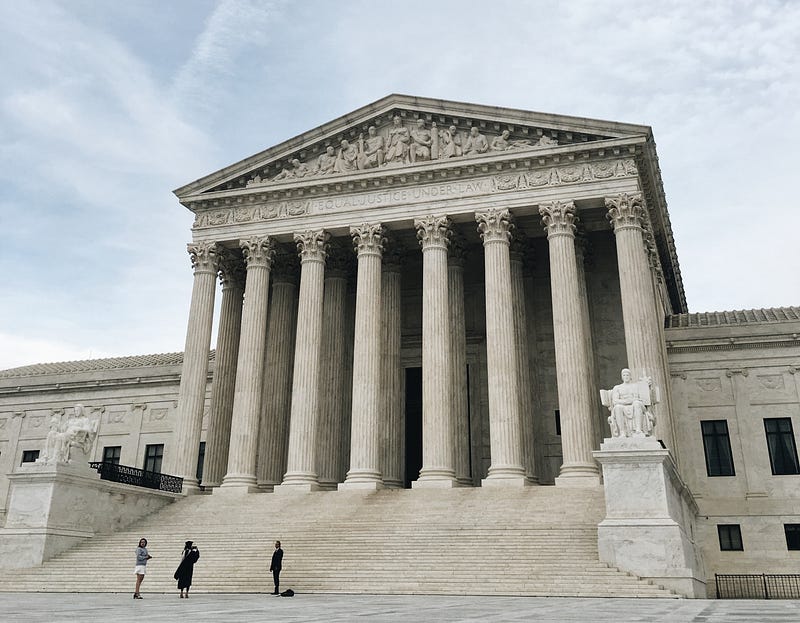
Photo by Anna Sullivan on Unsplash

The Court accepted Roe v. Wade using fuzzy logic by not referencing a specific section of the Constitution, issued the correct decision, then messed it up with conflicting details. They should start by quoting the 13th Amendment, Section 1 of the Constitution:

Neither slavery nor involuntary servitude, except as a punishment for crime whereof the party shall have been duly convicted, shall exist within the United States, or any place subject to their jurisdiction.

Slavery: coercive means to compel someone to work.

Children, especially pregnancy and babies, require an immense amount of work. People supporting the elimination of abortions or impossible abortion restrictions are advocating slavery for the woman. Then they want to push extreme financial costs upon the woman without making any contributions themselves. The same people claim that the government controlling guns infringes upon their individual rights. However, they want the government to control others (women), but they don’t want controls on themselves.

Then the Court fouled up Roe v. Wade by adding the 4th-to-6th month nebulous provision. The woman has complete control for the first 3 months, and emergency-only control the last 3 months. However, the middle three month only requires a doctor to agree to some problem, serious, minor, projected, or mental. Nothing really specific.

Finally, women have no representation on the Court. If the Court allows this law to stand, the State will become the new overseer. Can the people who eliminated drugs and prevented all border crossings stop abortions? Those things never happened and never will.

Let’s live in reality instead of fantasyland.

Here are the final proposals:

  • Reject the Mississippi law based on the 13th amendment
  • Set a hard cutoff point at 4 1/2 months
  • Eliminate the current 4th to 6th month provision
  • Tax churches for child support

Letting the Mississippi law stand makes it easier to support the new Texas law legalizing extortion, torture, creating a “Guilty until Proven Innocent” doctrine, and redefining pregnancy so that every woman who has a period can be charged.

References

  • More extensive logic to support each point
  • Even worse than Mississippi
  • May 5, 2022 - another viewpoint

Other Articles in the Same Category

Abortion
Roe V Wade
Reality
Supreme Court
Politics
Recommended from ReadMedium