
Travel, Nature Photography
Mingling with Giraffes on the South African Savanna
A magical sunset moment with the tallest mammals on earth
The long, slow slant of the sun lit the tips of the grasses on fire and sparked the hazy air into a golden mist. Perched on the back of a jeep bumping down a dirt path, my husband and I could barely contain our excitement at being on photo safari in a private reserve just outside of Kruger National Park.
We’d flown more than twenty hours to get to Johannesburg, then hopped onto a little plane, which took us to our lodgings. We’d then hustled into a jeep, which was to take us out to another jeep, which held our fellow guests, who’d already set out for the evening safari.
Before we’d even been out in the bush for a minute or two, our driver stopped the jeep and, before our bleary, jet-lagged eyes, a giraffe stepped out of the scraggly brush right in front of us.
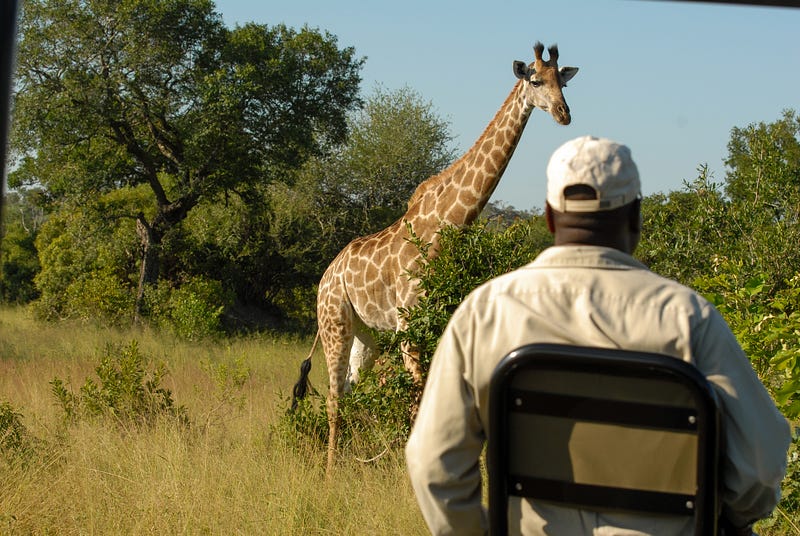
I’d seen giraffes in zoos before. But there is nothing like that first moment when you find yourself in the company of a wild creature in their native territory.
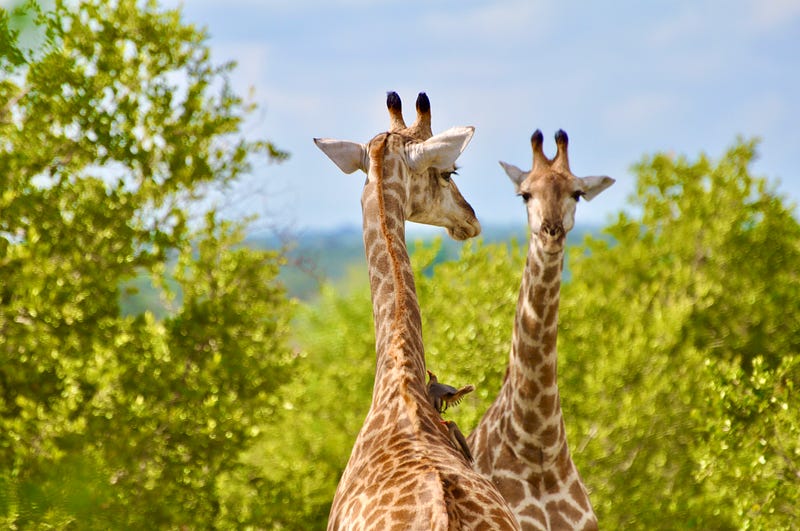
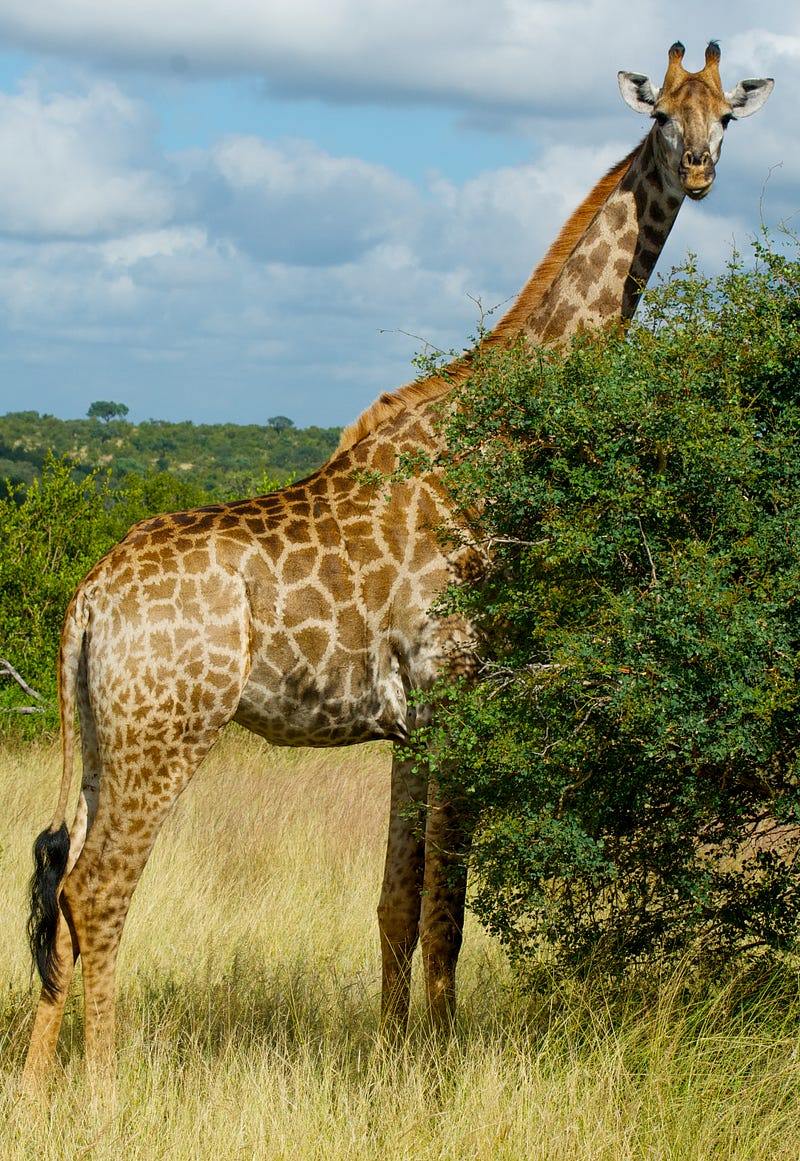
Their sun-splashed coats blended in with the dappled shadows but there is no way to miss the tallest living mammals on earth, who stand fourteen to nineteen feet high.
Both the males and females have little “horns” called ossicones. They are vascularised, so they may help the animals thermoregulate. The horns are also used in combat between males.
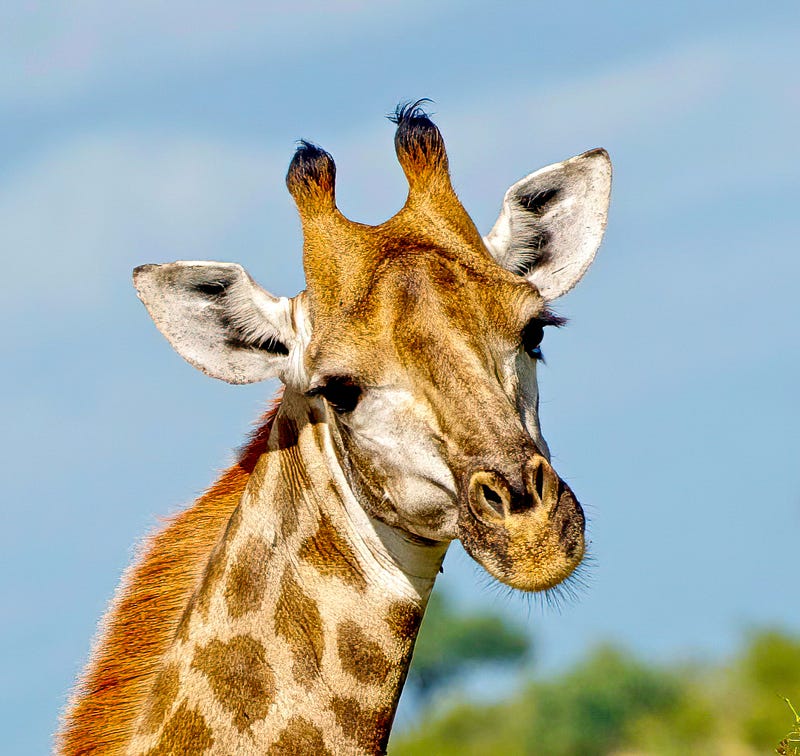
Their eyes are on the sides of their heads, giving them a very broad visual field. In nature, predators tend to have eyes facing forward, so that they can focus on their prey with both eyes. Prey animals tend to have eyes which face sideways, giving them a wider view.
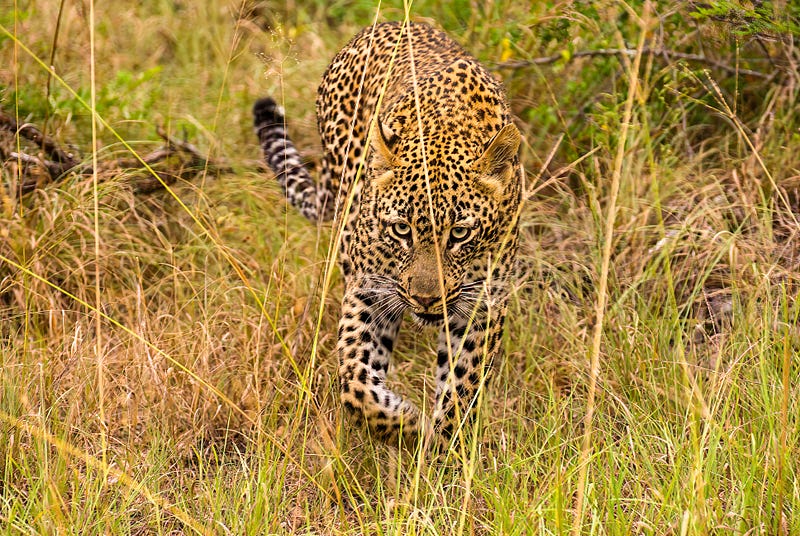
In this photo of a leopard, you can see how having forward-facing eyes allows them to zero in on whatever they are hunting.
Despite their size, giraffes are prey animals. They, especially their young, are vulnerable to attacks by lions, leopards, spotted hyenas, and African wild dogs.
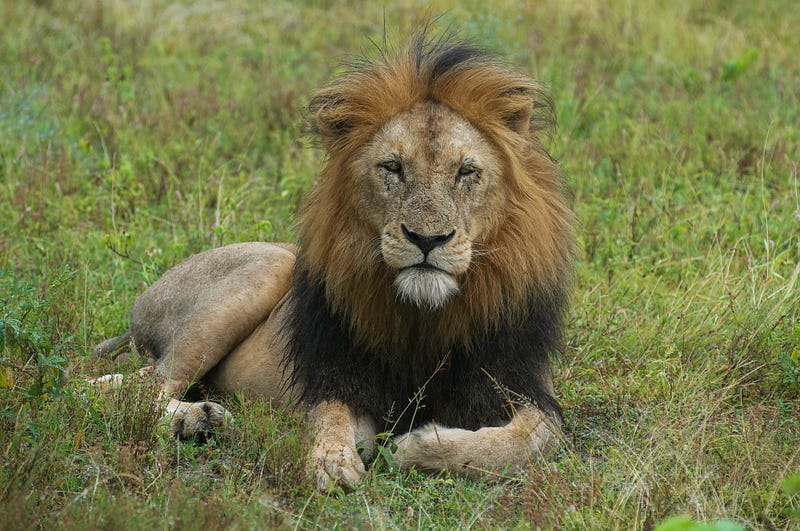
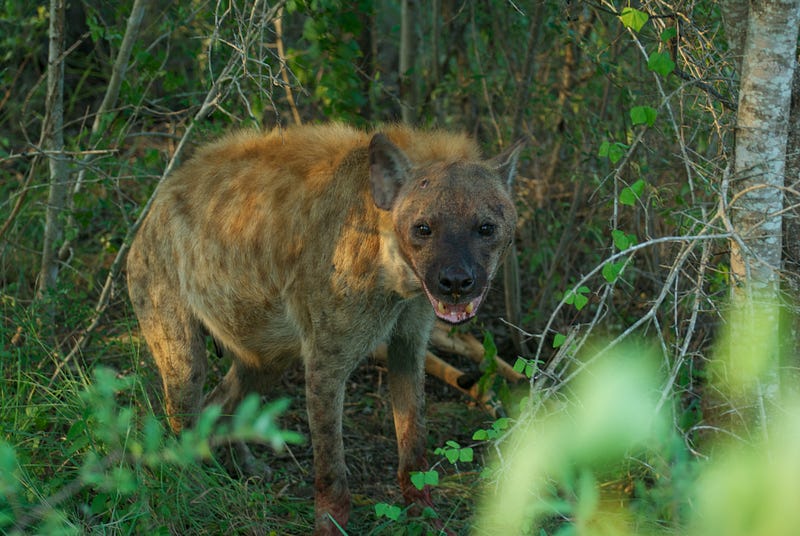
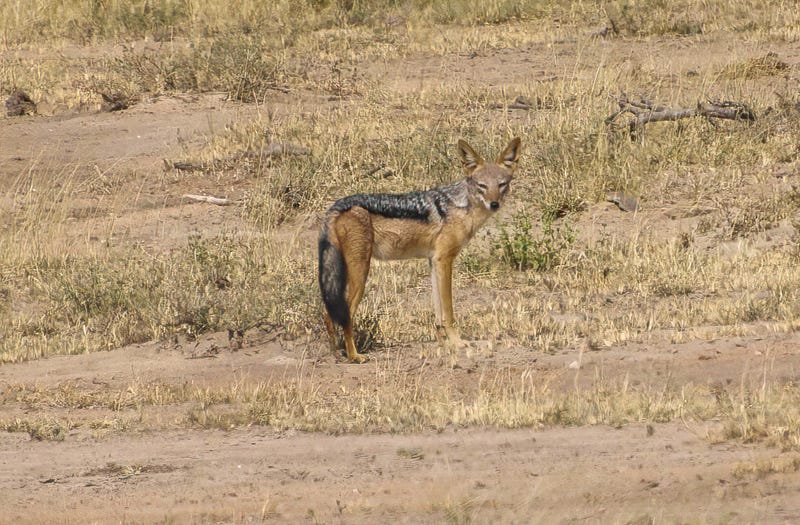
Because of their vulnerability to these predators, they tend to bunch together in herds of females with their offspring, or in bachelor herds of unrelated males. Groups of giraffes are called “towers.”
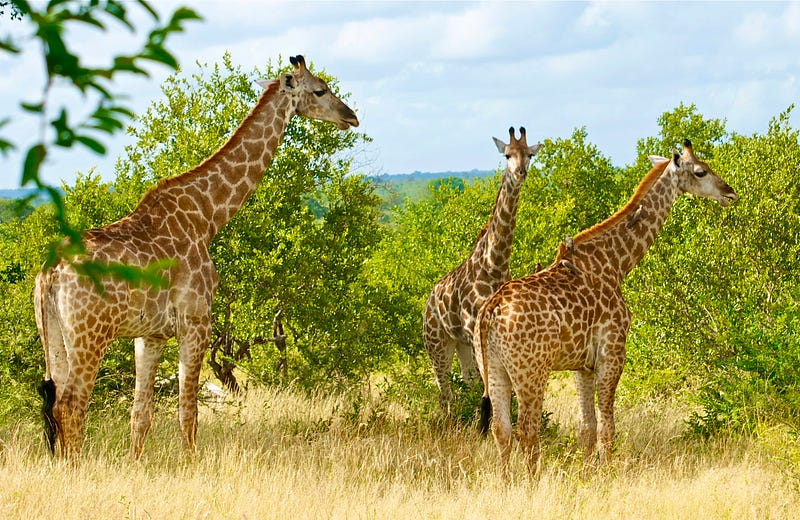
Giraffes graze all day on leaves, fruits, and flowers of woody plants, primarily acacia species. They have an advantage because they can they browse at heights most other herbivores cannot reach.
A giraffe’s eighteen-inch tongue helps them to more delicately pluck off leaves and they eat up to seventy-five pounds of food a day. They only need to drink water every few days because they get so much of their liquid from the leaves.
Their tongues are purple-black to protect against sunburn, because they spend so much of their day eating. And their upper lips are flexible and hairy to protect against sharp prickles.
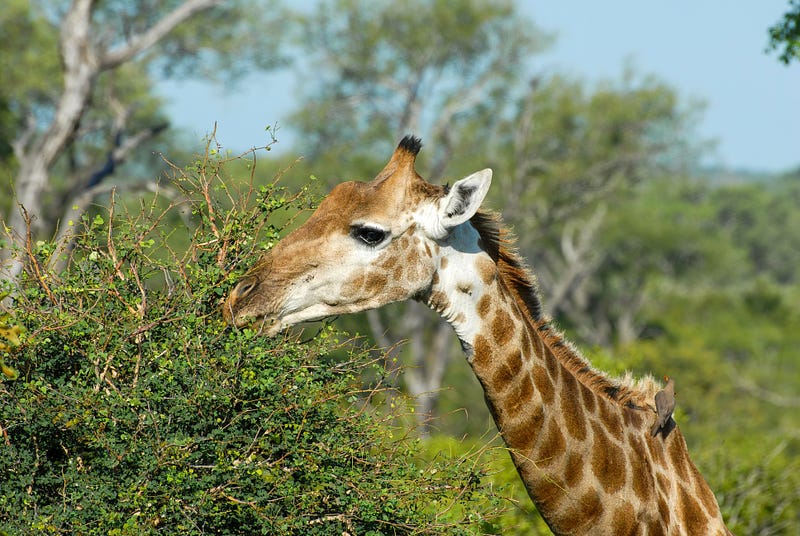
Giraffes’ necks are five to six feet long and are articulated with ball and socket joints, which allows them to move in many directions.
These gentle giants’ fur may have a natural chemical defense against ticks and other parasites. It contains at least 11 main aromatic chemicals. Males have a stronger odor than females, which may have something to do with sexual function.
Where you see a giraffe, you will also most likely find red-billed and yellow-billed oxpeckers, birds which clean them of ticks and alert them to danger.
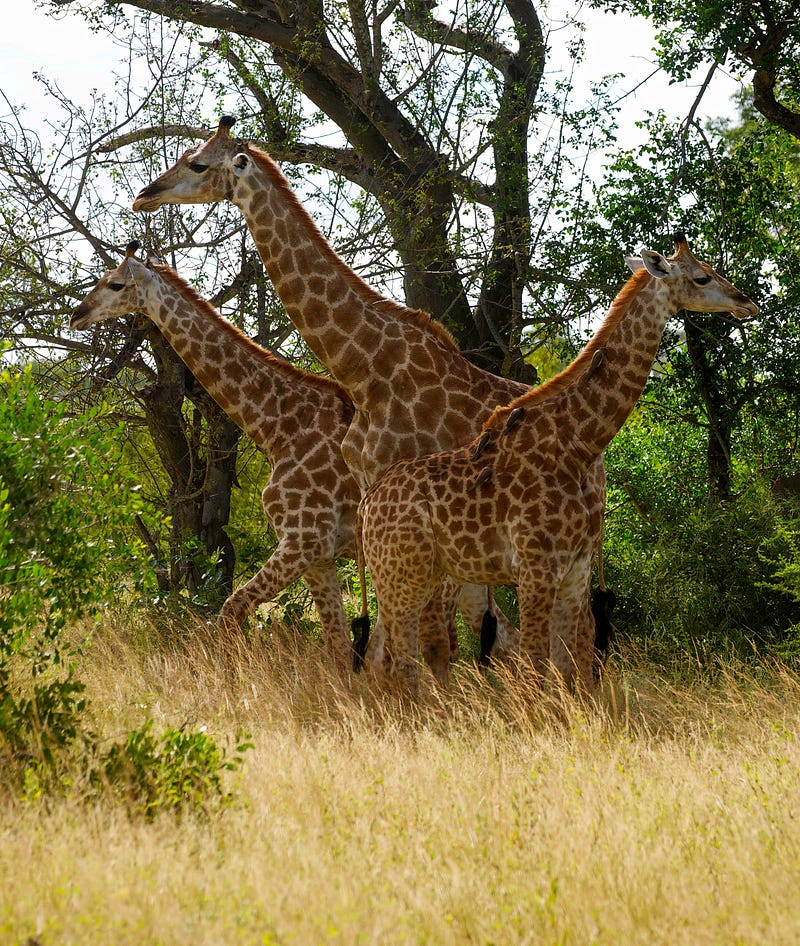
The sun hovered at the horizon. We lingered for a while, watching a small herd graze, then moved on to join the rest of the safari group. We had a full two weeks ahead of us to absorb the beauty and wildness of the South African savanna.
We’d see lions and jaguars and hyenas and elephants and so many other animals. But I will always remember that first glimpse of giraffes grazing in the setting sun as one of the most magical moments of our time in South Africa.
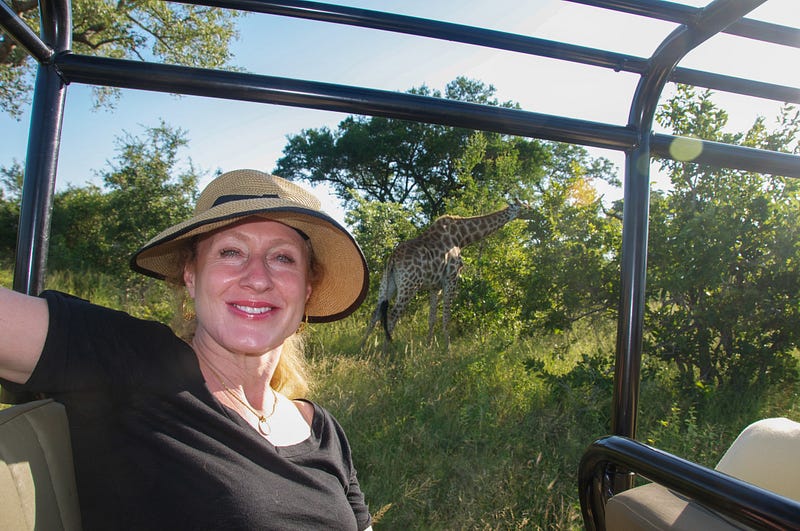
Erika Burkhalter is a yogi, neurophilosopher, cat-mom, photographer, and lover of travel and nature, spreading her love and amazement for Mother Earth’s glories, one photo, poem or story at a time. (MS Neuropsychology, MA Yoga Studies).
Thank you to the editors at Globetrotters (JoAnn Ryan, Anne Bonfert, Jillian Amatt — Artistic Voyages, Adrienne Beaumont, Michele Maize) for this month’s challenge— Wildlife:
September Monthly Challenge — Wildlife
What animals have you encountered on your travels?
medium.com
I also really enjoyed Anne Bonfert’s story about wild elephants:
and Jillian Amatt - Artistic Voyages’s story about monkeys and storks:
If you enjoyed this piece, you might consider subscribing to my stories. You’ll get an alert whenever a story gets published.
Photos and story ©Erika Burkhalter. All rights reserved.


