
Mindful Living 101 in 2022
Why mindfulness is the key to your success in the post-COVID world
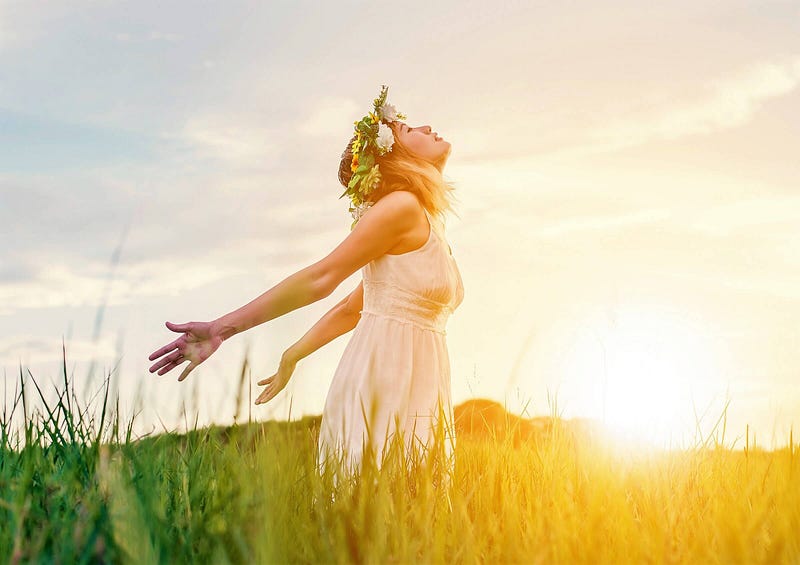
Mindfulness is a mental state attained by becoming more aware of the present moment while calmly acknowledging and accepting one’s feelings, thoughts, bodily sensations, and surrounding environment.
We’ve spent the last two years living in fear and grief. We’ve lost loved ones, mourned them from afar, and withdrawn to the trenches of our homes.
Secluded but not defeated, the household became our last line of defense against an invisible foe that assailed us insidiously.
It is time to reclaim what has been lost
It’s time to reclaim the land, the seas, and the sky. It’s time to put our faith in advanced mRNA technology and recognize that victory can only come from within.
Buddha teaches us how “the Way is not in the sky, the Way is in the heart.”
Victory is at hand, and I foresee glowing reason for relief.
The World Health Organization (WHO) reported a drop in the number of new cases of COVID-19 worldwide on February 15, for the second time this year.
Compared to the previous seven days’ total, there was a 19% decrease during the week of 7 to February 13, 2022.
Worldometer indicators from February 20 show that COVID-19 is declining globally, with a weekly 10% decrease in deaths and a 21% decrease in cases three months after the omicron variant was first reported.
South Asia saw a 37% decrease, in the Americas, 32%; in Africa, 30%; in Europe, 16%; and in the eastern Mediterranean, 12%.
Moreover, for the first time in nearly two years, restrictions were relaxed in New York, allowing for unmasked Valentine’s Day celebrations.
Thus, omicron, the most transmissible coronavirus variant to date, seems to be losing steam after it alarmed the world beginning in December 2021, causing total new infections to skyrocket.
Since March 2020, when the WHO decreed the pandemic, this is the first time that the world is experiencing a seemingly calmer period.
As the history of previous pandemics demonstrates, there is always a moment in the trajectory of these health crises that indicates a turning point on the way to the end. That appears to be what we are witnessing in early 2022.
This is the moment we’ve all been waiting. Finally, D-Day is coming for the COVID-19 pandemic.
Mindful living 101 in 2022
I’ve written about how I lived, experienced, and endured the pandemic for the past two years.
As you may recall, in October 2020, before what would be known as one of the pandemic’s darkest hours, I posted a heartfelt piece that was also a eulogy for those we lost.
My hopes were dashed when the Delta variant appeared just as we were about to roll out the new vaccines.
The fight dragged on for far too long, and the COVID pandemic has left many people with mental health issues.
I’ve written several essays about COVID-anxiety and all the psychological side-effects of the disease in the general population, including those who were never tested positive.
“Our life is shaped by our mind, for we become what we think.” — Buddha
Now, in 2022, I decided to expand on the stories I’ve told and the lessons I’ve taught as a mindset mentor and top executive coach.
It’s time to write a book that stems from both knowledge and experience. The current working title is:
Mindful Living 101 in 2022
The book’s central theme will be mindful living in the post-COVID world in terms of mental health and general wellness.
Mindfulness has been shown to help with COVID-19 side-effects such as stress, anxiety, depression, and more. It accomplishes this by empowering you to control your thoughts rather than allowing them to take control.
Mindful activities can be performed daily to help keep your mind healthy and strong. Meditation, yoga, nature walks, gardening, painting, writing, and other activities fall into this category.
These activities can assist in managing stress, anxiety, and depression and also help you to become more conscious of thoughts and feelings. I’ve previously discussed several mindful coping mechanisms.
“Altogether, the idea of meditation is not to create states of ecstasy or absorption, but to experience being.” — Chögyam Trungpa
Concluding remarks
Mindfulness, which can be cultivated through meditation or other mental training techniques, has been shown to have numerous benefits, including improved sleep quality, lower stress levels, and improved focus. It has also been shown to aid in treating anxiety disorders and depression.
Thus, in the coming months, my thoughts will turn to ways to incorporate mindfulness into our lives as we embrace a world unburdened by the ominous COVID threat.
As I devote more time to these pressing issues, you can expect to see more articles on mindfulness and general wellness. However, instead of paraphrasing the book, I intend to post articles that run concurrently with it.
If you are facing in the right direction, all you need to do is keep on walking. — Buddha
⭐️ Sign up through this link. Support your favorite platform and its talented authors. You’ll boost our community’s success and support my work with a small commission, all while gaining exclusive perks and benefits as a member.


