
Pandemic Reflections
Practicing Active Mindfulness Saved Me From Depression in 2020
This is everything I learned about mindfulness in 2020 to make it to cloud nine in 2021.
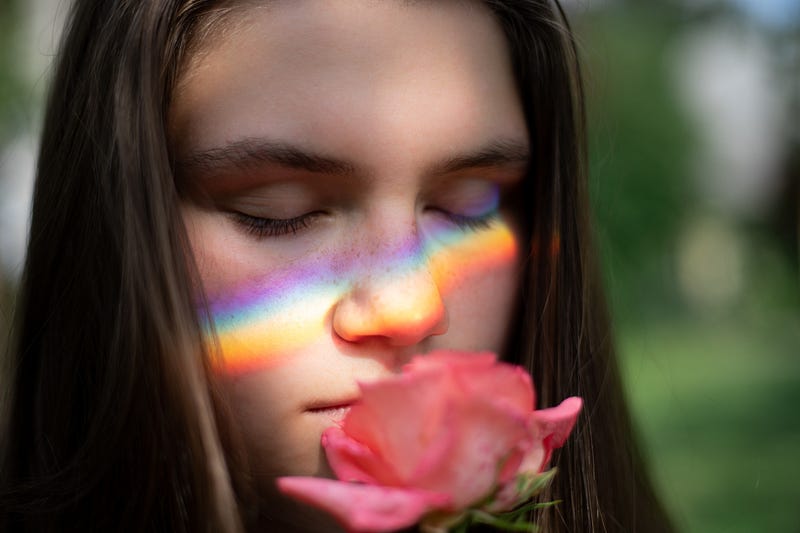
I’m a middle-aged human currently focused on finding new and mindful ways to be on cloud nine in 2021 by chasing rainbows while bareback riding my unicorn. I’ve had my fair share of “real jobs,” and now I’m pursuing my life-dream of writing and sharing insights about living a healthier and more rewarding life.
I started as a graduate of the University of Porto in Portugal and worked as a teacher. I ended up jobless, went back to Boot Camp, and served as an army sergeant for seven years. Afterward, I traveled to Belgium and worked in Project Management for the European Commission for another five years. My time in the “European Bubble” was stressful but rewarding.
How I Dodged a Bullet in 2016
However, life as a singleton ex-pat in Brussels can be harsh. You don’t get enough rainbows, and even the sun can be hard to spot during wintertime. I still remember December 2017 and how we only had 10 hours and 19 minutes of sunlight during that month. Specialists noted how this was a historical record that had no parallel since 1934.
“From December 1 until January 30, at sunrise, Belgium had exactly 30 hours 26 minutes of sunshine. The average for 30 years is 103 hours.”
According to Weather Online, the south of Portugal in December 2017 had 178.8 hours of sunlight; hence you can imagine how sometimes I would feel like a fish out of water.
However, the worst moment of my stay in Belgium happened on 22 March 2016. This one was the day of the Brussels bombings. At 9:11 a.m., a bomb went off in the Brussels metro on the train, leaving Maelbeek station in the European district.
I would take the metro every day to go to work; that bomb exploded 10 minutes after I got out from the metro at Arts-Loi station; Maelbeek was the next stop! That day fifteen people died, and fifty-five were wounded. Maybe one day, I can find it in my heart to tell the story of that traumatic experience. I digress, but this shows how life in the world's big capitals was harsh even before the COVID-19 crisis.
I came back home to sunny Portugal just before the coronavirus outbreak. I thought I had left all the clouds behind, and the colors of the rainbow would guide me to a new beginning. However, I could never have guessed the global ordeal that followed.
Revamping Myself in 2020
For a year now, I had to revamp my life and reinvent myself, aspiring to become a better human and a more humane sentient being.
After returning to Portugal, I went back to teaching and became a knowledgeable life coach. Suddenly, the COVID-19 menace struck, and those dreams almost went to ashes.
Nonetheless, I was resolute and didn’t abandon hope. Hence, amidst the misinformation avalanche and widespread panic that followed the exponential increase in the number of cases, I took my writing and knowledge to online platforms to keep helping others.
Chasing Rainbows in 2021
The rainbow is a powerful symbol for a “fresh start.” Rainbows symbolize renewal, hope, and the lasting connection between heaven and earth.
From a spiritual and biblical perspective, a rainbow represents God’s covenant with humanity and a promise of redemption. A new world free from catastrophic events like the Great-Flood.
“Whenever the rainbow appears in the clouds, I will see it and remember the everlasting covenant between God and all living creatures of every kind on the earth.” (Genesis 9, 16)
In the 1960s, the rainbow became one of the New Age movement symbols connecting people seeking spiritual evolution.
The natural phenomenon also represents the bridge used by gods and heroes to travel the path between earth and heaven. Buddha descended from the sky using a seven-colored ladder.
Rainbows have seven colors, each with its meaning: red, orange, yellow, green, blue, indigo, and violet.
- Red: passion, strength, and courage;
- Orange: harmony;
- Yellow: youth and energy;
- Green: hope and luck;
- Blue: transparency, infinity, and eternity;
- Indigo: discipline;
- Violet: spirituality.
Recently, rainbows became the symbol of humanity's struggle against COVID-19. The idea originated on Facebook and spread like wildfire across social network groups. Suddenly rainbows were everywhere; I could see them on every window and all over social media.
Kids were drawing rainbows at school faster than we could print them on our office’s Xerox. I was a symbol of faith and confidence in a brighter future ahead for children and children-at-heart alike.
Researchers are studying colors and their influence on the human mind from a mindfulness perspective. Several reflections on this topic are raising awareness for new techniques of active mindfulness.
Mindfulness-based Coloring
Editorial groups and manufacturers of adult coloring books often claim that coloring is a technique that can be helpful against stress and negative emotions, thus promoting physical and mental wellness. However, researchers note how this technique lacks peer-reviewed studies and external validity from a psychological research perspective.
Science has investigated this claim and the use of coloring books:
“May be another steadfast method of initiating and developing a mindfulness practice routine, or may become another tool to be used in contemporary secular mindfulness programs. For now, it is safe to assume that the use of guided coloring is a novel tool and research path to develop a more mindful coloring experience, and enable the augmentation of attentional training and open awareness.”¹
Nowadays, with half the world under lockdown, coloring books are flying out the shelves. Many of us find solace in this somewhat childish and nostalgic activity, growing to be a mindful complement or alternative to Netflix.
Four Mindful Benefits of Coloring:
- Reduces stress and anxiety Coloring relaxes the limbic system. It’s the functional equivalent of meditation, as it lets your thoughts wander off, hence promoting mindfulness.
- Improves sleep Coloring is a relaxing and electronic-free bedtime ritual that won’t disturb your level of melatonin.
- Improves motor and visual skills Coloring triggers both hemispheres of our brain, as it requires multiple instances to act. Hence, promoting creativity and logic while sending out the needed motor commands based on visual inputs.
- Improve focus Nowadays, we are under a constant stimuli barrage; thus, it’s easy to lose focus. Coloring lets our neural cortex operate as smoothly as any smartphone does with all the apps running in the background. The human brain is so powerful that coloring becomes an increasingly less energy-consuming task with exponential gains in the ability to focus.
My New Year’s Resolutions
As mentioned, I had to burst the EU-Brussels bubble after working at the international corporate level for five years. I was spending 12 hours per day at work and getting dangerously close to burnout when I took a U-turn in my life once again.
After being a workaholic for too many years, staying at home during a global pandemic could have turned me into the torpid sloth that refuses to budge off its tree branch.
Knowing how old habits die hard in 2021, I’m pursuing my life-coaching career and going back to content writing.
“Health is a state of body. Wellness is a state of being.”
— J. Stanford
My Wellness Goals for 2021
Becoming a life-coach means that we need to understand the concept of chaos. In hindsight, we now realize how the COVID-19 crisis recalls Murphy’s harbinger: “Anything that can go wrong will go wrong.”
During my life-coaching sessions, I always start by explaining how mindfulness is a path from chaos to calm. When we perceive chaos as our friend and not as an enemy, we remove the equation's entropy. Thus, in 2021, I plan to accept chaos instead of resisting it so that my conscious mind may resonate with my inner self and improve my general well-being.
“Chaos isn’t a pit. Chaos is a ladder.”
— Petyr Baelish, Game of Thrones
During 2020, there were moments when I experienced an exponential lack of control over myself, my emotions, and my actions. To deal with this problem, I resorted to active mindfulness.
How to Practice Active Mindfulness
Now is the time to go clean slate; thus, I plan to introduce active mindfulness in my daily routines to shun sedentary habits.
I realized I don’t need to remain still and disconnected from the world to be on cloud nine. Active mindfulness is the ability to maintain a thoughtful stance while engaging in everyday activities. Currently, I’m following four pillars of active mindfulness:
- Mind your feelings, not your beliefs;
- Be mindful of what you eat;
- Understand your emotions;
- Stay mindful when exercising.
You’ll never walk alone.
A recent study — Mindfulness training reduces loneliness and increases social contact in a randomized controlled trial², has provided helpful insight regarding the subject of loneliness (i.e., feeling alone) and social isolation (i.e., being alone):
“Mindfulness interventions, which train skills in monitoring present-moment experiences with an orientation of acceptance, have shown promise for improving social-relationship processes.”
The researchers discovered that developing an orientation of acceptance toward present-moment experiences is critical for mitigating the above-mentioned social risk factors.
Professor Andrew Hede, in his article Binary Model of the Dynamics of Active versus Passive Mindfulness in Managing Depression³, explains how the intra-self is an active component of our psyche that plays two roles under the main form of mindfulness, namely, ‘active mindfulness.’
- To manage the continuous focusing of attention in the present moment.
- To maintain an open state of active monitoring of their mind without any judgment, commentary, or intervention.
Professor Hede also notes the following:
“As one practices stillness meditation, their supra-self (‘inner observer’) engages in passive mindfulness such that they eventually experience their mind as being distinct from their existence. No amount of mental effort, intellectual repetition, or cognitive assertion can produce a shift in one’s sense of core identity. For a person who has lived many years struggling with their self-identity as a depressive person, the best they can hope for is metacognitive awareness involving active mindfulness.”
Hence, active mindfulness is the way forward in the battle against depression and has become the cornerstone for my career as a life coach. During my online coaching courses, I always refer to the remarkable example of Captain Sir Thomas Moore's active mindfulness.
The British Army veteran wanted to raise £1000 for the UK’s National Health Service before his 100th birthday during the first lockdown. He ended up raising 33 million pounds ($41 million) and became the most prominent individual fundraiser in the United Kingdom’s history.
Final Thoughts
Writing these words, I feel confident in my plan for an increasingly active lifestyle, and I am taking mindful steps on my path towards enlightenment and wellness.
Following in Professor Hede's footsteps, I hope to raise awareness regarding the role of our ‘intra-self’ (one’s managing ego), which engages in active mindfulness works to manage the ongoing chaos of one’s mind daily.
“The secret of health for both mind and body is not to mourn for the past, not to worry about the future, or not to anticipate troubles, but to live in the present moment wisely and earnestly.” — Buddha
⭐️ Sign up through this link. Support your favorite platform and its talented authors. You’ll boost our community’s success and support my work with a small commission, all while gaining exclusive perks and benefits as a member.

P.S.
While revising this piece, I read that Captain Moore has passed away at Bedford Hospital on 2 February, two days after being admitted with breathing problems. Hence, this article celebrates the memory of another fallen hero during the COVID-19 epidemic. My thoughts are with his family. He was such an inspiration!
“You’ll never walk alone, Sir!”
References:
- MANTZIOS, Michail and GIANNOU, Kyriaki, When Did Coloring Books Become Mindful? Exploring the Effectiveness of a Novel Method of Mindfulness-Guided Instructions for Coloring Books to Increase Mindfulness and Decrease Anxiety, Frontiers in Psychology, 2018.
- LINDSAY, Emily K., Mindfulness training reduces loneliness and increases social contact in a randomized controlled trial, PNAL, 2019.
- HEDE, Andrew, Binary Model of the Dynamics of Active versus Passive Mindfulness in Managing Depression, Lidsen, 2018.
Other studies:
ASHDOWN, Brien et al. l. How Does Coloring Influence Mood, Stress, and Mindfulness?, Journal of Integrated Social Sciences, 2018.
ELLIOT, Andrew J., Color and psychological functioning: a review of theoretical and empirical work, Frontiers in Psychology, 2015.
KENG, Shian-Ling; SMOSKI, Moria; ROBINS, Clive J., Effects of Mindfulness on Psychological Health: A Review of Empirical Studies, Elsevier, 2011.