avatarDavid Bates

Free AI web copilot to create summaries, insights and extended knowledge, download it at here

3997

Abstract

/p><p id="9b84">Meanwhile, month after month, pieces of what Australian investigative journalist <a href="https://readmedium.com/ross-coulthart-in-plain-sight-ufo-uap-9d31e98624b7?sk=6b9c642e47660d21cdfdc63eed8e796a">Ross Coulthart</a> calls “the biggest story of our time” dribble out into the blogosphere and podcastland, available to anyone with a cell phone or laptop but effectively ghettoized into irrelevance.</p><p id="68b4">Journalists like Coulthart and Leslie Kean are among the exceptions to the rule, of course. But so far, the story is being tugged into the daylight not so much in mainstream media outlets as it is in informal and fascinating podcast conversations led by guerilla journalists like Cristina Gomez, Zac Chichy, Curt Jaimungal, and dozens more who are doing what professional reporters ought to be doing: Getting informed, credible sources to go on the air and talk about what they know on the record.</p><p id="aacb">The contrast could not be more striking.</p><p id="c6ae">Elizondo and U.S. Navy pilots Alex Dietrich and Dave Fravor got a few minutes on <i>60 Minutes</i> this summer, but then it was on to the next story. On <i>CNN</i>, Jake Tapper listened to Sen. Mitt Romney unambiguously rule out all prosaic explanations for those UFO cases that continue to perplex the Pentagon but, incredibly, didn’t ask a follow-up question. At this year’s Ignatius Forum on “Our Future in Space,” the <i>Washington Post</i>’s <a href="https://readmedium.com/a-conversation-that-timidly-goes-where-weve-all-been-before-95ac025a5150?sk=dfe4cf8fbfc4c2d21d718c78731ef62e">wholly unprepared David Ignatius</a> passed up an opportunity to follow up with Director of National Intelligence Avril Haines when she gave him an open glide path to inquire about the extraterrestrial question — an epic fail that will likely one day haunt him.</p><figure id="3f3d"><img src="https://cdn-images-1.readmedium.com/v2/resize:fit:800/1*4yBNCqmKsOp-FNDA9uPKjg.jpeg"><figcaption>Luis Elizondo was on screen for less than three minutes on 60 Minutes this year. Cristina Gomez put him on screen for 67 minutes. Guess who got the better interview?</figcaption></figure><p id="c2bd">Contrast that with a millennial who maybe picks up a few bucks on Patreon for a podcast with a few hundred or maybe even a few thousand listeners — and they put Elizondo in the hot-seat for an hour and a half and he proceeds to unpack what amounts to <a href="https://readmedium.com/elizondo-in-the-ufo-echo-chamber-f56a8a3d7477?sk=a2b74b1cda94739a18cb1b590db9bbfd">an alternate history of humanity</a>.</p><p id="6766">On CBS, Elizondo appeared in the 13-minute <i>60 Minutes</i> segment in May for barely three minutes. Suppose CBS, or another flagship show like PBS’s <i>Frontline,</i> had given him a full hour to say some of the things he’s said on podcasts that have a fraction of the audience — how might that have changed the landscape of ufology?</p><p id="e2a5">It isn’t uncommon for news anchors to interview journalists who specialize in their given field, so imagine how the conversation would blow up if Coulthart found himself being interviewed on American TV by George Stephanopoulos or Jake Tapper about his UFO work, and he said this:</p><blockquote id="85b7"><p>“I do believe that the technology that is in possession of the United States has been deliberately divested to private aerospace. I know this is a controversial allegation, but I think that there’s been a deliberate attempt by certain sections of your military and intelligence services to avoid accountability and transparency and this is what they’re worried about. They’ve actually committed crimes; they’ve avoided admitting to oversight committees of the US Congress that there is technology that has been quietly hived off into private aerospace companies.”</p></blockquote><p id="0a15">Imagine the political uproar in Congress and the wild rollercoaster of Sunday morning talk shows, followed by viral video clips on social me

Options

dia, that would ensue if he appeared on NBC’s <i>Meet the Press</i> and said this:</p><blockquote id="daae"><p>“I’m aware of claims that there is a group of ex-military who go around the world investigating the phenomena and my understanding is they’re not paid by any government, they’re paid by a private aerospace company based out of Long Beach, California. I’ve spoken to former military personnel who claim to have been part of that body.”</p></blockquote><p id="ed01">The only part of that scenario one must imagine is that a cable news anchor with the audience enjoyed by Stephanopoulos or Tapper had the tenacity and intellectual curiosity to ask about it.</p><p id="0b43">But they didn’t. Cristina Gomez did, on her podcast <i>Shifting the Paradigm</i>, just before Thanksgiving. It’s unlikely that Tapper or any of his TV colleagues have even heard of Gomez, so the story remains siloed in the electronic aether.</p><p id="ca79">At some point, this dam must break. It could happen later today, a week from now, or next summer. There’s too much <i>public</i> momentum, with high-visibility developments like the struggle between the Pentagon and those supporting the Gillibrand amendment, for the UFO genie to be stuffed back in the bottle for another seventy years.</p><p id="4c09">Far too much work in ufology has been done for legacy media to <i>not</i> be late to this party. Even if the <i>Philadelphia Inquirer</i> has had a team working the story hard non-stop since January 2018 and drops a bombshell next week, virtually no one in the mainstream press will be able to say “First!”</p><p id="b3e0">No, it’s the the new generation of ufology activists — standing on the shoulders of researchers like Stanton Friedman, Grant Cameron, Robert Hastings and George Knapp — who got there first. They’re <i>already</i> there, waiting for their higher-paid colleagues in the mainstream media to realize they missed a cosmic Watergate.</p><blockquote id="fce0"><p><a href="http://www.trailofthesaucers.com">Trail of the Saucers</a> is edited by writer/producer <a href="undefined">Bryce Zabel</a> and published by Stellar Productions. Zabel co-hosts the popular new podcast <a href="http://www.NeedtoKnow.today">Need to Know with Coulthart and Zabel</a> that can be found on all major platforms.</p></blockquote><figure id="7ebe"><img src="https://cdn-images-1.readmedium.com/v2/resize:fit:800/1*Uzagd2M_sMQ9ezsIKzhYVQ.png"><figcaption><a href="http://www.NeedToKnow.today">Homepage</a><a href="https://bit.ly/NTK_Videos">YouTube</a><a href="https://bit.ly/NTK_Megaphone">Podcast</a></figcaption></figure><div id="c02c" class="link-block"> <a href="https://readmedium.com/how-investigative-journalism-will-bring-ufo-disclosure-5c6e860399f5"> <div> <div> <h2>Cosmic Watergate</h2> <div><h3>As the topic of UFO/UAP reality expands to mainstream, investigative reporters will compete to break stories of…</h3></div> <div><p>medium.com</p></div> </div> <div> <div style="background-image: url(https://miro.readmedium.com/v2/resize:fit:320/1*b5oX2CK4TIIB0Y7RtPWdHw.png)"></div> </div> </div> </a> </div><div id="cd30" class="link-block"> <a href="https://readmedium.com/mick-west-skepticism-and-ufo-conspiracy-theories-ef2efe98951e"> <div> <div> <h2>Surfing Mick West’s UFO Conspiracy Theory Spectrum</h2> <div><h3>The professional skeptic has built a ‘spectrum’ to illustrate the range of UFO conspiracy theories, but it needs an…</h3></div> <div><p>medium.com</p></div> </div> <div> <div style="background-image: url(https://miro.readmedium.com/v2/resize:fit:320/1*oIU7rmxDjSmaMKoTok36OA.png)"></div> </div> </div> </a> </div></article></body>

Beat the Press

Podcasters Now Scoop Established Journalists on UFOs

Journalists one day will look at the second half of 2021 and ask themselves: How did we not see it? Why didn’t we chase this?
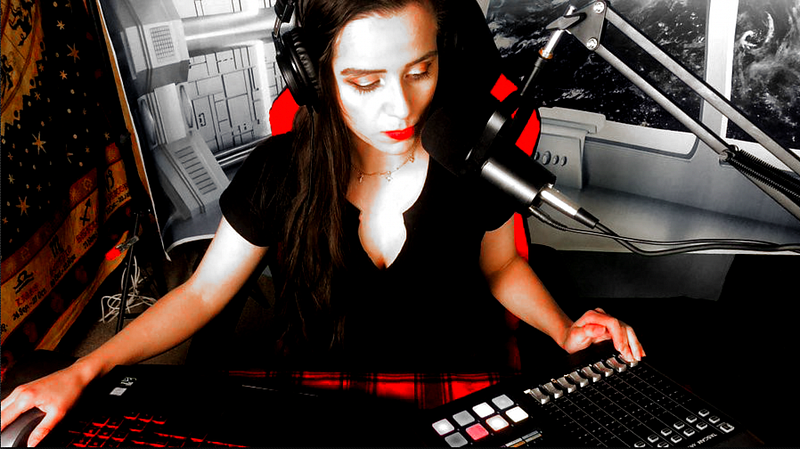
Cristina Gomez is the host of the podcast ‘Shifting the Paradigm,” where she has interviewed some of the top names in ufology.

It’s easy to imagine potential “big picture” lines of historical inquiry in a post-Disclosure world — depending, of course, on what is actually disclosed.

The most obvious: What does the U.S. Government know, and for how long has it known it? What is known about what this intelligent “other,” whatever it may be, is doing here in the first place?

What really happened at Roswell in 1947? Are there other Roswells we don’t know about? To what extent have the world’s religions been a product of or influenced by this engagement with whatever is engaging with us? What’s the relationship between the UAP phenomenon and human consciousness? And how does bizarre, Skinwalker Ranch-type shit fit into it?

The role of the news media, of course, will also be subject to scrutiny. Along those lines, historians and sociologists would do well to look at the final six months of 2021 in order to understand how and why such an extraordinary and important story could have been so visible, and yet ignored by the press?

That story, which has been sketched by “conspiracy theorists” but has by degrees been at least validated, if not proven, by a few journalists and on-the-record government sources, is that the U.S. and other governments have over the decades retrieved what appear to be alien craft and conspired to keep that fact a secret while they raced to reverse-engineer the technology.

This “secrecy” notwithstanding, the broad outlines of the story have been in plain sight for decades, camouflaged by the stigma associated with it. That’s no accident. The government in the mid-20th century deliberately set out to disparage UFOs and marginalize those who “believe” in them. Insofar as that message resonated through America’s newsrooms, it worked.

The taboo was shattered in December 2017 by The New York Times, and while mainstream outlets were quick to jump on the bandwagon (much to the vocal consternation of Skeptical Inquirer magazine), coverage tended to be cautious and repetitive — a kind of tippy-toe pack journalism.

Meanwhile, ufologists and alternative media journalists kept digging, bringing sharper focus and more detail to the picture sketched in the “respectable” media.

And yet, still, only a few are looking.

The public can hardly be blamed for not paying attention to this, and they don’t. You could ask hundred people on any street corner in America who Luis Elizondo is and you might get one or two who know anything about him. His 60 Minutes interview this year got more than 10 million YouTube views, but excluding repeat views, that’s less than three percent of the U.S. population.

Most of America has moved on. Aside from the personal business of their daily lives, most people are talking about supply lines, Alec Baldwin, Ghislaine Maxwell’s trial, school shootings, vaccines, Omicron, Christmas plans, the January 6th investigation, etc.

Meanwhile, month after month, pieces of what Australian investigative journalist Ross Coulthart calls “the biggest story of our time” dribble out into the blogosphere and podcastland, available to anyone with a cell phone or laptop but effectively ghettoized into irrelevance.

Journalists like Coulthart and Leslie Kean are among the exceptions to the rule, of course. But so far, the story is being tugged into the daylight not so much in mainstream media outlets as it is in informal and fascinating podcast conversations led by guerilla journalists like Cristina Gomez, Zac Chichy, Curt Jaimungal, and dozens more who are doing what professional reporters ought to be doing: Getting informed, credible sources to go on the air and talk about what they know on the record.

The contrast could not be more striking.

Elizondo and U.S. Navy pilots Alex Dietrich and Dave Fravor got a few minutes on 60 Minutes this summer, but then it was on to the next story. On CNN, Jake Tapper listened to Sen. Mitt Romney unambiguously rule out all prosaic explanations for those UFO cases that continue to perplex the Pentagon but, incredibly, didn’t ask a follow-up question. At this year’s Ignatius Forum on “Our Future in Space,” the Washington Post’s wholly unprepared David Ignatius passed up an opportunity to follow up with Director of National Intelligence Avril Haines when she gave him an open glide path to inquire about the extraterrestrial question — an epic fail that will likely one day haunt him.
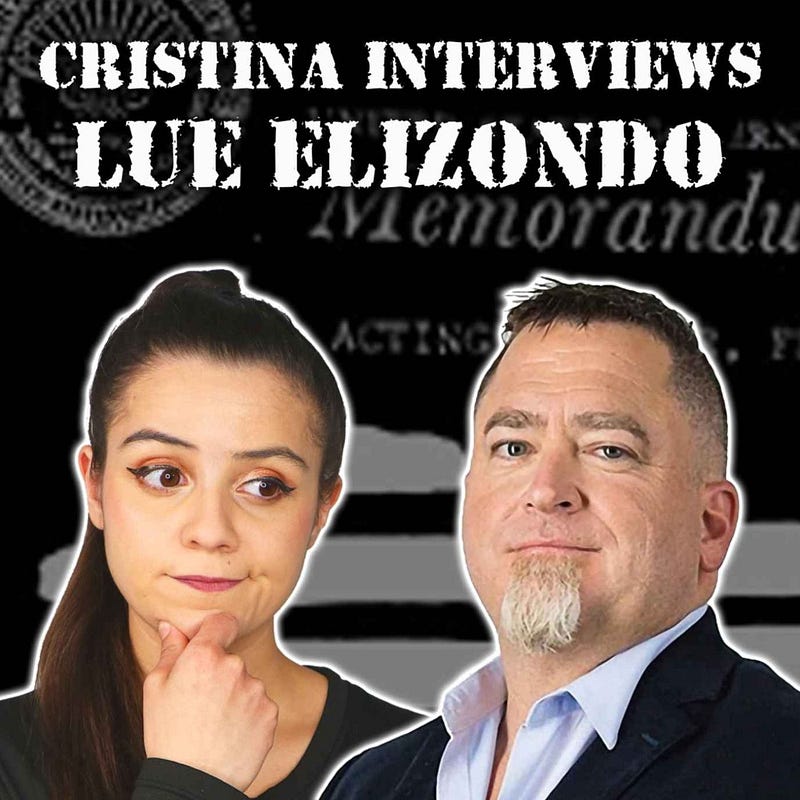
Luis Elizondo was on screen for less than three minutes on 60 Minutes this year. Cristina Gomez put him on screen for 67 minutes. Guess who got the better interview?

Contrast that with a millennial who maybe picks up a few bucks on Patreon for a podcast with a few hundred or maybe even a few thousand listeners — and they put Elizondo in the hot-seat for an hour and a half and he proceeds to unpack what amounts to an alternate history of humanity.

On CBS, Elizondo appeared in the 13-minute 60 Minutes segment in May for barely three minutes. Suppose CBS, or another flagship show like PBS’s Frontline, had given him a full hour to say some of the things he’s said on podcasts that have a fraction of the audience — how might that have changed the landscape of ufology?

It isn’t uncommon for news anchors to interview journalists who specialize in their given field, so imagine how the conversation would blow up if Coulthart found himself being interviewed on American TV by George Stephanopoulos or Jake Tapper about his UFO work, and he said this:

“I do believe that the technology that is in possession of the United States has been deliberately divested to private aerospace. I know this is a controversial allegation, but I think that there’s been a deliberate attempt by certain sections of your military and intelligence services to avoid accountability and transparency and this is what they’re worried about. They’ve actually committed crimes; they’ve avoided admitting to oversight committees of the US Congress that there is technology that has been quietly hived off into private aerospace companies.”

Imagine the political uproar in Congress and the wild rollercoaster of Sunday morning talk shows, followed by viral video clips on social media, that would ensue if he appeared on NBC’s Meet the Press and said this:

“I’m aware of claims that there is a group of ex-military who go around the world investigating the phenomena and my understanding is they’re not paid by any government, they’re paid by a private aerospace company based out of Long Beach, California. I’ve spoken to former military personnel who claim to have been part of that body.”

The only part of that scenario one must imagine is that a cable news anchor with the audience enjoyed by Stephanopoulos or Tapper had the tenacity and intellectual curiosity to ask about it.

But they didn’t. Cristina Gomez did, on her podcast Shifting the Paradigm, just before Thanksgiving. It’s unlikely that Tapper or any of his TV colleagues have even heard of Gomez, so the story remains siloed in the electronic aether.

At some point, this dam must break. It could happen later today, a week from now, or next summer. There’s too much public momentum, with high-visibility developments like the struggle between the Pentagon and those supporting the Gillibrand amendment, for the UFO genie to be stuffed back in the bottle for another seventy years.

Far too much work in ufology has been done for legacy media to not be late to this party. Even if the Philadelphia Inquirer has had a team working the story hard non-stop since January 2018 and drops a bombshell next week, virtually no one in the mainstream press will be able to say “First!”

No, it’s the the new generation of ufology activists — standing on the shoulders of researchers like Stanton Friedman, Grant Cameron, Robert Hastings and George Knapp — who got there first. They’re already there, waiting for their higher-paid colleagues in the mainstream media to realize they missed a cosmic Watergate.

Trail of the Saucers is edited by writer/producer Bryce Zabel and published by Stellar Productions. Zabel co-hosts the popular new podcast Need to Know with Coulthart and Zabel that can be found on all major platforms.

HomepageYouTubePodcast
Podcasting
Millennials
Journalism
Ufos And Aliens
Culture
Recommended from ReadMedium