avatarPromptDervish

Free AI web copilot to create summaries, insights and extended knowledge, download it at here

8750

Abstract

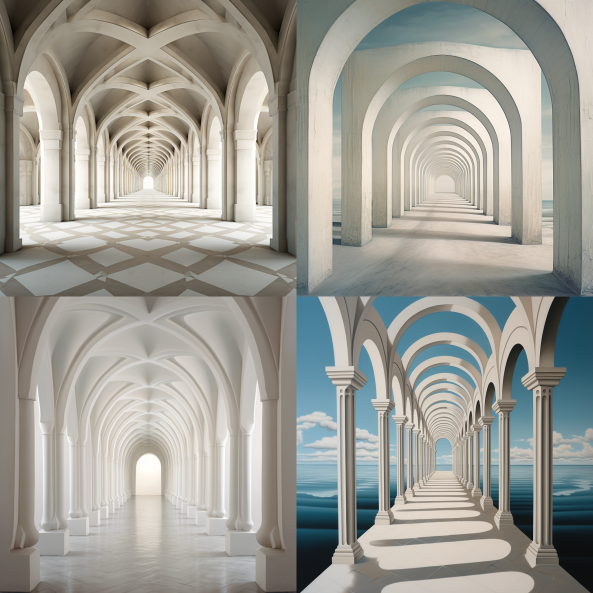
4aYEru_bKB0pWQz0g.png"><figcaption><b>A series of arches converging towards a vanishing point</b></figcaption></figure><h2 id="5d6d">Horizon Line: Level line where land or water and sky meet.</h2><figure id="0c33"><img src="https://cdn-images-1.readmedium.com/v2/resize:fit:800/1*N5NqFV7j5s1wYV0yFn5Z1Q.png"><figcaption><b>A road with telephone poles and a disappearing horizon line</b></figcaption></figure><h2 id="c1b3">Aerial Perspective: Using color and clarity to show distance.</h2><figure id="0370"><img src="https://cdn-images-1.readmedium.com/v2/resize:fit:800/1*5z1U_i_jptnlhM2Emn0O1w.png"><figcaption><b>A mountain range rendered in aerial perspective; the colors fading into blue as they recede into the distance</b></figcaption></figure><figure id="079e"><img src="https://cdn-images-1.readmedium.com/v2/resize:fit:800/1*XSHLt2C5YVrwn-9oZc5iCQ.png"><figcaption><b>A terraced rice field; its vibrant colors fading into the distant paddies; portraying the beauty of aerial perspective</b></figcaption></figure><h2 id="c043">Orthogonal Lines: Lines that appear to recede toward a vanishing point.</h2><figure id="51fd"><img src="https://cdn-images-1.readmedium.com/v2/resize:fit:800/1*7QFXIdsr5qChPt7jKuDIAg.png"><figcaption><b>Interior of a cathedral; capturing the grandeur of towering pillars using orthogonal lines</b></figcaption></figure><figure id="1113"><img src="https://cdn-images-1.readmedium.com/v2/resize:fit:800/1*DeniXP5U6UIJNBshfQUI3g.png"><figcaption><b>A contemporary office space; where orthogonal lines provide structure and order</b></figcaption></figure><h2 id="7f19">Foreshortening: Object or distance appears shorter than it is.</h2><figure id="1b88"><img src="https://cdn-images-1.readmedium.com/v2/resize:fit:800/1*G7LRWekH2Qzb-_b0OK6e8w.png"><figcaption><b>A fisherman reeling in a substantial catch; emphasizing the dramatic foreshortening of his arm</b></figcaption></figure><figure id="6626"><img src="https://cdn-images-1.readmedium.com/v2/resize:fit:800/1*yVmzX5xIjWcxhqtChI1rrg.png"><figcaption><b>The adrenaline rush of a car racing directly towards the viewer; utilizing foreshortening for impact</b></figcaption></figure><figure id="b19a"><img src="https://cdn-images-1.readmedium.com/v2/resize:fit:800/1*ZDL3zgyyuh22LNvWFGZ9xw.png"><figcaption><b>The excitement of a dog leaping towards the camera; employing foreshortening to enhance the depth</b></figcaption></figure><h1 id="281a">Camera Angles and Views</h1><h2 id="569c">Bird’s-Eye View: High above view, showing a large area. High-angle-shot also works nicely.</h2><figure id="95b3"><img src="https://cdn-images-1.readmedium.com/v2/resize:fit:800/1*dUvbtKySlkygyloHREmyWg.png"><figcaption><b>A cathedral from a bird’s-eye view; intricate rooftops and spirals forming a complex pattern</b></figcaption></figure><figure id="ee7c"><img src="https://cdn-images-1.readmedium.com/v2/resize:fit:800/1*B-5Z0wsG63P5HxCtV94GuA.png"><figcaption><b>A bustling city street in high-angle shot; looking down upon the crowds and traffic</b></figcaption></figure><figure id="c785"><img src="https://cdn-images-1.readmedium.com/v2/resize:fit:800/1*Q6CDMKgQAkNy2vbyDevIww.png"><figcaption><b>A fantasy world with floating islands; mystical creatures; and breathtaking landscapes; all in a bird’s-eye view</b></figcaption></figure><h2 id="ee56">Worm’s-Eye View or low-angle-shot: Ground-level view looking up.</h2><figure id="5777"><img src="https://cdn-images-1.readmedium.com/v2/resize:fit:800/1*t_Du_hjwcyZAGdskxKyT8g.png"><figcaption><b>The majesty of ancient redwood trees; their canopies stretching far above; as seen from a worm’s-eye view</b></figcaption></figure><figure id="2fa7"><img src="https://cdn-images-1.readmedium.com/v2/resize:fit:800/1*FYXyX0eH9FpxewTVMYVgHA.png"><figcaption><b>A movie scene captured in low-angle shot; making the characters appear larger and more imposing</b></figcaption></figure><h2 id="e3b0">First-person Perspective: as seen from the viewer point of view.</h2><figure id="5b33"><img src="https://cdn-images-1.readmedium.com/v2/resize:fit:800/1*_XLMH0ptWGHoohQOGMVL8w.png"><figcaption><b>An old room in first-person perspective; as if the viewer is walking into it; the details coming into focus</b></figcaption></figure><h2 id="2f13">Fish-Eye Lens: Strong visual distortion for wide panoramic or hemispherical image.</h2><figure id="6127"><img src="https://cdn-images-1.readmedium.com/v2/resize:fit:800/1*Vp37ZCf2gPljv0SjdT1EPQ.png"><figcaption><b>A whimsical and distorted perspective of a carnival with colorful lights and rides; as seen through a fish-eye lens</b></figcaption></figure><figure id="d506"><img src="https://cdn-images-1.readmedium.com/v2/resize:fit:800/1*9iwwh2GboTo8Z2C-q203gg.png"><figcaption><b>An ancient castle displayed in fish-eye lens; its towers bending towards the sky</b></figcaption></figure><h2 id="caf9">Panoramic: Unbroken view of the entire surrounding area.</h2><p id="a846">I should note here that panoramic is best done in a landscape aspect ratio like —ar 16:9 or — ar 3:2 to get a better effect. If you have an image where you did not use an aspect ratio, you can try the new Pan features under the upscaled image to pan the image in one of the four directions. This will allow you increase width or height. See my previous articles about his feature. Zoom out can also be useful.</p><figure id="496b"><img src="https://cdn-images-1.readmedium.com/v2/resize:fit:800/1*PS3YW0KfPjqgSWYJGSrqwA.png"><figcaption><b>A mesmerizing panoramic vista of a city skyline; illuminated by the golden glow of sunset</b></figcaption></figure><figure id="9728"><img src="https://cdn-images-1.readmedium.com/v2/resize:fit:800/1*rg-JncTTIj8q3W4zVPDuBg.png"><figcaption><b>A sweeping landscape captured in panoramic view; providing a broad scope of the mountains; valleys; and sky</b></figcaption></figure><h2 id="e82f">Parallax: The effect whereby the position or direction of an object appears to differ when viewed from different positions.</h2><figure id="67ec"><img src="https://cdn-images-1.readmedium.com/v2/resize:fit:800/1*hoOjOvDwoJLFJKu7EYmLUg.png"><figcaption><b>An explanation of the parallax effect in photography and its use in creating depth perception</b></figcaption></figure><figure id="f038"><img src="https://cdn-images-1.readmedium.com/v2/resize:fit:800/1*QpXsqrbTELGGwZB3CVtnaQ.png"><figcaption><b>An artistic depiction of the parallax effect using geometric shapes and patterns</b></figcaption></figure><figure id="0287"><img src="https://cdn-images-1.readmedium.com/v2/resize:fit:800/1*1_4_HUObItlpDRgKEqOouA.png"><figcaption><b>A visual experiment demonstrating how parallax creates the illusion of depth</b></figcaption></figure><h1 id="bf40">Advanced Concepts</h1><h2 id="2ebd">Isometric Perspective: Equal foreshortening along each axis.</h2><figure id="b921"><img src="https://cdn-images-1.readmedium.com/v2/resize:fit:800/1*NvpW8djk0qYs95PciMBq0Q.png"><figcaption><b>A bustling marketplace captured in isometric perspective; allowing viewers to appreciate the depth and organization</b></figcaption></figure><figure id="5a72"><img src="https://cdn-images-1.readmedium.com/v2/resize:fit:800/1*OqGgtG18DGqpW42Y3XxrMw.png"><figcaption><b>A cityscape with structures in a cube-like; isometric perspective</b></figcaption></figure><figure id="04e2"><img src="https://cdn-images-1.readmedium.com/v2/resize:fit:800/1*1B1notOLSuj2k5IaHy3nFA.png"><figcaption><b>A building layout with rooms displayed in isometric view</b></figcaption></figure><h2 id="53d2">Oblique Projection: Simple type of graphical projection for two-dimensional images.</h2><figure id="2848"><img src="https://cdn-images-1.readmedium.com/v2/resize:fit:800/1*p7tLIakp9IwKq1rSpbT4hw.png"><figcaption><b>A skyscraper seen from the oblique angle; its height and design emphasized</b></figcaption></figure><figure id="e1e5"><img src="https://cdn-images-1.readmedium.com/v2/resize:fit:800/1*qt93VTgZ_tDQ_iVvlCiXtQ.png"><figcaption><b>Oblique Projection</b></figcaption></figure><figure id="f429"><img src="https://cdn-images-1.readmedium.com/v2/resize:fit:800/1*jqjgK-BP4fyoQzOH7_4fRw.png"><figcaption><b>A simple oblique projection illustration of a classic chair design</b></figcaption></figure><h2 id="a151">Chiaroscuro: Strong contrasts between light and dark for volume illusion.</h2><ul><li>I have touched on this great all-purpose word in a few of the articles now. It is excellent for adding shadow and depth to just about anything.</li></ul><figure id="9357"><img src="https://cdn-images-1.readmedium.com/v2/resize:fit:800/1*5eRFNUX8YBuBuJqpmmDKvg.png"><figcaption><b>A dramatic black-and-white photograph emphasizing chiaroscuro lighting</b></figcaption></figure><figure id="a494"><img src="https://cdn-imag

Options

es-1.readmedium.com/v2/resize:fit:800/1*yl2GaTMuFlF4wCfJsOZg2g.png"><figcaption><b>A classical painting featuring chiaroscuro techniques; with strong contrasts between light and shadow</b></figcaption></figure><figure id="e37e"><img src="https://cdn-images-1.readmedium.com/v2/resize:fit:800/1*oPXaKLPl6qN1xF2yQK-9Kg.png"><figcaption><b>A film still from a noir movie; showcasing the signature chiaroscuro cinematography</b></figcaption></figure><figure id="2af8"><img src="https://cdn-images-1.readmedium.com/v2/resize:fit:800/1*EspAK2wdknRCon_fwoG5EA.png"><figcaption><b>A digital artwork using chiaroscuro to create a three-dimensional illusion</b></figcaption></figure><h2 id="3478">Z-Axis: The axis denoting depth in a 3D coordinate system.</h2><ul><li>I got the impression that Midjourney understands that the Z-axis means vertical, but I cannot say that it does more than that without more testing.</li></ul><figure id="7d73"><img src="https://cdn-images-1.readmedium.com/v2/resize:fit:800/1*_3XLFwSPVuOEuIqEWClHWA.png"><figcaption><b>An infographic explaining the concept of the z-axis in 3D graphics and design</b></figcaption></figure><h2 id="273d">X-Y Plane: This term is intended to specify a plane with width and height but no depth.</h2><ul><li>However, I’ve found that it often misfires, generating images of airplanes about 80% of the time — even when adding “no airplane” to the prompt. I had some success with “x-axis” and “y-axis,” but not consistently enough to recommend these terms for image adjustment. As always, your experience may vary. Using “2D” as a substitute for “X-Y Plane” seems to yield more reliable outcomes. To refine your prompt further, pair “2D” with descriptors like “2D-drawing,” “2D-illustration,” or “2D-schematic.” If you prefer a flat, organized layout, consider adding the term “knolling” to your prompt.</li></ul><figure id="8605"><img src="https://cdn-images-1.readmedium.com/v2/resize:fit:800/1*xUZ2U5kxzY4UMux8AuHOpQ.png"><figcaption><b>A video game level design emphasizing obstacles and objectives on the x-y plane</b></figcaption></figure><figure id="75ba"><img src="https://cdn-images-1.readmedium.com/v2/resize:fit:800/1*Amp0-bOehqK3ad3GhApkEw.png"><figcaption><b>An interior design concept focusing on furniture arrangement within the x-y plane</b></figcaption></figure><figure id="a768"><img src="https://cdn-images-1.readmedium.com/v2/resize:fit:800/1*6mleZ-I5zg4Vj_EXVEtY4g.png"><figcaption><b>A comic book page illustrating action sequences and character interactions within the x-y plane</b></figcaption></figure><figure id="735e"><img src="https://cdn-images-1.readmedium.com/v2/resize:fit:800/1*eUliqSFMIpst8IreeM9WOA.png"><figcaption><b>a sewing kit, 2d-illustration</b></figcaption></figure><figure id="b848"><img src="https://cdn-images-1.readmedium.com/v2/resize:fit:800/1*fGTm8qIOsnhU_cCrlvEpzA.png"><figcaption><b>a sewing kit, 2d-drawing</b></figcaption></figure><figure id="2dff"><img src="https://cdn-images-1.readmedium.com/v2/resize:fit:800/1*Lx0TIgOeT9L-4Ft8uHPG6g.png"><figcaption><b>a sewing kit, 2d-schematic</b></figcaption></figure><figure id="a5b1"><img src="https://cdn-images-1.readmedium.com/v2/resize:fit:800/1*jcSbfyMeXPwjMfyZQWXRww.png"><figcaption><b>a sewing kit, laid-flat</b></figcaption></figure><figure id="bcab"><img src="https://cdn-images-1.readmedium.com/v2/resize:fit:800/1*hMN56Zvfktyhc67aRwHidw.png"><figcaption><b>a sewing kit, knolling</b></figcaption></figure><h2 id="2eac">Rule of Thirds</h2><ul><li>In my testing I was completely unimpressed by anything I got with the use of the rule of thirds. As often as not I ended up with oddball lines on my images and it was useless for getting the subject out of the center of the image, sadly.</li></ul><figure id="41df"><img src="https://cdn-images-1.readmedium.com/v2/resize:fit:800/1*gQKzi7LjkCrJRwfMe8ZNkg.png"><figcaption><b>A landscape painting following the Rule-of-Thirds; with the horizon line along the lower third — ar 2:1</b></figcaption></figure><h2 id="deb6">Proportion: Size relationship of parts to a whole.</h2><p id="44b4">This is an important item for artistic expression but I was unable to find a way to demonstrate it since Midjourney has such issues with scale. It does not work to say one thing twice the size of something else. Such equivalencies must be spelled out distinctly.</p><h2 id="ad23">Overlapping: Placing one object in front of another for depth.</h2><figure id="00ef"><img src="https://cdn-images-1.readmedium.com/v2/resize:fit:800/1*ig8sgV60Ol-I4tSP5rHCqA.png"><figcaption><b>An autumn forest scene with overlapping layers of trees.</b></figcaption></figure><h2 id="4834">Implied Lines: Lines created by positioning objects in sequence.</h2><figure id="c2c0"><img src="https://cdn-images-1.readmedium.com/v2/resize:fit:800/1*OzEFREQpKz6-RGkA6nHXtA.png"><figcaption><b>A row of dominoes set up to imply a line. (note how most are dice of varying size lol)</b></figcaption></figure><figure id="32bf"><img src="https://cdn-images-1.readmedium.com/v2/resize:fit:800/1*HNBbf3b-ulJmi2JM6YH_TQ.png"><figcaption><b>Implied lines of a mountain range leading to the horizon.</b></figcaption></figure><h2 id="52a1">Juxtaposition: Contrasting elements placed close together.</h2><p id="2f33">When requesting a “juxtaposition” from Midjourney, the platform often combines elements in ways that might not meet your expectations. Achieving a clear distinction between two unrelated subjects in your image generally requires careful and precise prompting. Unfortunately, there’s no quick fix for this — you’ll need to invest time in crafting your prompt to get the desired result.</p><h1 id="735c">Takeaways:</h1><p id="46d5"><b>Perspective is King: </b>Perspective-based terms offer a more reliable and versatile toolkit for guiding AI art algorithms. These terms allow for a systematic and predictable manipulation of spatial elements, giving artists greater control over the final output. Camera terms can work as well but may give more mixed results.</p><p id="96db"><b>Specificity Matters: </b>Being precise and descriptive in your prompts can be more rewarding. Given that these algorithms aren’t perfect, the more clearly you can describe what you want, the better the chances of receiving a satisfactory result. This holds true for complex effects like parallax, depth of field, or chiaroscuro.</p><p id="4d5e"><b>Trial and Error: </b>Like any other art form, it seems that mastery of generative AI art comes with experimentation. While certain terms like “Rule of Thirds” or “Scale” may not produce ideal results now, that doesn’t mean they won’t in future versions of Midjourney or with different phrasing.</p><p id="af7c"><b>AI’s Limitations: </b>It’s important to note that despite their sophistication, these algorithms still have limitations when it comes to fully understanding human concepts, especially those that require a level of artistic intuition or a deeply ingrained understanding of visual language.</p><h1 id="4514">In Conclusion</h1><p id="103f">Both photographic and perspective terminology have their places in the world of generative AI art. However, perspective terms tend to offer a more consistent and adaptable framework, especially valuable for those involved in iterative creative processes. Understanding the limitations and strengths of each approach can dramatically improve the quality of your generated art, making your artistic journey with AI more focused and rewarding.</p><p id="ec3a">If you found this article insightful, please don’t hesitate to give it a clap — or multiple claps if you really enjoyed it! Your feedback helps me to refine my content. Feel free to leave your thoughts in the comments section, and don’t forget to follow me for more in-depth articles like this one. Thank you for reading!</p><figure id="1f7e"><img src="https://cdn-images-1.readmedium.com/v2/resize:fit:800/1*E6vUdQLr4GheRjBMZKOgrQ.png"><figcaption><b>A digital artwork using chiaroscuro to create a three-dimensional illusion</b></figcaption></figure><h2 id="417c">A Message from AI Mind</h2><figure id="ecd4"><img src="https://cdn-images-1.readmedium.com/v2/resize:fit:800/0*5Wm7sOfTpe5DEbhg.gif"><figcaption></figcaption></figure><p id="0438">Thanks for being a part of our community! Before you go:</p><ul><li>👏 Clap for the story and follow the author 👉</li><li>📰 View more content in the <a href="https://pub.aimind.so/">AI Mind Publication</a></li><li>🧠 Improve your <a href="https://www.aimind.so/prompt-generator?utm_source=pub&amp;utm_medium=message">AI prompts effortlessly and FREE</a></li><li><b>🧰 Discover <a href="https://www.aimind.so/?utm_source=pub&amp;utm_medium=message">Intuitive AI Tools</a></b></li></ul></article></body>

Midjourney Explorations: #9 — Perspectives and Composition

Master generative AI art with tips on perspective and photography. Achieve creative precision and adaptability in your art journey.

Spatial Perspectives and Composition

In a previous article, Midjourney Explorations: #6 — Art Media, Photos!, I delved into the world of cameras, film, and aperture. However, I didn’t go into great depth on how to frame the content of your image or why perspective matters. Given the significance and complexity of the topic, it warrants its own focused discussion. This article aims to fill that gap by providing a comprehensive look at how perspective terms can offer more consistent and accurate results in generative AI art, as compared to strictly photographic terms.

Photographic Terms

As I’ve found in my Midjourney explorations, sticking solely to photographic terms can yield hit-or-miss outcomes, underscoring the importance of a broader viewpoint. When using photographic terminology like “Depth of Field,” “Fish-Eye Lens,” or “Bird’s-Eye View,” the results can be variable in Midjourney, especially when these terms are applied in non-photographic art. These terms are often specific to the medium of photography, and when applied to other visual mediums, they may lead to inconsistent or even perplexing outcomes. That said, if they are working for you, then by all means use them, just do not get stuck to them when other options are available.

Why Perspective Terms Work Better

Spatial perspectives serve as the backbone of visual art, enabling the representation of three-dimensional space on a two-dimensional medium. In Midjourney, these perspectives can drastically improve the resulting images by adding dimensions, depth, and a complex layering of elements in the visual field. They can also guide the AI in positioning objects and subjects to evoke specific emotional or thematic responses, enriching the viewer’s experience.

Basic Elements of Composition

Foreground: The area closest to the viewer.

Middleground: Between foreground and background.

Background: The area furthest from the viewer.

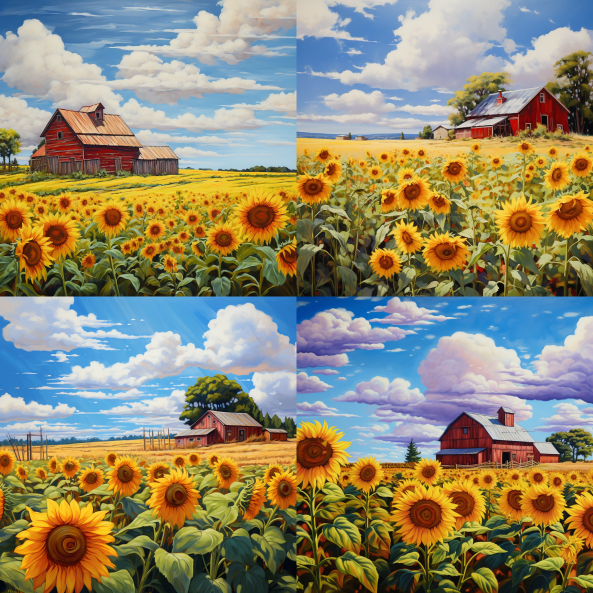
The depths can be used separately or together and do a fairly good job of placing things in the depth you may have in mind. I found that I had a bit more luck having multiple subjects when I positioned them using the three levels. It was not perfect but it did seem better than a regular prompt in my testing. Although trying to put a bunny in the foreground, a cat in the middleground, and a bear in the background got me three very weird hybrid critters! So, not perfect by any means.
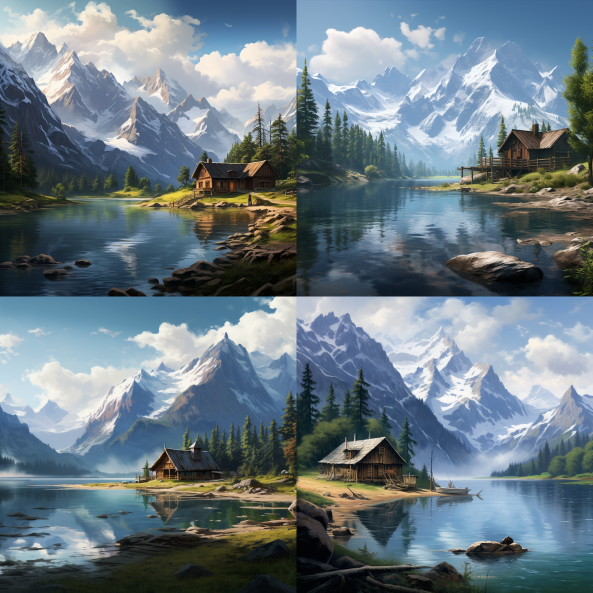
A serene lake in the foreground; a quaint wooden cabin in the middleground; and towering snow-capped mountains in the background
A field of blooming sunflowers in the foreground; a traditional red barn in the middleground; and a bright blue sky with fluffy clouds in the background
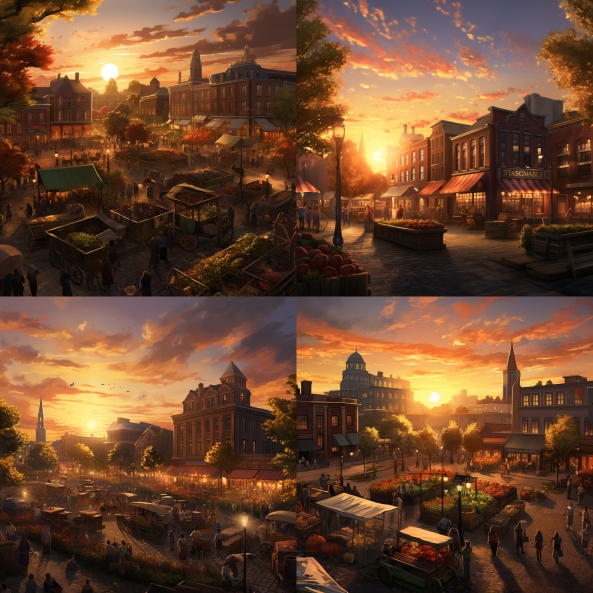
A bustling farmers market in the foreground; classic brick buildings in the middleground; and a glowing sunset in the background
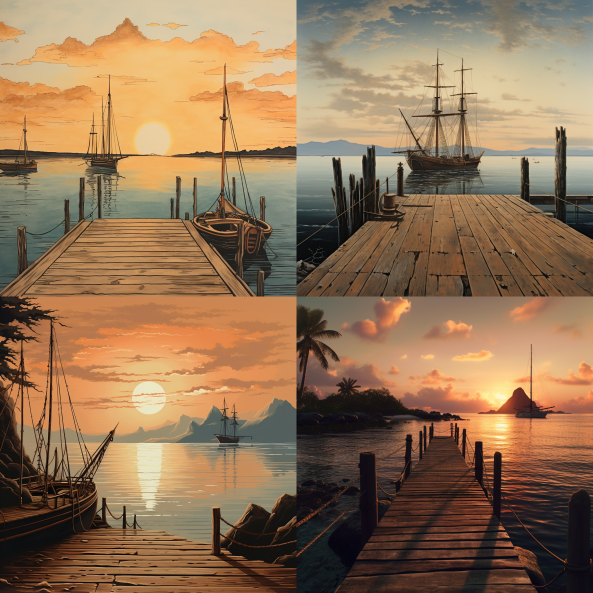
A wooden dock in the foreground; sailboats anchored in the middleground; and the silhouette of a distant island in the background
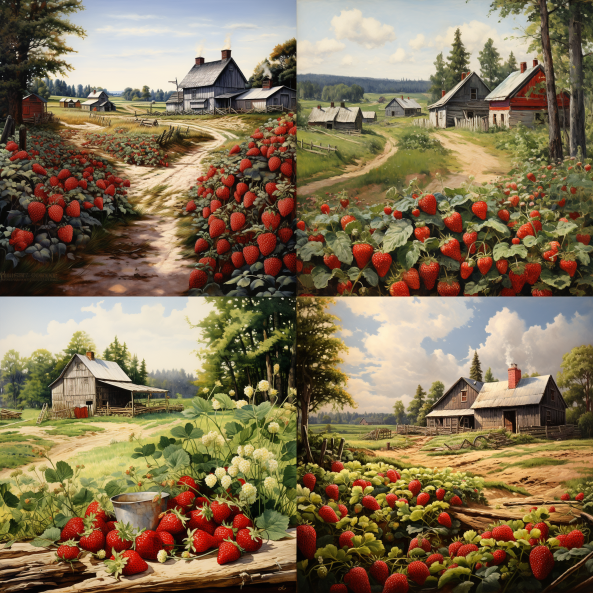
Freshly picked strawberries in the foreground; rows of berry bushes in the middleground; and a rustic barn in the background

Directionality: Placing objects above, below, left, right, behind and in front.

In Midjourney, achieving the desired placement and orientation can be challenging. While you may have some luck with commonly understood arrangements like ‘picture above a sofa,’ more specific setups, like placing a ‘cat under a sofa,’ are less reliable. To gain better control over the depth of your composition, it’s advisable to use spatial terms like ‘foreground,’ ‘middleground,’ and ‘background,’ as they tend to be more reliable than ‘in front of’ or ‘behind.’ When it comes to directional details, such as placing a knight’s sword in his left hand, the results can be unpredictable. If exact orientation is crucial, consider using the Vary(region) feature for manual adjustments or be prepared to generate multiple iterations.

Negative Space: Empty or open space around an object.

Positive Space: Area occupied by the main subject.

Use them together or separately, together seems to be more powerful.
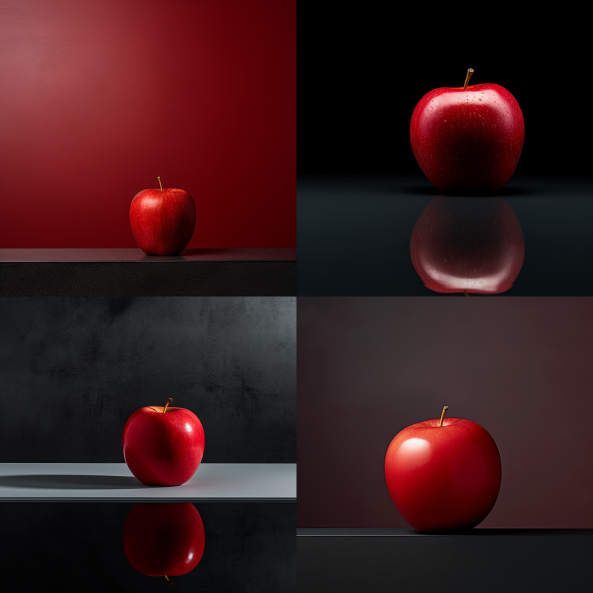
A single red apple in the positive space; with contrasting empty black negative space
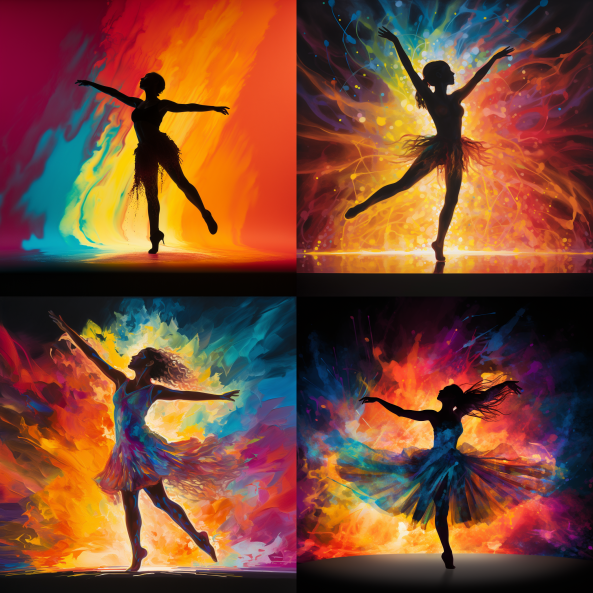
A silhouette of a dancer in positive space; surrounded by an aura of vibrant colors in the negative space
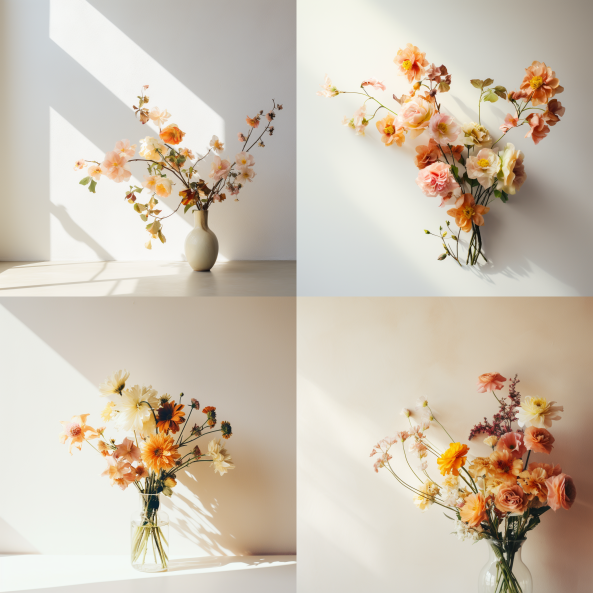
A bouquet of fresh flowers in the positive space; against a minimalist white negative space
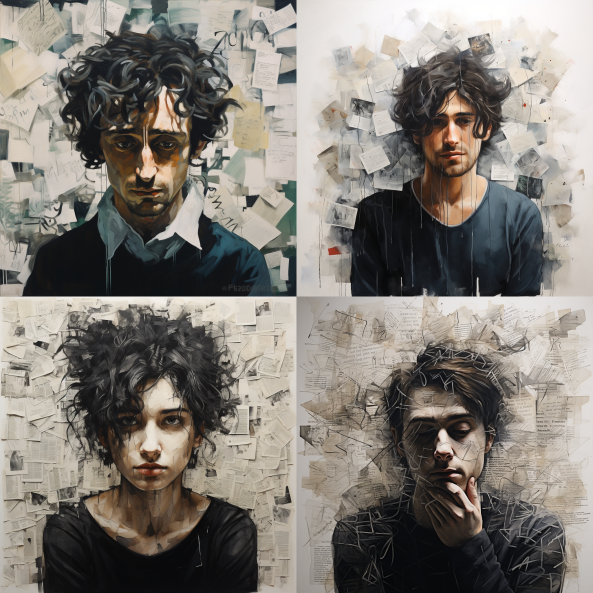
A portrait of a person in positive space; with the negative space composed of handwritten letters
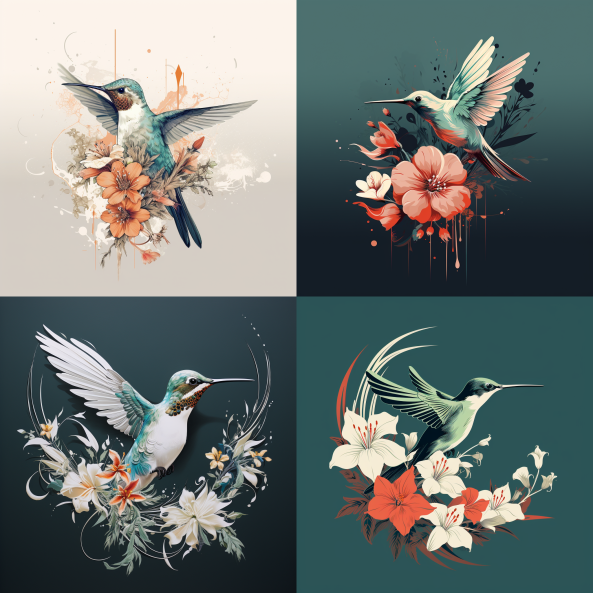
A hummingbird in the positive space; with a simple floral design in the negative space

Focal Point: Point in the composition drawing the viewer’s eye.

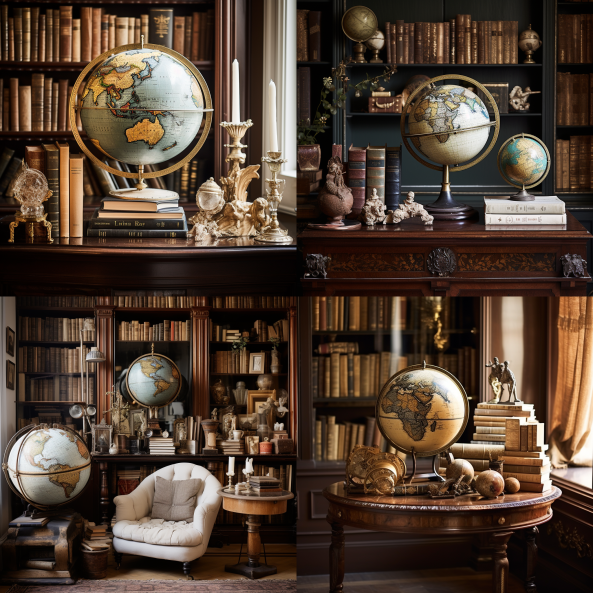
Midjourney has a tendency to put the subject at the center of every image, so this may not be as useful as the others.
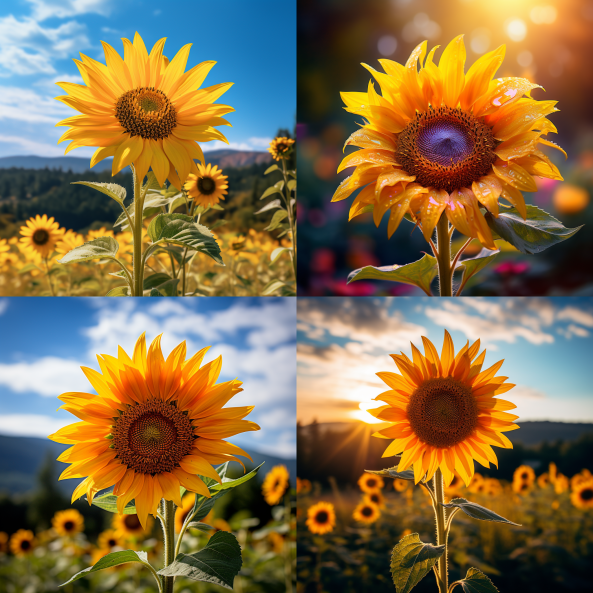
A vibrant sunflower as the focal point; with a blurred meadow as the backdrop
An antique globe as the focal point; set against a room filled with maps and books
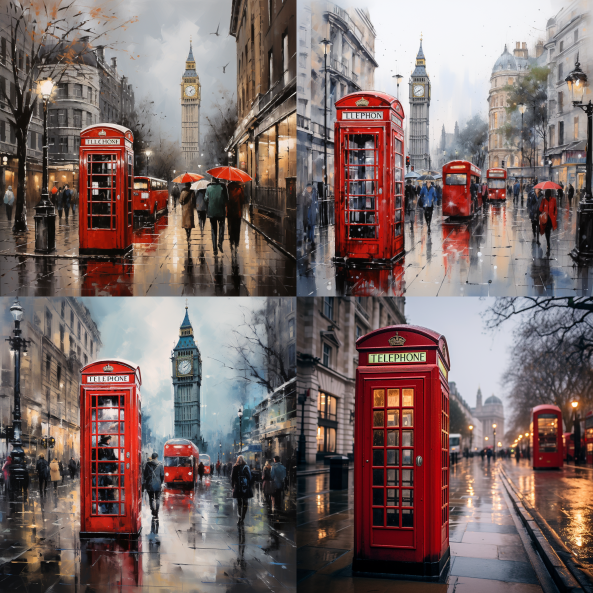
A classic red telephone booth as the focal point; in the midst of a bustling London street

Traditional Artistic Perspectives

Linear Perspective: Illusion of depth on a flat surface.
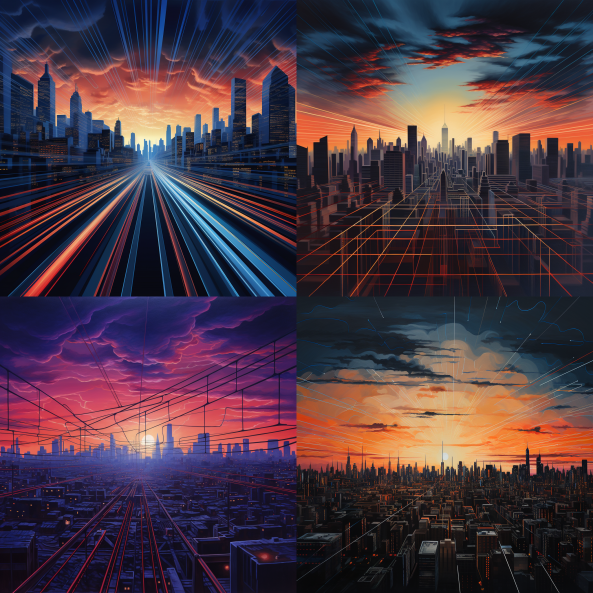
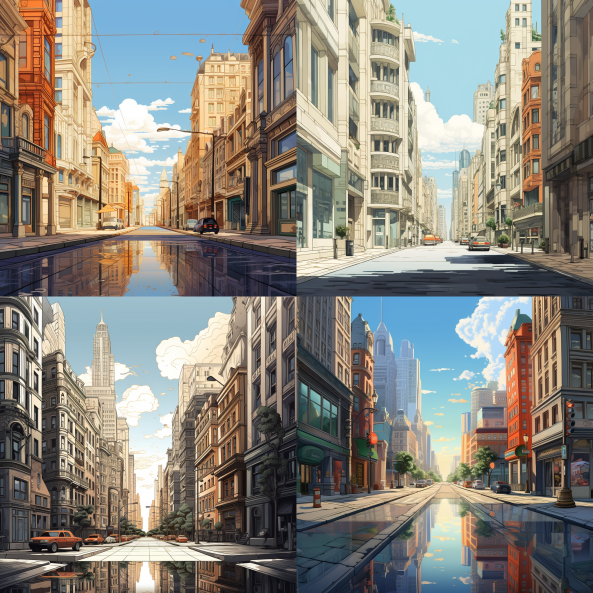
A city skyline at dusk in linear perspective; converging lines leading the eye to the horizon
A city street with receding buildings and clear linear perspective

Vanishing Point: Where parallel lines appear to converge.
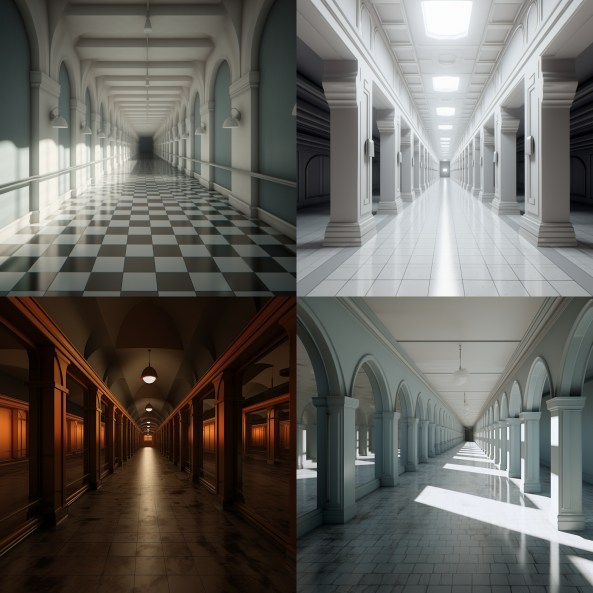
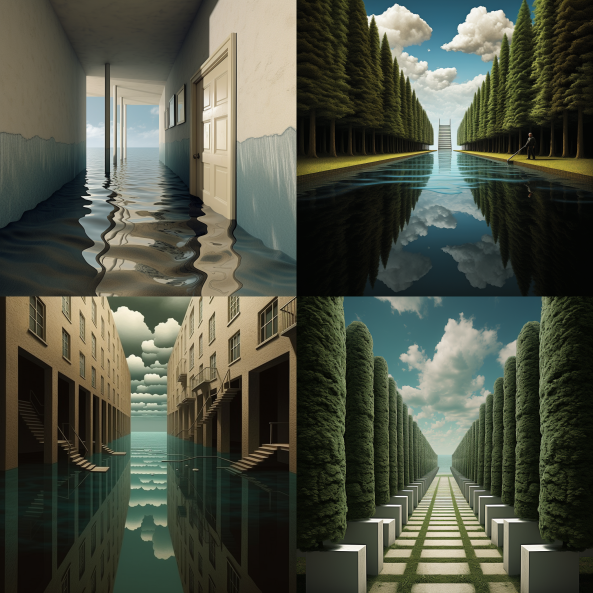
A scene with a vanishing point down a long corridor
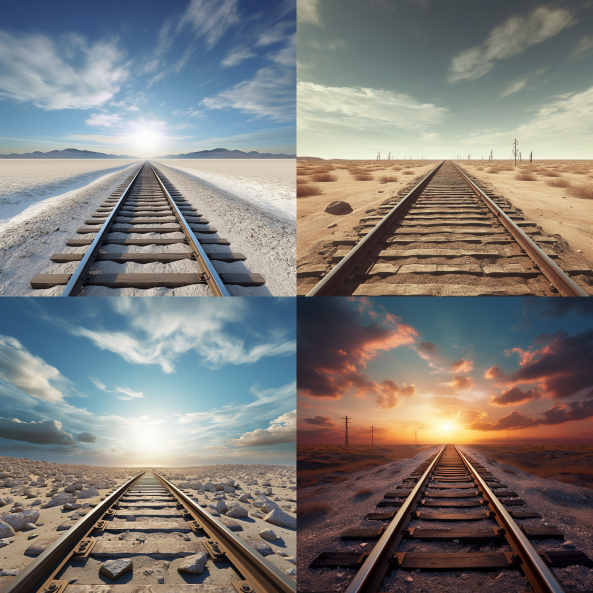
A railway track extending to a single vanishing point
A series of arches converging towards a vanishing point

Horizon Line: Level line where land or water and sky meet.
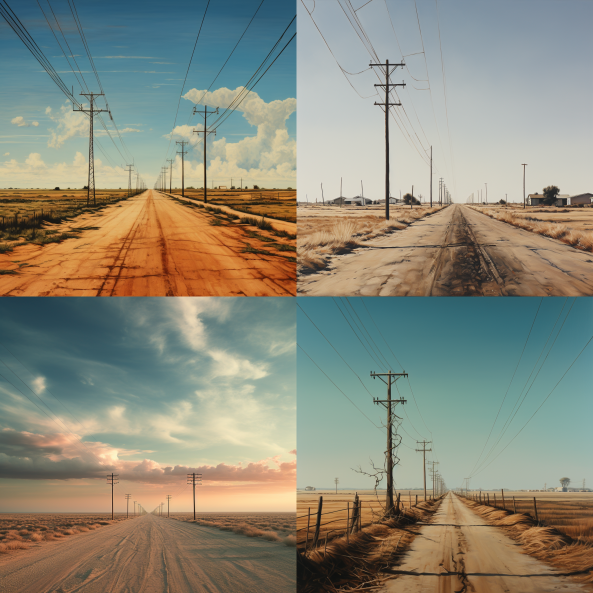
A road with telephone poles and a disappearing horizon line

Aerial Perspective: Using color and clarity to show distance.
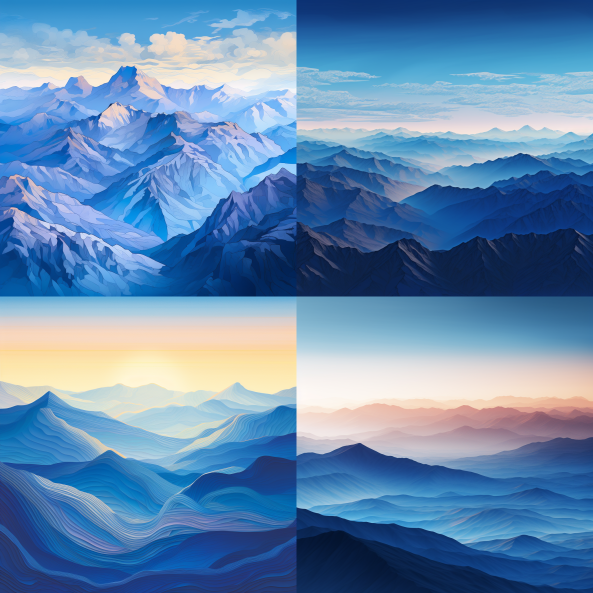
A mountain range rendered in aerial perspective; the colors fading into blue as they recede into the distance
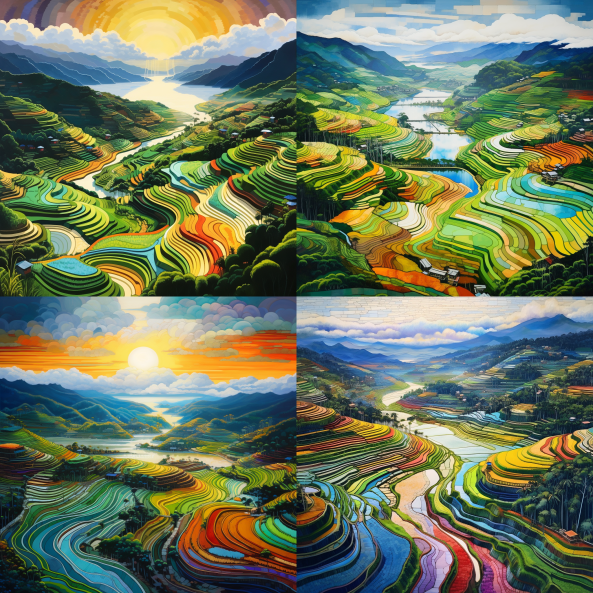
A terraced rice field; its vibrant colors fading into the distant paddies; portraying the beauty of aerial perspective

Orthogonal Lines: Lines that appear to recede toward a vanishing point.
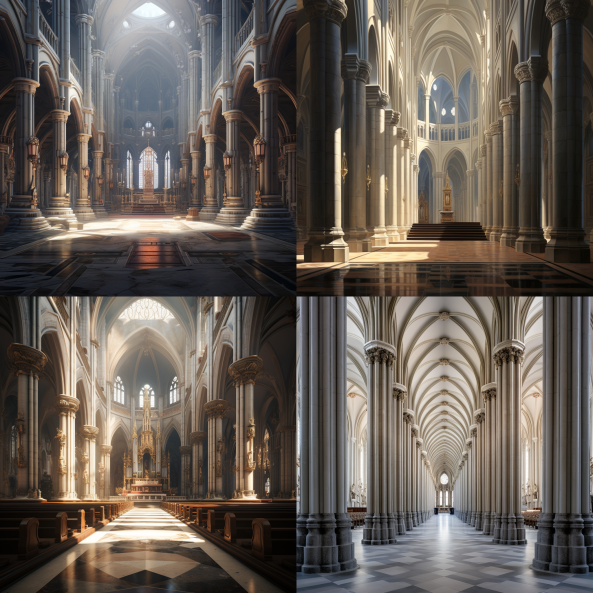
Interior of a cathedral; capturing the grandeur of towering pillars using orthogonal lines
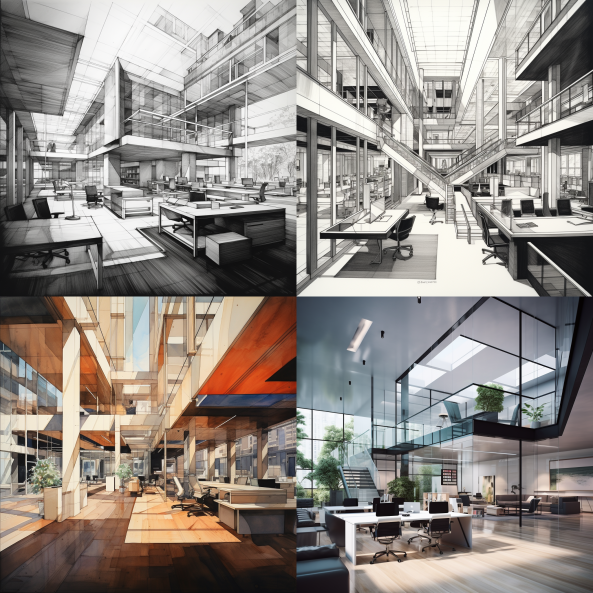
A contemporary office space; where orthogonal lines provide structure and order

Foreshortening: Object or distance appears shorter than it is.
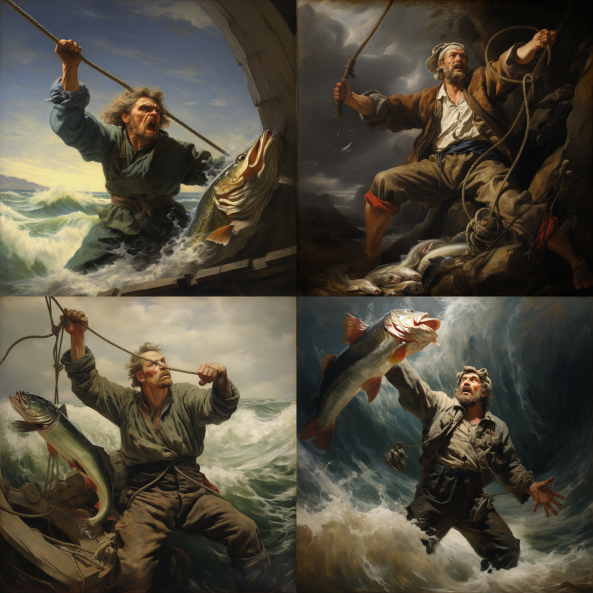
A fisherman reeling in a substantial catch; emphasizing the dramatic foreshortening of his arm
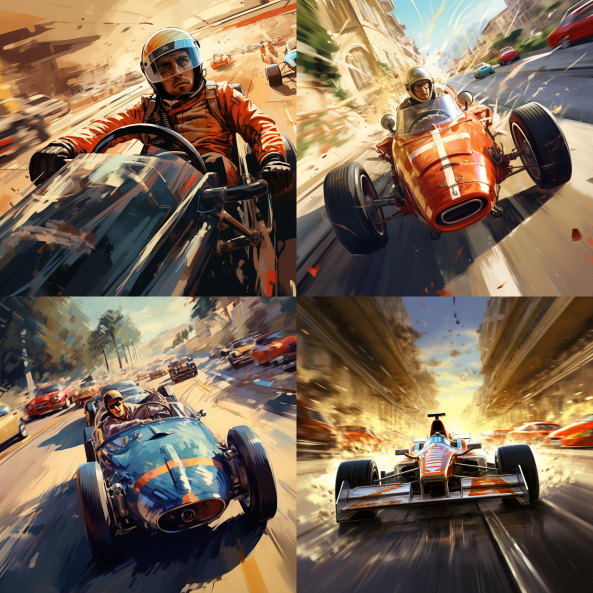
The adrenaline rush of a car racing directly towards the viewer; utilizing foreshortening for impact
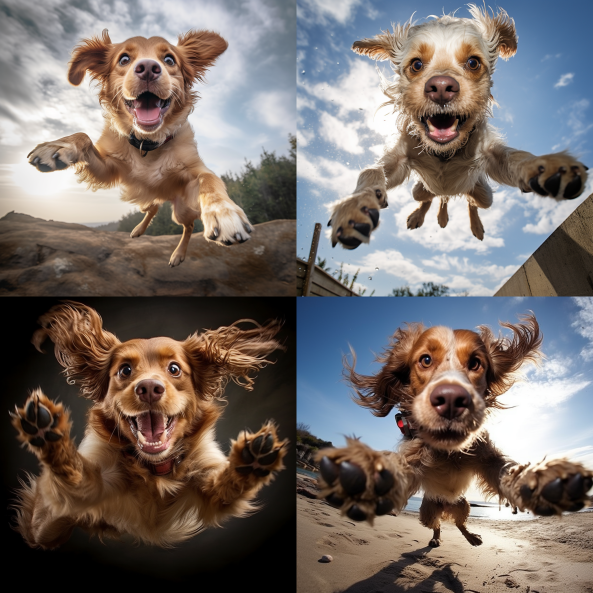
The excitement of a dog leaping towards the camera; employing foreshortening to enhance the depth

Camera Angles and Views

Bird’s-Eye View: High above view, showing a large area. High-angle-shot also works nicely.
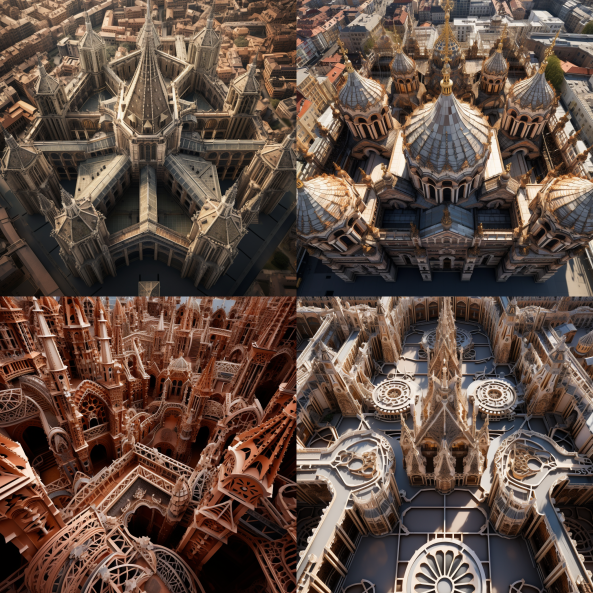
A cathedral from a bird’s-eye view; intricate rooftops and spirals forming a complex pattern
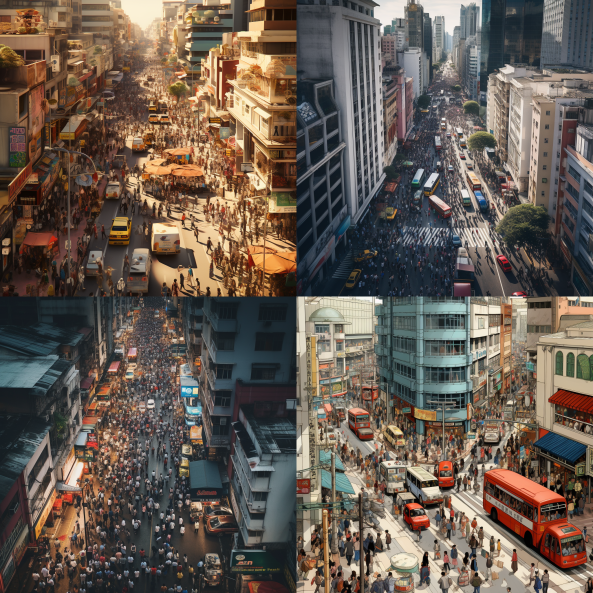
A bustling city street in high-angle shot; looking down upon the crowds and traffic
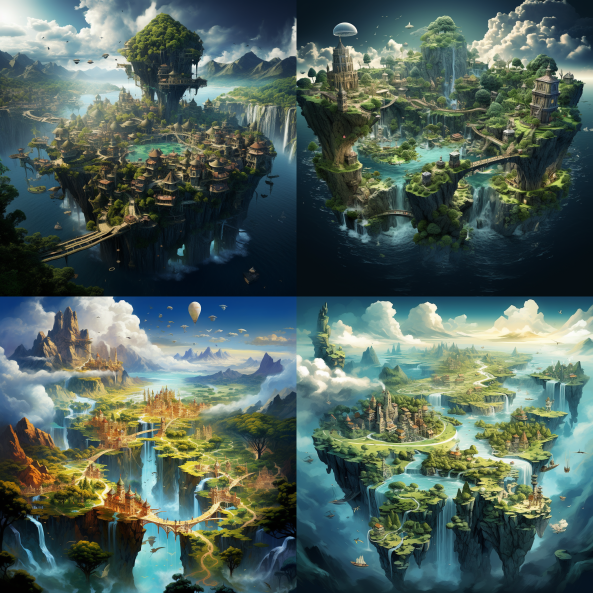
A fantasy world with floating islands; mystical creatures; and breathtaking landscapes; all in a bird’s-eye view

Worm’s-Eye View or low-angle-shot: Ground-level view looking up.
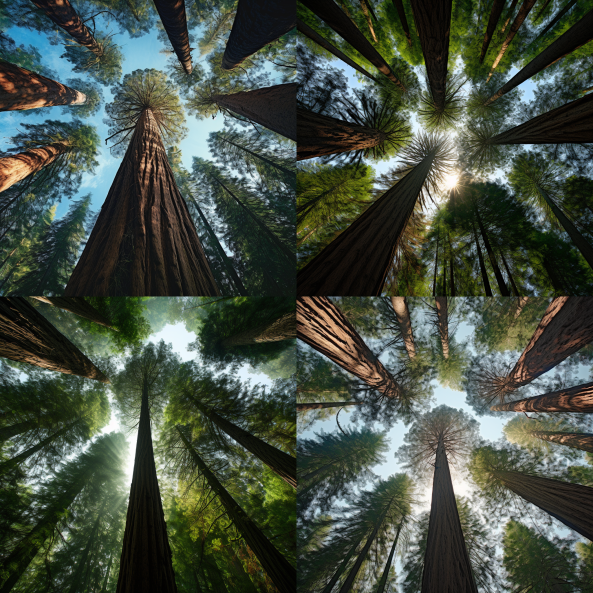
The majesty of ancient redwood trees; their canopies stretching far above; as seen from a worm’s-eye view
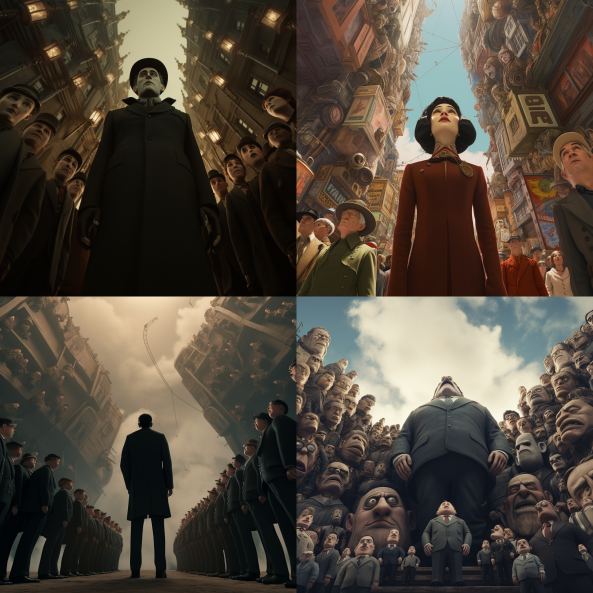
A movie scene captured in low-angle shot; making the characters appear larger and more imposing

First-person Perspective: as seen from the viewer point of view.
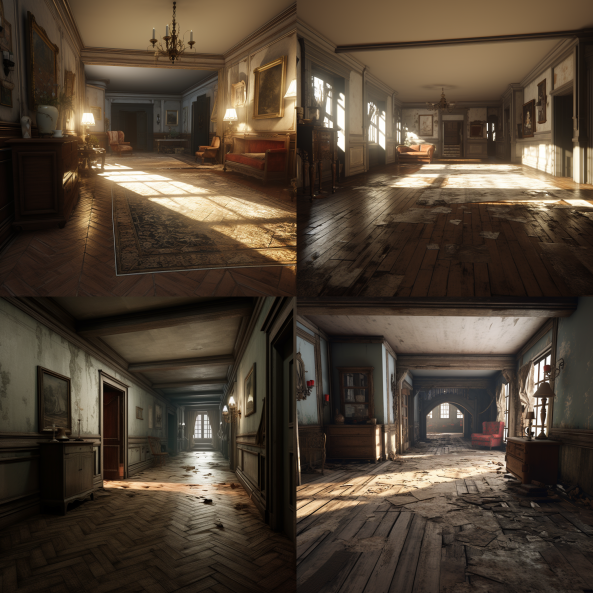
An old room in first-person perspective; as if the viewer is walking into it; the details coming into focus

Fish-Eye Lens: Strong visual distortion for wide panoramic or hemispherical image.
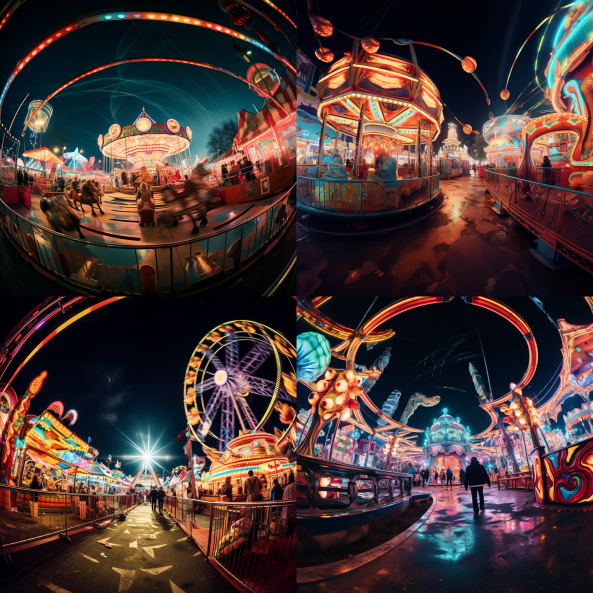
A whimsical and distorted perspective of a carnival with colorful lights and rides; as seen through a fish-eye lens
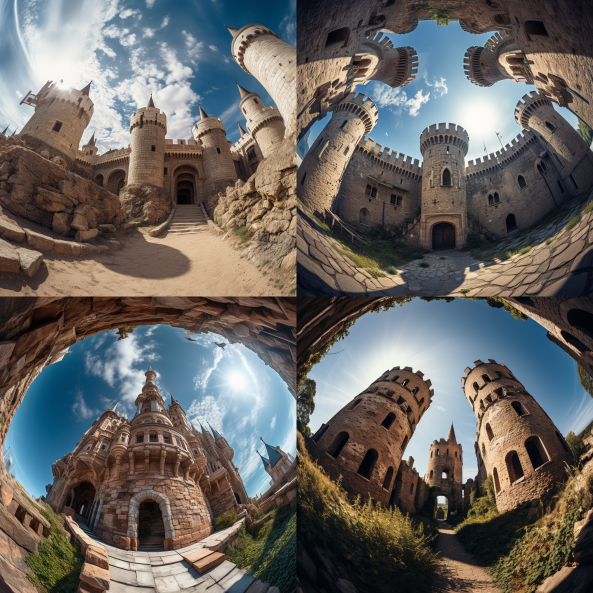
An ancient castle displayed in fish-eye lens; its towers bending towards the sky

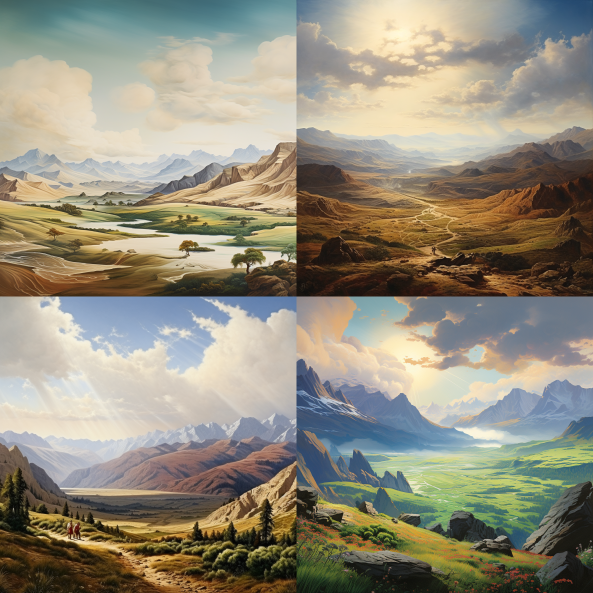
Panoramic: Unbroken view of the entire surrounding area.

I should note here that panoramic is best done in a landscape aspect ratio like —ar 16:9 or — ar 3:2 to get a better effect. If you have an image where you did not use an aspect ratio, you can try the new Pan features under the upscaled image to pan the image in one of the four directions. This will allow you increase width or height. See my previous articles about his feature. Zoom out can also be useful.
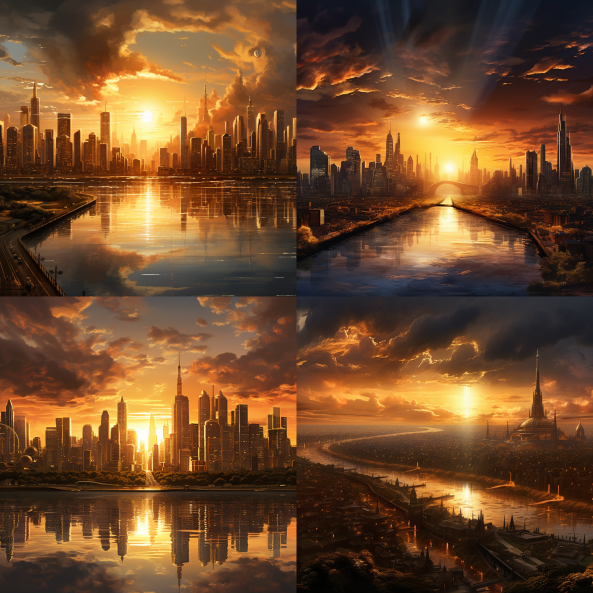
A mesmerizing panoramic vista of a city skyline; illuminated by the golden glow of sunset
A sweeping landscape captured in panoramic view; providing a broad scope of the mountains; valleys; and sky

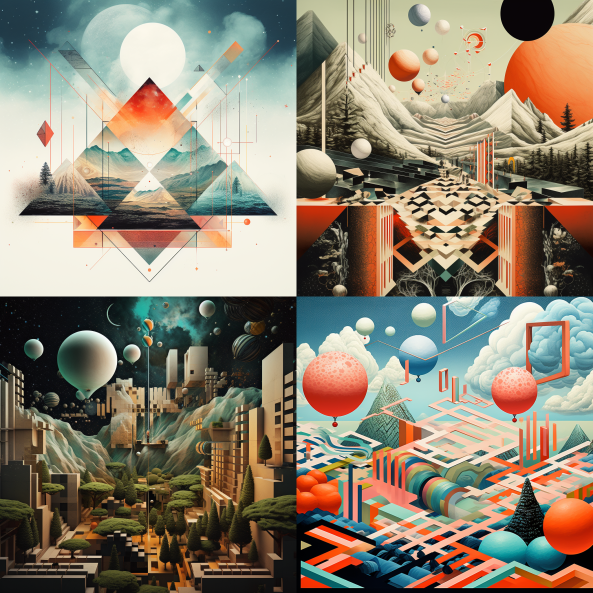
Parallax: The effect whereby the position or direction of an object appears to differ when viewed from different positions.
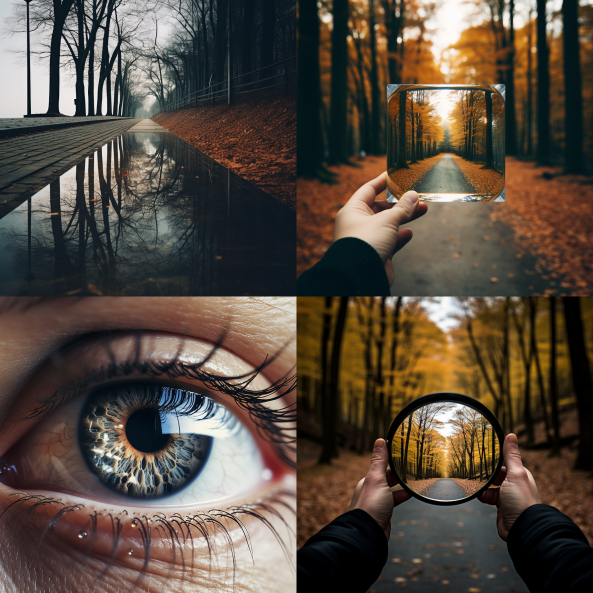
An explanation of the parallax effect in photography and its use in creating depth perception
An artistic depiction of the parallax effect using geometric shapes and patterns
A visual experiment demonstrating how parallax creates the illusion of depth

Advanced Concepts

Isometric Perspective: Equal foreshortening along each axis.
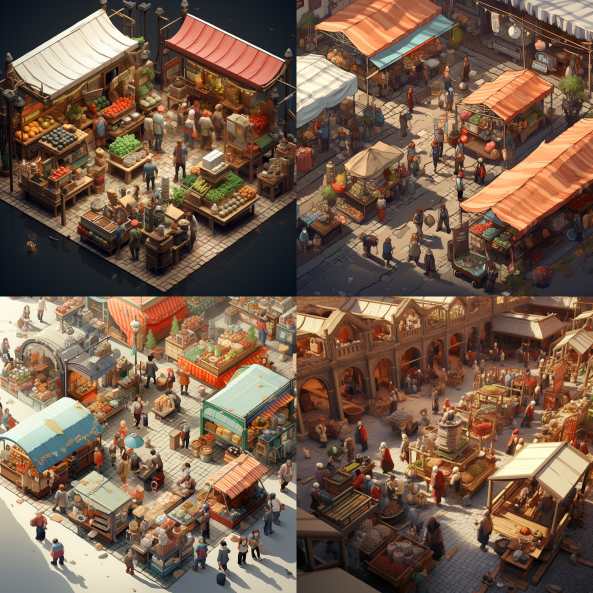
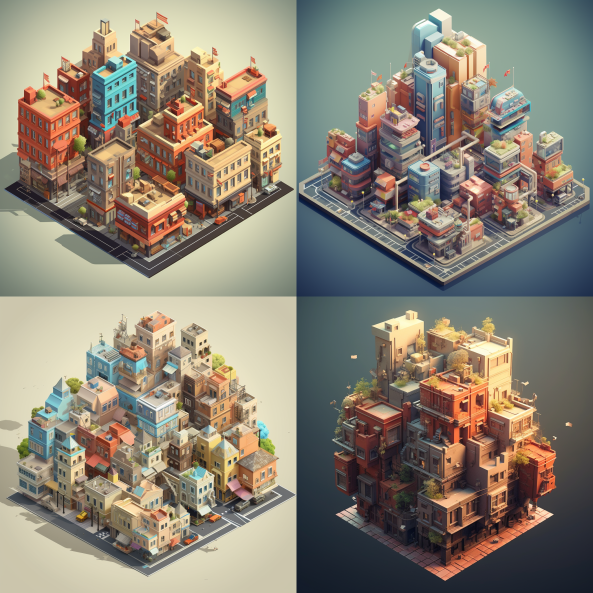
A bustling marketplace captured in isometric perspective; allowing viewers to appreciate the depth and organization
A cityscape with structures in a cube-like; isometric perspective
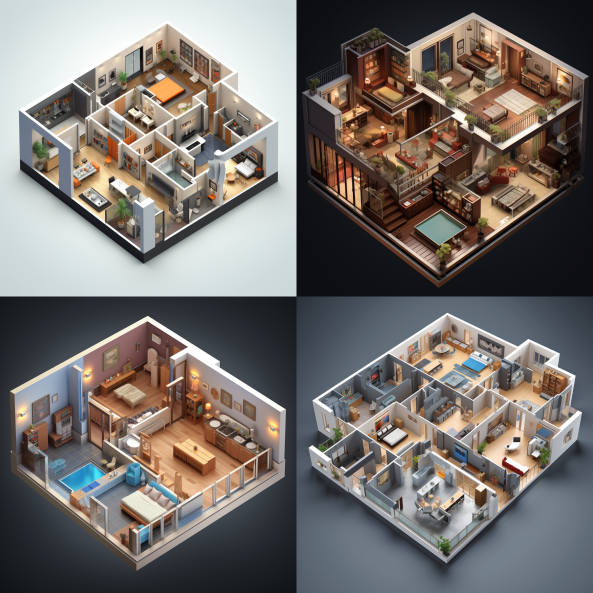
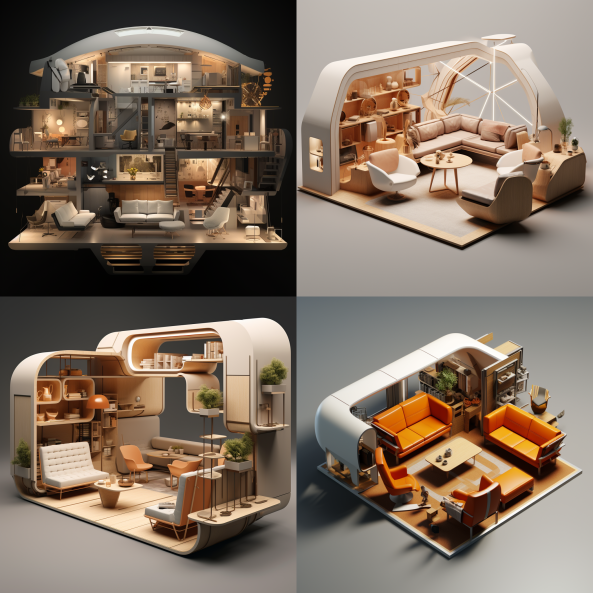
A building layout with rooms displayed in isometric view

Oblique Projection: Simple type of graphical projection for two-dimensional images.
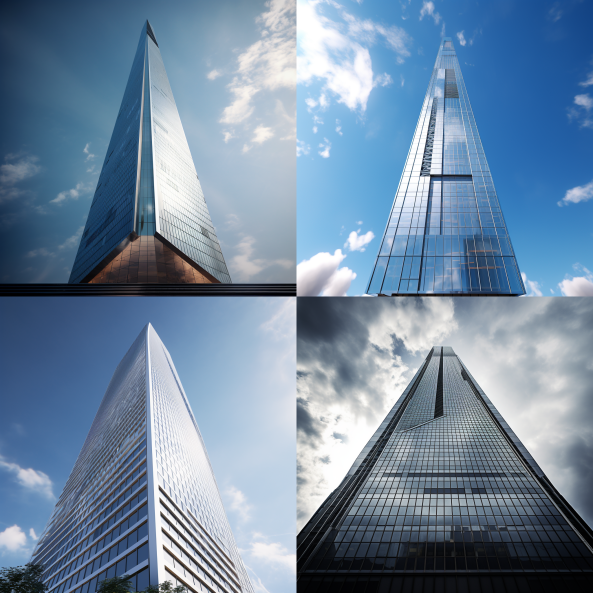
A skyscraper seen from the oblique angle; its height and design emphasized
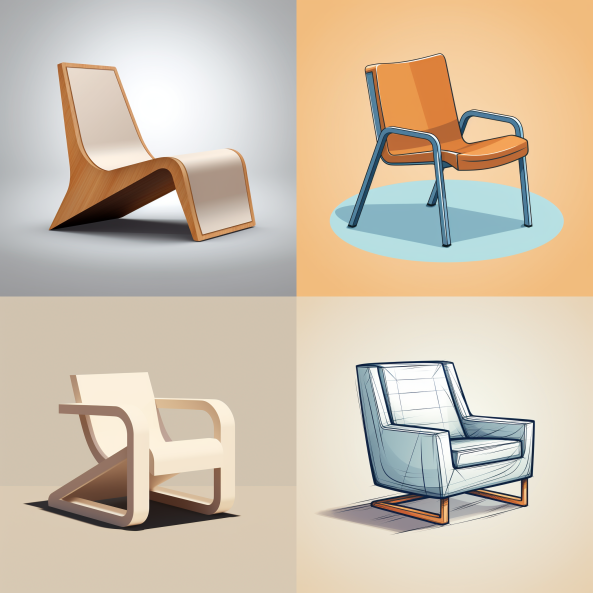
Oblique Projection
A simple oblique projection illustration of a classic chair design

Chiaroscuro: Strong contrasts between light and dark for volume illusion.

  • I have touched on this great all-purpose word in a few of the articles now. It is excellent for adding shadow and depth to just about anything.
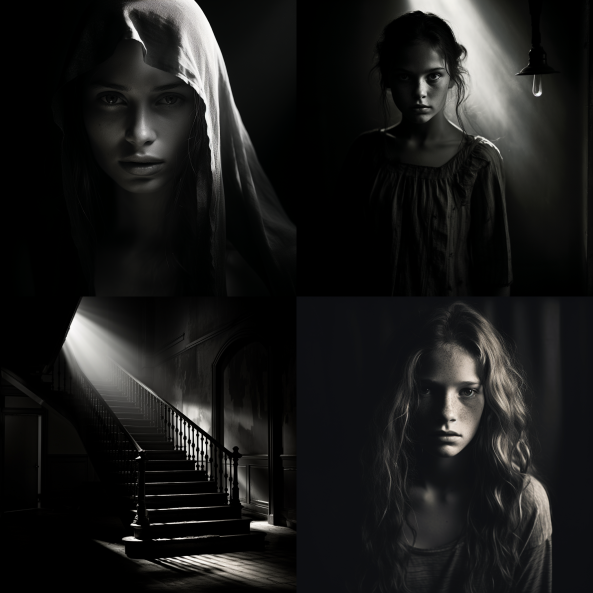
A dramatic black-and-white photograph emphasizing chiaroscuro lighting
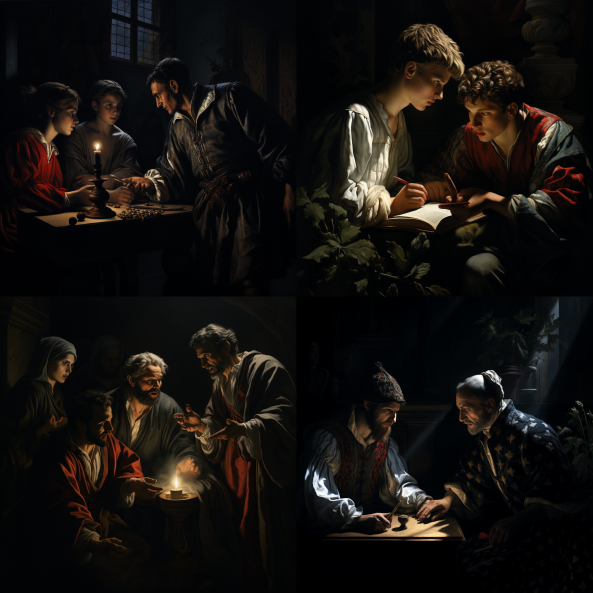
A classical painting featuring chiaroscuro techniques; with strong contrasts between light and shadow
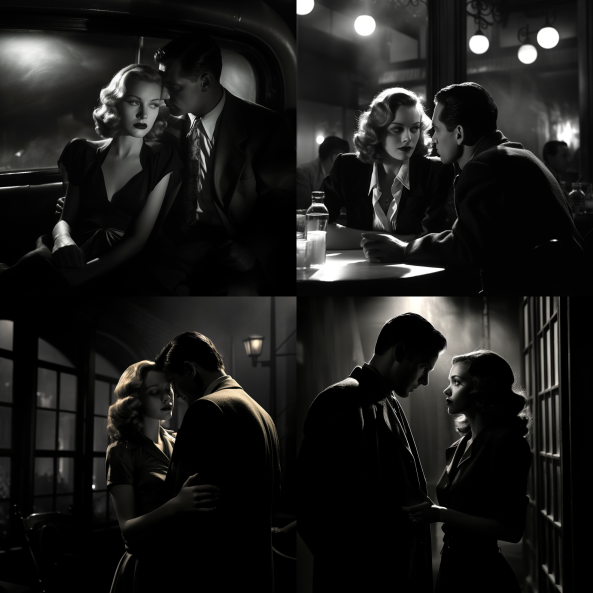
A film still from a noir movie; showcasing the signature chiaroscuro cinematography
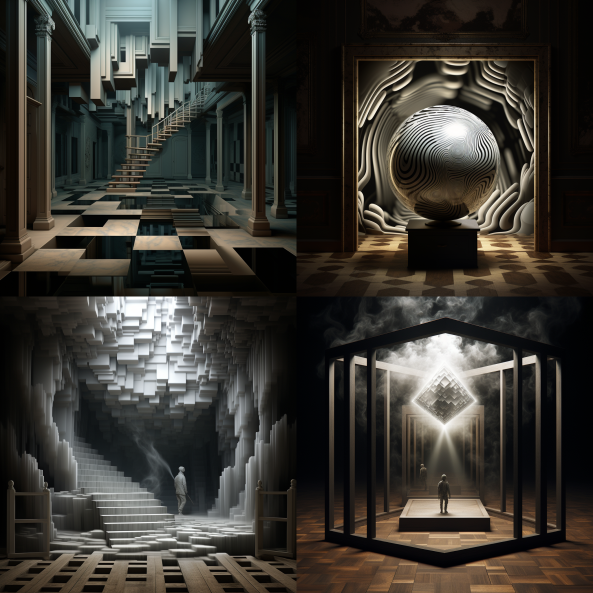
A digital artwork using chiaroscuro to create a three-dimensional illusion

Z-Axis: The axis denoting depth in a 3D coordinate system.

  • I got the impression that Midjourney understands that the Z-axis means vertical, but I cannot say that it does more than that without more testing.
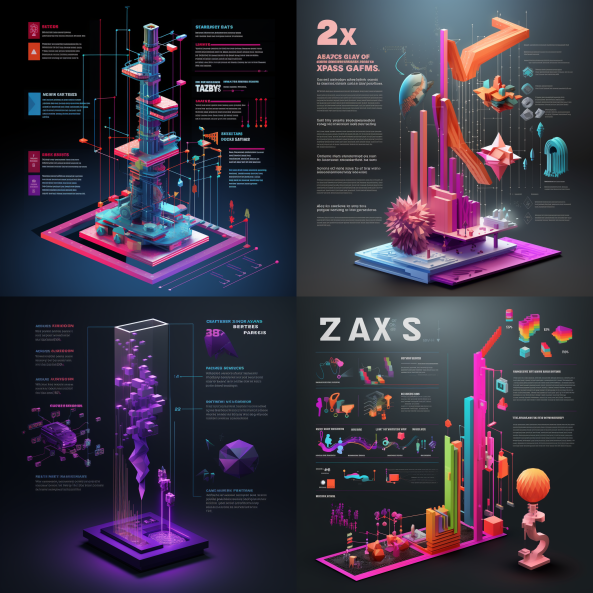
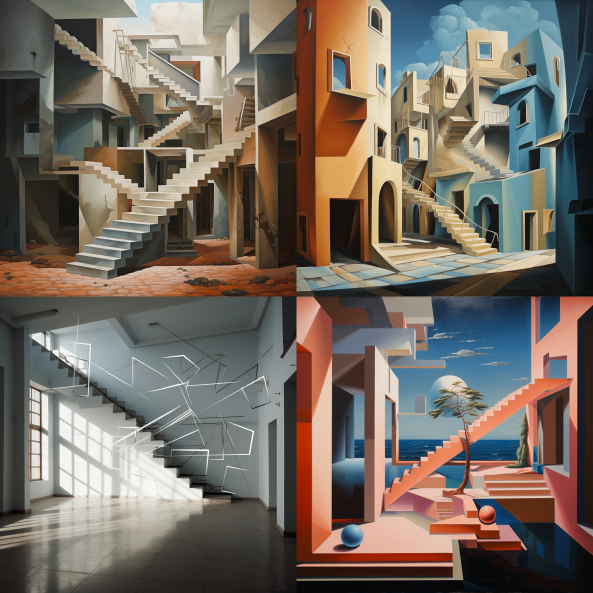
An infographic explaining the concept of the z-axis in 3D graphics and design

X-Y Plane: This term is intended to specify a plane with width and height but no depth.

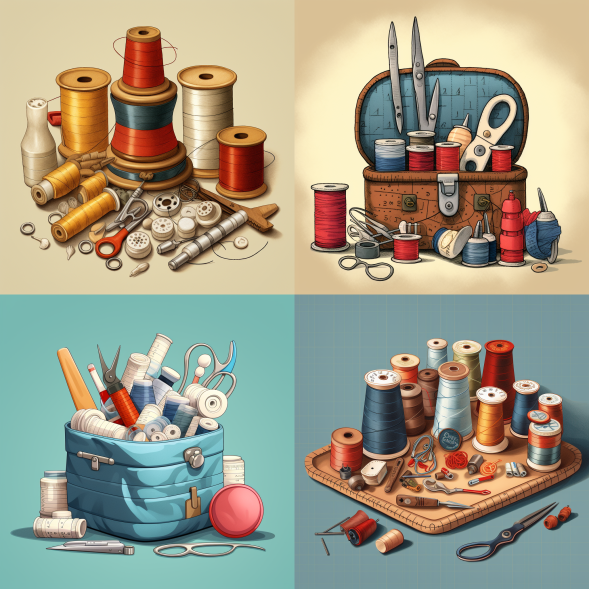
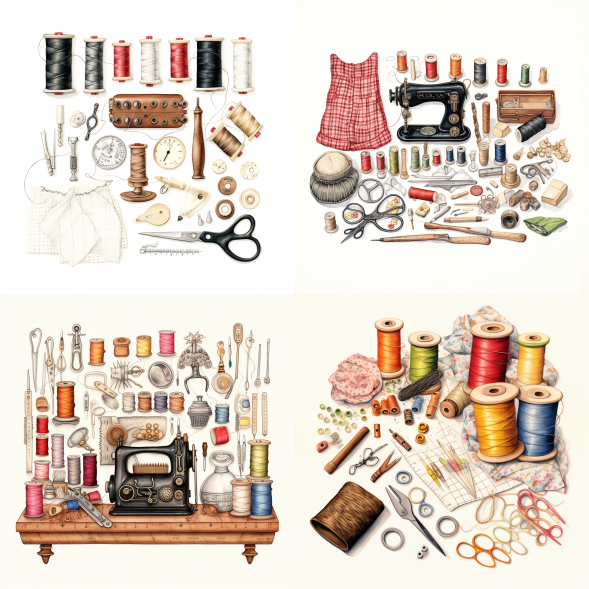
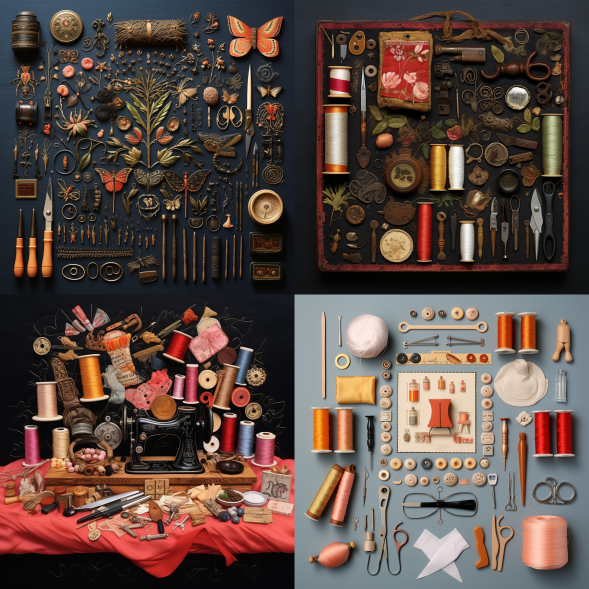
  • However, I’ve found that it often misfires, generating images of airplanes about 80% of the time — even when adding “no airplane” to the prompt. I had some success with “x-axis” and “y-axis,” but not consistently enough to recommend these terms for image adjustment. As always, your experience may vary. Using “2D” as a substitute for “X-Y Plane” seems to yield more reliable outcomes. To refine your prompt further, pair “2D” with descriptors like “2D-drawing,” “2D-illustration,” or “2D-schematic.” If you prefer a flat, organized layout, consider adding the term “knolling” to your prompt.
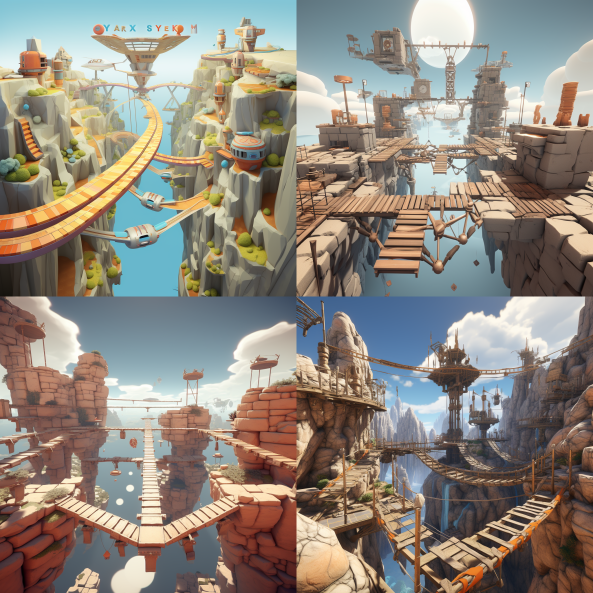
A video game level design emphasizing obstacles and objectives on the x-y plane
An interior design concept focusing on furniture arrangement within the x-y plane
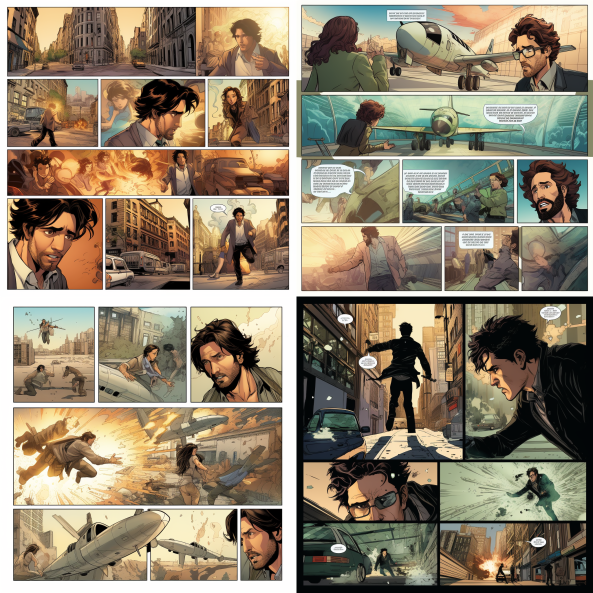
A comic book page illustrating action sequences and character interactions within the x-y plane
a sewing kit, 2d-illustration
a sewing kit, 2d-drawing
a sewing kit, 2d-schematic
a sewing kit, laid-flat
a sewing kit, knolling

Rule of Thirds

  • In my testing I was completely unimpressed by anything I got with the use of the rule of thirds. As often as not I ended up with oddball lines on my images and it was useless for getting the subject out of the center of the image, sadly.
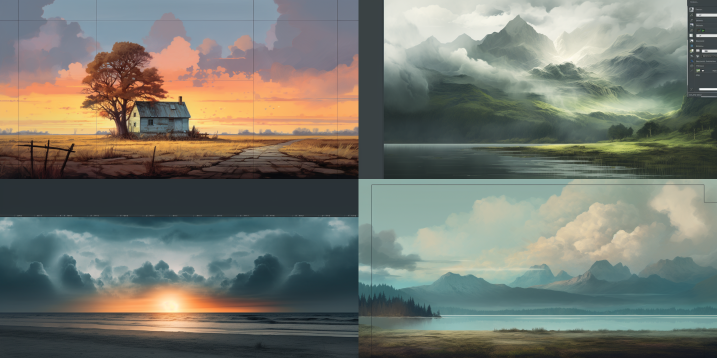
A landscape painting following the Rule-of-Thirds; with the horizon line along the lower third — ar 2:1

Proportion: Size relationship of parts to a whole.

This is an important item for artistic expression but I was unable to find a way to demonstrate it since Midjourney has such issues with scale. It does not work to say one thing twice the size of something else. Such equivalencies must be spelled out distinctly.

Overlapping: Placing one object in front of another for depth.
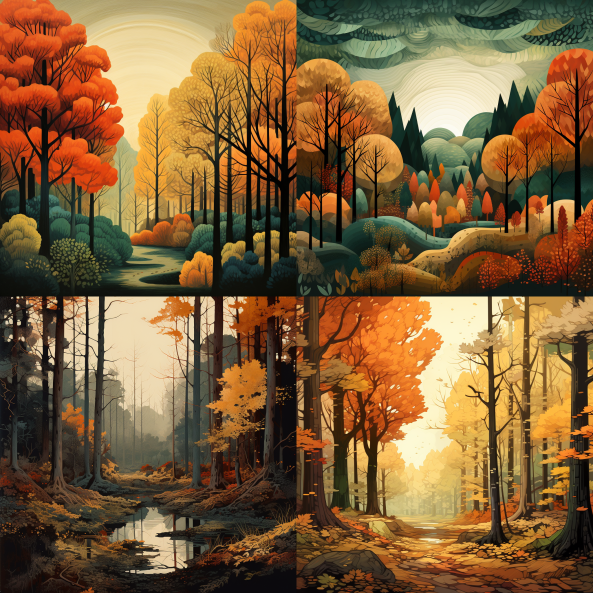
An autumn forest scene with overlapping layers of trees.

Implied Lines: Lines created by positioning objects in sequence.
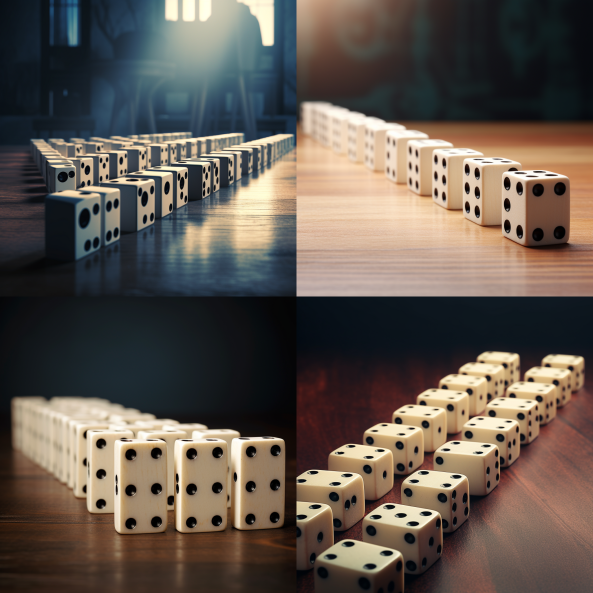
A row of dominoes set up to imply a line. (note how most are dice of varying size lol)
Implied lines of a mountain range leading to the horizon.

Juxtaposition: Contrasting elements placed close together.

When requesting a “juxtaposition” from Midjourney, the platform often combines elements in ways that might not meet your expectations. Achieving a clear distinction between two unrelated subjects in your image generally requires careful and precise prompting. Unfortunately, there’s no quick fix for this — you’ll need to invest time in crafting your prompt to get the desired result.

Takeaways:

Perspective is King: Perspective-based terms offer a more reliable and versatile toolkit for guiding AI art algorithms. These terms allow for a systematic and predictable manipulation of spatial elements, giving artists greater control over the final output. Camera terms can work as well but may give more mixed results.

Specificity Matters: Being precise and descriptive in your prompts can be more rewarding. Given that these algorithms aren’t perfect, the more clearly you can describe what you want, the better the chances of receiving a satisfactory result. This holds true for complex effects like parallax, depth of field, or chiaroscuro.

Trial and Error: Like any other art form, it seems that mastery of generative AI art comes with experimentation. While certain terms like “Rule of Thirds” or “Scale” may not produce ideal results now, that doesn’t mean they won’t in future versions of Midjourney or with different phrasing.

AI’s Limitations: It’s important to note that despite their sophistication, these algorithms still have limitations when it comes to fully understanding human concepts, especially those that require a level of artistic intuition or a deeply ingrained understanding of visual language.

In Conclusion

Both photographic and perspective terminology have their places in the world of generative AI art. However, perspective terms tend to offer a more consistent and adaptable framework, especially valuable for those involved in iterative creative processes. Understanding the limitations and strengths of each approach can dramatically improve the quality of your generated art, making your artistic journey with AI more focused and rewarding.

If you found this article insightful, please don’t hesitate to give it a clap — or multiple claps if you really enjoyed it! Your feedback helps me to refine my content. Feel free to leave your thoughts in the comments section, and don’t forget to follow me for more in-depth articles like this one. Thank you for reading!
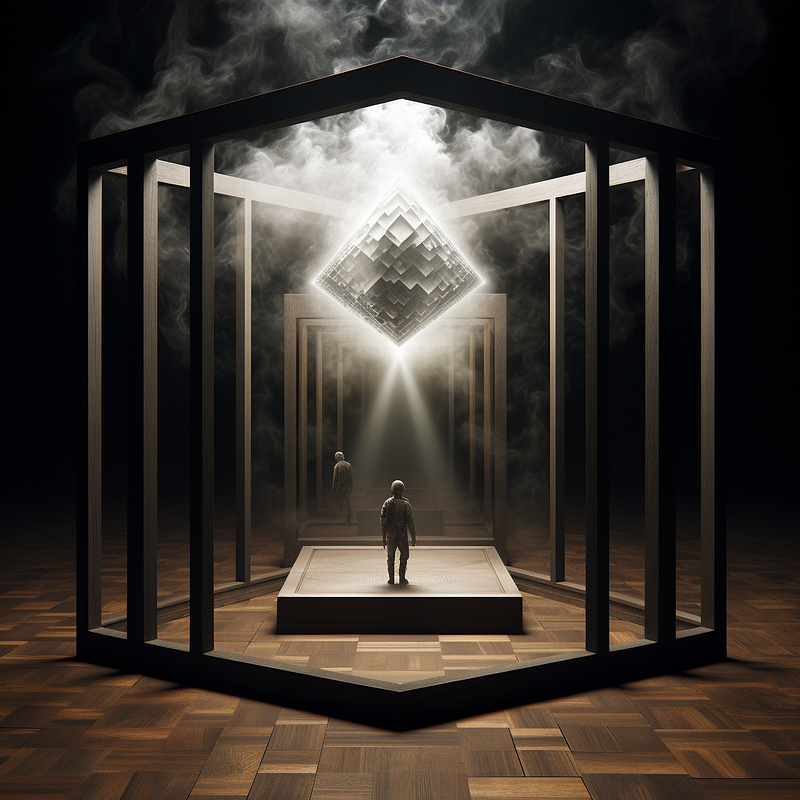
A digital artwork using chiaroscuro to create a three-dimensional illusion

A Message from AI Mind

Thanks for being a part of our community! Before you go:

Midjourney Ai
Midjourney Prompts
Midjourney How To
Generative Ai Tools
Ai Art Generator
Recommended from ReadMedium