The web content provides an in-depth exploration of techniques for enhancing depth and composition in generative art using Midjourney, including saturation gradients, clarity gradients, texture gradients, transparency, sfumato, atmospheric perspective, balance and arrangement, scale, depth cues, depth of field, selective focus, multiple horizons, and various miscellaneous techniques.
Abstract
The article delves into the nuances of adding depth and composition to generative art in Midjourney, offering a comprehensive guide to techniques that enhance visual depth. It covers the use of color saturation, clarity, texture, and transparency to denote depth, as well as the application of sfumato and atmospheric perspective for soft transitions. The piece also discusses the importance of balance and arrangement, scale, and depth cues in creating a three-dimensional effect. Furthermore, it addresses the challenges and strategies for achieving precise depth of field and selective focus, emphasizing the importance of descriptive prompts. The concept of multiple horizons is introduced to create layers within an image, and a variety of miscellaneous techniques are shared, showcasing the versatility of Midjourney in composition control. The author acknowledges the learning curve and encourages persistence and experimentation, providing a valuable resource for those looking to master the art of generative composition.
Opinions
The author expresses a strong preference for the saturation gradient technique, considering it a "personal favorite secret sauce" for landscapes and sunsets.
Midjourney's weakness in handling scale is noted, with the author observing that the AI sometimes fails to accurately depict the relative size of elements, such as animals or objects in a scene.
The use of mirrors in Midjourney is described as unpredictable, but the author suggests that adding specific descriptions of reflected elements can improve results.
The author emphasizes the unpredictability of AI behavior, particularly when it comes to scale and the placement of elements in a scene, and recommends a trial-and-error approach to overcome these challenges.
The article highlights the importance of experimentation with prompts, noting that too much detail can lead to unexpected outcomes, while the right amount can guide the AI towards the desired result.
The author shares their insights on the effectiveness of using technical photographic terms and descriptive details to achieve the desired depth of field in Midjourney-generated images.
The author provides a candid view of the AI's limitations, suggesting that understanding why certain results occur can help in finding alternative solutions to composition challenges.
The conclusion of the article encourages readers to embrace the learning curve and continue experimenting with Midjourney to achieve rewarding results in their generative art endeavors.
Midjourney Explorations: #10 — Adding Depth and Composition Extras
Welcome to the second installment of what initially was a single, expansive article. It was so long that I separated this part out to focus specifically on the nuances of adding depth and composition extras in Midjourney. My research has uncovered intriguing techniques to enhance your generative art experience. Let’s dive right in!
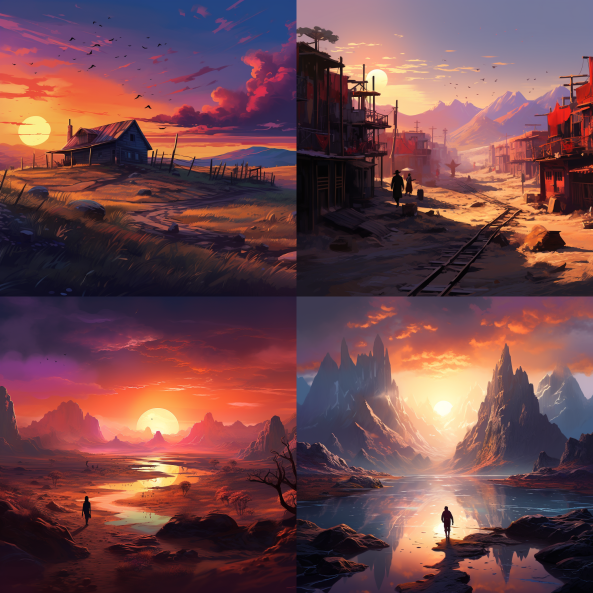
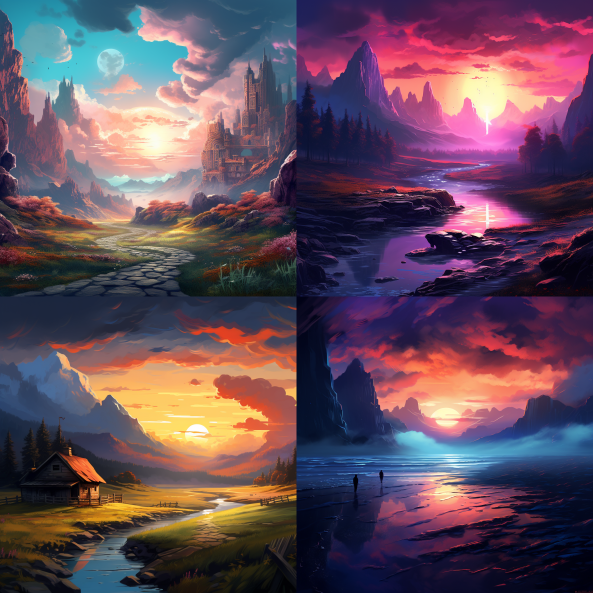
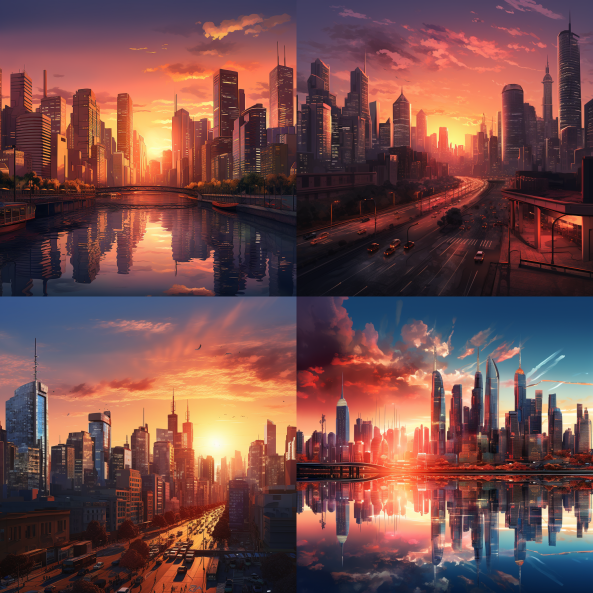
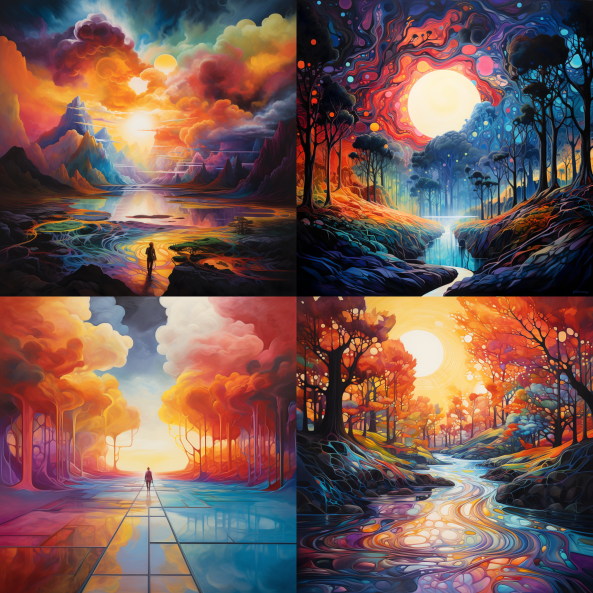
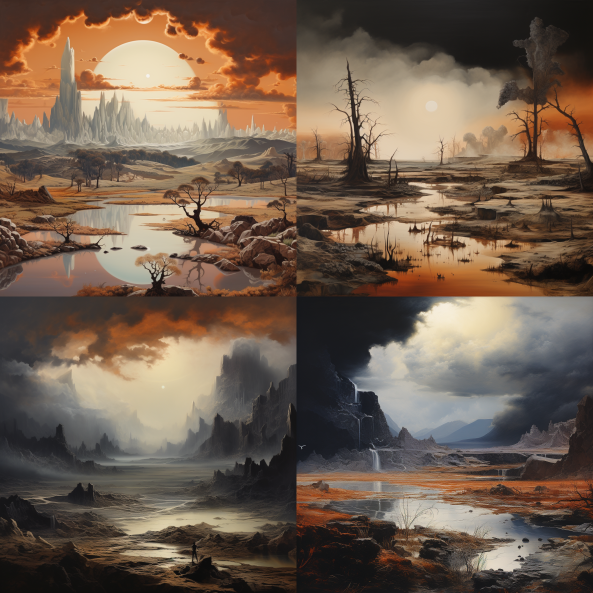
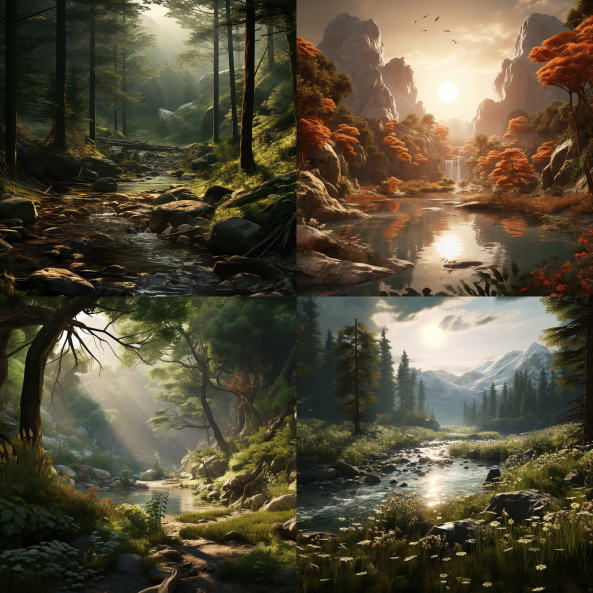
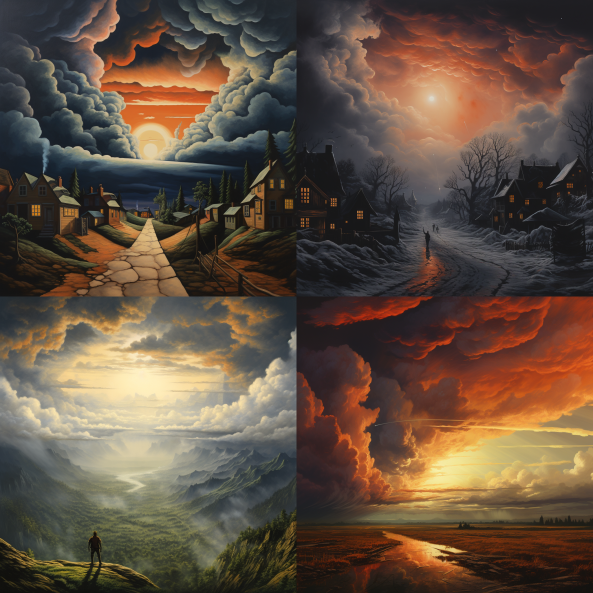
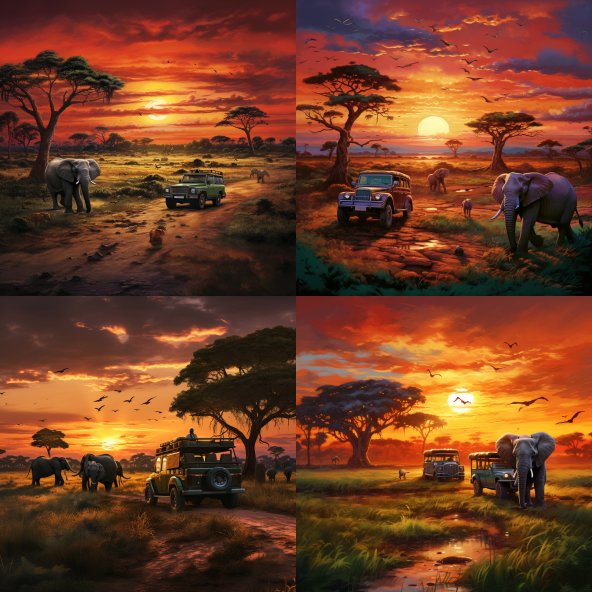
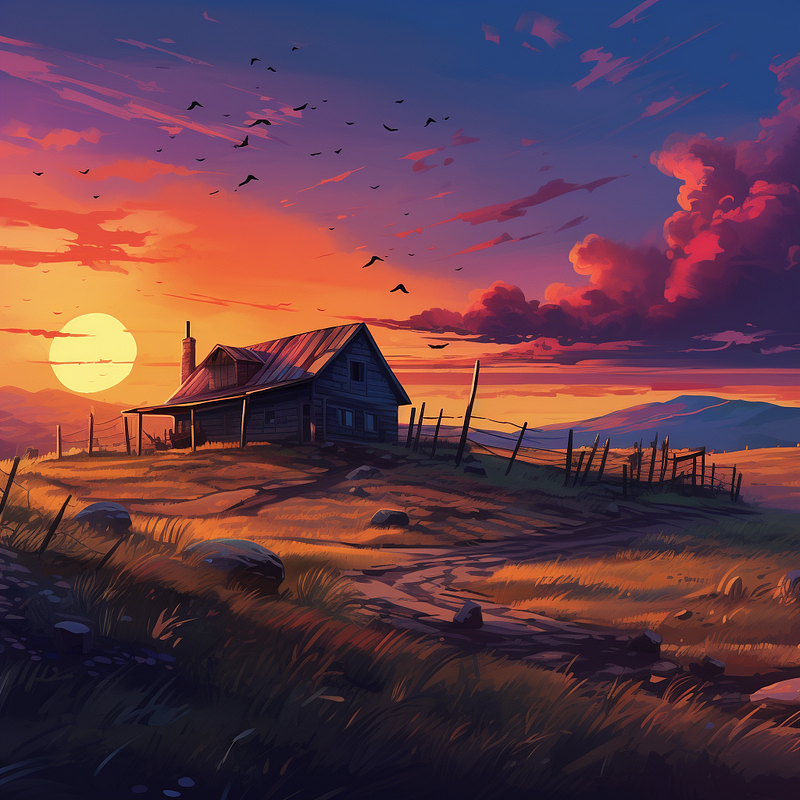
Saturation Gradient: Color saturation used to indicate depth.
This is my new favorite technique to apply to landscapes, particularly sunsets. It gives the images great depth. The gradients after it are good too but this is my new personal favorite secret sauce!
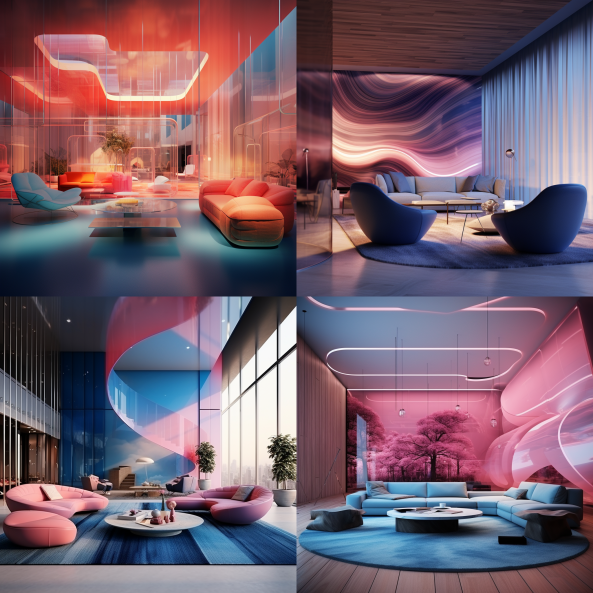
A digital painting that uses saturation gradient to differentiate between foreground and background elementsAn illustration of a landscape scene with a noticeable saturation gradient; accentuating the sense of depthA digital painting that uses saturation gradient to differentiate between foreground and background elementsAn interior design concept that utilizes saturation gradient to create a sense of spatial depth and visual interest
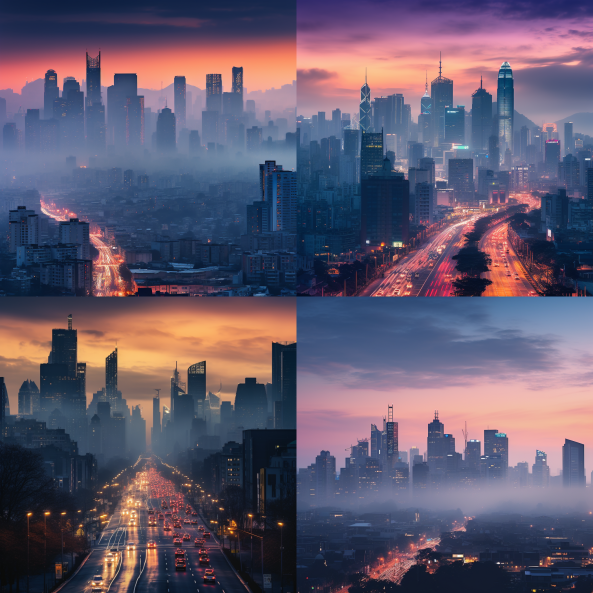
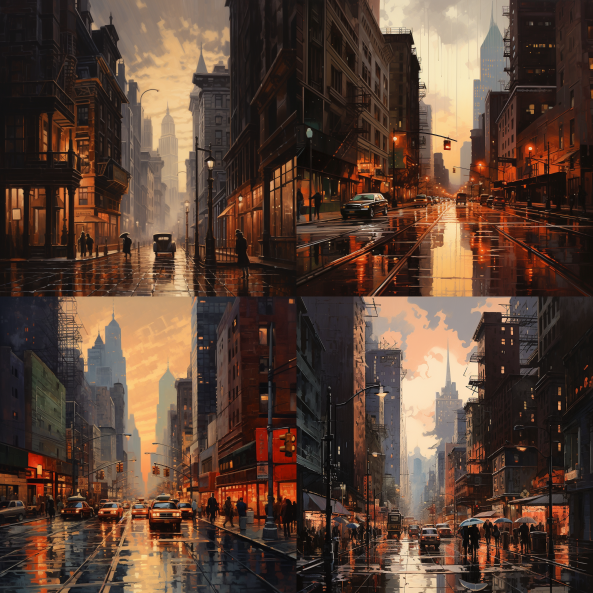
Clarity Gradient: Change in clarity to denote depth.
A digital artwork of a city skyline during sunset, with buildings in the foreground rendered in sharp detail and buildings in the background becoming progressively more blurred, creating a gradient of clarityA bustling cityscape at dusk, with the skyline gradually fading into a misty blur to create a clarity gradient effect
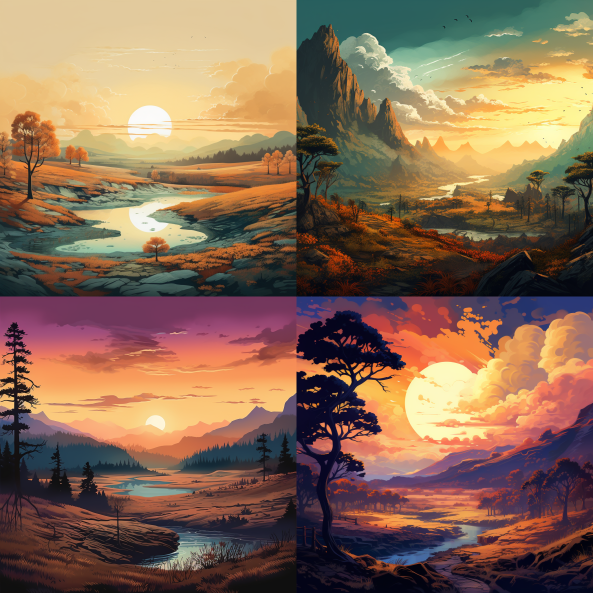
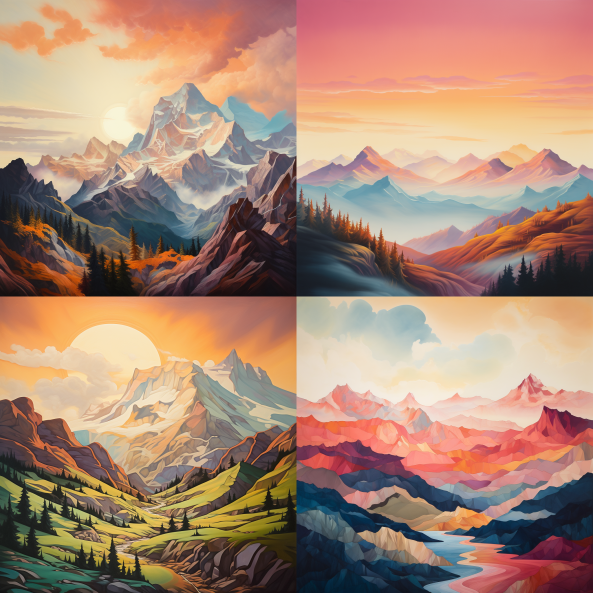
Texture Gradient: Amount and type of texture used to show distance.
An artwork where the saturation of colors gradually shifts from vibrant to muted; conveying distanceA landscape painting depicting a mountain range with a gradual shift in color and clarity
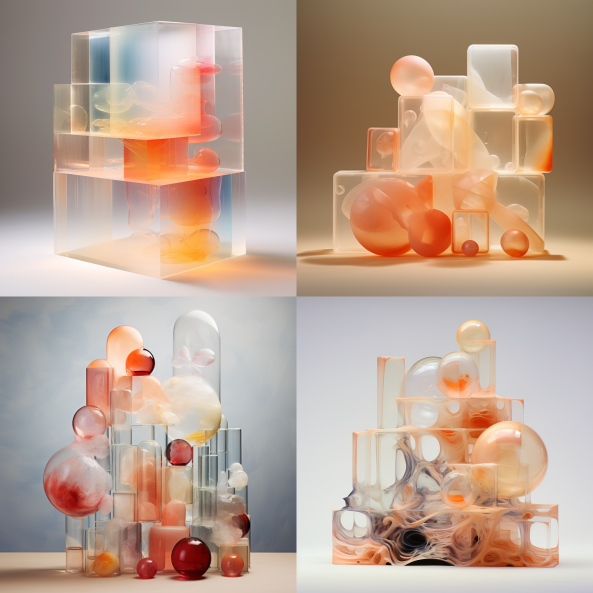
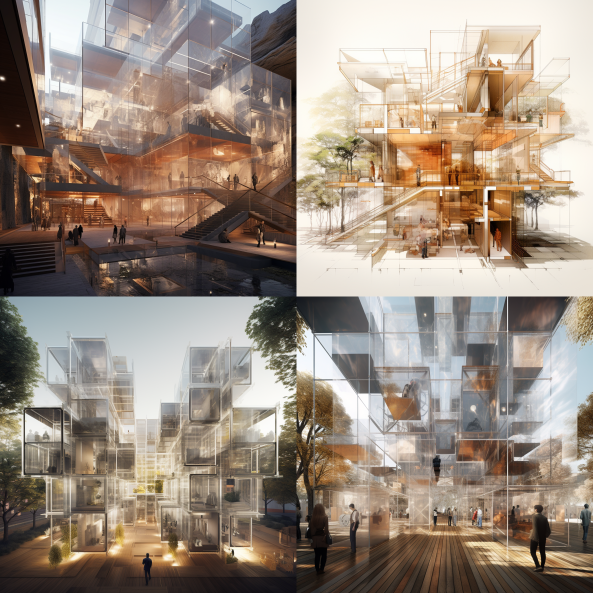
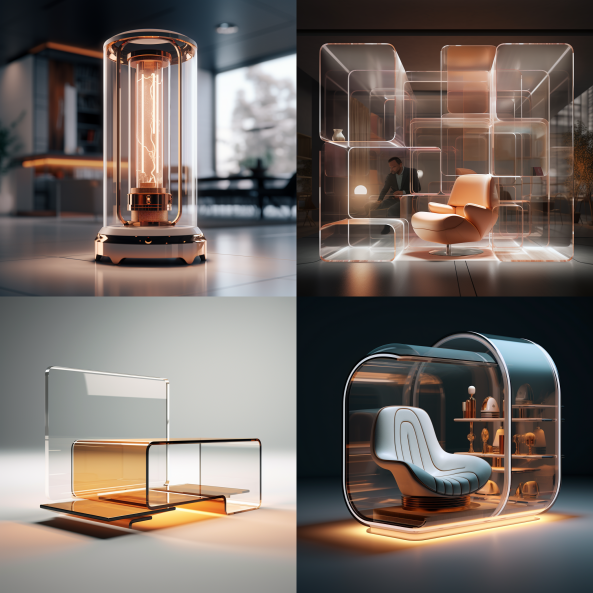
Transparency: The quality of being see-through.
An artistic composition featuring translucent objects that reveal underlying layersAn architectural rendering that incorporates transparent materials to convey openness and spatial connectionA product design concept that leverages transparency to highlight interior components and create visual interest
Sfumato: Softening the transition between colors and tones.
This technique is excellent for adding softness to an image and using that softness to give a feeling of depth.
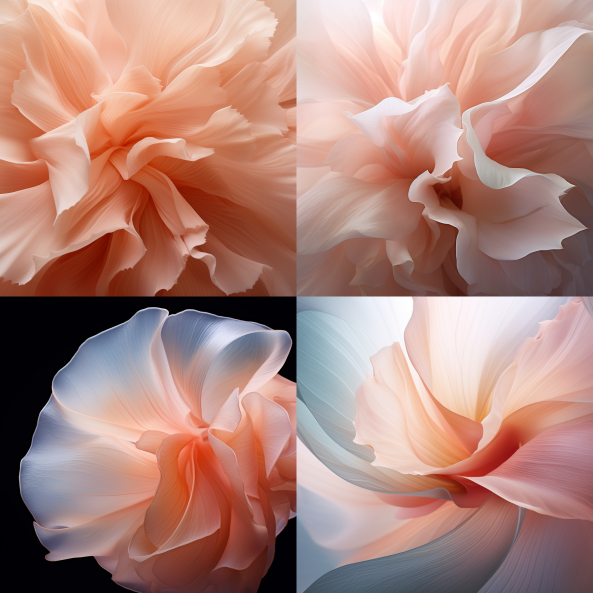
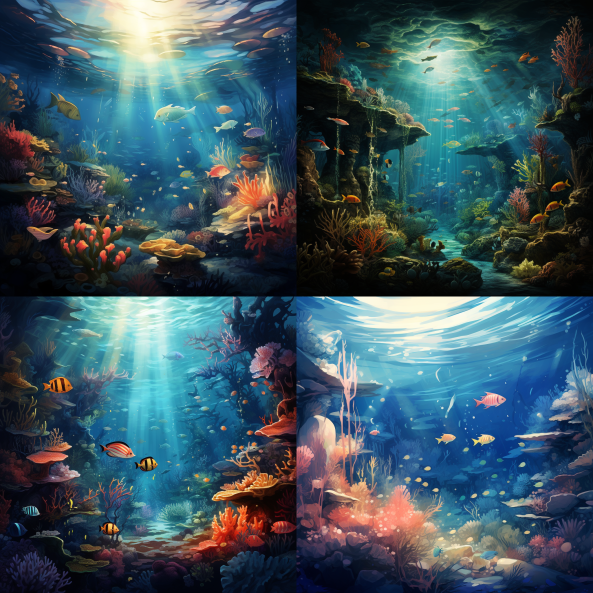
An artwork featuring a distant landscape with sfumato-treated elementsA close-up photograph of a flower petal with a gentle sfumato touchA nature scene rendered with subtle sfumato shading to suggest depthAn illustration of a dreamy; sfumato-enhanced underwater worldA gallery of famous paintings that employ sfumato to create atmospheric effects
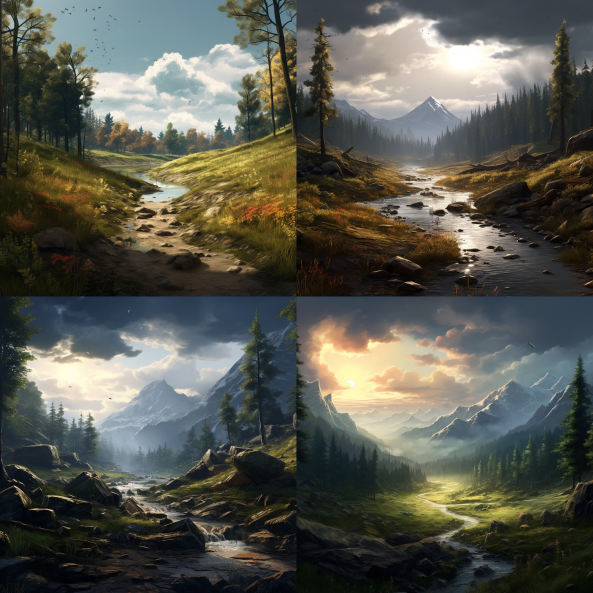
Atmospheric Perspective: Variant of aerial perspective, changing color and clarity of distant objects.
Atmospheric PerspectiveA cityscape painting with atmospheric perspective; emphasizing the depth of the urban environmentA nature scene rendered with atmospheric perspective to create a sense of distance
Balance and Arrangement
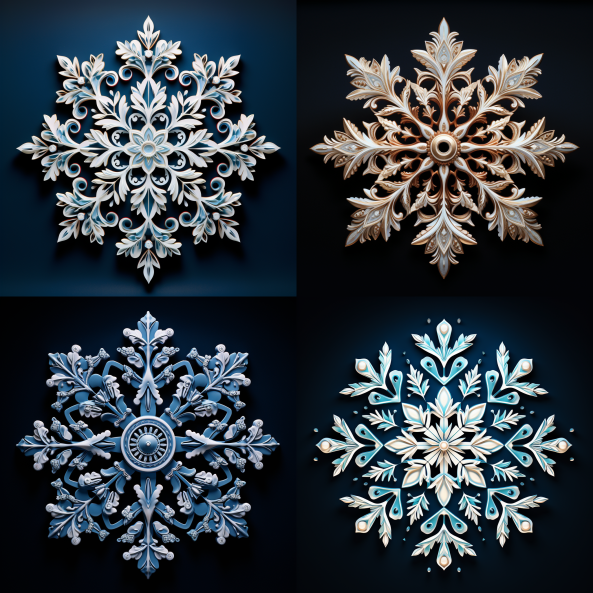
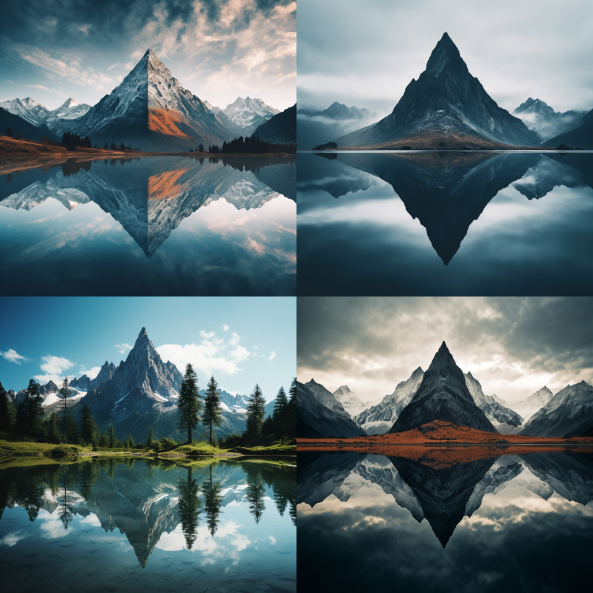
Symmetry: Balanced elements around a central axis.
A snowflake with intricate; symmetrical designsSymmetrical reflection of a mountain in a calm lake.
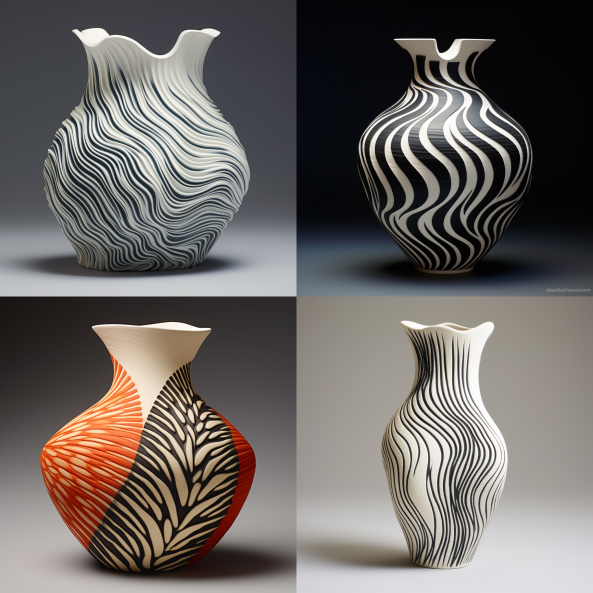
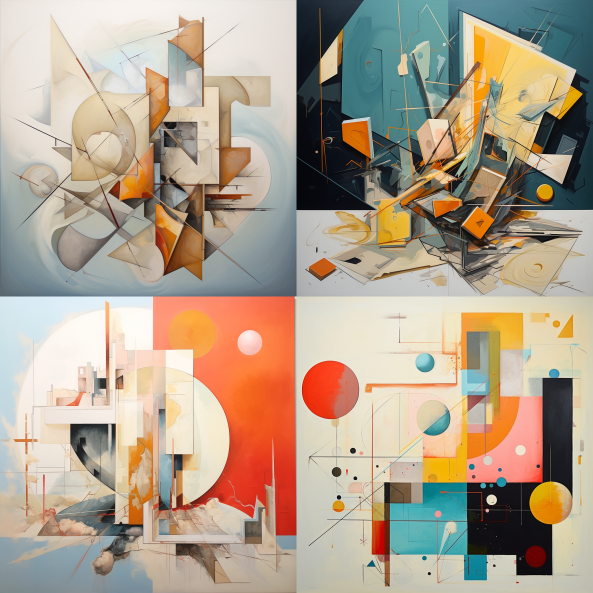
Asymmetry: Unbalanced or not symmetrical composition.
A vase with uneven; asymmetrical patterns.A painting with irregular; asymmetrical shapes.
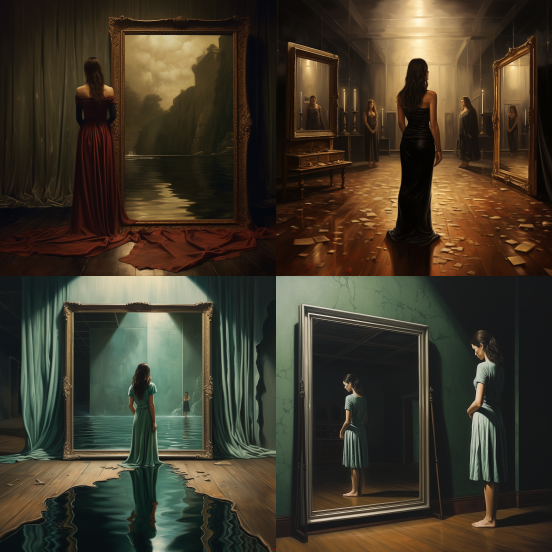
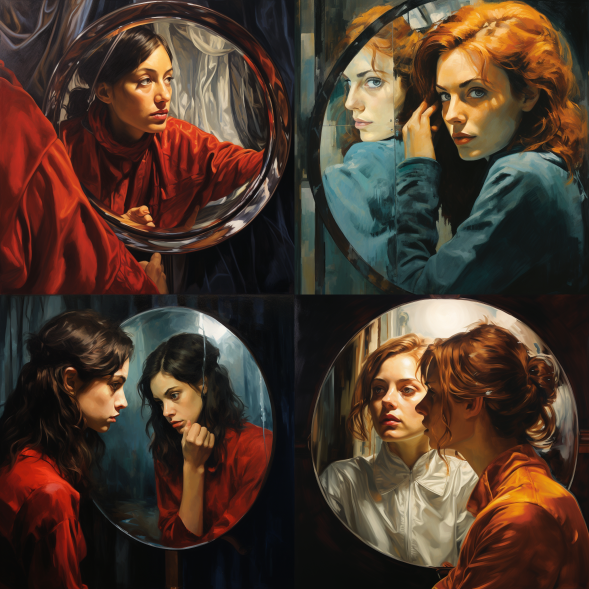
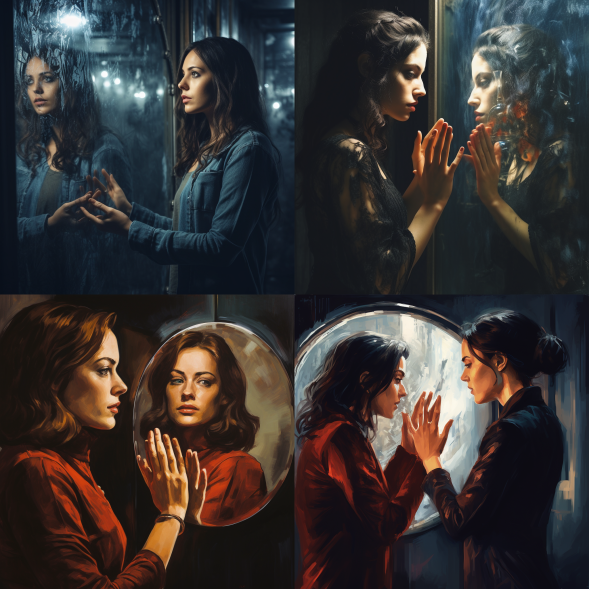
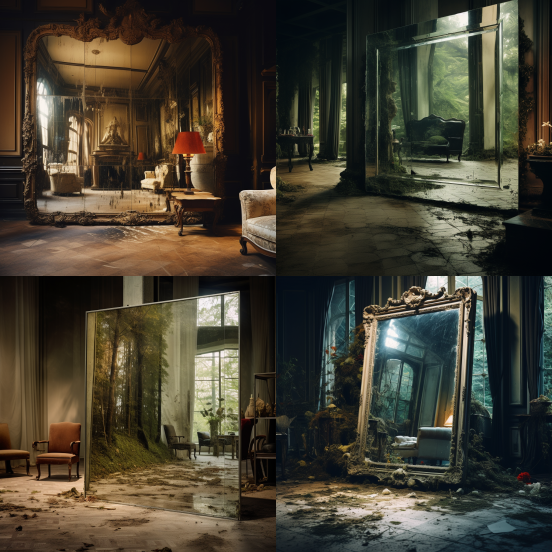
Mirrors: Reflections
The use of mirrors in Midjourney offers intriguing possibilities, but results can be unpredictable. The reflections generated may not always align with expectations. For more accurate outcomes, it’s advisable to specify what should appear in the mirror. Even then, there are no guarantees. Adding specific descriptions of the reflected elements can often yield better results.
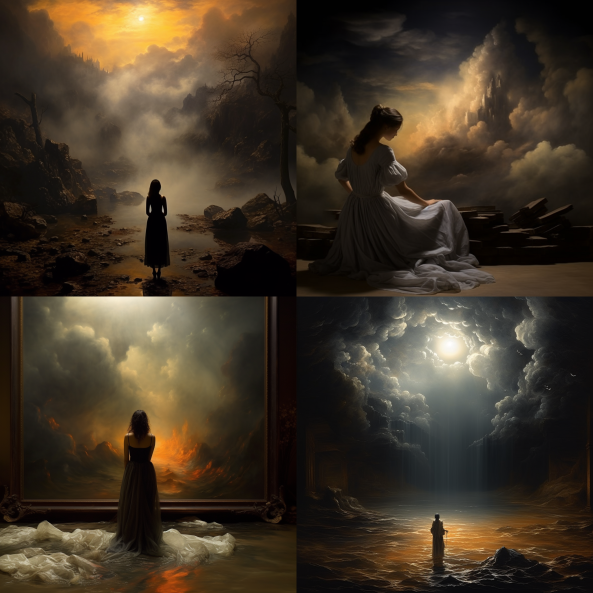
A woman viewing her reflection in a large mirror where we see the rest of the room she is standing inA woman staring into a mirror, her face is reflected backa woman staring into a mirror, touching her reflection with her handA large mirror reflecting the image of the room back into itself
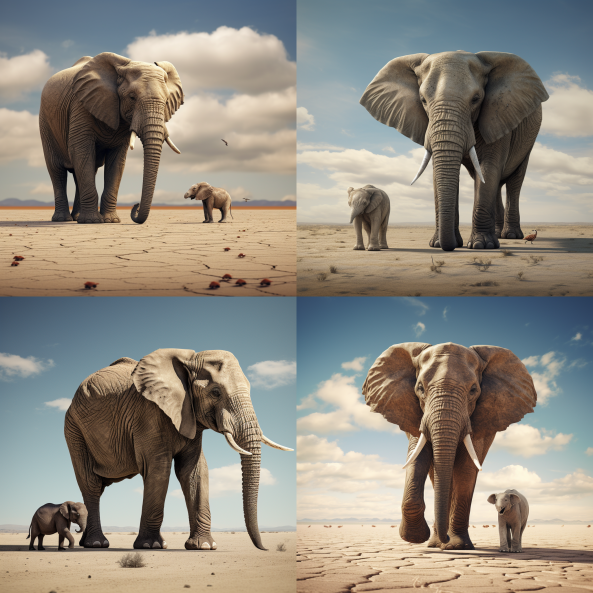
Scale: Size relationship of one element to another.
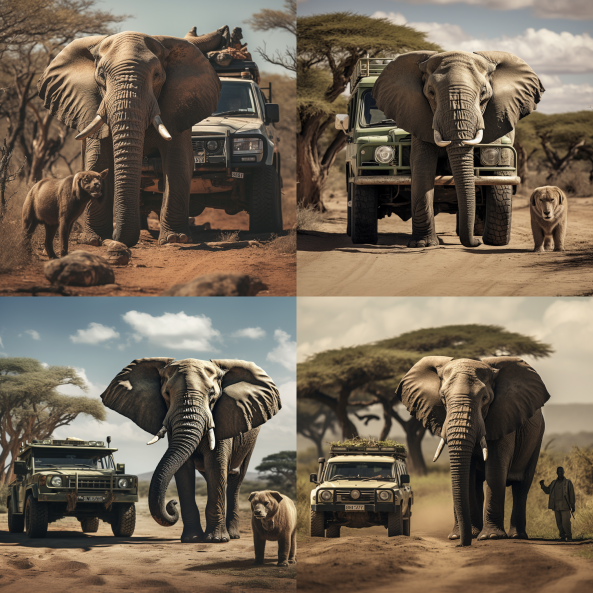
I have found in my testing that Midjourney is very weak on the scale of things sometimes. In the case of the image below part of the issue is that it is not a simple thing to get two named animals next to each other. Here it has given us a baby elephant rather than a mouse, so the scale is way off, but we can at least see that it is trying.
A large elephant next to a tiny mouse to demonstrate scale.A large elephant next to a Jeep
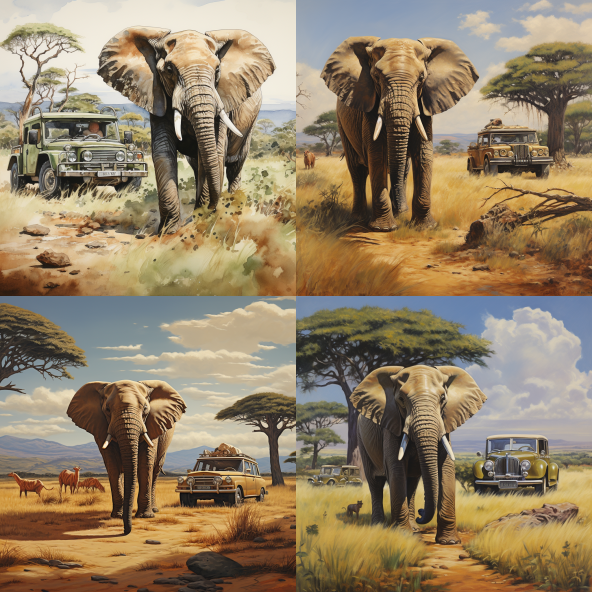
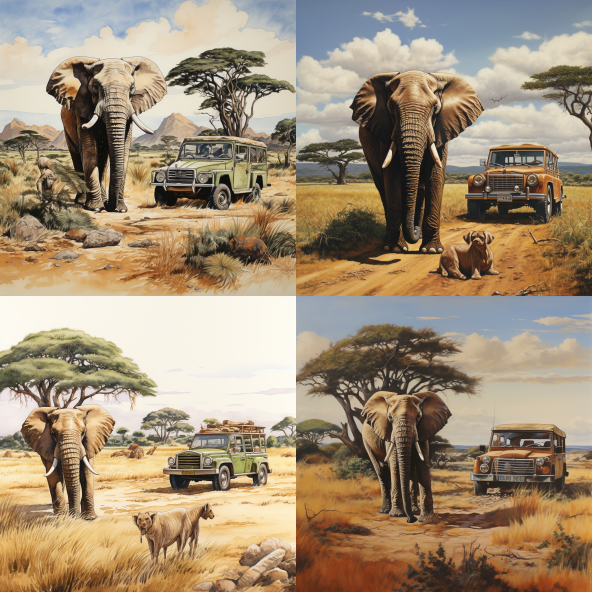
It is possible to nudge Midjourney by putting subjects in the foreground, middle-ground, or background of the image. But in my testing, I found that trying to get that jeep in the foreground was a no-go for Midjourney, even when trying out a weighted multiprompt that the jeep and elephant were in the same depth in the image.
a large elephant in the middleground, a jeep in the foreground, and the African-savannah in the backgrounda jeep in the foreground, a large elephant in the middleground, and the African-savannah in the backgrounda jeep in the foreground ::4 a large elephant in the middleground ::2 and the African-savannah in the background
As you can see above my hope of a weighted multiprompt did even less than no weighting at all. The #4 of this last image has the jeep in the foreground at least, but LOL, that elephant refused to move! Occasionally we simply find these places where you can poke it from many angles and not get what you desire. When it happens I recommend taking a big step back and starting from another angle.
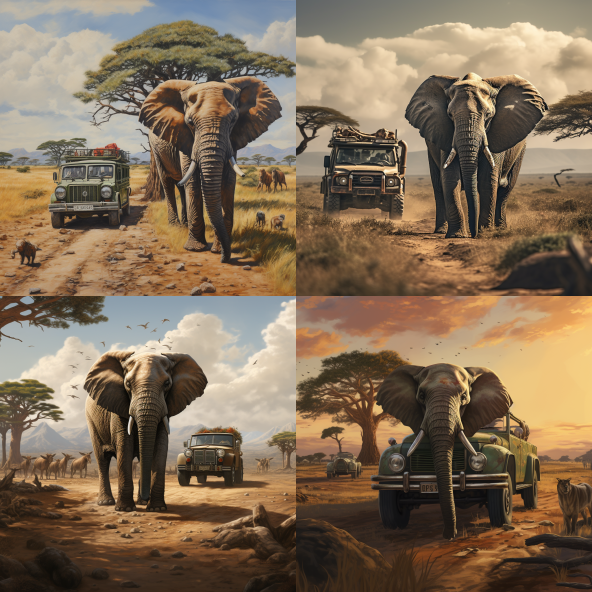
a jeep on the african-savannah in the foreground, elephants roam in the middleground and the sun sets in the background, saturation gradient accentuating the sense of depth
With shorter prompts adding something like the sunset and stuff going on in other parts of the image seems to help distract the AI (if we can call it that) and here we did actually get the jeeps a bit closer to the foreground. I suspect that what we are working with here is a stereotype of some sort where pictures of jeeps and elephants tend to feature the elephant and not the jeep. The distraction technique can help, but be aware that too much detail and too many words will take you right back into “it is not doing what I want” territory. The happy middle ground is what you want to strive for.
I left the failures in here to illustrate that these things are not always as straightforward as you may expect. So do not allow these sorts of “why won’t it do what I want?!” to get to you. There is always more than one way to solve a problem and they are going to vary by every variable in any given prompt. The trick IMHO is to just keep poking at it to understand why you are getting what you get and then back up and try a different way.
Depth Cues: Elements offering information about the third dimension.
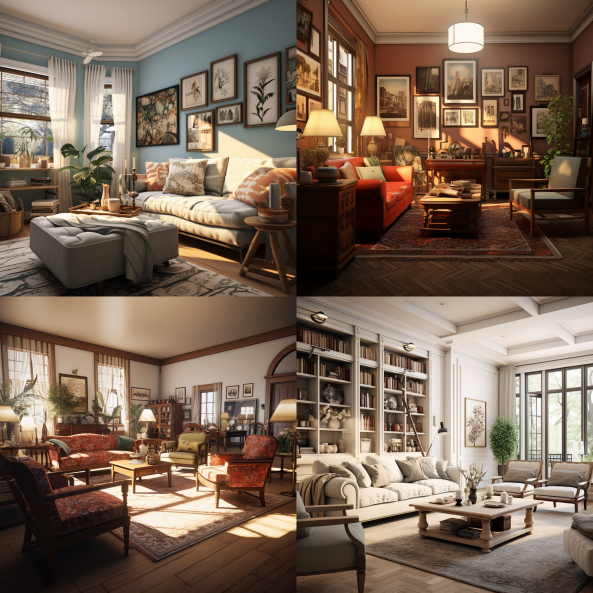
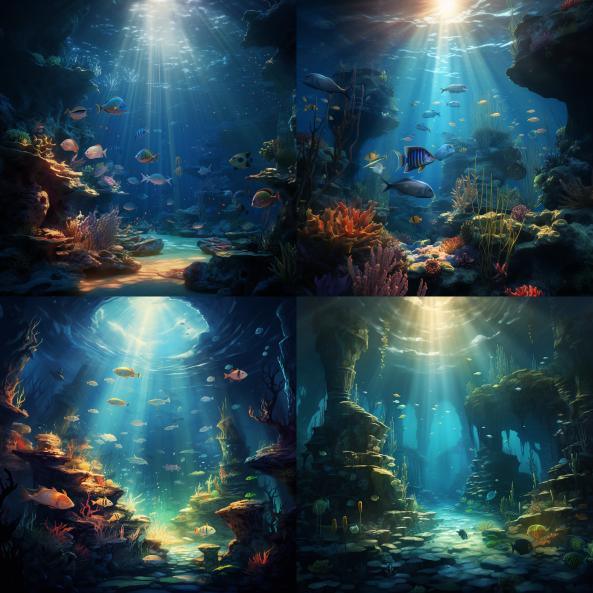
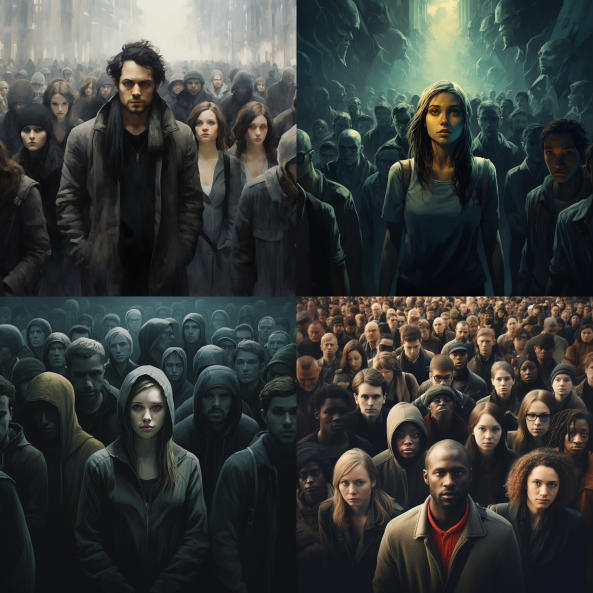
A room with furniture varying in sizes; effectively utilizing depth cuesAn undersea scene with fish strategically placed in various layers; highlighting depth cuesA crowd of people; with faces becoming less detailed as they recede into the distance; leveraging depth cues
Depth and Field Techniques
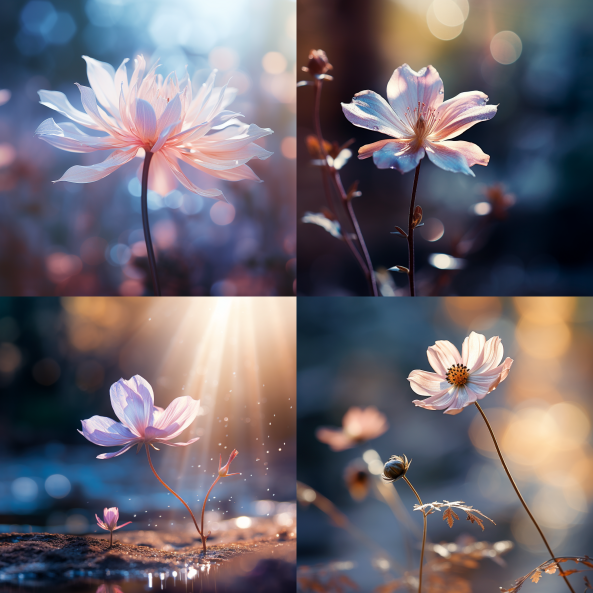
Achieving precise depth of field in Midjourney can be challenging. While you can use technical photographic terms like lens settings and F-stops, the results may not always meet your expectations. For more reliable outcomes, consider adding extra descriptive details in your prompt. Whether you’re a photography enthusiast or a beginner, experimenting with additional descriptions can offer a more satisfying depth of field.
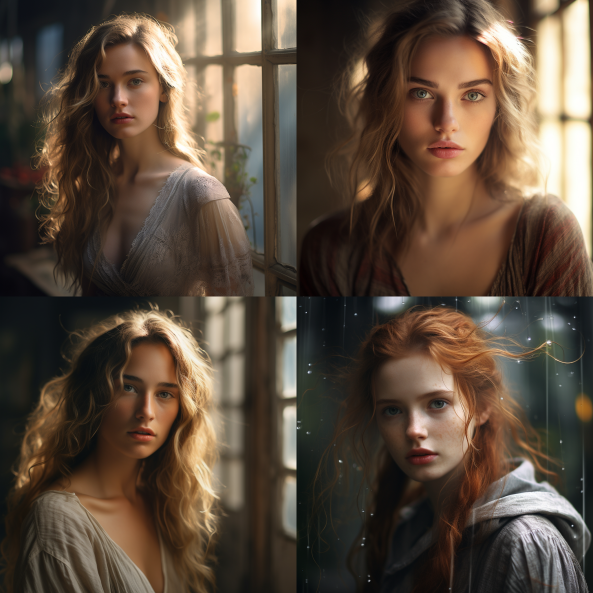
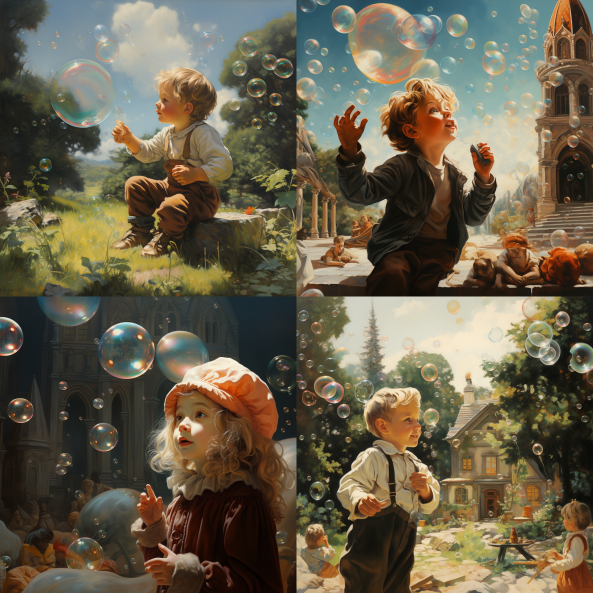
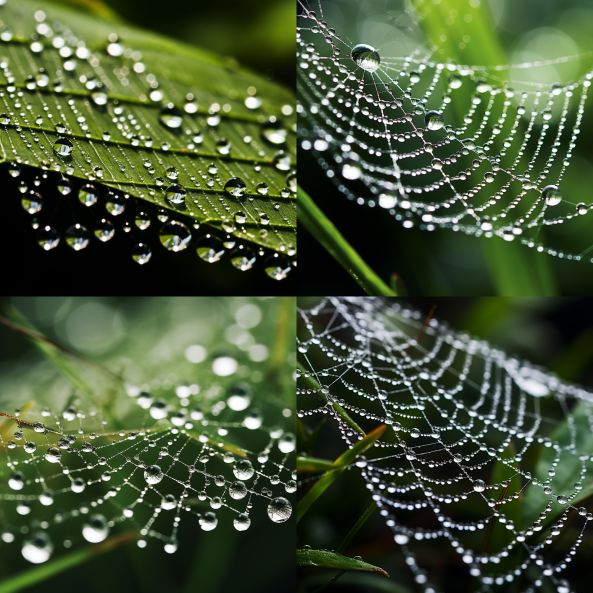
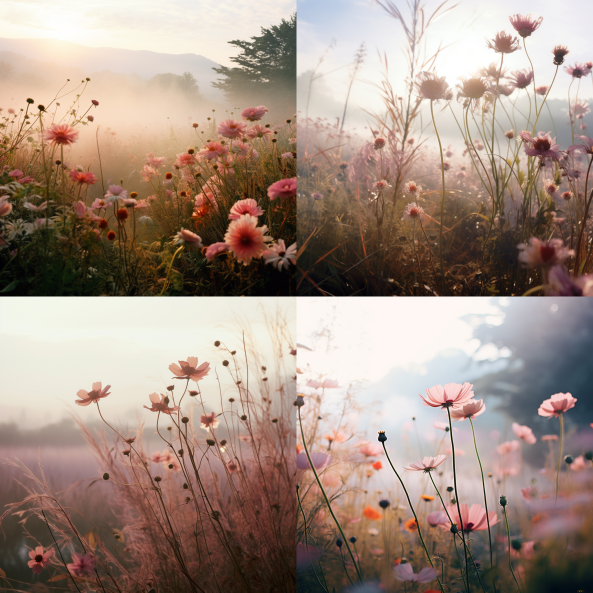
An image showcasing a delicate flower in sharp focus while the background gently blurs awayA portrait photograph with a beautiful subject in focus while the rest of the scene softly blursA scene with a child blowing bubbles; with each bubble appearing in crisp detail while the surroundings blurA nature photograph featuring dewdrops on a spider’s web; with the tiny drops in sharp focusA close-up photograph of a flower field with distant blooms appearing hazy
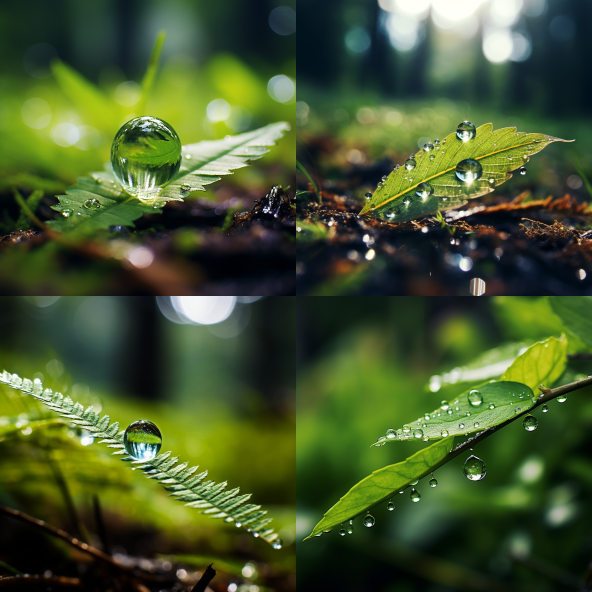
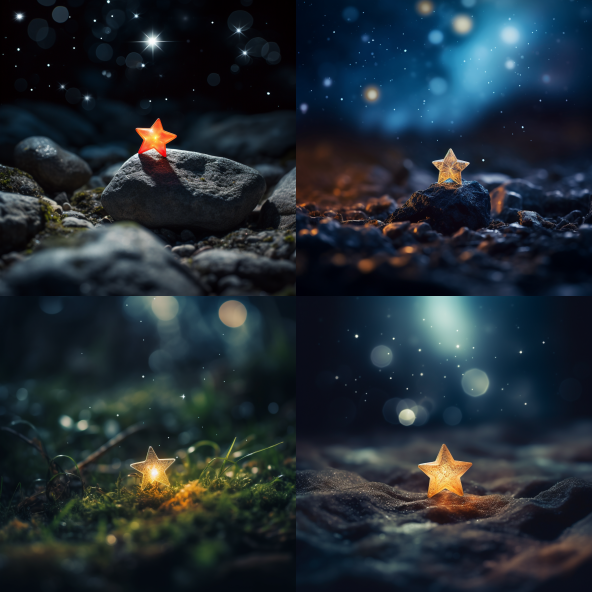
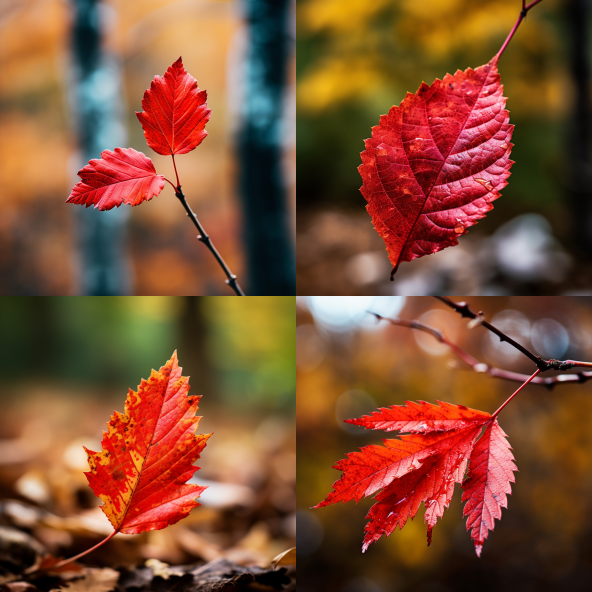
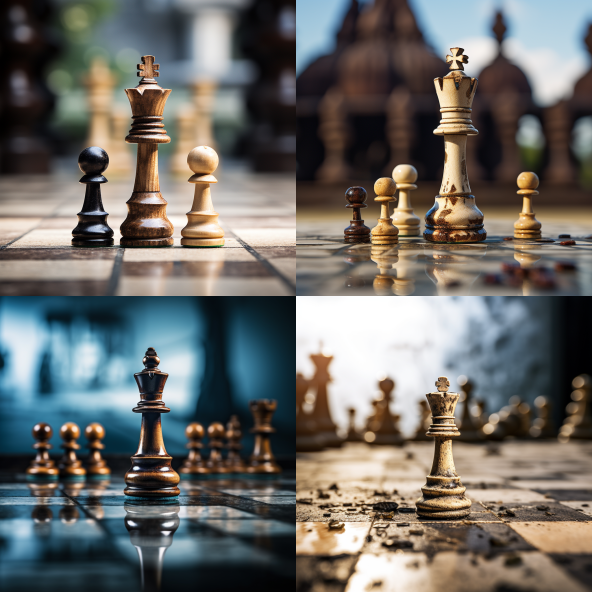
Selective Focus: By keeping one element of the image in sharp focus and allowing other elements to blur, you direct attention while also giving the image depth.
A dewdrop on a leaf in selective focus with the forest blurred in the backgroundA single star in selective focus among a blurry milky wayRed autumn leaf in selective focus against blurred green foliageA chess piece in selective focus, the remaining board and pieces blurred in the background
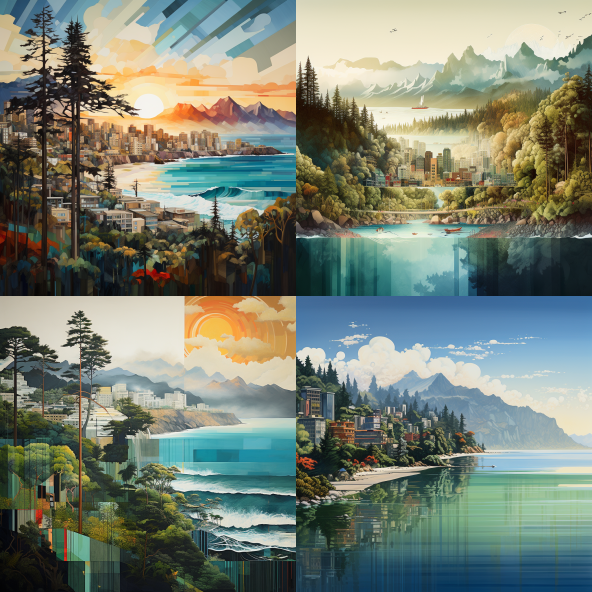
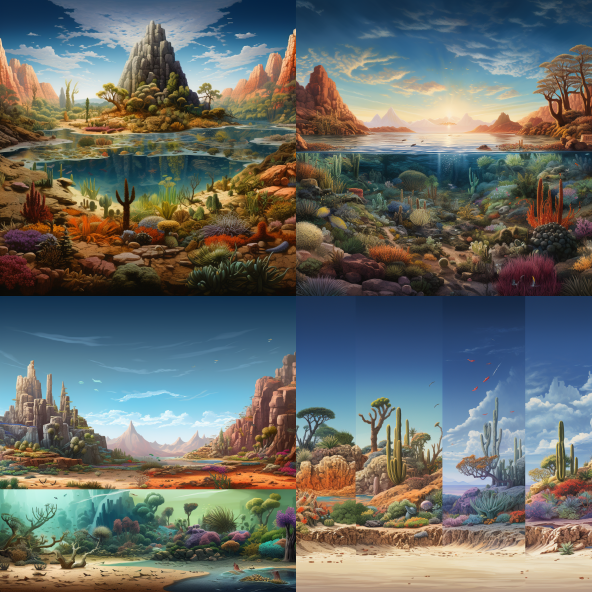
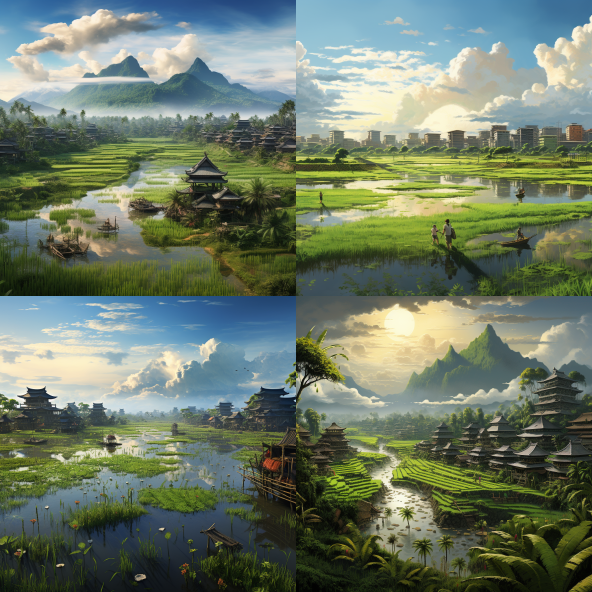
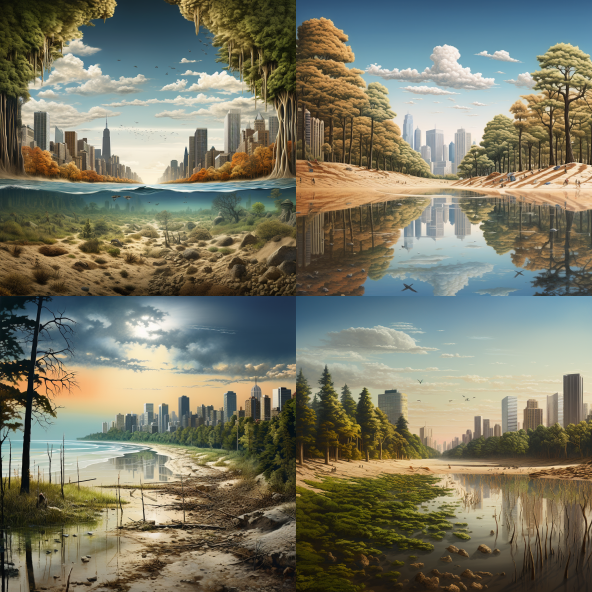
Multiple Horizons: More layers contribute to a deeper visual experience.
Utilizes various layers such as foreground, middle-ground, and background to enhance the sense of depth in an image. This is a variation on using the actual words of foreground, middle-ground, and background by simply using “multiple horizons” in the prompt to let the AI decide the placements a bit more freely. Some prompts get you glitch, others are wow.
Layered landscapes of a beachfront, cityscape, forest, and mountains showcasing multiple horizonsVarious ecosystems from a coral reef to a rainforest and a desert highlighting multiple horizonsRice paddies, traditional village, and towering skyscrapers showing multiple horizonsSandy beach transitioning into a forest, then a cityscape showing multiple horizons
Miscellaneous
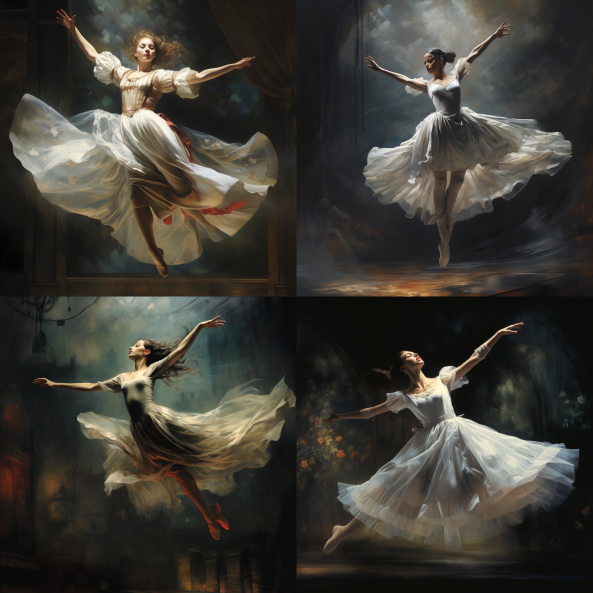
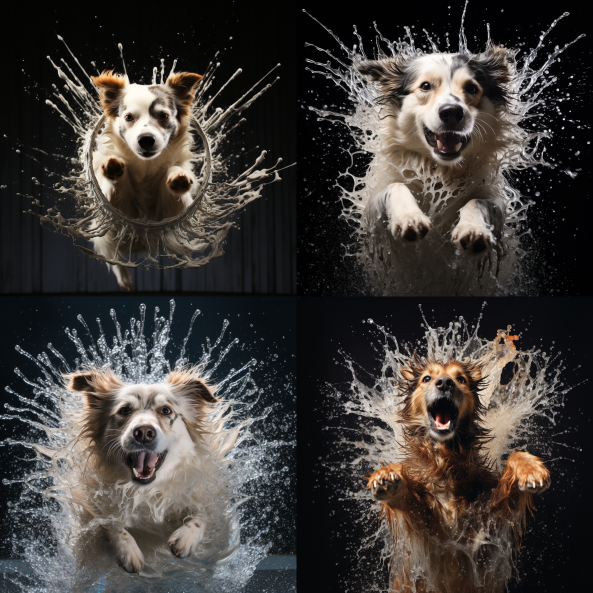
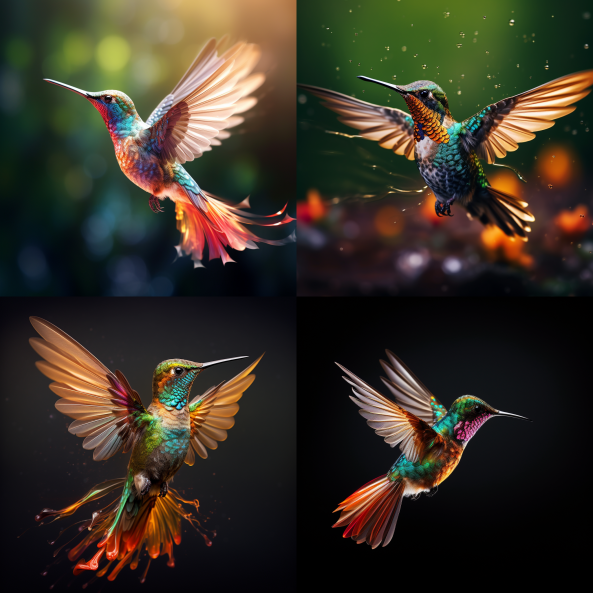
The images below are things I found while experimenting with prompts for these articles as I was looking for more ways to control the compositions. They are in no particular order, simply things I thought were worth sharing. I bolded the interesting part of the prompt that I wanted to highlight.
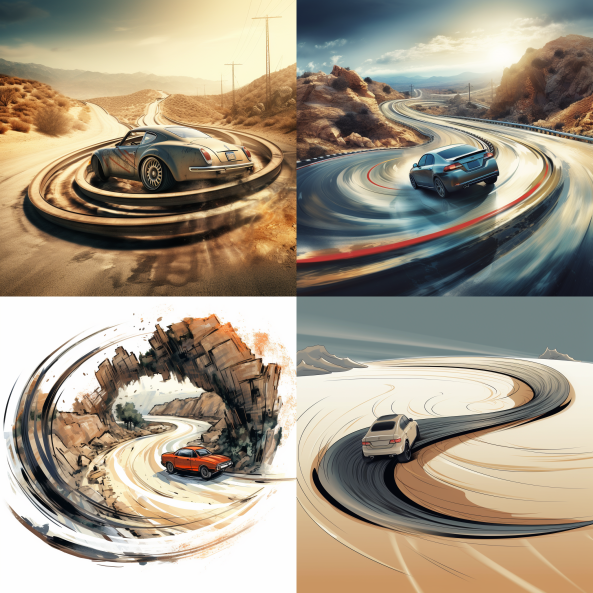
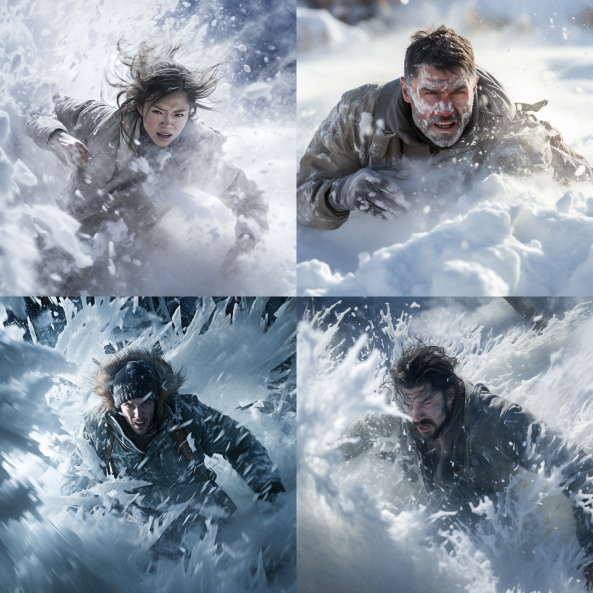
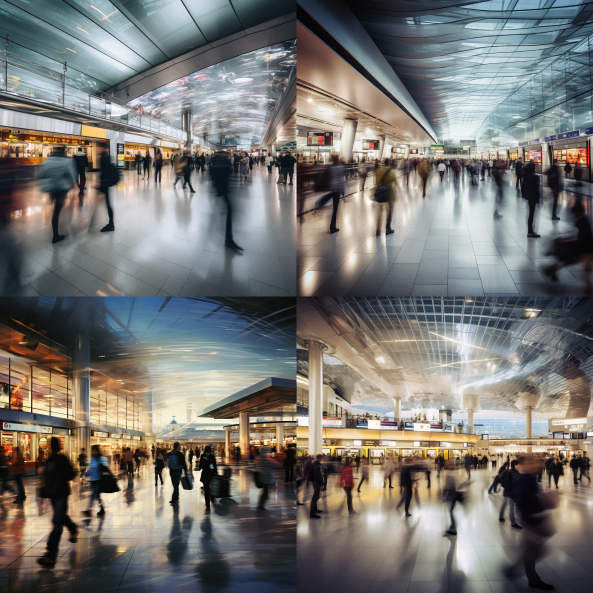
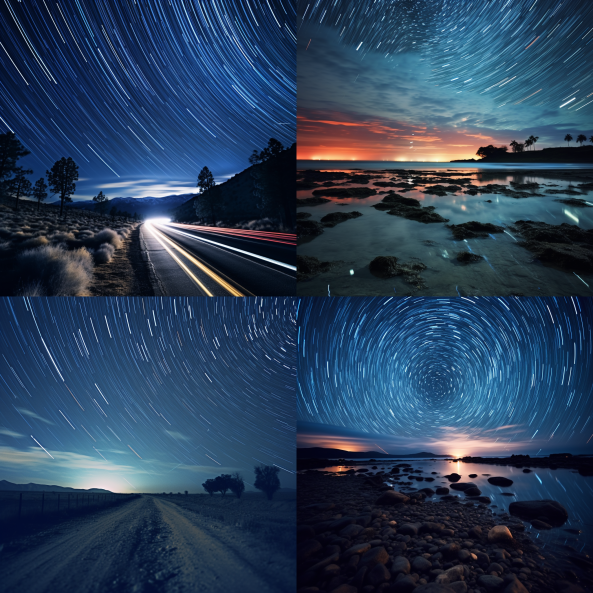
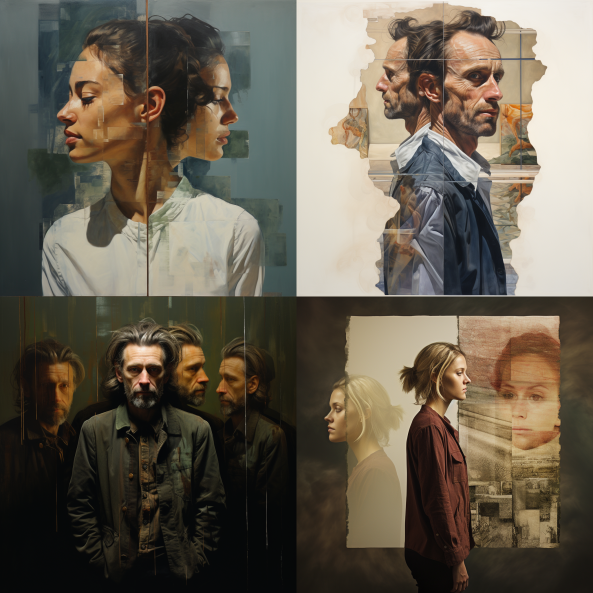
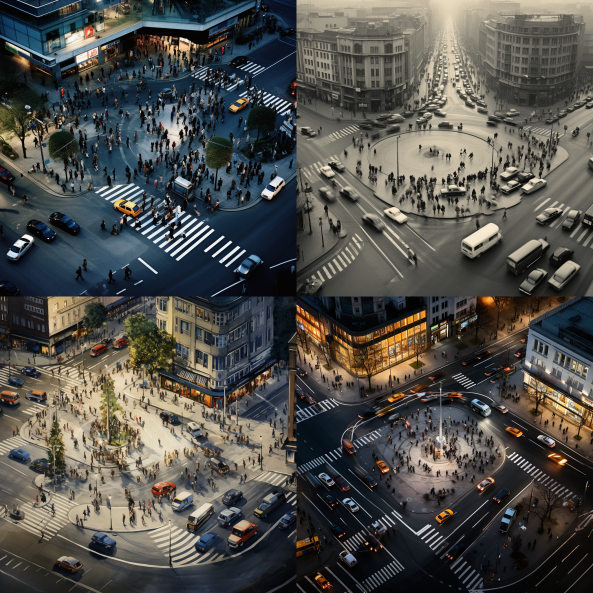
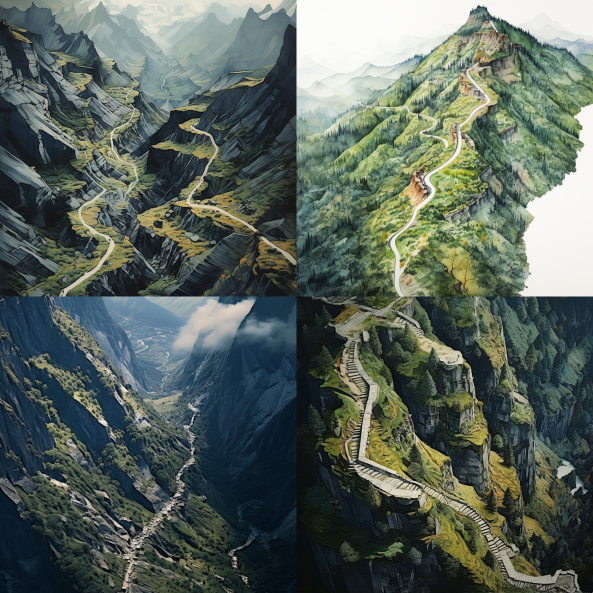
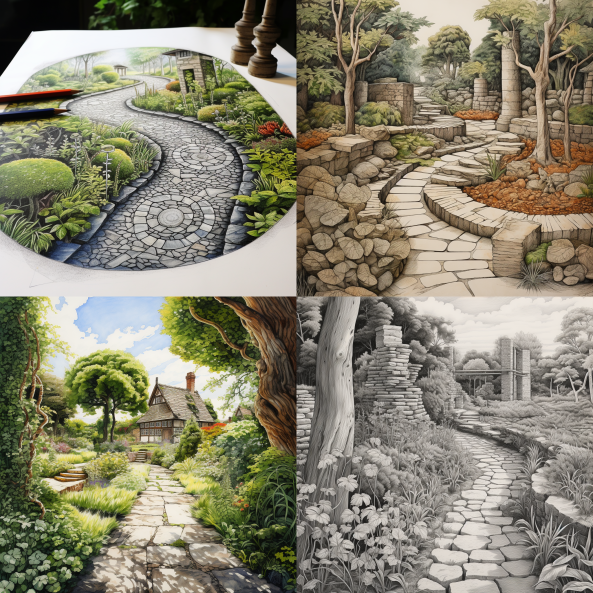
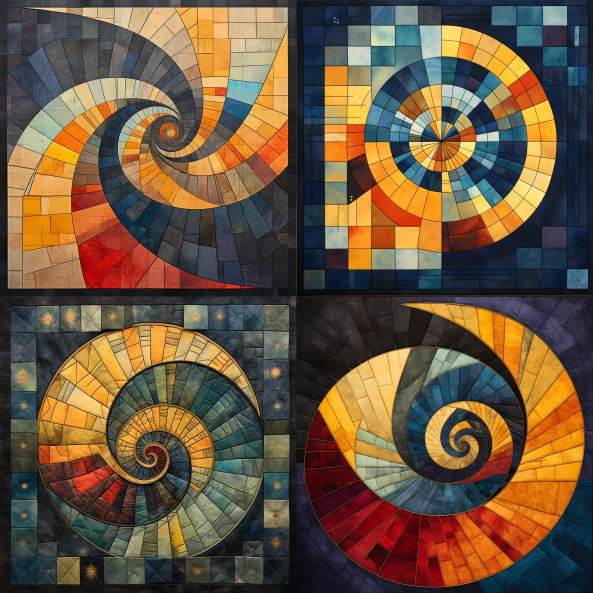
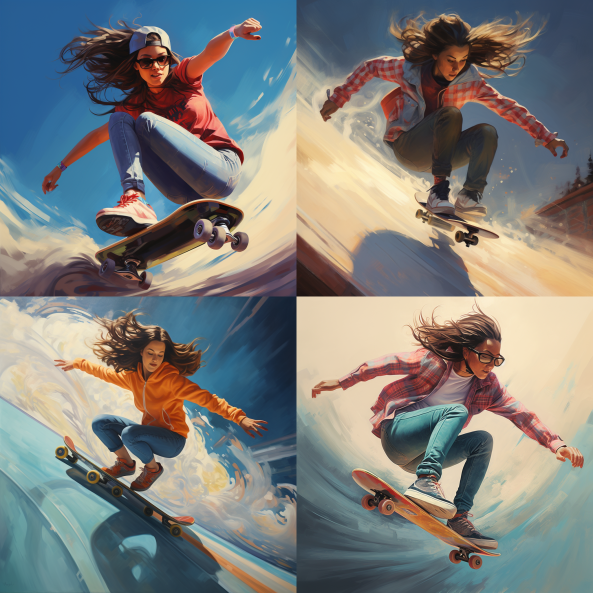
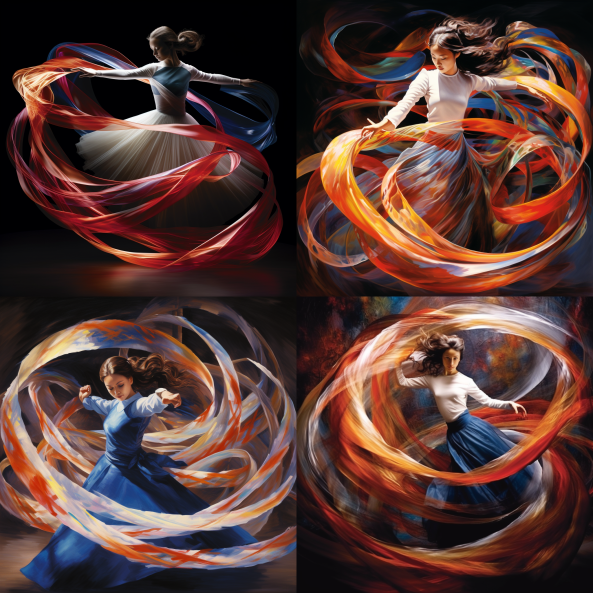
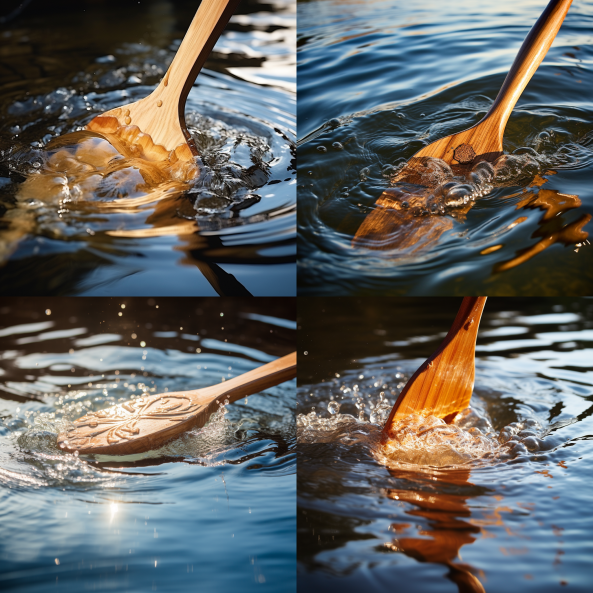
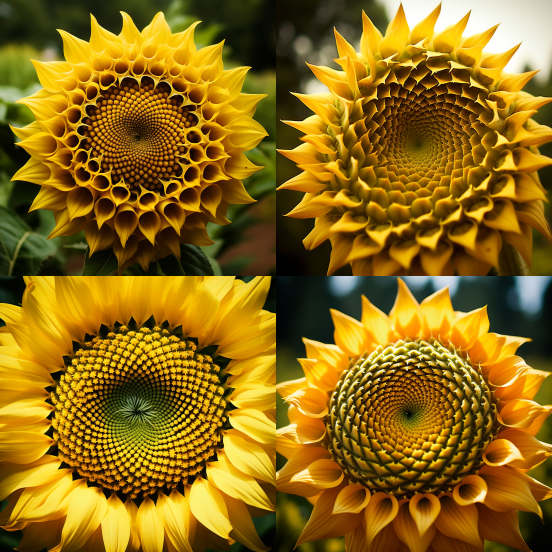
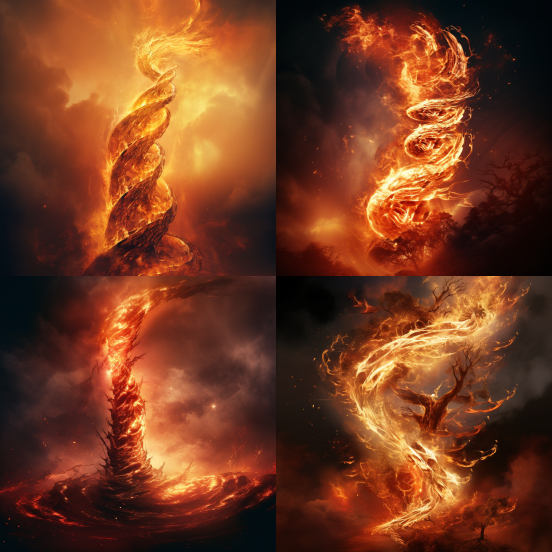
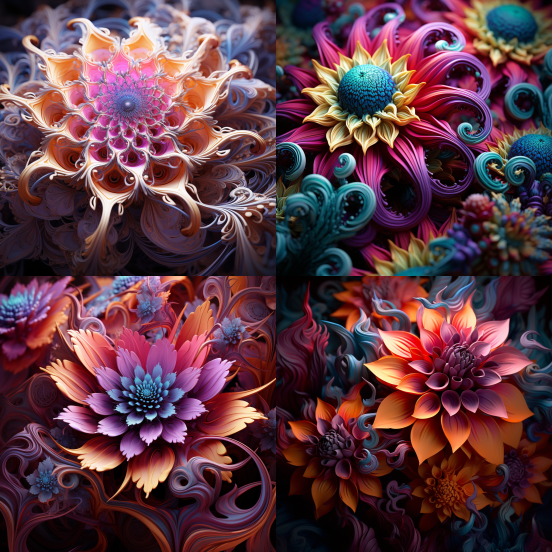
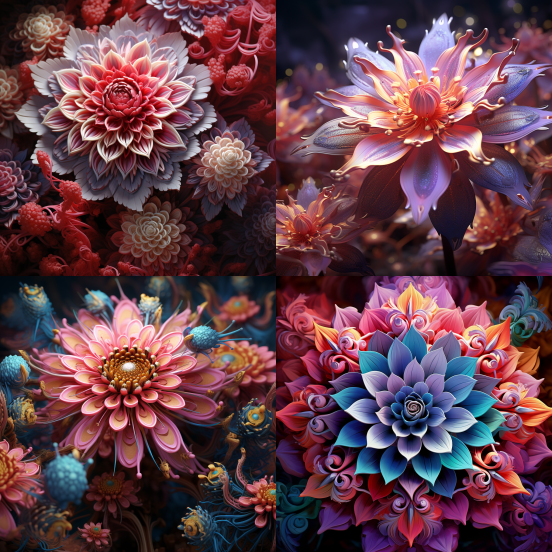
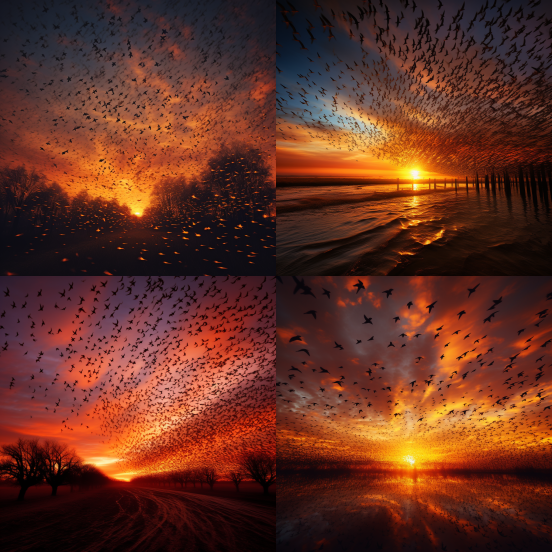
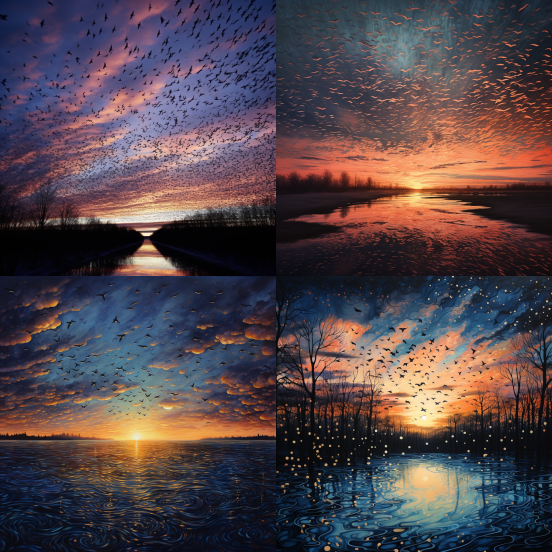
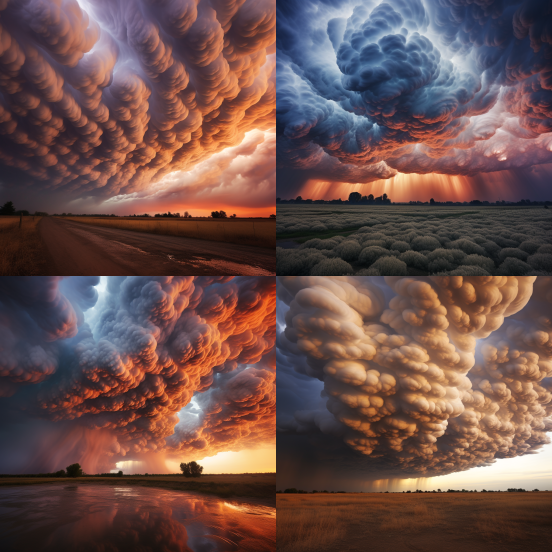
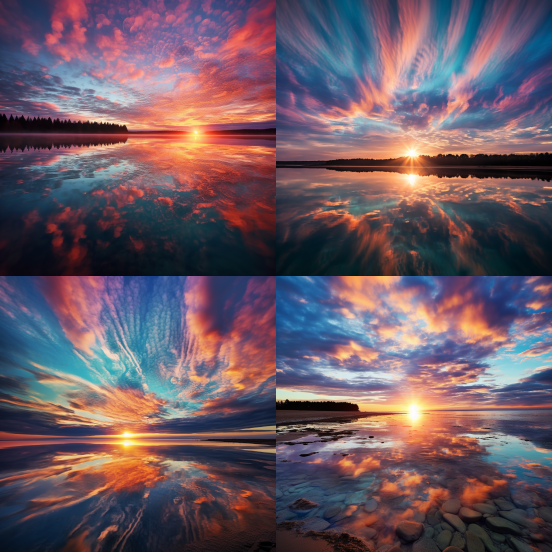
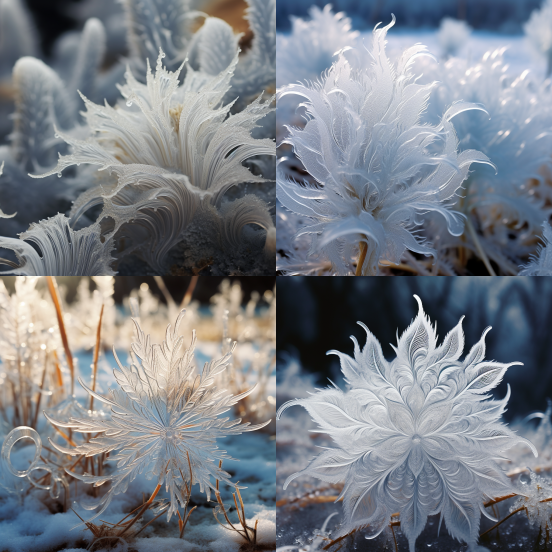
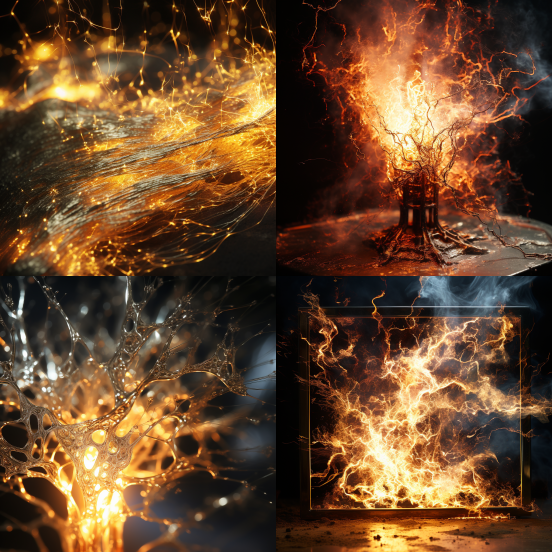
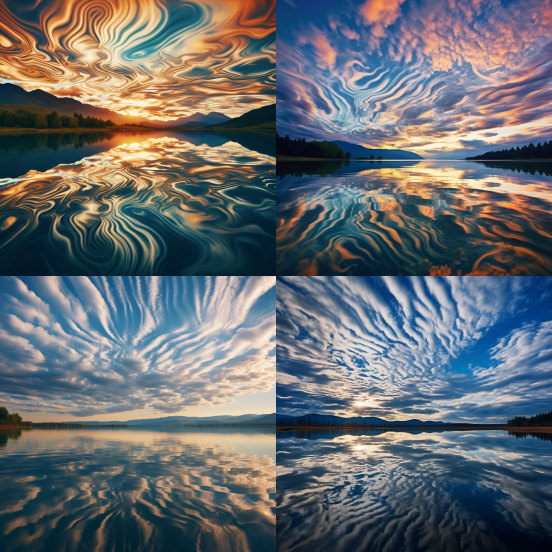
A ballet dancer leaping gracefully; her hang-time visible as she seems to floatA dog shaking off water; its fur creating a centripetal whirl of dropletsA hummingbird’s wings captured in slow motion; showing flapping frequencyA car drifting around a bend; its sliding friction causing the wheels to screech.An action scene frozen in a freeze-frame; each detail crisp and clearA bustling airport in time-lapse; showing the comings and goings in a blur of activityA night sky captured in long exposure; the stars leaving streaks as they moveA portrait of a person from multiple viewpoints; showing the front; side; and back in one composite imageA busy intersection seen from a zenithal viewpoint; the traffic forming a choreographed dance of movementAn aerial view of a mountain path with evident linear perspectiveDraw a stone path winding through a garden with visible vanishing pointsQuilt pattern with piece sizes and arrangements following the Golden RatioA skater mid-jump; her momentum carrying her smoothly over a row of obstaclesA gymnast twirling ribbons in a spiral; the rotational torque of her movement captured in the flowing fabricA paddle cutting through water; displaying fluid resistanceFibonacci spiral in a sunflowerFire tornado spiraling upwardsBlossoming fractalsTwilight sky filled with the fluid patterns of murmurations.A dramatic sky filled with mammatus clouds during a thunderstormDramatic nacreous clouds reflecting the sun’s rays at dawnFrost flowers formed on a surface with intricate crystalline patternsClose-up of St. Elmo’s Fire phenomenon on a metal objectA serene lake under the captivating patterns of Kelvin-Helmholtz cloudsDiffraction
Sometimes the simplest prompts can give you the most interesting images!
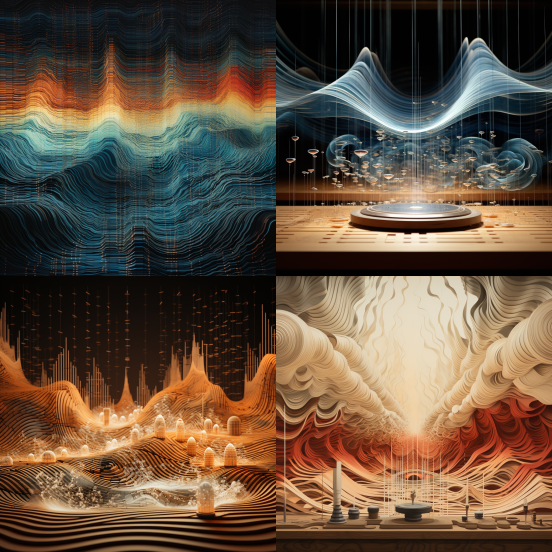
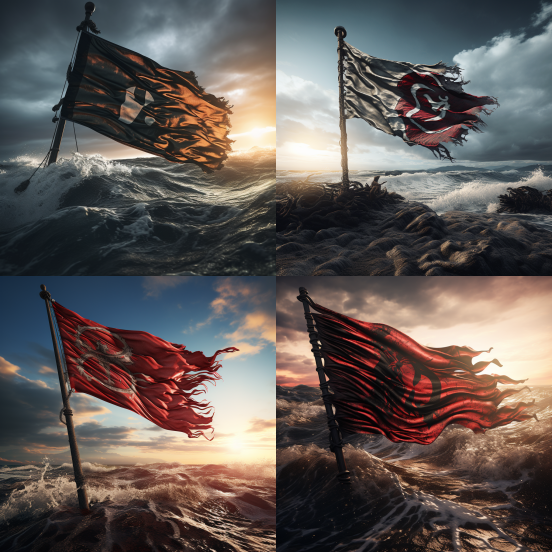
An artwork depicting sound waves as they oscillate across a surfaceA pirate flag rippling in the wind
Conclusion
Mastering depth and composition in Midjourney offers an exciting challenge but yields equally rewarding results. From scale to selective focus and multiple horizons, the techniques we’ve explored provide a deeper understanding and control over your generative art endeavors. Yet, as with any tool, there’s always a learning curve. Don’t let minor setbacks deter you; the trick is to keep experimenting until you get it right.
Thank you for diving deep with me into this fascinating subject; I hope you’ve found the insights valuable. If you’ve enjoyed reading this, please hit the clap button (lots if you really got a lot out of it!) and consider following me for more articles like this. Happy generating!