
Medium Writing Tips
Medium vs. WordPress
Should writers use Medium or create their own self hosted blog with WordPress?
Reader Question:
Should I use Medium to publish my blog or should I create a self hosted blog through a platform, such as WordPress?
Answer:
Whether a blogger is just starting out, or is at the stage where they are finally starting to gain some traction among readers, virtually all will consider the age old question — Should I use Medium to publish my blog or should I create a self hosted blog through a platform, such as WordPress?
I’ll start by saying that there is no definitive answer for everyone, so if you are looking for me to pick one of the two options, and discredit the other, this article is not for you.
If you want to learn about the advantages and disadvantages of each platform, learn more about what each really entail, and read a detailed comparison, this is the article for you.
Background on Blogging for Beginners
I would generally recommend to anyone that is considering starting a blog that they begin on a self-hosted setup.
Self-hosting means that a user has full access to all the site files and code and can deploy them in any way they like. A self-hosted site has its own domain name and is hosted by one of a number of web hosting providers who make server space available for self-hosted sites of all kinds. Owners of self-hosted sites are free to make changes to the site files in order to customize the website and add any needed functions.
The reason I would suggest a self-hosted blog over a site-hosted blog is pretty straightforward— if you want to build a blog that is taken seriously by search engines and readers alike you’ll want to avoid free hosts.
Free hosts just aren’t strong enough once you get beyond a certain point. And if you already are using Medium, there is no real reason to look at other free hosting options.
Free hosts include blog sites like Blogger, Tumblr or WordPress.com (WordPress.org is also free but you can only use it on a paid, self-hosted server) which don’t cost anything but also limit you in various ways.
Paid hosting accounts include companies like BlueHost, which host your blog and domain name for yourself. This is a more professional option and really gives you control of your servers and how you design, build and optimize your blog or website.
So the real question is — do you need a more customizable self-hosted blog or is a free but limited blog on a platform like Medium sufficient for your needs?
What is Medium?
If you are a Medium member, you obviously already know what Medium is. But for those that may not have set up a Medium account, below is a quick explanation of Medium:
Medium is an online publishing platform developed by Evan Williams (Twitter Co-Founder) and launched in August 2012. It contains writing from a mix of amateur and professional writers. The initial goal behind the platform was to make it as easy as possible for people who have thoughtful things to say.
Medium has gained popularity among writers for it Partner Program. The Medium Partner Program allows anyone to quickly create sleek posts and to instantly monetize these posts.
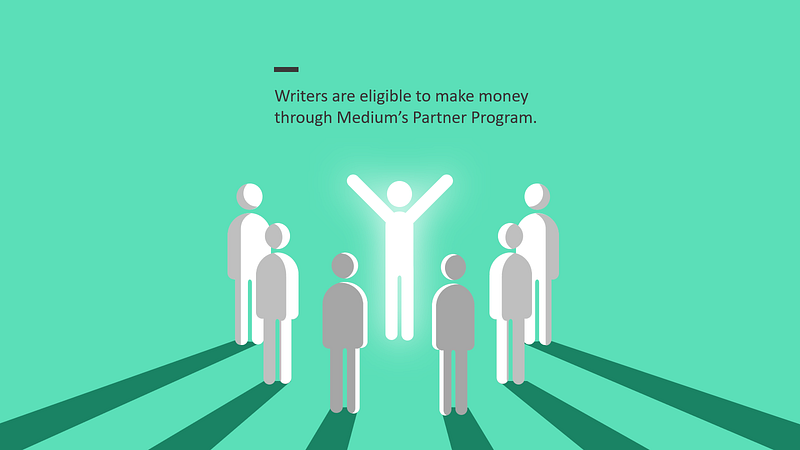
Partner Program writers are paid based on how deeply Medium members read their work. As members read longer, writers earn more. In addition, we distribute a portion of each member’s subscription fee to the writers they read most each month.
What is WordPress?
WordPress is by far the most popular blogging platform in the world. WordPress powers over 30 percent of the Internet.
Pros:
- Very flexible — WordPress gives you full control over every aspect of your site
- Highly extendable — you can add almost any functionality through plugins (The WordPress directory has over 54,000).
- Thousands of mobile-friendly themes allow you to switch the design of your blog at the touch of a button.
- The platform can be relatively easily search engine optimized and works well with social media.
- You will have full ownership of your content.
Cons:
- Beginner friendly, although running your WordPress website does involve some technical know-how. For that reason, there is a learning curve
- You are responsible for site maintenance including backups, security, and performance.
WordPress is Perfect for:
- Business blogs
- Online businesses
- Professional bloggers
- Bloggers who want full control over their site
What Are the Features of WordPress That Have Made It so Popular in the Blogging World?
Plugins
The real power of WordPress comes from plugins, which allows you to do almost anything you want with your website. There are currently more than 30,000 free plugins available on WordPress.org repository alone. Thousands of paid plugins are available from various other sources as well.
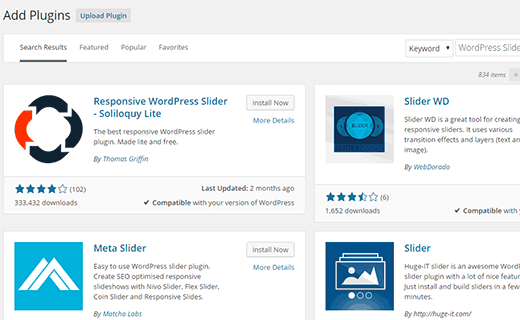
Plugins allow you to do anything you want such as build email list, create an eCommerce store, and more. If you can think of some cool feature to add to your WordPress.org site, then there is a good chance that someone has already created a plugin to do just that.
Themes
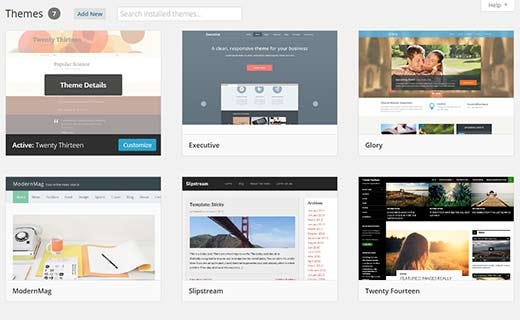
WordPress.org offers thousands of themes available for self hosted WordPress sites. This makes it easy to make your blog or website look professional, while still maintaining a flair of originality.
Running Advertisements on Your Site
On a self hosted WordPress site, you decide whether to run ads or not. You control what kind of ads would display on your website. You can add affiliate links to your blogs or join any advertising program you want and display ads on your website.
You may even manage your own ads using some of the best advertising plugins. Most importantly, you will be the one making money from those ads.
Your Own Brand
With a self hosted WordPress.org site, you get your own domain name. This domain name is your brand identity.
You don’t want to share your brand with a web address like yourname.wordpress.com when you can get a domain name of your own.
With most WordPress hosting providers, you get your branded email address like [email protected] which looks more professional on your business cards or any other promotional material.
Monetization Options
One great advantage of a self hosted WordPress.org site is that you can easily add a full fledged eComemrce solution like WooCommerce to your website.
This allows you to sell things from your website, offer premium content, and grow your business. Even if you are just starting out as a small blog, you would still want to keep this option open.
Pricing
WordPress is an open-source solution which means it’s free to use. Keep in mind that self-hosted sites requires you to find a hosting provider and a domain name (which do cost money).
These do not all need to be provided by the same company, but this is typically simpler, especially if you are new to self hosted blogs. That is why I typically recommend Bluehost.
Bluehost simplifies the process of creating a blog or website by providing:
- Free Domain Name for 1st Year
- Free SSL Certificate Included
- 1-Click WordPress Install
- 24/7 Support
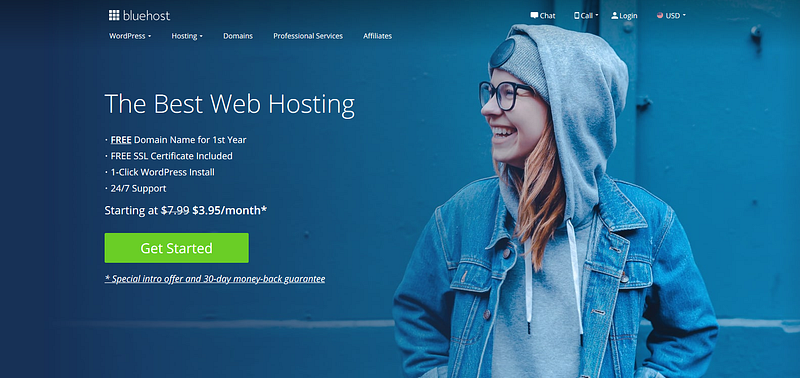
They are even running a special where they cover all of these services for as low as $3.95 per month (which is hard to beat).
If you are looking for additional cheap domains (maybe you want to buy and hold a domain name while you figure out your hosting needs), I would recommend NameCheap. There are lost of domain registrars, but NameCheap is that perfect sweet spot of cheap (without buying domains in larger bulk quantities) and user friendly.
Whatever you do, I would not recommend using GoDaddy for any of the above services!
Godaddy is completely overpriced for virtually every feature. It is user friendly, but it is not worth the markup when sites like NameCheap are essentially 99% clones, at lower prices.
Although you can always switch your hosting provider, domain registrar, (while still keeping WordPress and your underlying website architecture) it can be a really annoying process. I actually started with GoDaddy as one of my first providers and I shudder to think how much money I wasted applying for overpriced products and how much time it took to transfer most services to other providers.
What Is the Difference Between Free/Shared Hosting and Self Hosted Blogs?
Free Hosted Blogging Platform
A free blogging platform is one that you can simply sign up for a free account, get a free subdomain via the platform (i.e. bloggingguide.blogspot.com or bloggingguide.wordpress.com) and quickly set up your site.
Your files are stored (hosted) on the platforms servers, which you don’t have access to but you have the option to purchase a custom domain name. Some examples of free hosted blogging platforms are Blogger, WordPress.com, Joomla.com, Tumblr and Medium.
Self-Hosted Blogging Platform
Self-hosted is slightly more work to set up and comes with some added cost. You need a custom domain name and hosting in order to set up your site. A self-hosted blog is one that “lives” on your own server. You pay for hosting to rent digital storage space.
Self hosting means you have full control over your blog and have more options when it comes to layout, search engine optimization, advertising revenue, additional functions and more. You can install custom themes to brand your blog. You have complete access to your backend files, which allows you to make any necessary code changes. Some examples of self-hosted blogging platforms are WordPress.org, Joomla.org, Drupal.org and Ghost.org.
What Are the Main Differences Between Publishing on Medium and Creating My Own Self-Hosted Blog?
So hopefully you know a little more about what Medium and WordPress are, as well as what makes a self hosted blog different than a free hosted blog.
Now you are trying to decide which option is right for you.
Below are some of the Pros and Cons, when comparing Medium against a self hosted blog.
Note: While there are many self hosted blog providers, I will be focusing primarily on WordPress, when referring to self hosted blogs, below.
Factor — Cost
Differences: When it comes to cost, Medium is the clear winner. Posting on Medium is 100% free. Even if you choose a simple design on WordPress, acquire a cheap domain, and find affordable hosting, you will be spending at least $100 per year. Likely several hundred dollars if you want to really make your blog amazing.
Winner:
Medium
Factor — Control/Customization of Design
Differences: WordPress is the clear winner when comparing the ability of an author to customize their design. Not that Medium's uniform design is bad — it is actually one of the site’s overall strengths. Clean, organized, sleek aesthetic is what has helped Medium gain traction among readers and writers. But if you want to be able to change the layout, color scheme, font, text size, embed specific plugins, or create an e-commerce store related to your content, WordPress is the clear choice.
Winner:
WordPress
Factor — Control/Freedom of Speech/Platform Risk
Differences: While authors still own their content when publishing on Medium, it’s worth noting that Medium reserves the right to cancel your account or remove your content at any time. Although, in my experience, Medium is much better than platforms such as Quora, which ban members automatically and without explanation. There is also the greater risk that Medium will run into some sort of trouble and will shutdown. While I do not see this happening anytime soon, this is the risk when hosting your content on any third party company’s platform. This is why at a minimum, I recommend backing up your Medium articles periodically:
Even if Medium does not fail as many publishers, tech companies, and social media companies do, a more reasonable scenario might be that Medium is hacked or someone makes some sort of error and deletes massive amounts of content.
WordPress faces few of these risks. The platform almost never restricts or even get involved with individual blogs/websites (unless it is being used for something illegal). At a minimum, your freedom of speech is better upheld by WordPress.
Once you understand WordPress, you can easily export not only your articles, but entire site architecture for backup. So even if there were an issue with WordPress, you could keep operating your website, just on a different platform.
On WordPress, the monetization strategies are left up to you, and there is little risk of that changing. Medium could change the terms of the Partner Program overnight, and writers would have no recourse.
On Medium, you do have a built in audience. But curation and other factors that are out of your control, still determine much of one’s success on Medium. WordPress may not have the same built in audience, but you never need to wait for a publication or curator to distribute your articles. You have total control and the final say.
Winner:
Factor — Scalability/Growth Potential
Differences: Medium allows writers to scale their writing profile very quickly. You can quickly create a wide array of content by posting stories, a series, publications, responses, and letters. WordPress allows writers to create an ecosystem in which your content is a central component, but it is one of many verticals designed to build your brand and make money. Beside having your blog posts, you may also have other content related to your personal brand or business, such as detailed bio/company information, landing pages, eCommerce stores, forums, or private member access content. You can create all these verticals and promote them through Medium but Medium is not designed to do that making it somewhat challenging, and in many cases they actively try to prevent this (No advertisements allowed, no prominent CTAs if you want your content curated, etc.). WordPress allows users to truly build their own brand and choose how they grow.
Winner:
WordPress
Factor — Built in Audience/Ease of Finding New Readers
Differences: One of the greatest benefits of using Medium over a self hosted blog is that Medium offers a built in audience. Medium has somewhere between 85 and 100 million monthly active users, which demonstrates its massive audience and potential reach of content. While millions of people may use WordPress for their blogs, each blog has the disadvantage of needing to figure out how to gain readers.
In addition to having a built in audience, Medium has extremely high domain authority, boosting your article’s rankings in any search engine. Most self hosted blogs, especially new ones take years to establish significant domain authority.
Domain authority of a website describes its relevance for a specific subject area or industry. This relevance has a direct impact on its ranking by search engines, trying to assess domain authority through automated analytic algorithms.
For example, Medium has an extremely high score of 95/100, whereas most newly created blogs will struggle to exceed 10.
Winner:
Medium
Factor — Technological Simplicity/Ease of Use
Differences: Medium is easier to use than WordPress. This is one of the main draws of Medium — its WYSIWYG design allows anybody to create an account, write articles with little or no technical experience required, and automatically enable monetization through the Medium Partner Program. That said, WordPress has made creating a self hosted site simple enough, that virtually anyone can create one. While WordPress sites can be complex and highly customized, there are countless user friendly features that allow anyone to create a sleek, personalized blog.
Winner:
Medium
Factor — Monetization of Content
Differences: Most free hosted blogs would not even begin to compare to WordPress. But this is where Medium shows its strength. Despite being a free platform, it allows authors to monetize their writing with literally just a few clicks. For most writers this is the biggest value of publishing on Medium. However, if you are interested in building your own brand, generating leads, selling products, or running ads on your own website, WordPress easily trumps Medium. Ultimately, this factor is a tossup because it really depends on how you want to monetize your content. Medium offers a simple but rigid program. WordPress offers more opportunities for monetization and customization but requires more effort and skill.
Winner:
Tie Between Medium and WordPress
Factor — Search Engine Optimization (SEO)
Differences: If you know what you are doing WordPress has an amazing array of plugins and features that can boost your SEO. That said, this does take some experience and knowledge. Medium on the other hand allows writers to customize most elements of their post, with relative ease.
Also, Medium has extremely high domain authority, boosting your article’s rankings in any search engine. Most self hosted blogs, even ones with all the proper SEO optimization, take years to establish significant domain authority.
Domain authority of a website describes its relevance for a specific subject area or industry. This relevance has a direct impact on its ranking by search engines, trying to assess domain authority through automated analytic algorithms.
For example, Medium has an extremely high score of 95/100, whereas most newly created blogs will struggle to exceed 10.
So by simply posting on Medium your content instantly gains more credibility with search engines. That said, Medium could have made it easier/clearer as to how writers can make these changes. Evaluating this factor depends upon your needs and level of technical experience, as WordPress does offer amazing and relatively easy to use SEO plugins.
Winner:
Tie Between Medium and WordPress

It’s also worth noting that all of the advantages in this list favoring Medium, are subject to change. Medium could make publishing less simple, they could charge writers, they could change the terms of the partner program to require content to be exclusively published on their site, or they could simply stop the Partner Program and change business models.
Will these detrimental changes happen? It’s not likely. But it is possible.
These are the larger risks worth considering before investing hundreds or thousands of hours of your time and/or money into a single endeavor.
That said, having used both WordPress and Medium, I think that Medium is an amazing product, and for most new bloggers/writers, it is probably a good way to start. If your content takes off, you always reserve the right to move to a new WordPress site.
And while this article is meant to be a comparison of Medium and WordPress (assuming a writer is trying to pick between the two), there is an obvious third choice for those not constrained by the cost or time— publish on both platforms! The two platforms are not mutually exclusive.

Thanks for reading this article! Leave a comment below if you have any questions. Be sure to sign up for the Blogging Guide newsletter, to get the latest tips, tricks, and news about writing on Medium and to join our Facebook group, Medium Writing, to share your latest Medium posts and connect with other writers.
If you liked this article, here are some other articles you may enjoy:

Casey Botticello is an internet entrepreneur and the founder of Blogging Guide, an online community of writers with an award-winning newsletter. He is also the creator of the popular Medium Writing Course and the Substack Newsletter Course.
Casey previously worked at several tech startups, a lobbying & strategic communications firm, and has created several businesses of his own. He is a graduate of The University of Pennsylvania, where he received his B.A. in Urban Studies.
You can connect with him on LinkedIn, Twitter, Facebook, follow his Medium publications, Digital Marketing Lab and Medium Blogging Guide, or reach out to him directly on his personal website.


