
Medium is the Massage Oil: You Are Its Hands and Elbows
A great innovator from long ago predicted what we would have today as our favorite writing platform (in all of its entirety — good, bad, and indifferent). He knew the impact we would have. Was he correct?
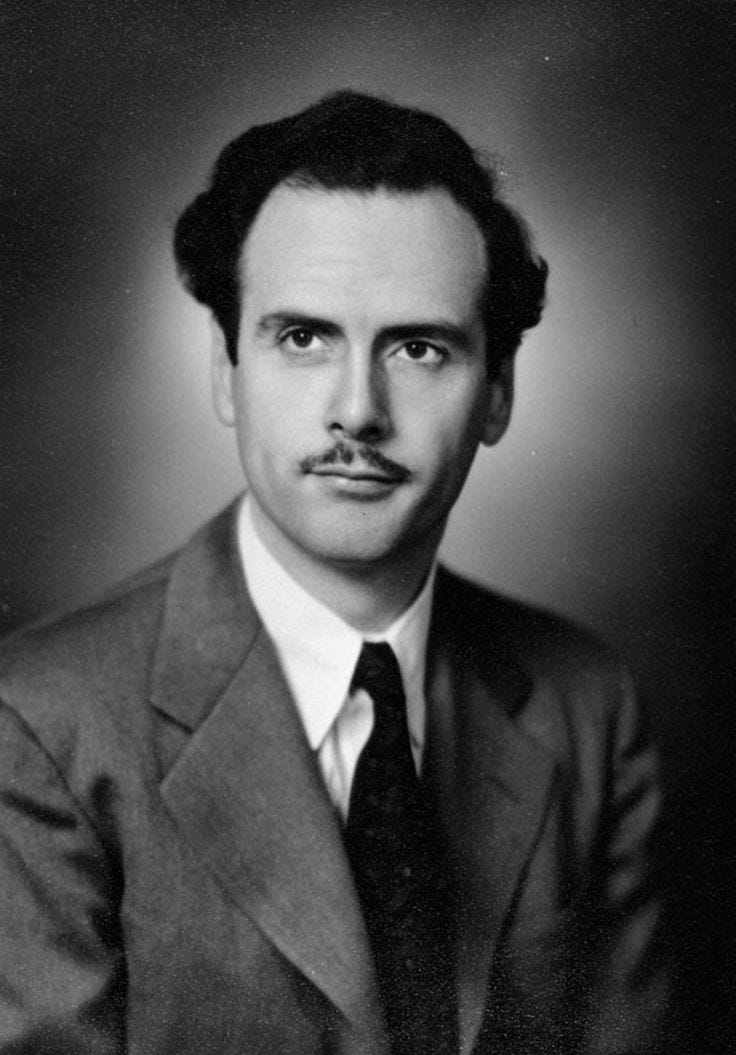
Herbert Marshall McLuhan (July 21, 1911 — December 31, 1980) was a Canadian philosopher. Many don’t know it, but his work is among the cornerstones for the principal study of media theories, and he knew Medium would be here right about now. And what he said about it will surprise you. But first, a little background:
McLuhan studied at both the Universities of Manitoba and Cambridge and he began his teaching career as a professor of English at several universities in the United States and Canada before moving to the University of Toronto in 1946, where he would live out the remainder of his life.
(✅If you are not a Medium subscriber, use this link to read this article🌻)
McLuhan was and still is famous for having coined the expression “the medium is the message” in the first chapter of his well-received book Understanding Media: The Extensions of Man.
McLuhan’s theory:
With his phrase: “The medium is the message” — he proposed that any and all communication mediums themselves, not the messages they carry, are the primary focus of what is being read and studied. He believed that any artifact included in a specific source of a media affect the entirety of society by the indulgence of their very characteristics primarily, and then their content second to that.
In other words, Medium itself is more important to your readers than reading the content you write for it. No great shakes there, right? There’s more…
McLuhan understood the term “medium” as a specific style of communication in the broadest sense. Typifying his view, in Understanding Media, he wrote: “The instance of the electric light may prove illuminating in this connection. The electric light is pure information. It is a medium without a message, as it were, unless it is used to spell out some verbal ad or name.” To him, the light bulb demonstrates the concept of “the medium is the message” since a light bulb does not have content in itself. And yet it is a medium that has a social effect in that it enables people to create spaces during nighttime which otherwise would be only darkness.
And by extension, Medium the website therefore shines its influence on social themes which otherwise would not have been viewed anywhere else.
McLuhan was prescient and discussed the internet way back in 1962. Thanks to Jake Rossen for his excellent article in Mental Floss:
“Futurists of the 20th century were prone to some highly optimistic predictions. Theorists thought we might be extending our life spans to 150, working fewer hours, and operating private aircrafts from our homes. No one seemed to imagine we’d be communicating with smiley faces and poop emojis in place of words. Marshall McLuhan didn’t call that either, but he did come closer than most to imagining our current technology-led environment. In 1962, the author and media theorist, predicted we’d have an internet.
“That was the year McLuhan, a professor of English born in Edmonton, Canada on this day in 1911, wrote a book called The Gutenberg Galaxy. In it, he observed that human history could be partitioned into four distinct chapters: The acoustic age, the literary age, the print age, and the then-emerging electronic age. McLuhan believed this new frontier would be home to what he dubbed a “global village” — a space where technology spread information to anyone and everyone.”
Jake Rossen’s article continues:
“Computers, McLuhan said, ‘could enhance retrieval, obsolesce mass library organization,’ and offer ‘speedily tailored data.’ McLuhan elaborated on the idea in his 1962 book, Understanding Media, writing:
“Since the inception of the telegraph and radio, the globe has contracted, spatially, into a single large village. Tribalism is our only resource since the electro-magnetic discovery. Moving from print to electronic media we have given up an eye for an ear.”
That’s pretty good — huh? Anyone with that kind of foresight must know that of which he speaks.
So, to give another example of McLuhan’s theory, the message of a newscast about a heinous crime is not only a news story itself (the content of the story), but also more about its entertainment value and its persuasive power over public attitude towards crime since the reports are brought directly into the home via television broadcasts for the public to watch while they are eating their dinner. Any wonder political bickering is so widely viewed no matter which side you take?
To McLuhan, the term ‘message’ signifies both content and character. The content of the medium is a message that we all can easily understand, while the character of the medium is an entirely different message altogether. McLuhan says “Indeed, it is only too typical that the ‘content’ of any medium blinds us to the character of the medium.” He is indicating here that the medium itself both shapes and controls the public’s association and learning.
Boosted or not, your articles here make a difference since you are helping to sculpt the medium of Medium itself, one significantly crafted jawline strike at a time.
Taking film and movies as an example, he strongly believed that the way this medium used conceptions of speed and time reinvented “the world of sequence and connections into the world of creative configuration and structure.” Therefore, the message of the movie medium is the very transition from direct causal connections to the director’s ideas of meaning itself.
By extension, understanding the medium as the message itself, he proposed that in the future, the content of any medium will always be built upon an earlier medium. All of us writers here on Medium, are thus building upon the things we’ve learned somewhere else, utilizing resources found elsewhere, but we are refining them for our times and for our specific audiences.
But here’s where we contribute the most. McLuhan frequently punned on the word “message,” changing it to “mass age,” “mess age,” and “massage.” A later book of his was titled, The Medium Is the Massage and was originally to be titled The Medium is the Message, but McLuhan preferred the new title, which is said to have been the result of a typographical error.
Concerning the title, McLuhan wrote:
The title “The Medium Is the Massage” is a teaser — a way of getting attention. There’s a wonderful sign hanging in a Toronto junkyard which reads, ‘Help Beautify Junkyards. Throw Something Lovely Away Today.’ This is a very effective way of getting people to notice a lot of things. And so, the title is intended to draw attention to the fact that a medium is not something neutral — it does something to people. It takes hold of them. It rubs them off, it massages them and bumps them around, chiropractically, as it were, and the general roughing up that any new society gets from a medium, especially a new medium, is what is intended in that title.”
We all do that — look for the best titles to capture potential reader’s interests. There are even apps that do this for us better than we could do it ourselves.
I believe all of us writers on Medium, no matter how good, how popular, which topics we choose, how much applause we receive, are each contributing to the everlasting pixels of a medium which will never die. It is a testament to life as we know it on this planet during this fascinating time in humanity’s existence. Or to use McLuhan’s analogy of a massage: we are all giving one good elbow dug deep into the strained and spasming shoulder muscle of society itself.
People tend to focus on the obvious, the content, hoping it will provide valuable information. In the process, they likely miss the structural changes in the influence of the medium itself over longer periods of time. In Understanding Media, McLuhan describes content of any medium as a juicy piece of meat a burglar might carry and use in order to distract the mind’s own watchdog. Society’s values, norms, and ways of doing things will always constantly change because of newer technology, and it is therefore important that all of us writers and readers realize the social implications of the medium itself.
One way to understand this is to look at how Medium has impacted and changed your life itself. And then how about all those other websites? We don’t heed these changes; we embrace them whether or not it is good for us to do so.
McLuhan, way back when, understood that these changes upon all of us would range from cultural, societal, worldly and local themes, to beliefs about family and religion, and once started, would continuously set historical precedents through their interplay between ourselves and the existing technological of our time, until they impacted people all the way around the world as a cascade of interactions traversing way beyond our control and which we would never be fully aware of.
Oops! Hope the effects of my output was mostly beneficial somehow….
Written with special thanks to these Wikipedia articles and their references:
Marshall McLuhan and The Medium Is the Message
And finally, this:
Thank you for your time. Please follow me to read more of my stories, or click here to find them.
Not already a member? Join Medium for other extremely insightful articles and stories by me and great authors worldwide. Come and write with us at Spread the Ripple.
This story was brought to you by Spread the Ripple. We are a publication dedicated to kindness, positivity, and happiness. Read more stories and come and write with us here:


