
MAYIM BIALIK | STEVE HASSAN | CULTS | MIND CONTROL | INDOCTRINATION
Mayim Bialik’s “Breakdown” & Steve Hassan: Spotting a Cult, Hidden Hypnotism & Indoctrination in the Digital Age
In addition to her successful acting career, Bialik holds an impressive academic background. She earned a Ph.D. in neuroscience from UCLA.
Note: My stories candidly portray my experiences, thoughts, and emotions, which may be intense for some readers, particularly those sensitive to trauma. While I use AI to assist me due to my neurological conditions, system errors inaccurately tag my content as AI-generated, causing restrictions. Until these issues are rectified, I’m including it in my disclaimer. Reader discretion is advised.
Dear Fellow Survivor ™,
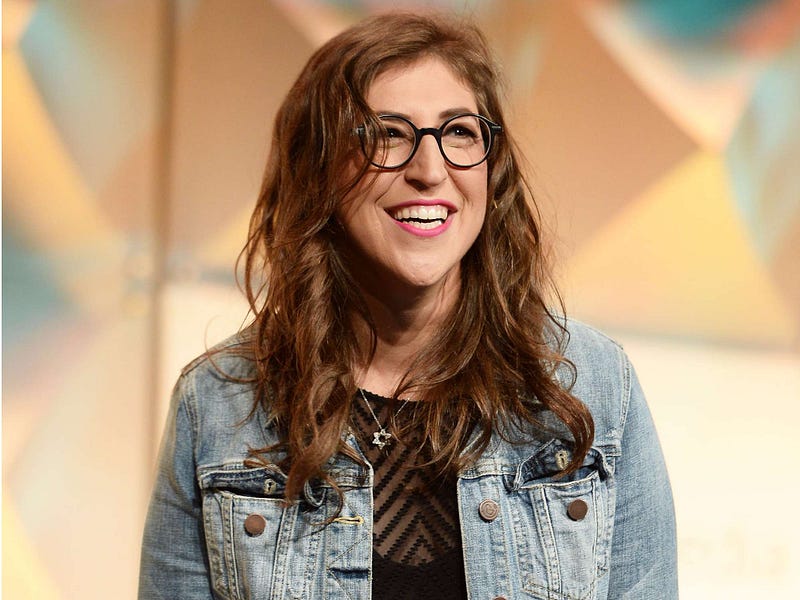
Mayim Bialik (my-um bee-uh-lik) is a multi-talented actress, neuroscientist, and author known for her diverse career in the entertainment industry. She gained widespread recognition for her portrayal of the quirky and intelligent Amy Farrah Fowler on the hit television show “The Big Bang Theory.”
(Though I’ve been watching her since she was “Blossom.”)
In addition to her successful acting career, Bialik holds an impressive academic background.
She earned a Ph.D. in neuroscience from UCLA. Her dedication to academic pursuits alongside her thriving acting career showcases her exceptional intellect and lifelong commitment to learning.
Over the years, many of my online followers are aware that I’ve been vocal about certain “coaches” and “influencers” within the Manosphere. This is mainly because of the significant negative impact they’ve had on my life following my encounter with my sex trafficker and other individuals who exploited me for many years.
The harm caused by this exploitation didn’t just affect me personally; it also took a toll on my successful career. Since 2015, I have faced ongoing gangstalking, doxxing, and severe psychological abuse as retaliation for standing up and speaking out about it all.
By 2021, the abuse had escalated to its worst point, with unforgivable actions targeting both me and my family.
While I’d rather not continually revisit these specifics with every related post, you can discover more about the reasons behind my decision to share these experiences for the benefit of other survivors here:
I’d like to draw attention to an episode of Mayim Bialik’s “Breakdown” featuring cult expert, Steve Hassan. I highly recommend listening to the entire 1.5-hour podcast.
If you are struggling with being involved in the teachings of the Manosphere, especially if you have used neuro-linguistic programming on women without their permission in the world of pickup artistry, employed intermittent reinforcement through “Red Pill,” or participated in operant conditioning within their different groups, causing harm to others, I have collected some insightful quotes for you:
“I was told by the Erickson Foundation you need a master’s degree if you want to study with us. So I went and got a Master’s so that I could actually study with the real deal people who are the Masters in the world. So I’d been flying around the world to all these conferences. Learning from the top people, I don’t use [Neuro-Linguistic Programming] hypnosis in my work with my clients but I teach them what I’ve learned about hypnosis. I’ll show them a video, I’ll explain it. So going back to your answer, your question. What do I mean by covert hypnosis? It is inducing and altered state of consciousness in a person without their volition and without their informed consent, in order to do something to them, and the most common thing is rape. And you can Google sex plus NLP, or sex plus hypnosis. And you can see many sites where, with a credit card, they’ll teach you how to do this technique.” — Steve Hassan
“You’re saying that a component of certain cults…that there’s a set of ways to speak and manipulate that are effectively used to, to get someone to have sex with you against their will?” — Mayim Bialik
“Well, they might think in their mind that they’re with the love of their life and not with the creepy smelly guy that just that to them in a bar. But yes.”
“I think many women know what this is. It is often an experience you have with someone. After the fact, a week later, the next day, you realize you were told everything that they wanted you to believe to get you into bed, right? I mean, that’s a thing.”
“Folks on the spectrum, folks, with dyslexia, ADHD, ADD. Those types of things can be, especially susceptible if they’re not educated because they like the rules. They like the formulas that outline it all out. And so many of the cases I’ve done, including some one who was going to shoot up a lot of people, and fortunately, we did a successful intervention. I said, I think he needs to be tested because I think he’s on the spectrum and he was and is very, very high functioning. But folks on the spectrum, love this chart and the BITE model because then they can analyze for themselves.” — Steve Hassan
“When we talk about populations, that might be more susceptible to these kinds of influences, especially of an authoritarian nature, what you’re saying is that for people who already resonate towards wanting order and especially if there’s any insecurity about their sense of order or not fitting or being different, when you’re presented with someone that says, ‘I’m going to fix it’. ‘Here are the things to do’. ‘Here are the things to believe’ and ‘here’s the structure’, you have to follow that kind of rigidity and in some cases can feel kind of comforting.”
“Yes, but more importantly, I think is the the socialization of having an instant in-group where people accept you and your special, and you’re one of us and you can recite right at your and you’re building towards something bigger.”
Mayim Bialik’s podcast “Breakdown” and Steve Hassan’s discussion on cults, hidden hypnotism, and indoctrination in the digital age both touch on the ways in which individuals can be influenced and manipulated.
Bialik’s personal experience sheds light on the impact of societal pressures and mental health struggles, while Hassan’s insights into manipulation and control within cults and extremist groups provide a broader perspective.
When examining the connection to those stuck within the Manosphere’s rhetoric, it’s important to consider how vulnerable individuals may be drawn into these communities due to feelings of alienation, insecurity, and a desire for belonging.
Both Bialik and Hassan’s work underscore the need for critical thinking, introspection, and support systems to counteract the effects of indoctrination and manipulation.