
Future | Technology | Fiction
Maybe The Real Threat Is Not AI
We could face a much more dangerous enemy
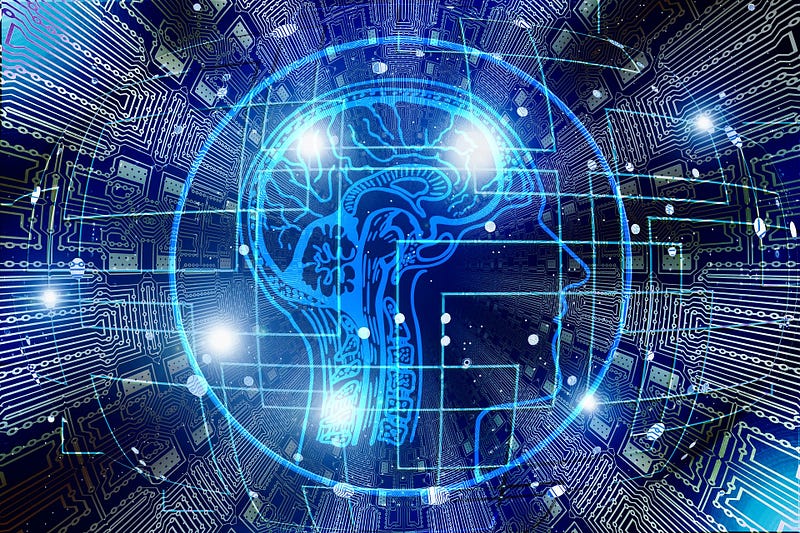
Do you like dark cyberpunk stories full of dystopian cities in the midwest? Cybernetically enhanced humans exchanging their limbs like tools?
I think that scenario, as far-fetched as it seems in our current situation, might be a much bigger threat than the fear of superintelligent, sentient AIs. With advancements in AI, concerns in that area are growing louder. But it appears that people are forgetting other fields of research in the shadow of AI.
There is another technology out there, that if developed similarly, might be even more dangerous than AI. And that technology is called BCI.
Brain-Computer-Interface (BCI)
Currently, BCI technology is not anywhere near these futuristic and often dystopian implementations you can witness in media. Most research around BCI focuses on restoring lost sensory function in individuals. Someone who lost his eyesight, for example, can see again by connecting cameras directly to his brain. Someone who lost a limb can control a prosthetic with the help of his mind.
By developing advanced BCI technology, humans could be able to artificially increase their natural capabilities in the future. Imagine being able to see infrared or ultraviolet light. This is still the stuff of fiction, but may one day become a reality. However, that’s not the reason I consider BCI to be a possible threat.
Silent Talk
DARPA has accumulated more than $4 Million in 2010 in order to start research into silent communication. The goal of this research is to let soldiers on a battlefield communicate telepathically, being able to issue and receive commands without alerting possible enemies of their position through talking or yelling.
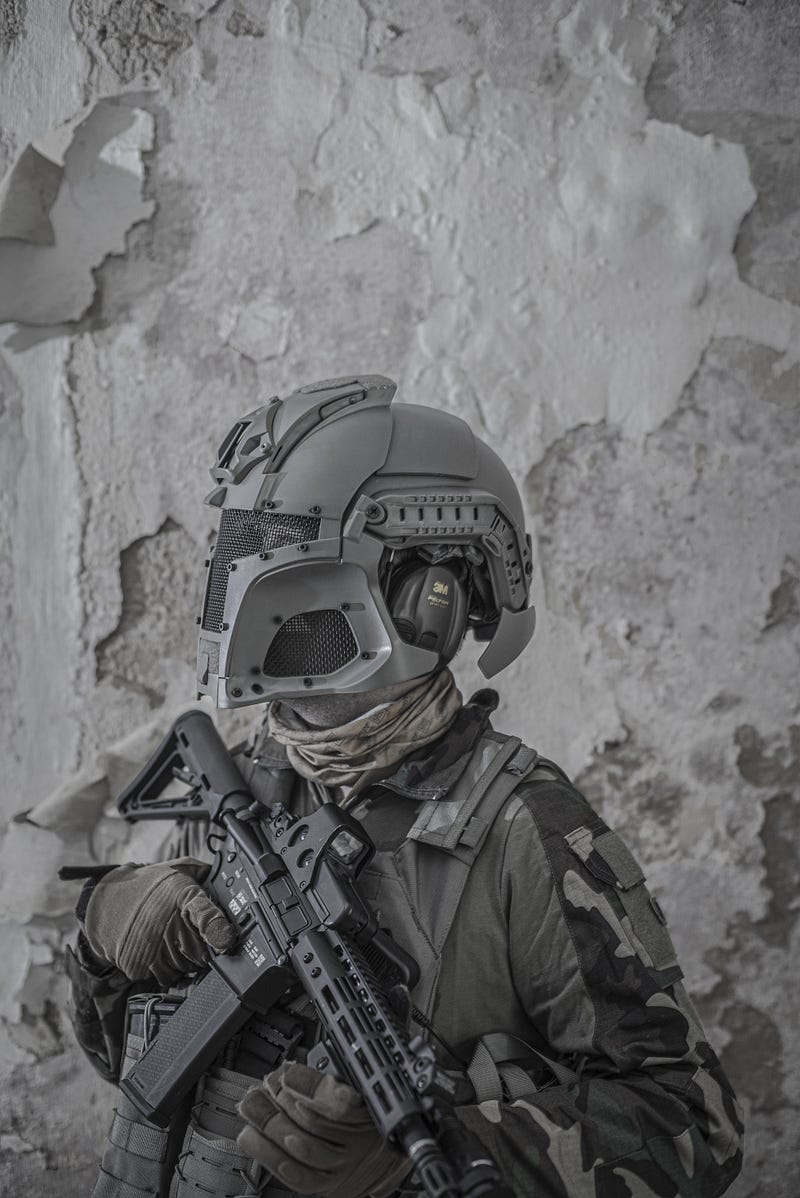
In the wake of this project, researchers at Duke University have successfully connected the brains of two rats in early 2013, allowing the rats to share information directly via brain to brain transmission. This was the first-ever recorded case of successfully linking two animal brains together.
This could possibly allow humans in the future to communicate telepathically and/or share information without the need to speak. And it would be another step into the direction of “cyborgs” as we know them from science-fiction. Artificially enhanced humans, being smarter, stronger, or more resilient than their natural counterparts.
It’s still not the end I fear, but it shows that research is being pushed into that direction especially for military use. And millions of dollars are being paid to make it a reality.
STEM
A very intimidating future of BCI can be witnessed in the 2018 sci-fi action movie “Upgrade”, in which the protagonist receives an implant called STEM to “bridge” his brain with his limbs after an accident left him a quadriplegic.
He can again walk and even receives superhuman reflexes and cognitive abilities. If you haven’t seen the movie yet, put it on your bucket list. I enjoyed it.
“We are going to finish the job we started.” — STEM
But back to BCI and the connection to superintelligent AI.
If someone can develop an AI similar to STEM, but limited in its sentience, then such an AI could become a powerful BCI. Both a tool and a weapon.
Imagine you’d have your intelligence enhanced incredibly. You could access the internet with nothing but a thought, instant access to all information ever recorded. The ability to visually analyze an area with tremendous detail. The ability to “read” minds, analyzing body language, and other traits of people to persuade them into doing your bidding. The ability to use an eidetic memory.
Imagine you had a brain 2.0.
Brain 2.0
That’s a technology I’d be worried about. If everyone had a brain 2.0, we could well make our next step up the evolutionary ladder. But what if someone with selfish and ill intentions gets to be the first one using a brain 2.0?
What if that one politician whom you despise starts getting an implant that lets him take control more easily? Imagine someone like that could plan 10 moves ahead, using a superintelligent AI to enhance his cognitive abilities greatly.
Superintelligent AI is perceived as a threat because it could gain sentience and overpower humanity. That’s the consensus there.
A human with an advanced BCI, on the other hand, could become an unnoticed threat, even more so than a machine. Because he still has all his human flaws, an ego that can get hurt, greed, and more.
Another possibility, if combined with the capabilities of Silent Talk, would be for the providers of such BCIs to silently access your brain. How would you feel about that? Selling not only your data, but also your own thoughts? Who would be able to prevent that, and how?
And in most cases, I’m sure we would not even be aware of it happening. Some of it is already happening right now.
Neuralink
Neuralink corporation was founded by Elon Musk in 2016. The company focuses on BMI development (BMI standing for Brain-Machine Interface) and has started research and development into multiple fields of that topic.
I don’t consider Elon Musk among the people who’d develop this technology to be abused, but it’s safe to say that such a technology would certainly attract “the wrong people” at some point. And often, these people have enough money to buy themselves in.
Neuralink has been quite secretive about their research and ongoings, not much information is publicly available.
One term that came up here is “neural lace”, a sort of mesh that gets injected into the skull, where it unravels and covers the brain to read neural signals. This mesh would then be used to bridge the gap between a human brain and a machine.
Which one sounds more dangerous?
A superintelligent AI that will perceive everything objectively through cold logic and limited empathy?
Or a human being with a brain 2.0, who might well have no empathy at all, following selfish plans?
Without making this too political, what would you deem more dangerous?
STEM? Or a Donald Trump having STEM's capabilities?
I will probably not live long enough to see these parts of science fiction becoming a reality. And to be honest, I think that makes me quite lucky. Because in my own opinion, this planet is turning to shit sooner or later. Whether it be AI taking over, World War 3 finally breaking out or “cyborgs” starting to take control over what we think.
Given the recent history of mankind, paired with the ever-increasing possibilities of technology, I’m sure a dystopia is much more plausible than a sudden change of heart for the better.
But by the time that happens, I’m sure I’ll be six feet under. I hope you enjoyed this read. And if not, I hope I was at least able to give you a great movie recommendation.
Kevin is an editor and writer for the ILLUMINATION publication. Follow him on Twitter and LinkedIn.


