
Math Chat Mondays #1: Using Rich Tasks in the Math Classroom
A Math Moment with Linda Gojak, K-5 Reveal Math Author
Welcome to Math Chat Mondays, a series where we highlight many of the expert authors, advisors, and thought leaders behind our new Reveal Math K-5 core mathematics program. Each Monday we will introduce a Reveal Math contributor, asking them questions about their mathematical research and expertise, their contributions to the Reveal Math curriculum, and above all, why they are passionate about all things math. Read on to meet our first guest, Linda Gojak!
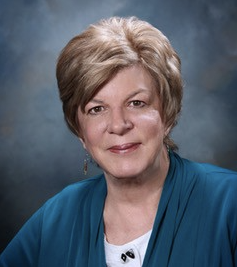
Meet Linda Gojak
Linda has taught mathematics in the classroom across various grade levels. She has held offices as President of the Ohio Council of Teachers of Mathematics, the National Council of Supervisors of Mathematics, and the National Council of Teachers of Mathematics. Linda has received the Presidential Award for Excellence in Mathematics and Science Teaching and the Christofferson-Fawcett Award for Leadership in Mathematics Education.
1. Why have you chosen a career supporting math classrooms?
My goal has always been to get students to deeply understand the mathematics they are doing and not just go through the motions of remembering and following procedures. Making time for students to talk about their thinking and listen to the thinking of classmates provides the opportunity to build that deep understanding rather than simply focus on getting the correct answer.
The bonus is that through student discourse, I also learn more about where each student is in his/her understanding and as the teacher, I can think about where misconceptions are and how I can support students through my questions and additional tasks rather than just show it and tell it one more time.
I have also learned there are many things we can do as teachers to help students become more comfortable in talking and writing about their thinking rather than just focusing on the right answer. While this all takes additional time, I believe that less is more. Opportunities to share thinking, consider the thinking of others and revise my own thinking has become important for me both as a learner and a teacher.
Read more about identifying misconceptions with math probes:
2. How do you encourage students to enjoy math?
I have spent much of my teaching career and time working with teachers to look for or develop tasks that give students (or teachers) the opportunity to “play” with the mathematics. Time for students to explore and try their ideas out rather than follow meaningless procedures gets them involved. This means I have to give my students tasks that are interesting and challenging.
The goal of the tasks I select needs to not only focus on the mathematical concept I am teaching, but also be one that grabs student interest in pursuing a solution or solutions to the problem and provides multiple entryways to reaching a solution. When kids get involved in constructing their own understanding, they will stick to a task.
We need to give students time to do this. When they know I value their thinking and that making mistakes is an important part of learning, they are willing to explore and construct their understanding.
Discourse becomes an important part of revising and adjusting their thinking. One of my favorite tasks is to have students determine the better of two pizza offers. They find many strategies to determine a unit cost (perhaps the cost per square inch). While I don’t expect them to discover the formula for finding the area of a circle, they develop a deeper understanding of the concept of area. When the formula is connected to their thinking, they also have an appreciation for efficiency.
Learn about the benefits of classroom discourse:
3. Describe Rich Tasks and how educators might use them effectively today.
Rich tasks allow students to reason about how they can make sense of a given context. They have multiple points of entry and a variety of strategies that can be used to reach a solution or solutions. They should include important mathematical ideas (not only computation) and provide the opportunity for students to use and extend what they know. If a student can solve a problem with little thought or only through mindless procedures, that problem is not a rich task. Rather, it is an exercise where students are simply doing what they already know.
Educators can use rich tasks to introduce a concept by allowing students to explore, try things out, revise their thinking, and determine if an answer is reasonable. I try to find rich tasks to introduce a new concept and follow up student work time with discourse about the different approaches they used to reach a solution. It is important to realize that a good task will take much more time to do in class (or as homework) so this is a situation in which less is truly more.
Teachers may not be able to write their own rich tasks and that is not an expectation. There are so many good tasks available on the internet and in alternate resources. What really excites me is that many textbooks are included rich tasks rather than emphasizing show and tell procedures.
Read more about using Rich Tasks in the math classroom:
4. How did you get involved with Reveal Math and what are you most excited about?
I have focused on K-5 mathematics for most of my career. As an elementary mathematics specialist and classroom teacher, focusing on student understanding and getting students excited about doing mathematics was my goal. I have written several books and articles on elementary mathematics and the standards and work with teachers internationally to improve mathematics instruction. When I was asked to join the Reveal Math team, I laid out one expectation…that this program could not be the same as traditional programs in that it had to focus on helping students and teachers to build deep understanding of the mathematics they were going to do.
5. What makes Reveal Math different?
We have worked very hard to incorporate both the Standards for Mathematical Practice (CCSSI) and the Effective Teaching Practices (NCTM) into the program — not just as add ons but imbedded in both the pedagogy and content of each lesson. For example, good questions lead to good discourse and we worked hard on providing good questions for teachers to ask.
The first chapter of each year focuses incorporates building a positive mindset, review of concepts from the previous year in preparation so that students can connect previous knowledge to the new concepts, and developing classroom norms for the coming year. The program also gives teachers options for instruction with either a guided discovery approach or a student exploration approach. I think this is exciting and will help teachers (and students) tremendously!
Read more about integrating the Standards for Mathematical Practice into your instruction:
6. What is the most important aspect of elementary mathematics today and how do you see it evolving?
Whether states are using an adaptation of the common core standards or have developed their own standards, the work of the common core has helped teachers to build a more impactful approach to teaching mathematics. The Standards for Mathematical Practice and Effective Teaching Practices can be implemented with the use of any set of good standards.
I see a great shift in instruction that focuses more on student learning. Elementary teachers are becoming more comfortable building their own mathematical confidence and that has transferred to teaching so that students understand the mathematics they are learning.
I think this will continue to grow and develop with ongoing support such as coaching and good professional development
7. What is your fondest math memory?
I remember early in my teaching career trying to incorporate rich tasks and problem-solving strategies in my mathematics program with a problem of the week (POW). The kids really struggled with these tasks. Some of them referred to themselves as “prisoners of war” when they attempted to solve them!
But I was relentless!
One day well into the year a group of students came to me and asked why I saved the easier problems for the end of the year. I just smiled knowing the problems were actually more challenging and my students were really becoming problem solvers …and beginning to enjoy good mathematical thinking!