
Food | Nutrition
Matcha vs Green Tea
Do they come from 2 different languages?
I think in recent times I dig to write any stuff about food. I’ve been thinking all this time there are no differences between green tea and matcha. Probably those are just the same phrase in different languages and I thought green tea is English and I assume matcha is Japanese.
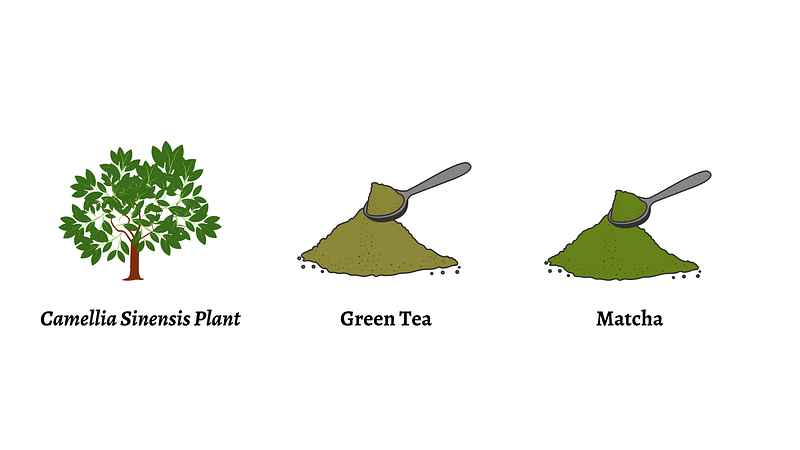
I am just so sad whenever I like to assume with my mind alone and then find out the fact is unlike. Like cacao and cocoa, matcha and green tea come from the same plant Camellia Sinensis Plant. Both have different benefits and flavors so you can choose which one you like more and need based on that. Come on, learn more about this.
Ingredients
Green Tea is made of steeping green tea leaves while matcha is made of stems, leaves, and veins of green tea. Manufacture harvest green tea leaves then heat them quickly while for matcha need more special processing technique.
Processing
Most of the time, green tea is grown directly in the sun while matcha is put in the shade place during the final weeks before harvest to avoid. The shade enhances chlorophyll levels in the tea leaves and turns them darker. The next process is also different. Green tea is prepared by steaming or roasting raw tea leaves for a short time, then drying for several days.
After that, green tea can be consumed shortly.
Besides, matcha is peeled and rooted, then steamed immediately after harvest to stop oxidation, and finally, the leaves are ground into a delicate and bright green powder
Cultivate country
Around 80% of the world’s green tea comes from China, while most matcha is cultivated in Japan.
Dissolution
Green Tea is brewed in boiled water at 100 Celcius while matcha is best when mixed with water under 80 Celcius.
Price
Usually, green tea is cheaper than matcha cause matcha has more value in nutrition and more complex processing techniques.
Equivalent Estimates
a cup of matcha is equivalent to 3 glasses of green tea. Meanwhile, another source mention 10 glass of matcha is equivalent to 15 of green tea. I think the ratio is more or less 1:3.
Color
Green tea has darker while matcha has brighter color because matcha is put in the shade place before harvest, which increases chlorophyll and caffeine levels. The fermentation with a quick steamed process maintains the color and reduces oxidation. Eventually, the finished powder of matcha appears with vibrant green color. On the other hand, green tea leaves lose much of their color during the drying and oxidation process.
Taste
Green tea usually has bitter tastes while matcha is sweet. Because while put in the sun, green tea lost much chlorophyll and natural sugar, while this doesn’t happen with matcha. Also, matcha is often mixed with additional sweetener during the processing. In addition, matcha has a bold, rich, and buttery flavor while green tea is light, delicate, and refreshing.
Texture
Green tea is commonly gritty like crushed leaves. Whereas matcha has smoother in powder form.
Amount of Caffeine
Matcha contains around 68 mg of caffeine per cup while matcha only less than half or around 32 mg per cup. Thus green tea will be better to relax you before falling asleep whereas matcha is good to prevent sleep when you need to do some work at night.
Benefit
In general, matcha and green tea actually have almost the same benefits for the body. It’s just that matcha has a high antioxidant content, while green tea is superior because it has lower caffeine content.
Some general benefits for the body include:
- Increase mental alertness
- Improve brain memory
- Headache relief
- Help weight loss
- Digestive system relief
- Improve memory and concentration
- Calm the mind
- Inhibits the growth of cancer cells
- Reduce the risk of cardiovascular disease
- Help maintain blood sugar and cholesterol levels
- Prevents premature aging of the skin
- Help inflammation issue
- Reduce stress
- Help the process of removing toxins from the body or detoxification
- etc
How to served
Green tea is more commonly served as tea with the addition of natural condiments such as honey, citrus, ginger, cinnamon, and another herbal aroma. While matcha can be drunk with milk, mix it with sweetener to create a matcha latte or made it into smoothies. Matcha is consumed more directly as a regular tea, while matcha is mostly used as an alternative to food processing ingredients such as cuisine, desserts, cakes, drinks, etc.
Bottom Line
Many tea lovers enjoy both green tea and matcha tea, while others have a preference for the two. I personally love both of them. You can brew green tea if you want to relax but on the other hand, you can use matcha if you want to stay awake longer but you avoid coffee.
You may also like
If you enjoy content about food like this, I also have an Instagram version just in case you prefer a lighter and more concise discussion.