
Maslow’s Hierarchy of Needs: Self Actualization is a Need not an End State
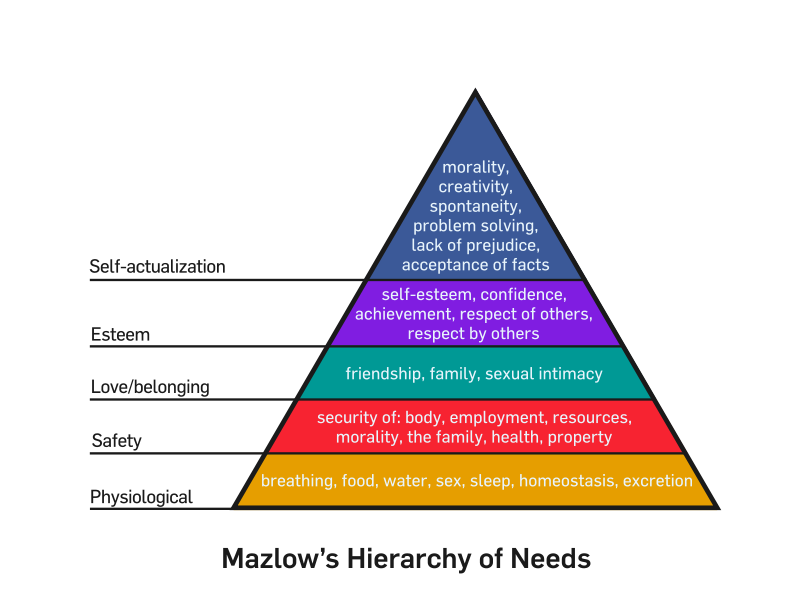
Maslow’s Hierarchy of Needs is a widely recognized theory of human motivation that outlines five levels of basic needs that must be met in order for an individual to reach their full potential. The pyramid-shaped model has become a staple in psychology and business management alike, as it provides a framework for understanding the various needs that drive human behavior.
At the base of Maslow’s pyramid are the most basic physiological needs, such as food, water, shelter, and sleep. These needs are essential for human survival and must be met before any other needs can be fulfilled.
Once these needs are met, an individual can move on to the next level of needs, which are safety needs. This includes things like physical safety, job security, and financial stability.
The third level of Maslow’s pyramid is social needs, which include the need for love, affection, and a sense of belonging. People have a natural desire to form relationships and feel like they are part of a community.
is followed by esteem needs, which include the need for respect, recognition, and a sense of accomplishment. People strive for success and want to be seen as competent and capable.
At the top of Maslow’s pyramid is the need for self-actualization. This includes the desire to reach one’s full potential, to pursue personal growth, and to contribute to society in meaningful ways. Self-actualization is a lifelong pursuit, as there is always room for growth and development.
Unlike the lower levels of Maslow’s hierarchy, self-actualization is not a deficiency need that must be met before moving on to higher levels. Instead, it is an ongoing need that can continue to evolve and grow over time, even after other lower-level needs have been met. Self-actualization is not simply a goal to be achieved, but rather a lifelong journey of personal growth and development.
Self-actualization is considered a need because it is a fundamental aspect of human nature. People have an inherent drive to reach their full potential and to achieve a sense of purpose and meaning in their lives.
When this need is not met, individuals may experience feelings of emptiness, dissatisfaction, and a sense of unfulfillment.
This is because self-actualization is not just a state of being, but a process of continued growth and development. It involves a lifelong pursuit of personal growth, creative expression, and meaningful engagement with the world. When individuals are unable to self-actualize, they may feel as though they are missing something essential in their lives, even if they have achieved material success or met their basic needs.
Furthermore, individuals who are unable to self-actualize may feel a sense of disconnection from their true selves, and may experience a sense of alienation or existential crisis. They may feel as though their lives lack purpose or direction, and may struggle to find meaning or fulfillment in their work, relationships, or other aspects of their lives.
It is important to note that self-actualization is not a one-size-fits-all concept, and what it means to self-actualize can vary greatly from person to person. However, the pursuit of self-actualization is essential for personal growth and fulfillment, and can help individuals to find meaning and purpose in their lives. By engaging in activities that promote personal growth and development, such as pursuing creative interests, engaging in meaningful work, or developing deep and meaningful relationships, individuals can begin to move towards self-actualization and experience a greater sense of fulfillment and satisfaction in their lives.
Self-actualization is not an end state, but a fundamental human need that continues to evolve and grow over time. It is a lifelong journey of personal growth and development and is an essential aspect of human nature that must be nurtured and cultivated to achieve true fulfillment and happiness in life.



