
Many French Want the Guillotine Back
Poll suggests majority favor death penalty
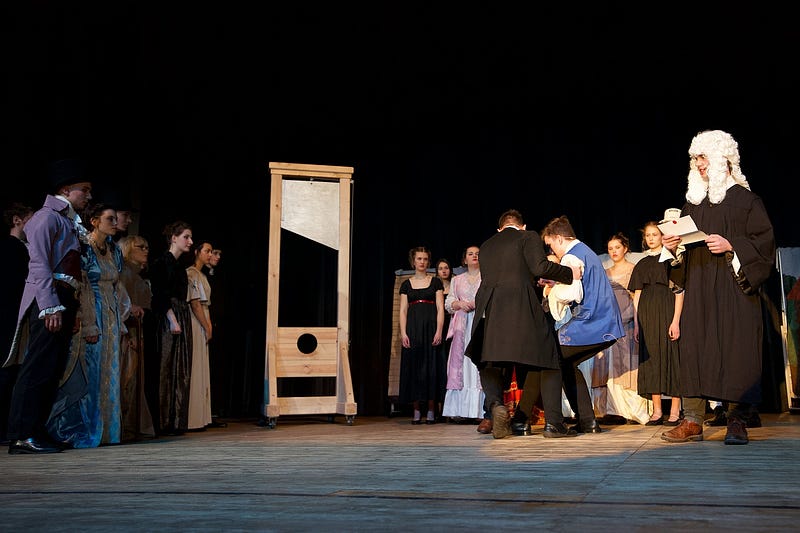
Today it is forty years since the French National Assembly first voted to end the death penalty. It was a controversial decision at the time and, four decades later, the matter still causes controversy in this country.
At the time of capital punishment’s abolition, the French were still using the guillotine as their chosen method of taking a convict’s life. The last person to be beheaded by this machine was Hamida Djamboudi in September of 1977.
Today the guillotine seems a savage way to take the life of even the most vile of criminals, but is was actually introduced at the request of Dr Joseph Ignace Guillotin for humanitarian reasons.
He wanted a method of execution that was both less cruel and more egalitarian than its predecessors. Up until then the French had a variety of methods by which they could end a person’s life, depending on both the rank and stature of the victim, and the crime being punished. Nobility were only ever executed by beheading with a sword or axe while commoners were generally hung.
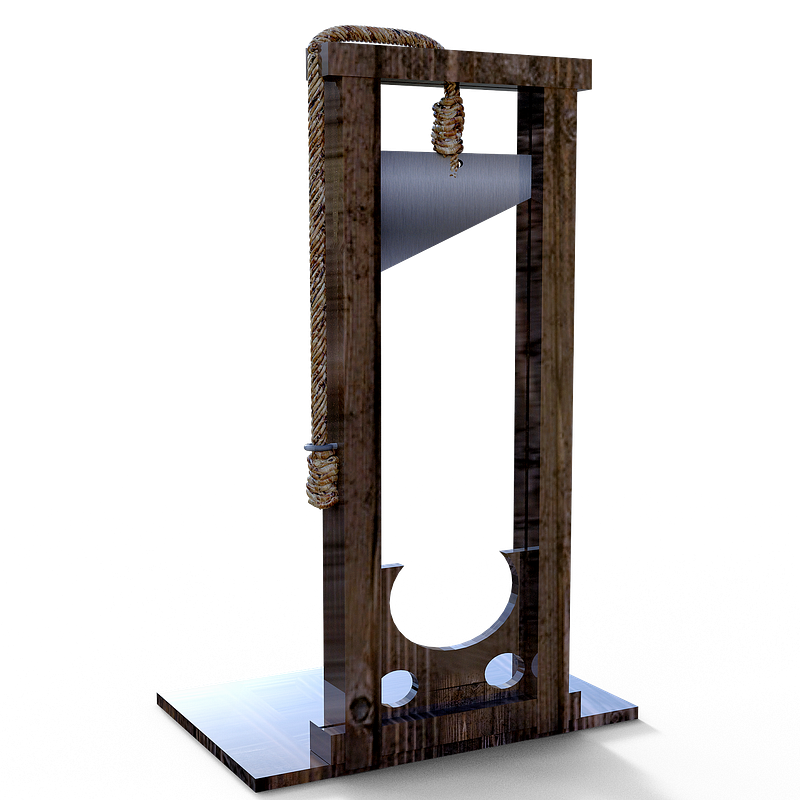
Though it is France which is most commonly associated with this device, there is evidence that similar machines had seen use elsewhere before the French made it their primary method of execution. The Italians seemed to have used such a machine as far back as the 16th century, while the Scots may have used one which they called ‘The Maiden’ in the 17th century.
The prototype of what became known as the guillotine was developed by another doctor. This time Dr. Antoine Lois, secretary of the Academy of Surgery. Construction was overseen by a German harpsichord maker called Tobias Schmidt.
Initial tests were carried out on hay bales, followed by sheep, and then finally on fresh corpses. In April of 1792, Nicolas Jacques Pelletier was the first person to be executed using the machine after he was convicted of a violent attempted robbery.
When the French Revolution got into full swing, the guillotine was used on thousands of “enemies of the Revolution” in events that drew huge crowds to the Place de la Revolution.
The atmosphere was festive and souvenir guillotines could be purchased as children’s toys. Dr. Guillotin, horrified at what he had started, approached the French court to have the name of the guillotine changed but his request was denied.
Executioners became national celebrities and what they wore on the scaffold could influence fashion trends. The role of guillotine operator would often be passed from father to son and might be held by the same family for decades.
With such a bloodthirsty past, you might think that as a nation, France would shy away from the death penalty. Latest poles seem to indicate otherwise.
In a recent poll carried out by RFI, it was found that fifty-five percent of the population are currently in favor of the reintroduction of capital punishment.
To better understand this upswing, one needs to place the poll in context. The country has witnessed the Charlie Hebdo and Bataclan terrorist attacks, along with some savage criminal events, including one in which a bus driver was beaten to death for asking a passenger to wear a face mask.
What the poll also reveals is that there is a strong feeling of nostalgia sweeping the country with a large number of people saying that things were better in the past. Right leaning voters are also shown to be far more in favor of the reintroduction.
At the moment it seems highly unlikely that any poll will cause law makers to revisit the subject of the death penalty, using the guillotine or any other means. What is interesting is that forty years after the guillotine’s use was banned, it still holds such a divisive grip on the country’s collective psyche.
Thank you for reading.
If you want to read more of my writings, check out the following articles.
- As Goliath Laughs
- The Game of Snakes and Adders
- I Don’t Want to Get Rich but I Do Want to Change the World
You can share your outstanding stories and inspire others. Just click the below image and be a writer for The Masterpiece.
