
Macro-micro mindset
A more holistic approach to UX and product design
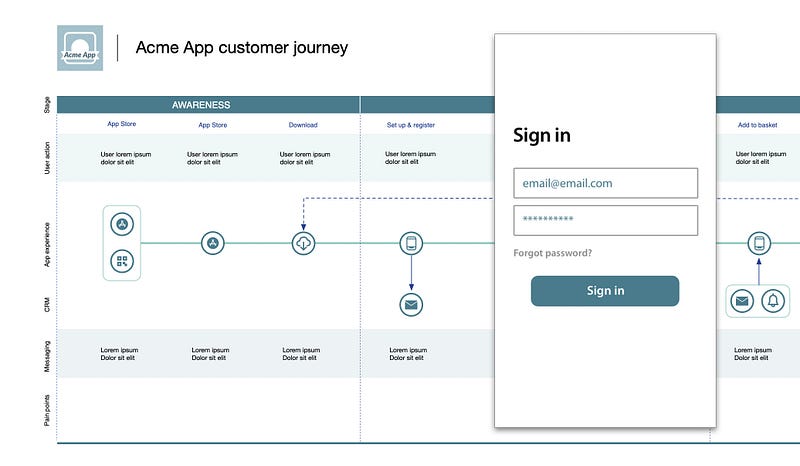
Have you ever received a brief to redesign
- Why this screen?
- Where did the user just come from?
- Where are they going next?
- How does this fit in the grand UX scheme of things?
- Why are we not fixing
further down the journey that sucks?
Yes? Then this article is for you.
Note: This is for Juniors-Midweights working in product teams, or with a bit of UX time and freedom to explore a journey — not for the occasions or agency-style environments where you are given a very tight deadline and a JFDI.
What users see
It seems to me that there is often a disconnect between the way we structure and scale design teams, and the way users perceive our products and services.
Only the UX industry could have confuddled itself into “feature team” siloes, whilst not even trying to get a seat at the table of whatever Marketing, Operations or any other part of the business are doing to the customer journey.
(Yes I know, not all orgs are like this, but enough that I hear about to give me The Raised Eyebrow of Concern)
Users only see one experience
Users only see one experience — your brand turning up, or not. That moment of digital interaction sucking, or not. Users do not stop and say “It’s OK, I get that replicating account services in your native app is a technical nightmare, so you’re kicking me out to a non-mobile-optimised website every three seconds. I feel ya.”
No, they rant about
What can we do about this?
So, the answer involves using Mr Brain and working a bit harder, but trust me — it’s worth it.
Think outside the screen
First, we’re going to step right outside the bounds of our brief. Want a login screen? I’ll map you a flow. Want a sign up flow? Let me map the end-to-end journey. Want an end-to-end app journey? Let me map the product and multichannel ecosystem.
Yes you’ve guessed it, I’m inserting Information Architecture into the design process once again.
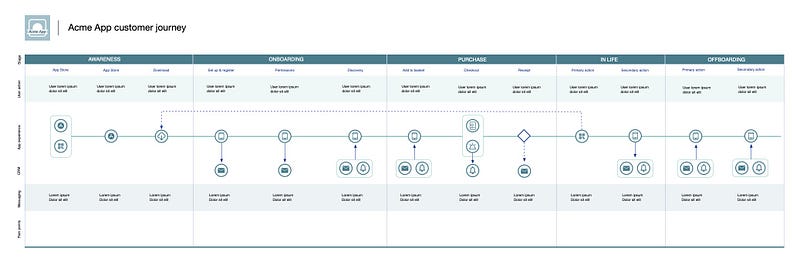
Then add the detail and context
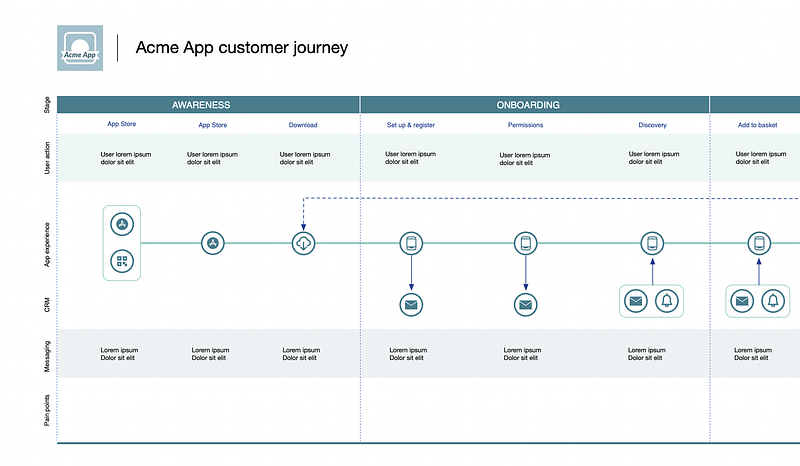
Next, add everything you know about the journey onto the map —
- What stage of the journey do
appear? - What are the screens or core interactions before and after
? - What communications are we sending out to support the journey?
- What messaging is supporting the task?
And with all of these, what does that context add to the considerations or requirements for your current task of designing
This is where you start to align to your wider product, marketing and business strategy — understanding context is key to being more valuable as a UX Designer.
Then add the user pain
Now consider everything you know from user research and product or customer data analysis. Make friends with your researcher, data analyst, marketing team or other stakeholders — anyone who knows something you don’t about that journey.
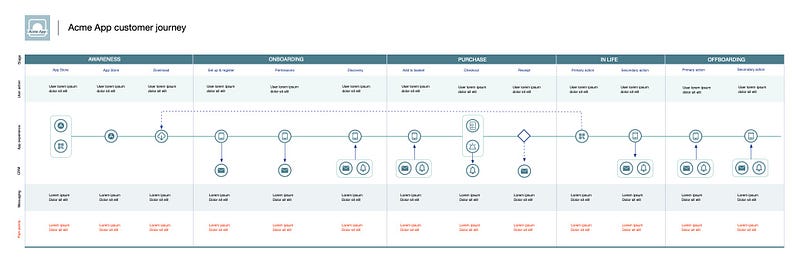
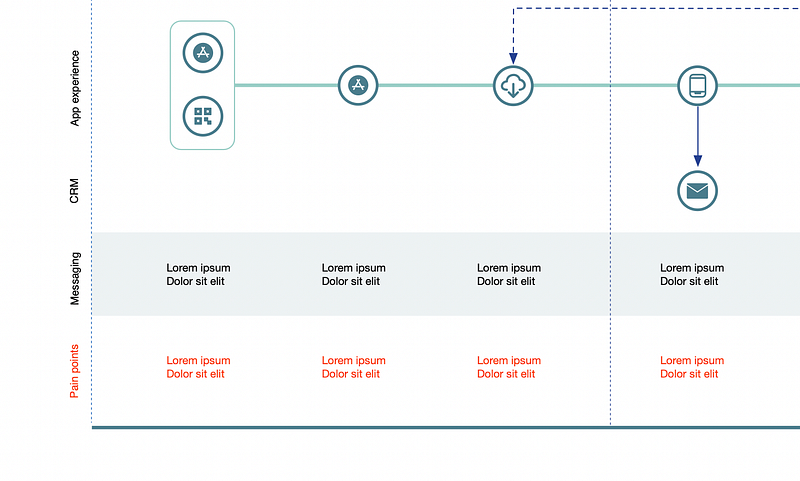
Map those possible pain points or UX inconsistencies against the various stages of the journey.
Behold! You have just added depth to your brief of “redesign
You will also now be able to zoom your brain and your stakeholders from the micro of your screen design, to the macro of the journey context.
How cool is that?
From the “micro” of your screen design, to the “macro” of the journey context. And back again.
As simple or as complex as you like
Clearly this could get very complex, very quickly. But remember, you have complete control over this. You only need to include as much as is needed to communicate your intent. This is a communication tool, not an artwork.
However, I have used this approach to a range of scenarios from a single marketing campaign, to complete company-wide digital transformation encompassing multiple digital products, and the service layer.
You can also include:
- Business objectives
- Data capture & enablement
- Technical architecture or systems integration
In short, you can use this in any scenario where you need to communicate some of those extended product dependencies as well as your UI solution.
Why is this a good approach?
This approach has a range of benefits, all of which I’ve experienced on projects and with a range of colleagues and stakeholders:
- It’s good for you as a UXer — It’s hard work, but it’s good to use your brain muscle, remind yourself that you are more than just a pixel monkey and get yourself aligned to some of those strategic design decisions
- It’s good for stakeholders — It’s a single point of truth that helps them understand the current state of the product and customer journey, the long term vision and the context of any screens you are showing them for sign off, without them having to do mental gymnastics at the beginning of every meeting to know where they are focusing.
- It’s good for users — It delivers against an holistic journey, which reduces the likelihood of delivering one great screen in a journey of inconsistency and suckage
- It’s great for product outcomes — It stops the team getting bogged down in UI details out of context, and stops the product execution happening far from the strategic context. It also helps you prioritise the most important parts of that product’s development, aligning your team, your stakeholders and your user needs at the same time.
What more could you want?
What’s stopping us from doing this?
With any luck you are super-excited to get on with this activity — hurrah! But just in case, let’s check in on reality because the reason you might need this approach, could be the very reason you’ll be thwarted.
Let’s look at some of the challenges you might encounter.
- Excited new hire — You’ve just arrived in the role and everything seems very reactive, frantic, not based on user needs or generally unclear. Possibly all of the above. You can see it because you’re new. If you try and do this type of work, you’ll probably get nods and smiles of seeming agreement before you get drowned in the day-to-day
- Can’t stop, won’t stop — Strategy needs time out from Business-As-Usual, and getting buy-in to pause ongoing work can be tricky. Tactics are easier in the short term and look superficially very effective because it’s noisy, busy-work. It’s often not until something breaks spectacularly that senior management are prepared to invest in strategy
- Resource, resource, resource — One of the pains of any busy in-house team is that as soon as you hire a new person, they are absorbed into the production machine (see above). This is why it’s often only external agencies who are brought in to support the leadership who get to look at things at a higher level.
What can we do to buy time for this?
If you come against the above issues, and you still want to try and bring more macro to your micro, you have some options.
- Steal time — Look for efficiencies in your day such as not attending some of those pointless meetings, bundling small tasks together so that you can get an hour here or there
- Take time — Less popular, and shouldn’t be the default, but if you want to dedicate some of your own time out-of-hours, maybe some of those Netflix shows can wait. Just keep that work life balance and don’t burn yourself out!
- Get gradual buy in — Do a bit of the work, show stakeholders what you’re trying to do. The likelihood is they’ll recognise the value quickly and give you at least some time to dedicate to it. Another tip is to get them involved in the mapping stage (Miro ftw). Senior stakeholders tend to live their lives at the macro level, so they’ll also have valuable insights to contribute.
- Bring in resource — It doesn’t have to be an entire agency, it can be a freelancer with specialist skills. I’ve worked on several projects as the only UXer going in to work with a client-side product team. The team get time out from their BAU to do the work, and I get to train them on the method and the mindset. So cool.
Hard things are hard
UX change in an organisation takes a long time, and UX change within a design or product team’s own ways of working can as well. Do not lose heart.
Expend effort where you can in such a way that you are using your own UX brain to best effect. Nudge stakeholders and colleagues along, and don’t burn yourself out.
But at the same time, don’t be afraid to push back against being an order taker. You’re better than that.
Hello 👋
Did you know, you can 👉 subscribe for free to get notified of any new articles I write. Woot.
I’ve even made a ton of helpful lists, depending on what you’re most interested in.