
11 reasons why UX teams should care passionately about Information Architecture

Today I am banging on about IA because I believe it is crucial to the success of any product design project, is wildly interesting and challenging, and separates the wireframers from the big boys and girls.
It’s also shockingly overlooked both in terms of project delivery and skill set.
**********
Information Architecture is the backbone of the UX design process. It orders and influences everything we design and build.
In reality it is one of the oldest areas of human understanding and effort. It goes back before UX, before HCI and before HIP. Just like architecture. There’s a reason that word is in there. It’s library and information science meets engineering. It’s All of the Things.

As long as humans have been able to think, they’ve been trying to organise thoughts. As long as there has been information, data, words and things, there has been a need or desire to understand, categorise and organise — from the Dewey Decimal System to the use of heuristics and stereotypes in understanding basic human societal interactions in everyday life.
If you like science, and you like design, and you’re interested in humans, then this, is your jam.

Why should you care
1. It is everything
Information Architecture reaches into every area of a product design project from strategy to design. It encompasses what the thing is, how the user uses it, how the business understands it, how it operates and is maintained and yes how it is designed.
2. It is the hardest part of any project
It is the problem you need to solve. If you don’t solve this problem, you haven’t solved the project.

3. It is fundamentally human
IA, and all its component tasks, activities and documentation, is about how we think, perceive and process information as human beings. From a pure UX and psychology geek perspective, you should want to get elbow deep in this stuff.
4. You get to work with other people
As much as one might think that the sitemap is cranked out and the taxonomy disentangled by a boffin in the corner, as with all UX projects one must first understand where this came from in the first place — someone, or some people, created this information and organised it according to the whims of their internal cognitive processes. Your job is to flip that, and make it work for the users’ brains. What a gig.
5. People are scared of it
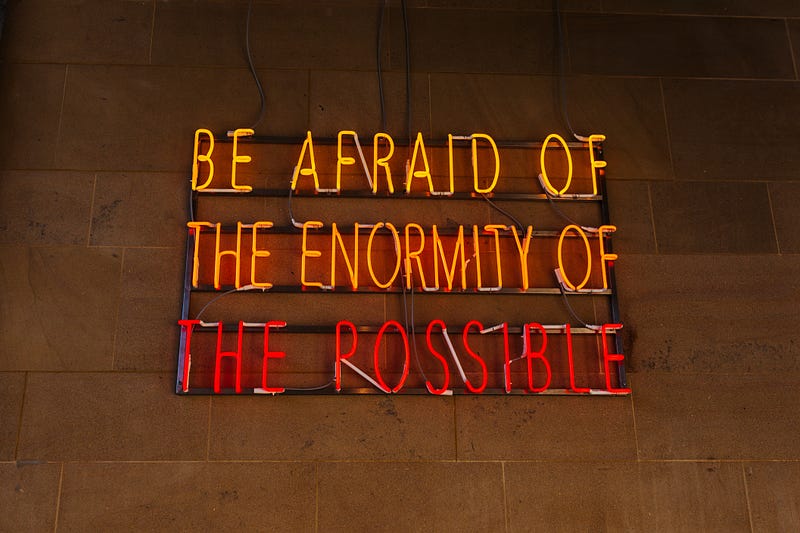
They are, but you don’t have to be, and if you can bear a little complexity, you can get through it, and you can help others get through it. What more value can you add to a project than being the safest, calmest most competent pair of hands in the room?
6. It shows where the bodies are buried
If you like removing risk from a project (and why wouldn’t you) then you’re going to want to know where the problems are. I’m talking about the real problems that will bite you in the ass later, not the ones that are stated in the original brief.
Any experienced UXer knows that the initial brief is rarely the only problem you end up needing to solve. A proper job on the IA will reveal and resolve many problems across business process, tech capability, or human need — early on in the project, before you start investigating design. It can even show you why you should have done the upfront research the client killed, and get you the budget to go back and do it.

7. It unlocks the project for the rest of the team
As with all UX artifacts and deliverables, the outputs of the IA (the “Define” stage in UCD methodology) provide critical guidance and guardrails for the rest of the team — what are we designing, how will it work, how does it need to be built?
Imagine, 6 months — 12 months into the project — What is this screen I’m designing today and where does it fit? When do the error states get triggered by the back end? Where do these new products go?
Some way down the design process many people are going to be grateful that you architected that experience.
8. It is the interface of science and art
Like research and evidence? Like designing? This is where the two come together. Why wouldn’t you find this the most exciting part of the entire project?!
9. It doesn’t (always) require huge amounts of time and effort
Sure, some projects are massive. Some are both complex and complicated. And for those types of project you might need a heavyweight expert whose actual job title is Information Architect (and if you ever get to work with one of them you are extremely lucky).
However for most projects, you just need to do something that involves thinking things through, clarifying with stakeholders, considering users and documenting the framework — even if it’s just creating the most basic, numerically-annotated sitemap and a clearly cross-referenced user flow.
Read on to discover what happens if you don’t.

10. It doesn’t have to be pretty
Unlike most UX-related artifacts, IA has not (yet) been Dribbbbblified. It doesn’t have to be A Pretty. In fact, that can often get in the way. As with all information design projects, any graphic enhancement to your output beyond the basic information is only there to increase affordance and user understanding.
This means that as a task and a skillset it is more accessible to newcomers. If you have an analytical brain and the desire to solve problems in a logical fashion, then you don’t need to be a Sketch master to create useful artifacts. In fact Sketch probably won’t help you here. Go master Omnigraffle. Or the pen.
11. You’ll sink the project if you don’t do it (properly)
IA is one of those parts of the project that you just can’t skip. And you do need to create it in line with actual evidence-based requirements that you’ve gathered previously (user, business, tech).
As much fun as it is to get in there are start ideating madcap creative ideas, or banging out wireframes or (please no) going straight into UI, if you skip IA entirely your project will implode. It’s that simple.
Things I have seen happen as a result:
- Teams cannot communicate about a specific screen because they lack a common language
- The UX team build the world’s biggest prototype because there’s no limit to the scope
- The world’s biggest prototype cannot be tested in an hour’s session
- There are no clear tasks or journeys anymore (if there ever were to begin with)
- The client/stakeholder adds more and more “could you just”s until the whole product is bloated and 95% redundant to user needs
- The Project Manager can’t manage cost, resource or burn rate because there’s no limit to the scope
- The navigation is just one hellish super-fly-out shit storm that no user can use
- The devs finish the design job based on what they feel like doing because they’ve been given no framework or direction
- And in 6 months post-launch the product range is spaghetti because there was no guidance for the Content team.
Or you could, you know, skip the IA.
Why doesn’t it get more attention?
Hard things are hard
Information Architecture can be complex and complicated. And it’s only going to get more so, with new technology bringing more ways for humans to create, share and disorganise information — the chances for information to run riot are greater than ever.
There aren’t many “pretty” outputs
UI is generally more accessible to beginner UXers and to non-UX audiences such as clients and stakeholders. Everyone has opinions about design. It’s easy to have opinions about design. It doesn’t take very long to look at something pretty and think yes/no (or “make it more wow”).
Making informed assessments of the psychological (cognitive and behavioural) impact of a design is harder and requires education and skill.
Understanding an Information Architecture challenge — that it is there at all, let alone how to solve it — is a big ask for some practitioners.
Also, it has bad visual PR. There is no Dribbbbbble for IA. There should be, but no one would populate it because a) it’s usually a bit ugly so only IAs would love it and b) it’s usually confidential, so all The Clever would have to be removed.
It’s usually confidential
Which brings me to my next point — the only time I get to see other peoples’ IA work is in portfolios, if I’m lucky. And even then it’s an after thought or an ill-explained jpeg. (You can tell people who’ve personally produced well thought-through IA work — they get excited when they show you their thinking and explain how it de-f*cked their project)
It’s not the sort of thing you’re going to upload publicly for approval because it’s probably part of a confidential design strategy.
It can be an inconvenient truth
“Doing the IA” can be seen as yet another stage of the process between “problem” and “pretty”.
Just like a UX team trying to crowbar themselves into an archaic design workflow, or any attempt to insert research into a low budget project, IA is often squeezed out of the equation or passed over with minimal thought.
IA is the clever but risk-averse person in the corner who asks important questions about the immense folly one is about to undertake.
Ignore him/her at your peril.

Not enough skilled practitioners
IA is like oxygen. You don’t think about needing it until you don’t have it, by which time you are screwed.
Very few PMs or UX Leads put much emphasis on it, very few UX courses seem to focus on it (because look — I made a pretty!) and therefore very few young’uns coming up have the skills and confidence to propose such activities on a live project.
It is possible to develop IA skills independently. It is possible to study and practice what you learn as part of your own project hygiene — whether someone is paying you to or not. It is simply irresponsible to ignore something because it is a bit difficult or time consuming, when you know what the risk is.
Upskill yourself, and you upskill everyone around you on every project you touch.
Go, make order out of chaos. Become a god.
If you found this useful, consider subscribing for free to get email alerts when I post new articles, or you can join Medium for full access to my article archive, plus everything else on Medium.
Where can you learn more?
There are tons of excellent resources out there — free and paid. Use Google, start reading, grab some books, find a mentor, and practice, practice, practice.
**********
Courses:
LinkedIn Learning | UX Foundations: Information Architecture | Chris Nodder
Treehouse | https://teamtreehouse.com/library/information-architecture
Udemy | https://www.udemy.com/course/ia-fundamentals/ | Joe Natoli
Books:
Rosenfeld, Louis; Morville, Peter| Information Architecture: for the web and beyond (the polar bear book)
Covert, Abby | How to make sense of any mess
Resmini, Andrea, Rosati, Luca | Pervasive Information Architecture: Designing Cross-Channel User Experiences
Dade-Robertson, Martyn | The Architecture of Information: Architecture, Interaction Design and the Patterning of Digital Information