

What makes a valuable UX designer?
Caveat: here I am talking about the practical Design skill set only, not the wider skill set that many Senior industry practitioners have acquired while still calling themselves UX Designer. I’m not getting into Job Title Bingo — you are all right. Please calm down.
As a hiring manager and mentor, the majority of UX designers I encounter outside of my own team tend to have a strong focus on the deliverables, and almost define themselves as someone who does or can do, when instructed:
- Wireframes
- Prototypes
- Bit of UI
- Some journeys/flows
- Sitemaps.
Yes artefacts are import, and they in themselves should be usable (that’s another post..) but this is only the production end of the skill set, and not where a UX Designer who is valuable (to their team and themselves) should build their professional identity if they want to stand out.
Here are some learnings from the last 10–15 years of things that make UX designers more valuable (and more joyful to work with!), outside of “delivery mode”.
Be interested
Talking to users and stakeholders, asking questions and general humble enquiry is not only the remit of researchers. Any decent UX consultant should have these attributes. Whether it’s questioning a brief, a client or a user — this is your job too.
Be vocational
This is not a job, it’s a vocation. You should NEED to do this with your life because frankly it’s awesome. How could “making things suck less for everyone” not be a decent life’s work. Live the passion and the enthusiasm every day, even if it’s because you’re ranting about an inaccessible colour contrast.
Be goal-congruent
UX design is huge. It’s a massive area of intellectual enquiry. Want to be good? Start learning. Read, practice and review with colleagues. Find a teacher. Get off your ass and pull the knowledge from the industry around you into your head. Because no one is going to put it there for you.
Be a doodler
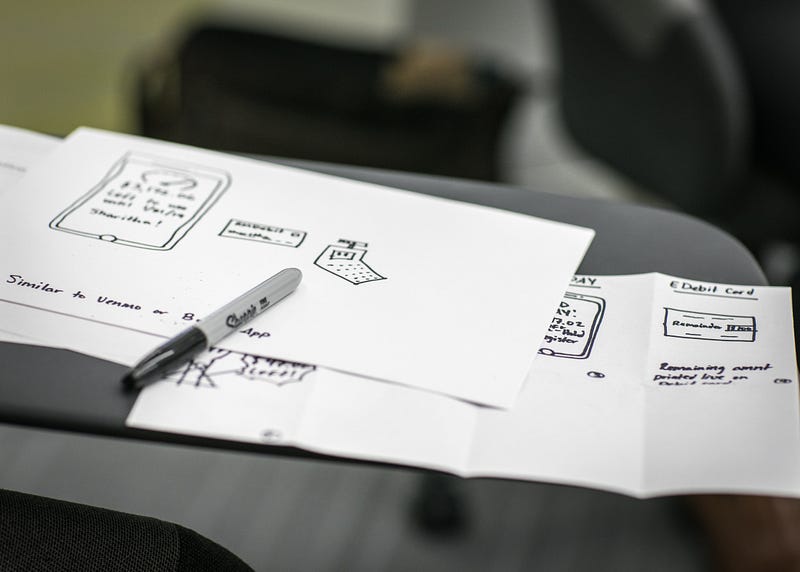
You are not Sketch. Design is not InVision. The first port of call should not be software, it should be a pen, whether on paper, post it or white board, try to get in the habit of not staring at an empty screen.
I remember a quote (warning: likely misattribution) by John Cleese who I think said “no one ever got inspired while staring at a screen”. That.
Be a strategist
Reach out beyond the wireframe brief. Ask “why?”
Why are we doing this? What do we want users to do? Why do we think they will? What do we know about them. When are we testing? What is the problem we are trying to solve?
Talk to other people on the team about the problem you are solving together. Don’t deliver a wireframe and walk away.
Be a teacher
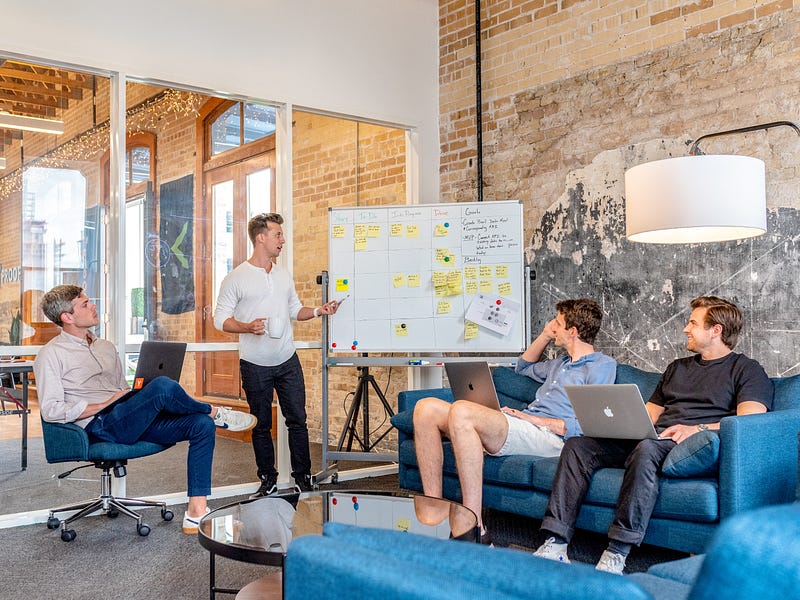
Just like researchers, 80% of your job is explaining and socialising your solutions. Don’t just say that you have done something, but say why. Share the thinking and the science. Keep going until your user(!) understands.
Be an architect
It’s not about the wireframe or flow in front of you — it’s about the whole experience. What does it matter if this one page or one tool is great, if getting to it, leaving it, or getting back to it sucks? The user sees one experience, not just your bit.
Be.. complex
In a world where hard things are hard, don’t be afraid of complexity. Asking questions often opens up several cans of worms. Doing this either makes people run away (in which case you’ve solved your own problem) or makes them really interested in working with you. Be confident in this. Be excited by it. It makes stakeholders feel safe and excited too.
Be rational (as well as emotional)
There’s really only so much you can do in a day. Don’t reach out infinitely beyond the edges of the problem you are trying to solve. Don’t blow the scope and burn through resource. You can recognise complexity and be its architect without drowning in work and trying to solve every problem TODAY.
Be resilient
Another one that will be its own post — but learning to roll with the punches is crucial. All sorts of decisions will be made around you, and you can’t influence all of them. Learn how and when to suck it up and move on.
Be uncertain
Don’t leap to conclusions. Don’t take your researcher’s word as the final answer to everything. Allow findings, patterns and solutions to form in your brain over time. Hold uncertainty in your head until you’ve come to a credible, testable answer. And then leave the door open to being wrong.

Give a shit
Nothing is more attractive to clients, stakeholders or other UXers than someone who actually cares about their craft.
Act like it.
See also: What makes a valuable UX Researcher
If you found this useful, consider subscribing for free to get email alerts when I post new articles, or you can join Medium for full access to my article archive, plus everything else on Medium.


