avatarDark Energy Articles

Free AI web copilot to create summaries, insights and extended knowledge, download it at here

5912

Abstract

Moses’ brother.</p><figure id="03e0"><img src="https://cdn-images-1.readmedium.com/v2/resize:fit:800/1*98OdgUYYpQTIhXhClp6OKA.jpeg"><figcaption>Petra, Temple of Al Khazana — [Photo: Photo by Spencer Davis, <a href="https://www.pexels.com/photo/ancient-temple-in-old-city-with-tall-sandstone-columns-4388165/">Pexels</a>]</figcaption></figure><p id="18bc">In return, he was led through a long, narrow gorge whose walls reached over 200 meters in places. At its end, the young Swiss saw the eighth wonder of the world. <b>It is the temple of Al Khazna, the Pharaoh’s Treasury.</b> According to the legend, the amphora crowning the two-storey colonnade was supposed to contain the treasure of pirates. White traveler was the first European to set foot in this place in 600 years.</p><p id="3dc5">Quite unexpectedly, Johann Ludwig Burckhardt thus discovered the “Rosy-fingered Dawn,” as Eastern poets called Petra (Gr. rock). You could say that the Swiss was something of an accidental passerby who knew when to stop for a moment.</p><h1 id="2f18">Machu Picchu — the lost city of Indiana Jones</h1><p id="9bf2">It has been less than 100 years since Burckhardt saw the lost city. On exactly July 24, 1911, in a completely different part of the world, Hiram Bingham III, the son of a Honolulu missionary and a college teacher at Yale, was on the verge of discovering another mysterious city.</p><p id="dcc4">Like his famous predecessors, he too was not an archaeologist. The later governor, military pilot, and senator had taught history and political science in his youth. However, in his memory — like Schliemann — he carried a childhood picture that depicted an Inca bridge over the Apurimac River. It was through this engraving that Hiram became fascinated with South America.</p><p id="602f">He dreamed of discovering the sacred capital of the Incas, Vilcabamba, and its legendary treasures. The consequences were obvious. He left for Peru, where he checked every rumor about the city’s location. Now, on a rainy morning, he climbed the mountain ridge called Machu Picchu without much hope. He had heard that there were some ruins on it, but the natives did not find them interesting.</p><figure id="f0c1"><img src="https://cdn-images-1.readmedium.com/v2/resize:fit:800/1*qhVr7yavHS1tz6N0zVvMWA.jpeg"><figcaption>Machu Picchu — [Photo by Trace Hudson, <a href="https://www.pexels.com/photo/aerial-photography-of-machu-picchu-in-peru-2516418/">Pexels</a>]</figcaption></figure><p id="5b44">After many hours, extremely tired, he reached the top and… his breath was taken away. What he saw, he later wrote, surpassed in attractiveness the best Incan walls in Cuzco, which had been awe-inspiring visitors for four centuries, and looked like an <b>unreal dream.</b></p><blockquote id="ba2e"><p>“Suddenly we found ourselves before the ruins of two of the most perfect and interesting buildings of ancient America. The walls, made of beautiful white granite, consisted of cyclopean-sized blocks taller than a man. I could hardly believe my senses when, examining the large blocks in the lower layer, I estimated the weight of each at 10–14 tons. Would anyone give credence to what I found? Fortunately, in this country where accuracy of description of things seen is not a common trait of travelers, I had a good camera and the sun was shining,” Hiram Bingham reported years later in The Lost City of the Incas.</p></blockquote><p id="a147">Hiram Bingham — considered today as the prototype of Indiana Jones — was convinced that it was Vilcabamba. However, he discovered a completely different place — the sky-high city of Machu Picchu. Stretching from 2009 to 2400 meters above sea level, it was gigantic.</p><figure id="4915"><img src="https://cdn-images-1.readmedium.com/v2/resize:fit:800/1*w0-EPueQ9Aujp3EkWbmFkw.jpeg"><figcaption>Machu Picchu — [Photo by logan primm, <a href="https://www.pexels.com/photo/green-grass-field-near-mountain-3706960/">Pexels</a>]</figcaption></figure><h1 id="0914">Heinrich Schliemann — amateur archaeologist</h1><p id="8589">Schliemann, Burckhardt and Bingham were just starting out. Neither of them was an archaeologist, and they had to deal with a completely new subject. Schliemann was simply learning. His Troy was to be located near the Turkish village of Bunarbashi.</p><p id="0789">The rich merchant’s attention was caught by the name of a large hill lying a few kilometers from Bunarbashi, Hisarlık. It meant “palace.” Despite the odds, Schliemann painstakingly excavated the ruins for three years. Archaeologists mocked him, he was after all an amateur, a merchant. For the great world of science — nobody.</p><p id="2566">June 14, 1873. Heinrich had his name day. One morning he noticed that something was glowing in the Earth. He sent all the workers home and he and his wife began digging up the area. To his great surprise, he came upon a real treasure. Altogether he dug up many valuables, gold and silver coins, gold bracelets, diadems, brooches and many other valuable finds. The explorer immediately recognized that he had just found the treasure of King Priam of Troy.</p><figure id="a437"><img src="https://cdn-images-1.readmedium.com/v2/resize:fit:800/1*FXpXVDQTRE9KoKvP3pdqEg.jpeg"><figcaption>Priam’s treasure — [Photo: Public domain via <a href="https://commons.wikimedia.org/wiki/File:Priam%27s_treasure.jpg">Wikimedia Commons</a>]</figcaption></figure><p id="64c7">At one point he placed the jewels on Sophia’s head and shoulders. The photograph in which Mrs. Schliemann later poses in this gold jewelry has become one of the icons of archaeology.</p><p id="48af">By 1894, Schliemann had discovered the remains of nine cities founded on the same site. Troy, described in the Iliad, was most likely the sixth or seventh city built on the hill of Hisarlık.</p><figure id="3565"><img src="https://cdn-images-1.readmedium.com/v2/resize:fit:800/1*a1j-ws-TTsMNH_0cBL

Options

Ci4w.jpeg"><figcaption>Gold Earrings — [Photo: Gary Todd from Xinzheng, China, CC0, via <a href="https://commons.wikimedia.org/wiki/File:Gold_Earrings_from_the_%22Treasure_of_Priam%22_(replica),_original_from_Troy_II,_c._2300_BC_(28138855054).jpg">Wikimedia Commons</a>]</figcaption></figure><figure id="70c1"><img src="https://cdn-images-1.readmedium.com/v2/resize:fit:800/1*YyOtUdP6LfuL28vcqZ_f3A.jpeg"><figcaption>Gold Pectoral — [Photo: Gary Todd from Xinzheng, China, CC0, via <a href="https://commons.wikimedia.org/wiki/File:Gold_Pectoral_from_the_%22Treasure_of_Priam%22_(replica)_Breast_jewelry,_original_from_Troy_II,_c._2300_BC_(28679217101).jpg">Wikimedia Commons</a>]</figcaption></figure><h1 id="8cc7">In the footsteps of the Nabataeans</h1><p id="5e19">Schliemann was only five years old when Johann Ludwig Burckhardt, the discoverer of Petra, died at the age of only 33. He did not live to research his city. Today it is known that from the 3rd century BC to the 1st century AD. Petra was the capital of the Nabateans, an ancient people of Semitic origin. The inhabitants themselves called it Multicolored, only a narrow gorge led to it. Therefore, this pearl of the desert could not be conquered either by Pompey the Great, Herod and Cleopatra.</p><figure id="cc68"><img src="https://cdn-images-1.readmedium.com/v2/resize:fit:800/1*XHOE0Qs3MPB1S0DniiKK9w.jpeg"><figcaption>Petra — [Photo by Vincent Pelletier, <a href="https://www.pexels.com/photo/petra-jordan-720254/">Pexels</a>]</figcaption></figure><p id="5239">The city lies at the crossroads of trade routes from India to Egypt during its heyday was inhabited by up to 40 thousand people. Nabateans drew on Egyptian, Syrian, Greek and Roman influences, thus creating, among others, original buildings carved in the rock. Petra lost its independence in 106 AD when the Emperor Trajan occupied the city.</p><p id="0773">The last Europeans in Petra were medieval crusaders. After that, the desert treasure ceased to exist for the Western world. Therefore, when Burckhardt stood before the rock-cut temple, he did not realize what the place was. He was cautious; his notes lack awe.</p><p id="f039">He describes one object after another with precision, noting, however, that he was somewhat afraid lest cultural strangers might think him a treasure-seeking wizard. Before his untimely departure he rediscovered the temples of Abu Simbel in Nubia in present-day Egypt. Research at Petra did not begin until 1965, a century and a half after his death.</p><p id="acce">Hiram Bingham was more fortunate. After discovering a city on top of a Peruvian mountain, his next expedition involved Yale University and the National Geographic Society, from which the explorer received a $10,000 grant.</p><p id="68ed">Gilbert H. Grosvenor, then editor of National Geographic magazine, was in awe. How extraordinary must have been the people who built Machu Picchu if they erected such a city where one could hide on top of a mountain, without steel, but only with stone hammers and wedges, he wrote.</p><figure id="fd89"><img src="https://cdn-images-1.readmedium.com/v2/resize:fit:800/1*JF_VTxHR-14wKo1fjzXhqA.jpeg"><figcaption>Machu Picchu — [Photo by Gilmer Diaz Estela, <a href="https://www.pexels.com/photo/a-high-angle-shot-of-a-machu-picchu-7167613/">Pexels</a>]</figcaption></figure><p id="eed8">Machu Picchu readily yielded to explorers. In 1912, expedition participants began clearing and mapping the city, and it took three years. But even though archaeologists are still there today, scientists still can’t answer many questions.</p><p id="3f94">Probably the city was constracted in the 15th century and abandoned a century later. It had a small population of about a thousand people. The upper parts of the complex were intended for priests. There, among other things, was an observatory and the <b>Temple of the Three Windows</b>, used for the worship of the Sun.</p><figure id="5640"><img src="https://cdn-images-1.readmedium.com/v2/resize:fit:800/1*DJQeVokkTdcQ58_FYcv5gA.jpeg"><figcaption>Temple of the Three Windows — [Photo: bobistraveling, <a href="https://creativecommons.org/licenses/by/2.0">CC BY 2.0</a>, via <a href="https://commons.wikimedia.org/wiki/File:20_Temple_of_the_Three_Windows_Machu_Picchu_Peru_2539_(15164544405).jpg">Wikimedia Commons</a>]</figcaption></figure><p id="7f00">Bingham found more than five thousand different objects in the ruins. And while there was a lot of controversy surrounding both these finds and the discoverer of Machu Picchu (other researchers quickly emerged who claimed to have been to the lost city before), it was he who brought this piece of land back to the world.</p><p id="2dd0">In 2007, the city atop the mountain was listed as <b>one of the seven new wonders of the world.</b> And while today, in the world of the internet, it’s getting easier to lose hope for new discoveries, archaeologists and crazy heads still don’t give up. There are more than seven wonders in the world.</p><div id="ac83" class="link-block"> <a href="https://readmedium.com/non-human-suffering-do-animals-suffer-and-how-1ee79aba9731"> <div> <div> <h2>Non-human suffering — do animals suffer and how?</h2> <div><h3>Fear, depression, anguish — not only humans struggle with these feelings. Animals also get depressed.</h3></div> <div><p>medium.com</p></div> </div> <div> <div style="background-image: url(https://miro.readmedium.com/v2/resize:fit:320/1*2jrQdpNBMn4t3thXIeZk9Q.jpeg)"></div> </div> </div> </a> </div><p id="5b22"><b>Cool that you made it to the end of this article. I will be very pleased if you appreciate the effort of creating it and leave some claps here, or maybe even start following me. Thank you!</b></p></article></body>

Machu Picchu, Troy and Petra — how were lost cities discovered?

Lost cities have fascinated and inspired generations of archaeologists for centuries. No wonder that every now and then we learn something new about them.
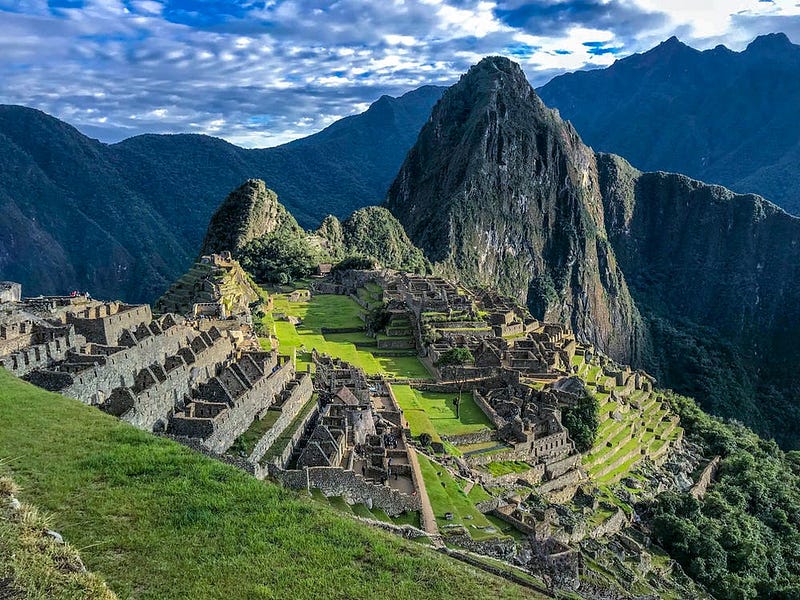
Photo of Machu Picchu — [Photo: Photo by Chelsea Cook, Pexels]

It has always been known that the imagination is most fired by what is hidden. But lost cities, legendary caches, underground labyrinths, although attractive to researchers, do not always provoke them to action. Perhaps that is why Troy, Petra or Machu Picchu were brought back to the world by the determination of enthusiasts and chance rather than academic fame.

Heinrich Schliemann was simply a merchant. It is true that as a child he dreamed of digging for treasure and his imagination was fired by his father’s stories of Homeric heroes, but he chose a stable profession. At the age of 14, he began working in a store.

He soon enlisted on a merchant ship to Venezuela, but did not make it to the New World because an adventure stood in his way. A storm tossed his ship onto the Dutch coast and the young trader saw it as a sign from fate.

He decided to stay in Amsterdam. He continued to do business, but with greater vigor. At the same time he learned languages, including Arabic. By the end of his life he knew 13 languages. By the age of forty he had travelled around the world, made a fortune in the USA on a gold rush, made a number of lucrative deals in Russia and was finally able to return to his childhood dreams.

From the times when his dad read him Homer, he best remembered a certain Christmas present — Jerrer’s Illustrated History of the World. The boy was impressed by an engraving depicting the fire of Troy. This image stuck in his memory so much that he decided to find the ruins of the city in the future. Momentarily, however, because of his young age, he practiced archaeology by playing with his neighbor’s daughter in a dig.
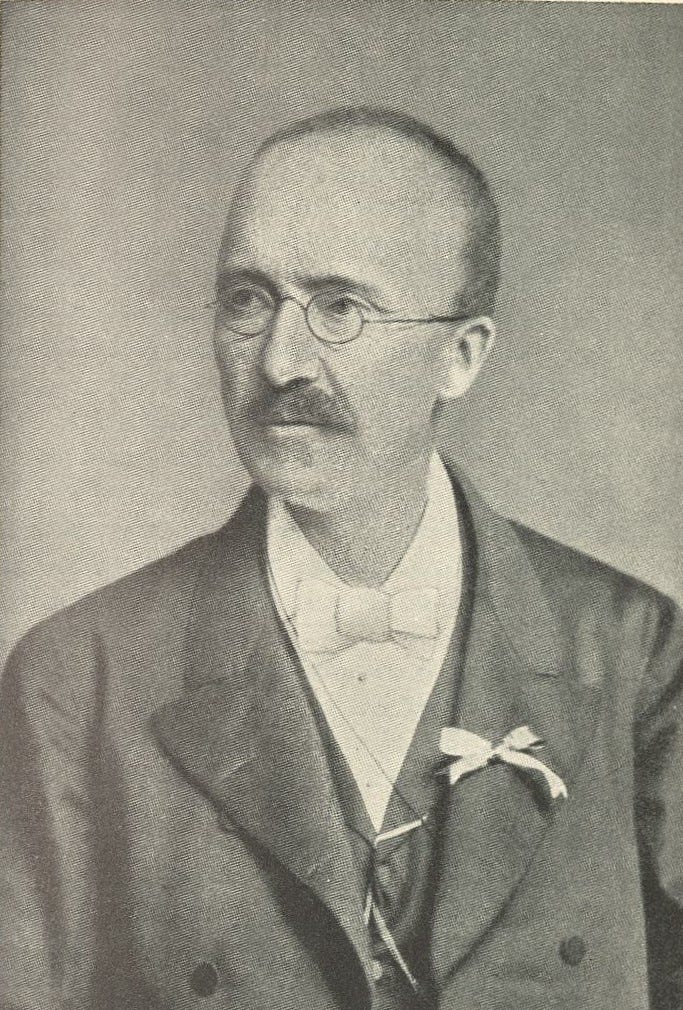
Heinrich Schliemann — [Photo: Unknown author, Public domain, via Wikimedia Commons]

Did Troy really exist?

The adult Schliemann retained the child in him. He was a romantic and did not give up on his dreams. At the age of 47 he met Sophia Engastroménou, 30 years his junior, the niece of the Greek Archbishop Vimpos. In 1870 they travelled together to Asia Minor, where on the banks of the Hellespont (now the Dardanelles) Heinrich set about his first major archaeological exploration. Most witnesses to this work doubted his sanity. In Schliemann’s day, it was widely believed that Troy was just a Homeric fantasy.

The Greek epic describes in the Iliad about 50 days in the history of the Trojan War. According to Greek mythology, the dispute occurred when Paris, son of the king of Troy, supported by the goddess Aphrodite, kidnapped Helen, wife of King Menelaus. The Greeks (Achaeans) besieged Troy for 10 years to reclaim their queen.
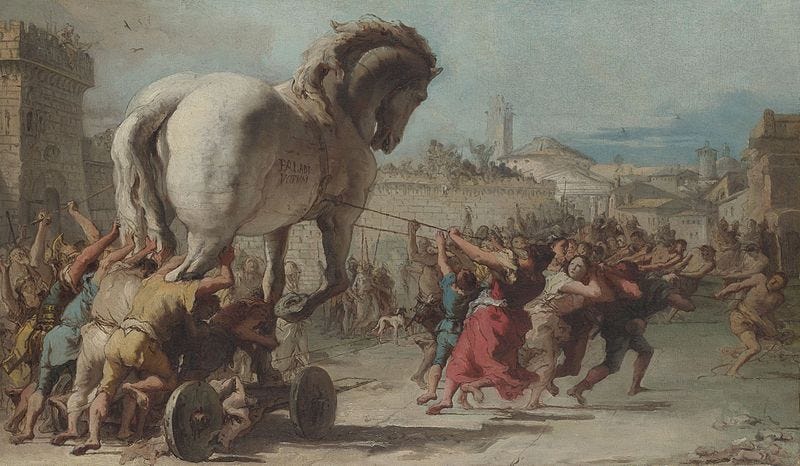
[Photo: Giovanni Domenico Tiepolo, Public domain, via Wikimedia Commons]

The Olympian gods were also on both sides of the conflict, and they took care of their own business. And as the war was dragging on, the Achaeans used a trick. They left a wooden horse at the city gates and sailed away. The lucky Trojans dragged the horse into the city, and at night the warriors hidden there came out and opened the gates for their Achaean companions.

Although the Iliad’s verses are full of fanciful interventions of supernatural forces, it does not lack excellent descriptions of the Trojan reality, architecture, customs and scenes of everyday life. Schliemann, like the ancient Greeks and Romans, such as Tukidides, believed it to be a true story. Heinrich, however, was a laughingstock because he sought the legendary Troy with the Iliad in hand.

The lost city of Petra in Jordan

Schliemann must also have read or at least heard about the great discovery made by Swiss Orientalist Johann Ludwig Burckhardt in 1812, 10 years before he was born. The 28-year-old traveler made his way from Damascus to Cairo. Commissioned by the British Society for the Promotion of Discovery Expeditions, he set off for Africa to look for the source of the Niger.

He had many days of wandering among desert villages and towns forgotten by the world. In Cairo he intended to join one of the caravans going to the Marzuk oasis in present-day Libya. Burckhardt, like Schliemann later, studied Arabic. For two years, in Syria, he also learned local customs. Here he took the name Ibrahim ibn Abdullah and converted to Islam.

Now dressed as a Bedouin, he was able to cross the Middle East with ease. When he arrived in the southwest of present-day Jordan, the natives told him about a city carved out of the rock. A city? His gut — there it was again! — told him to check it out. The traveler paid his guides the equivalent of two horseshoes to lead him to a place where he could make an offering at the tomb of Aaron, Moses’ brother.
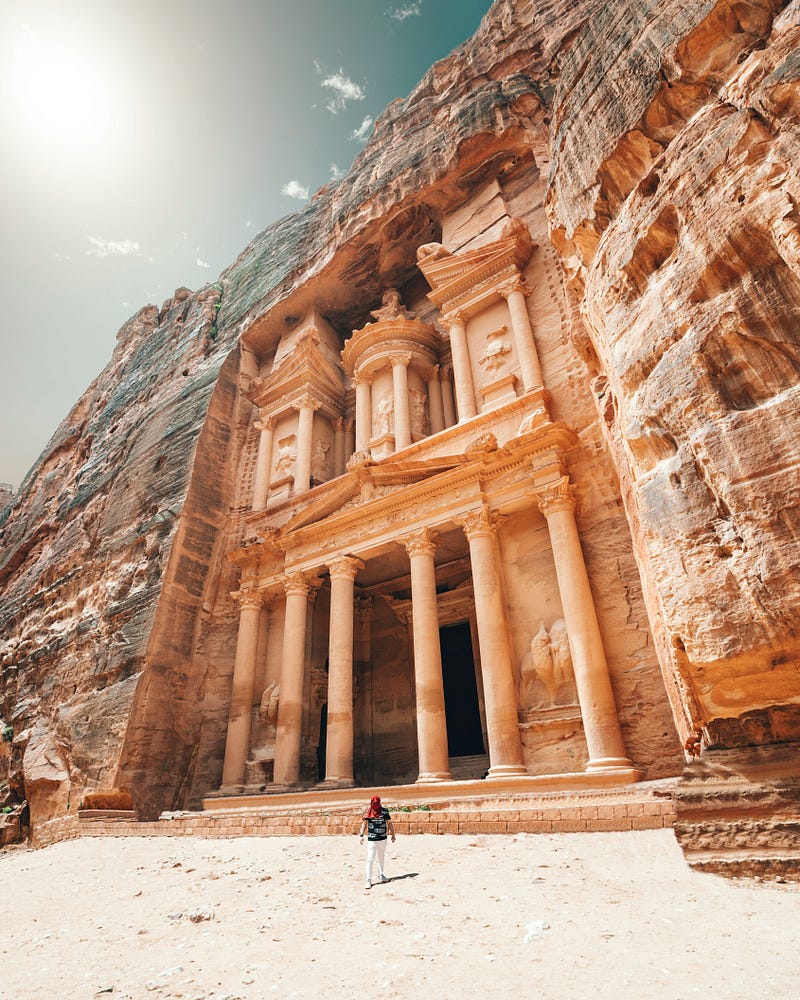
Petra, Temple of Al Khazana — [Photo: Photo by Spencer Davis, Pexels]

In return, he was led through a long, narrow gorge whose walls reached over 200 meters in places. At its end, the young Swiss saw the eighth wonder of the world. It is the temple of Al Khazna, the Pharaoh’s Treasury. According to the legend, the amphora crowning the two-storey colonnade was supposed to contain the treasure of pirates. White traveler was the first European to set foot in this place in 600 years.

Quite unexpectedly, Johann Ludwig Burckhardt thus discovered the “Rosy-fingered Dawn,” as Eastern poets called Petra (Gr. rock). You could say that the Swiss was something of an accidental passerby who knew when to stop for a moment.

Machu Picchu — the lost city of Indiana Jones

It has been less than 100 years since Burckhardt saw the lost city. On exactly July 24, 1911, in a completely different part of the world, Hiram Bingham III, the son of a Honolulu missionary and a college teacher at Yale, was on the verge of discovering another mysterious city.

Like his famous predecessors, he too was not an archaeologist. The later governor, military pilot, and senator had taught history and political science in his youth. However, in his memory — like Schliemann — he carried a childhood picture that depicted an Inca bridge over the Apurimac River. It was through this engraving that Hiram became fascinated with South America.

He dreamed of discovering the sacred capital of the Incas, Vilcabamba, and its legendary treasures. The consequences were obvious. He left for Peru, where he checked every rumor about the city’s location. Now, on a rainy morning, he climbed the mountain ridge called Machu Picchu without much hope. He had heard that there were some ruins on it, but the natives did not find them interesting.
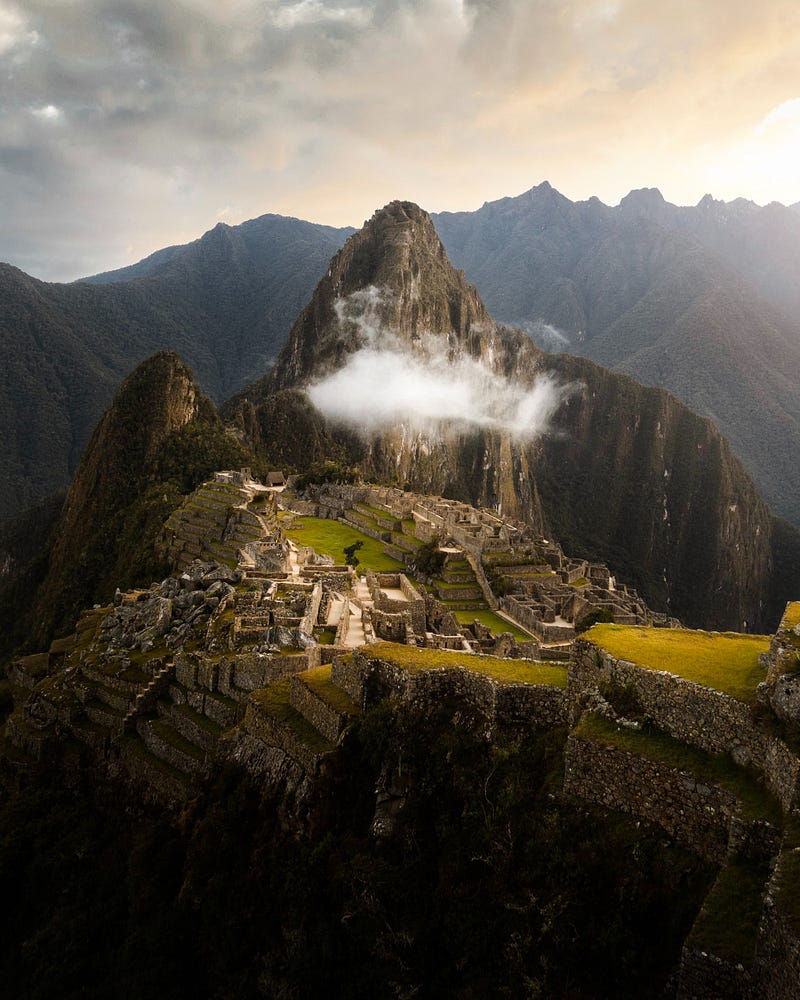
Machu Picchu — [Photo by Trace Hudson, Pexels]

After many hours, extremely tired, he reached the top and… his breath was taken away. What he saw, he later wrote, surpassed in attractiveness the best Incan walls in Cuzco, which had been awe-inspiring visitors for four centuries, and looked like an unreal dream.

“Suddenly we found ourselves before the ruins of two of the most perfect and interesting buildings of ancient America. The walls, made of beautiful white granite, consisted of cyclopean-sized blocks taller than a man. I could hardly believe my senses when, examining the large blocks in the lower layer, I estimated the weight of each at 10–14 tons. Would anyone give credence to what I found? Fortunately, in this country where accuracy of description of things seen is not a common trait of travelers, I had a good camera and the sun was shining,” Hiram Bingham reported years later in The Lost City of the Incas.

Hiram Bingham — considered today as the prototype of Indiana Jones — was convinced that it was Vilcabamba. However, he discovered a completely different place — the sky-high city of Machu Picchu. Stretching from 2009 to 2400 meters above sea level, it was gigantic.
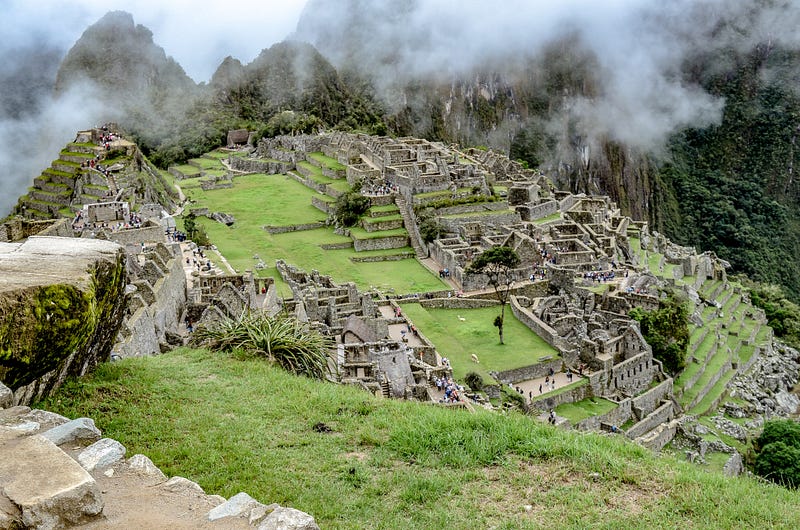
Machu Picchu — [Photo by logan primm, Pexels]

Heinrich Schliemann — amateur archaeologist

Schliemann, Burckhardt and Bingham were just starting out. Neither of them was an archaeologist, and they had to deal with a completely new subject. Schliemann was simply learning. His Troy was to be located near the Turkish village of Bunarbashi.

The rich merchant’s attention was caught by the name of a large hill lying a few kilometers from Bunarbashi, Hisarlık. It meant “palace.” Despite the odds, Schliemann painstakingly excavated the ruins for three years. Archaeologists mocked him, he was after all an amateur, a merchant. For the great world of science — nobody.

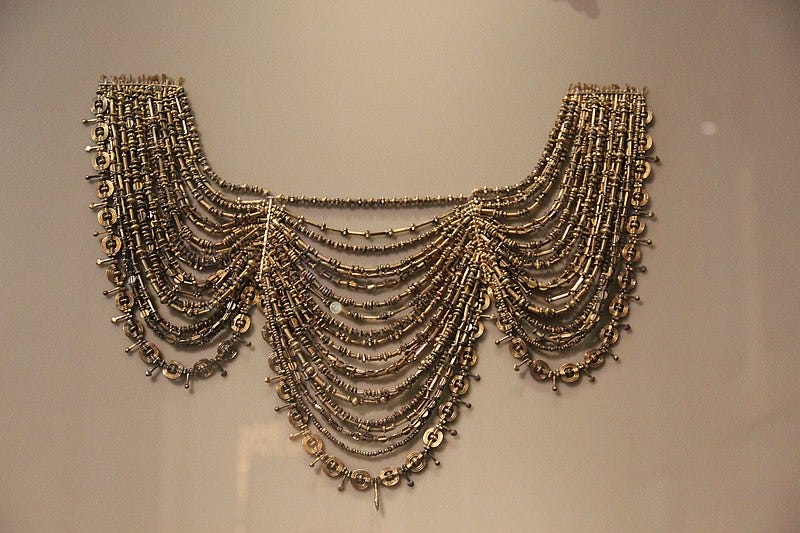
June 14, 1873. Heinrich had his name day. One morning he noticed that something was glowing in the Earth. He sent all the workers home and he and his wife began digging up the area. To his great surprise, he came upon a real treasure. Altogether he dug up many valuables, gold and silver coins, gold bracelets, diadems, brooches and many other valuable finds. The explorer immediately recognized that he had just found the treasure of King Priam of Troy.
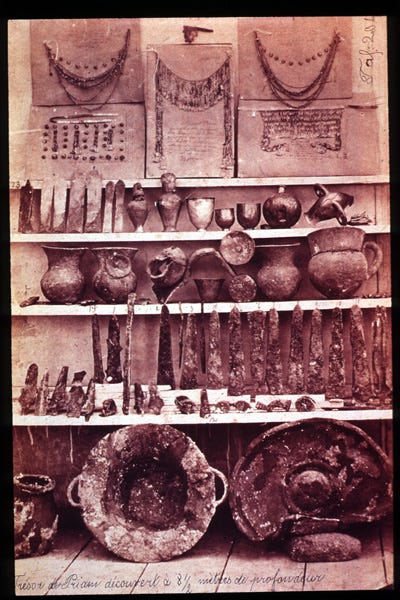
Priam’s treasure — [Photo: Public domain via Wikimedia Commons]

At one point he placed the jewels on Sophia’s head and shoulders. The photograph in which Mrs. Schliemann later poses in this gold jewelry has become one of the icons of archaeology.

By 1894, Schliemann had discovered the remains of nine cities founded on the same site. Troy, described in the Iliad, was most likely the sixth or seventh city built on the hill of Hisarlık.
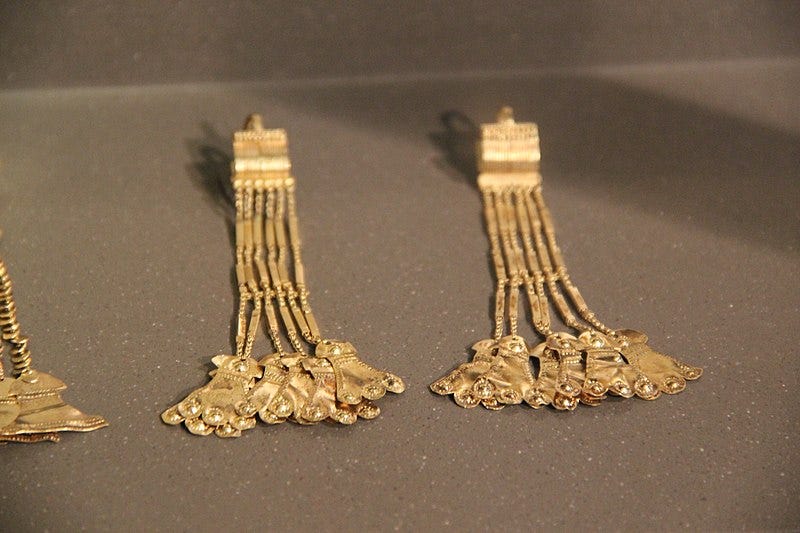
Gold Earrings — [Photo: Gary Todd from Xinzheng, China, CC0, via Wikimedia Commons]
Gold Pectoral — [Photo: Gary Todd from Xinzheng, China, CC0, via Wikimedia Commons]

In the footsteps of the Nabataeans

Schliemann was only five years old when Johann Ludwig Burckhardt, the discoverer of Petra, died at the age of only 33. He did not live to research his city. Today it is known that from the 3rd century BC to the 1st century AD. Petra was the capital of the Nabateans, an ancient people of Semitic origin. The inhabitants themselves called it Multicolored, only a narrow gorge led to it. Therefore, this pearl of the desert could not be conquered either by Pompey the Great, Herod and Cleopatra.
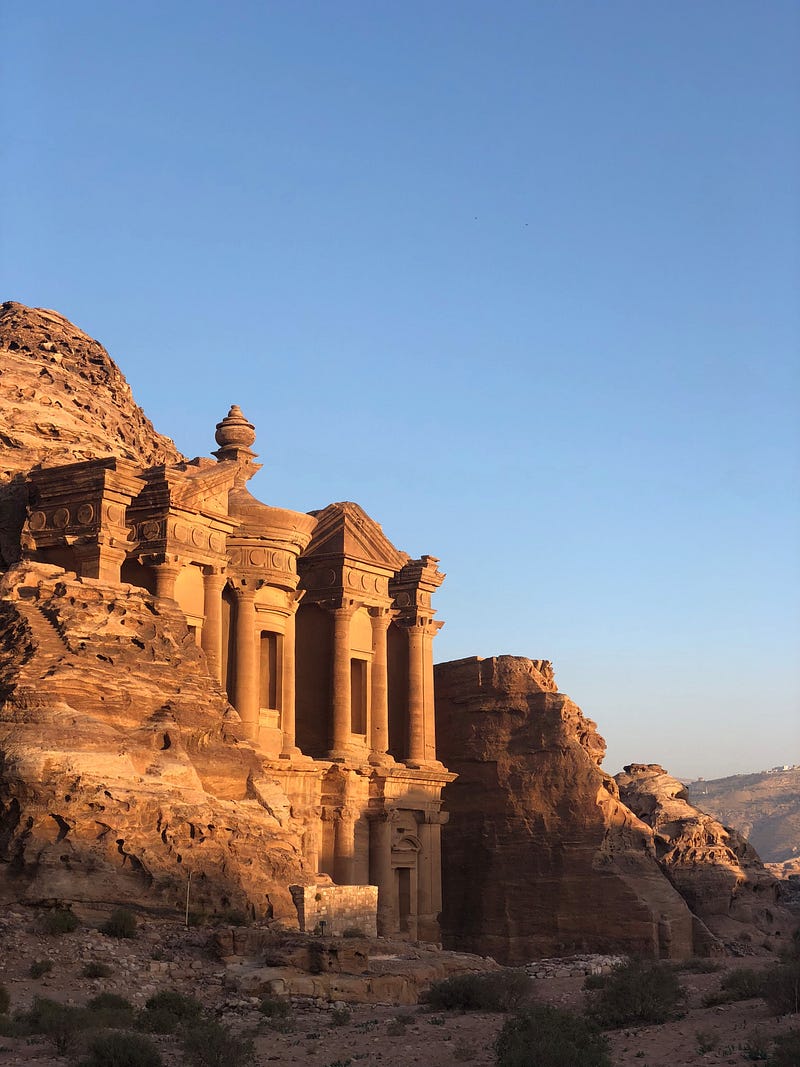
Petra — [Photo by Vincent Pelletier, Pexels]

The city lies at the crossroads of trade routes from India to Egypt during its heyday was inhabited by up to 40 thousand people. Nabateans drew on Egyptian, Syrian, Greek and Roman influences, thus creating, among others, original buildings carved in the rock. Petra lost its independence in 106 AD when the Emperor Trajan occupied the city.

The last Europeans in Petra were medieval crusaders. After that, the desert treasure ceased to exist for the Western world. Therefore, when Burckhardt stood before the rock-cut temple, he did not realize what the place was. He was cautious; his notes lack awe.

He describes one object after another with precision, noting, however, that he was somewhat afraid lest cultural strangers might think him a treasure-seeking wizard. Before his untimely departure he rediscovered the temples of Abu Simbel in Nubia in present-day Egypt. Research at Petra did not begin until 1965, a century and a half after his death.

Hiram Bingham was more fortunate. After discovering a city on top of a Peruvian mountain, his next expedition involved Yale University and the National Geographic Society, from which the explorer received a $10,000 grant.

Gilbert H. Grosvenor, then editor of National Geographic magazine, was in awe. How extraordinary must have been the people who built Machu Picchu if they erected such a city where one could hide on top of a mountain, without steel, but only with stone hammers and wedges, he wrote.
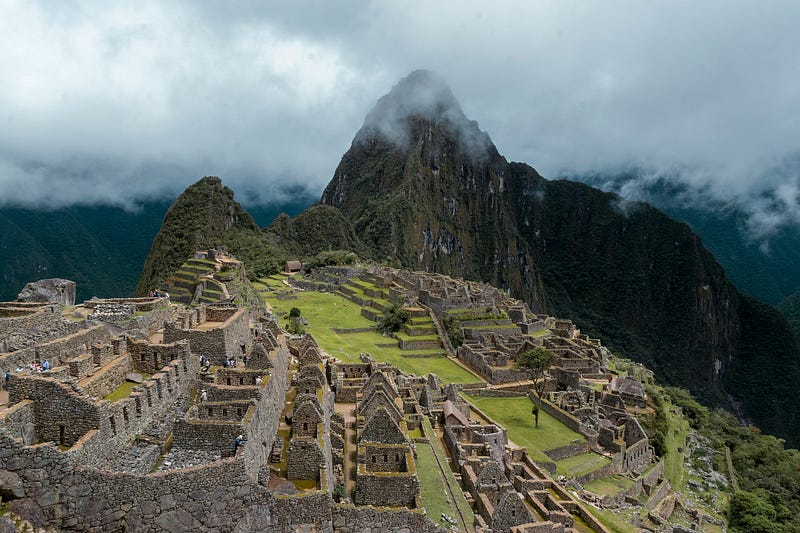
Machu Picchu — [Photo by Gilmer Diaz Estela, Pexels]

Machu Picchu readily yielded to explorers. In 1912, expedition participants began clearing and mapping the city, and it took three years. But even though archaeologists are still there today, scientists still can’t answer many questions.

Probably the city was constracted in the 15th century and abandoned a century later. It had a small population of about a thousand people. The upper parts of the complex were intended for priests. There, among other things, was an observatory and the Temple of the Three Windows, used for the worship of the Sun.
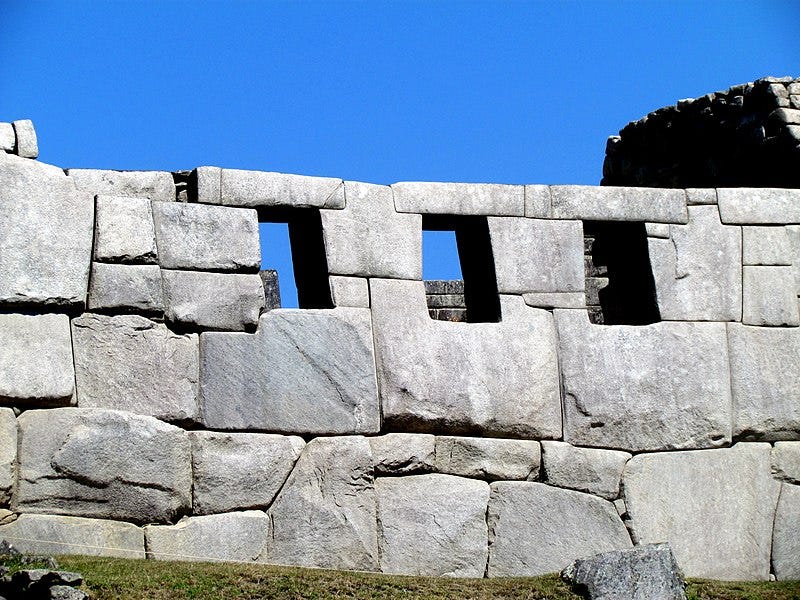
Temple of the Three Windows — [Photo: bobistraveling, CC BY 2.0, via Wikimedia Commons]

Bingham found more than five thousand different objects in the ruins. And while there was a lot of controversy surrounding both these finds and the discoverer of Machu Picchu (other researchers quickly emerged who claimed to have been to the lost city before), it was he who brought this piece of land back to the world.

In 2007, the city atop the mountain was listed as one of the seven new wonders of the world. And while today, in the world of the internet, it’s getting easier to lose hope for new discoveries, archaeologists and crazy heads still don’t give up. There are more than seven wonders in the world.

Cool that you made it to the end of this article. I will be very pleased if you appreciate the effort of creating it and leave some claps here, or maybe even start following me. Thank you!

History
Travel
Science
Life
Culture
Recommended from ReadMedium