
Low-Content Books Made Easy with Chat GPT: Step-by-Step Full Tutorial
Turn Your Ideas Into Passive Income the Easy Way
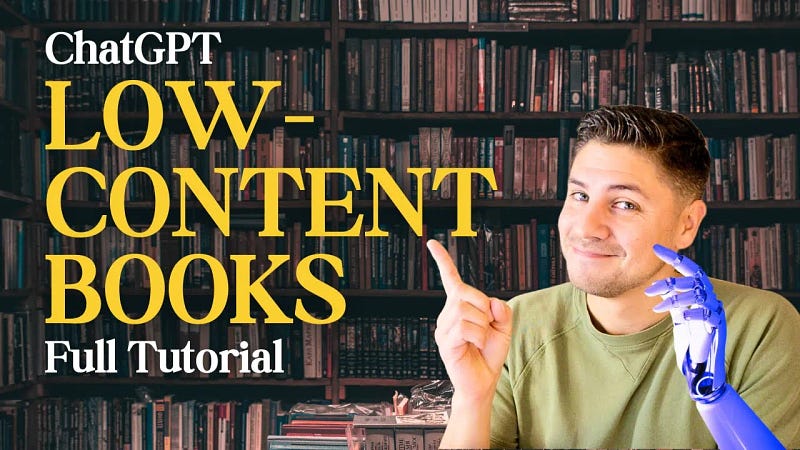
Are you looking for a new way to generate passive income? Low-content books might be the answer.
It’s easier than you probably think, especially if you incorporate ChatGPT! With no low-content book experience, I published 7 books in 3 weeks on Amazon via Kindle Direct Publishing (KDP).
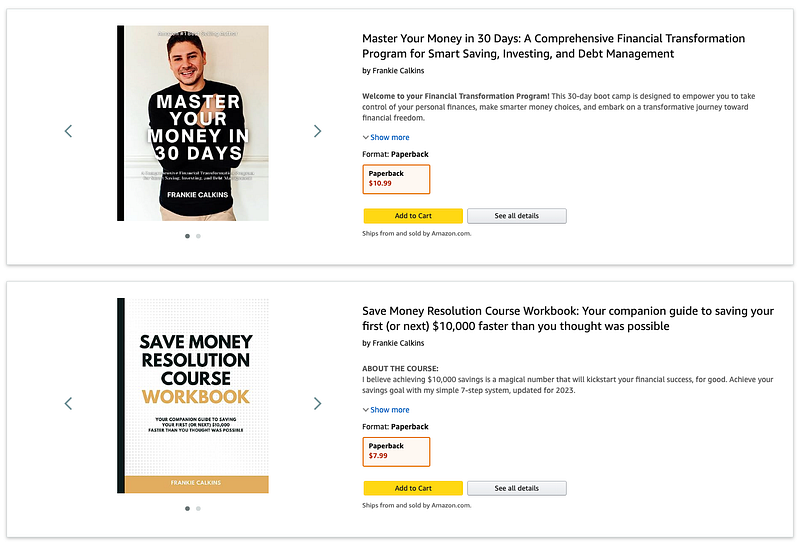
I’m going to guide you through the process of creating your own low-content books, turning your ideas into low-content books, and your books into profitable assets.
Let’s dive in and explore the step-by-step process of creating these books in 3 parts:
- I. Creating Your Book
- II. Publishing Your Book
- III. Marketing Your Book
Note: It’s easier to show than tell when it comes to ChatGPT. Therefore, I created a companion 45-minute full tutorial video for this article. It walks through this entire process with visuals and even more tips!
Part I: Getting Started with Low-Content Books
Low-content books, such as notebooks, planners, and journals, have gained popularity as a lucrative source of passive income due to their niche appeal and minimal effort.
Here’s the step-by-step creation process:
Step 1: Brainstorm Your Book Ideas
To create a successful low-content book, it’s essential to understand your target audience and identify their needs. Here are some tips for brainstorming book ideas:
- Research Popular Niches: Explore various niches on Amazon, social media platforms, and marketplaces to identify trends and popular themes. Look for underserved niches or gaps that you can fill with your unique ideas. Utilize ChatGPT for niche topics.
- Consider Target Audience: Determine who your book is for and what problems they might be facing. Think about their interests, hobbies, and goals. Tailor your book to provide value and help them overcome challenges.
- Generate Ideas: Once you’ve identified your target audience and their needs, generate ideas that cater to those specific niches. Consider different formats, such as budget planners, fitness journals, gratitude diaries, or coloring books. Think about the specific features and content that will resonate with your audience. Again, ChatGPT can point you in the right direction.
Step 2: Choose the Right Format
Now, it’s time to choose the format that best suits your book and target audience. Here are some considerations:
- Book Type: Decide on the type of low-content book you want to create. It could be a guided journal, a daily planner, a recipe notebook, or even a combination of different types within a single book.
- Size and Design: Consider the size of your book and how it will be used by your audience. Will it be carried around or used at a desk? Think about the practicality of the size and the design elements that will appeal to your target audience. Think about a cover and interior design that’s visually appealing and aligned with the book’s purpose.
- Content Layout: Plan the layout of your book’s interior pages. Decide on the number of pages and whether you want to include prompts, templates, or empty spaces for your audience to fill in. Create a logical flow that guides readers through the book. ChatGPT can help create the steps in your user’s journey.
Step 3: Create and Format Your Low-Content Book
Once you have a clear vision for your low-content book, it’s time to bring it to life! Here are the steps involved in creating and formatting your book:
- Design the Book Cover: A captivating cover is crucial for attracting potential buyers. Use design tools like Canva or hire a professional designer to create an eye-catching cover that reflects the essence of your book. Ensure it conveys the book’s purpose and resonates with your target audience.
Develop the Book Interior: Pay attention to the interior design and formatting of your book. Consider the following:
- Trim Size: Choose a trim size that suits your book’s purpose and target audience. Common sizes include 6x9 inches or 8.5x11 inches. Experiment with different sizes to find the best fit.
- Bleed: Decide whether you want to include bleed in your book. Bleed allows printing at or off the edge of a page, giving your book a professional look. Ensure that any important elements or text are not too close to the trim edge to avoid cropping during printing.
- Paper Options: Choose between a matte or glossy cover based on your book’s content, design, and audience. In my experience, glossy covers create more vibrant colors.
Part II: Prepare Your Low-Content Book for Publication
Let’s discuss the important steps to prepare your low-content book for publication on Amazon through Kindle Direct Publishing (KDP).
These steps ensure that your book meets the platform’s guidelines and increases its chances of attracting readers and generating sales.
Step 1. Manuscript Preparation
Before you can publish your low-content book on KDP, you need to prepare your manuscript. Here are some key considerations:
- File Format: Save your manuscript in PDF format. This ensures that the formatting, fonts, and layouts remain intact when viewed on different devices.
- Page Numbers: Add page numbers to your manuscript if desired. While low-content books don’t typically have extensive text, page numbers can still be useful for reference and organization.
- Proofread and Edit: Carefully proofread and edit your manuscript for any spelling, grammar, or formatting errors. Ensure the content is clear, concise, and free of any inconsistencies.
Step 2. Create a KDP Account
If you don’t already have one, create an account on Kindle Direct Publishing (KDP) at kdp.amazon.com.
Sign in using your Amazon account or create a new one. Follow the prompts to set up your account, including providing payment and tax information.
Step 3. Set up Your Book on KDP
Now it’s time to set up your book on KDP. Follow these steps:
- Book Details: Enter the required information, including the book’s title, subtitle (if applicable, but recommend), author name, and series (if applicable). Write a compelling book description that accurately represents the content and appeals to your target audience. ChatGPT can make this step a breeze!
- ISBN: Amazon no longer requires an ISBN (International Standard Book Number) for your low-content book. While it’s not mandatory for KDP, having an ISBN can help with distribution and cataloging if you decide to provide your own via a local ISBN agency.
- Keywords: Choose relevant keywords that describe your book’s content and target audience. These keywords will help readers discover your book when they search on Amazon. Be strategic in selecting keywords with high search volume and moderate competition. Ask ChatGPT to provide keywords that are SEO-friendly to help your book with discoverability.
- Categories: Select the appropriate categories and subcategories for your book. This helps Amazon place your book in relevant browsing lists and increases its visibility to potential readers.
- Upload the Manuscript: Upload your prepared manuscript file (in PDF format) to KDP. Ensure that the formatting and layout appear as intended.
- Book Cover: Upload your professionally designed book cover. Make sure it meets KDP’s requirements regarding size, resolution, and file format. A high-quality cover is crucial for attracting potential buyers and setting your book apart. You must have your full title on the cover.
Step 4. Pricing and Royalties
Determine the pricing for your low-content book and set the royalty options. Consider factors like printing costs, market competition, and your profit goals.
KDP offers two royalty options: the 35% royalty and the 70% royalty. The 70% option requires you to meet specific pricing criteria and includes distribution costs.
Step 5. Previewing Your Book
Before finalizing your book’s publication, take advantage of KDP’s preview tool. This allows you to review your book’s appearance on different devices and identify any formatting or layout issues.
Make any necessary adjustments to ensure a seamless reading experience for your audience. This step is mandatory in KDP.
Step 6. Publishing Your Book
Once you’re satisfied with the book’s preview, it’s time to publish! Click the “Publish Your Kindle eBook” button to make your low-content book available to readers on Amazon.
Your book will typically be live within 24 to 48 hours, although it can take longer during busy periods. However, most of my books were live on Amazon within 24 hours.
Part III: Marketing and Promoting Your Low-Content Book
Congratulations on publishing your low-content book! However, the journey doesn’t end there.
To maximize its visibility and attract readers, you need to invest time and effort into marketing and promoting your book. Here are some effective strategies to get you started:
Step 1. Optimize Your Book’s Metadata
Metadata plays a crucial role in how your book is discovered by readers on Amazon. Review and improve the following elements utilizing ChatGPT if necessary:
- Book Description: Craft a compelling and engaging book description that entices readers to learn more. Highlight the unique features and benefits of your low-content book, such as the types of pages or activities it offers.
- Keywords: Incorporate relevant keywords throughout your book’s metadata, including the title, subtitle, and book description. Choose keywords that your target audience is likely to search for on Amazon.
Step 2. Leverage Social Media
Social media platforms are powerful tools for promoting your low-content book and connecting with your target audience. Consider the following:
- Create a dedicated author page or profile on platforms like Facebook, Instagram, or Twitter. Share updates, behind-the-scenes content, and sneak peeks of upcoming books.
- Engage with your audience by responding to comments, answering questions, and fostering a sense of community.
- Share visually appealing images or short videos showcasing the pages and activities from your low-content book. This helps potential readers visualize the value your book offers. Here’s a short video I recently made showing off my first low-content book:
Step 3. Build an Author Website or Blog
Having an author website or blog provides a centralized platform to showcase your low-content books and engage with your audience. Consider the following elements for your website:
- Blog: Maintain a blog where you can share valuable content related to low-content books, creativity, or other relevant topics. This helps establish your expertise and attract organic traffic to your website. Or, blog on Medium!
- Book Showcase: Create dedicated pages for each of your low-content books. Include attractive images, book descriptions, and links to purchase them on Amazon.
- Email Newsletter: Offer a newsletter signup option on your website to build an email list. Send regular updates, exclusive content, and promotions to your subscribers.
Step 4. Encourage Reviews and Feedback
Reviews and ratings are influential factors for potential readers. Positive reviews not only increase your book’s credibility but also improve its visibility in Amazon’s algorithms. Here’s how you can encourage reviews:
- Reach out to family, friends, and early readers to leave an honest review on your book’s Amazon page.
- Include a polite call-to-action at the end of your book, asking readers to leave a review if they enjoyed it.
- Engage with readers who reach out to you with feedback. Show appreciation for their input and encourage them to leave a review if they found value in your book.
Step 5. Offer Promotions and Discounts
Promotions and discounts can attract new readers and create buzz around your low-content book. Consider the following:
- Limited-time price reductions or free promotions: Temporarily reduce the price of your book or offer it for free to attract new readers. This can lead to increased visibility and potentially result in more reviews and word-of-mouth referrals.
- Collaborate with other authors or run joint promotions: Partner with authors in your niche to run joint promotions, such as bundled book deals or cross-promotions. This expands your reach and introduces your book to new audiences.
Marketing and promotion require consistent effort and experimentation. Keep track of what strategies work best for your low-content book and adjust your approach accordingly.
With dedication and perseverance, you can attract readers and build a successful brand as a low-content book author!
Watch the Full Video Tutorial
From selecting the right niche and designing captivating interiors to optimizing your book listing and marketing it effectively, each step plays a crucial role in your success as a low-content book author.
Remember, the key to success lies in providing value to your readers. Focus on creating high-quality content, understanding your target audience’s needs, and delivering an exceptional user experience.
Embrace the power of automation tools like ChatGPT to streamline your book creation process and save valuable time.
If you’re eager to dive deeper into the process of making a low-content book, I highly recommend checking out my comprehensive tutorial on YouTube. In this 45-minute video, I walk you through the entire process step by step, using ChatGPT to assist you along the way.
From generating ideas and creating book layouts to optimizing your content and publishing on Amazon, my video tutorial will equip you with all the knowledge and guidance you need to create your own successful low-content book.
Get Started Today!
So, what are you waiting for?
Start turning your creative ideas into reality and embark on your journey as a low-content book author. With determination, persistence, and the right resources, you can tap into the thriving market of low-content books and unlock a world of possibilities.
Success comes to those who take action.
Start creating your low-content books today and experience the joy of sharing your creativity with the world.
Best of luck!
This article contains Amazon affiliate links, which means I may earn a commission if you make a purchase using these links.
Wait a second. If you want to start writing on Medium yourself and earn money passively you only need a membership for $5 a month. If you sign up with my link, you support me with a part of your fee without additional costs.
Frankie Calkins (M. Ed) is a Digital Marketing Director by day. On nights and weekends, he’s an author, YouTuber, and course creator. He lives in the Seattle, Washington area. Contact: [email protected]