
Love Your Period (One Day It Will Be Gone…)
It’s a miracle and deserves to be treated that way
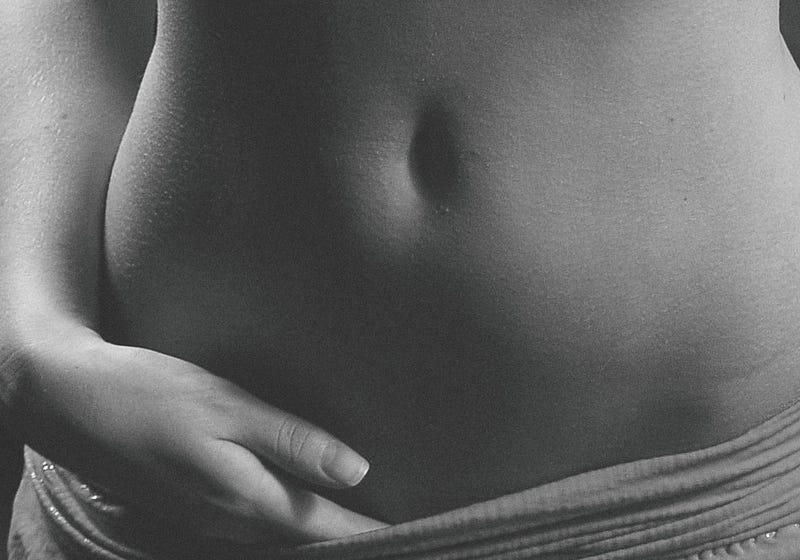
I hated my period before it even arrived. It seemed like some kind of awful joke, having to walk around bleeding and in pain once a month. Where on earth was the logic in that?
I know my mother must have spoken to me about it at a young age and I even remember barging in on her when she was in the bathroom, putting on a fresh pad, complaining about her cramps. But it wasn’t something we discussed in detail.
When I was 11, she let me read teen magazines and that’s when the true horror set in. It seemed like half the ads in each one were for feminine hygiene products, and for the first time, I discovered that women smelled bad “down there” — particularly when they were bleeding. I learned that periods were inconvenient, painful, and embarrassing.
If the ads weren’t bad enough, there were dozens of articles and advice columns about menstruation that shared horrors of which I had never imagined: bleeding through your pants when you were standing at the front of the classroom giving a speech, bleeding on your partner during sex, discovering that your tampon string slid out of your bikini bottoms at the beach…
Dear heavens, there was no end to the mortifying circumstances that awaited me. The overriding message I received from that first year of reading teen magazines was that menstruation was one of the most shameful aspects of female life and that it should, accordingly, be kept hidden.
Like a good little indoctrinated female, I told my mom that I didn’t want her to make a big deal when I got my first period, only a year later. I didn’t want my family to know — especially my dad. I felt so ashamed.
And yet, there was also something empowering about it. I remember walking through the halls at school on the second day of my very first period and feeling like a totally different person. I realized I was a woman — I could reproduce, which made me, biologically speaking, a sexually mature female. I glanced at all the other girls as I walked down that hall, wondering how many of them had started bleeding yet. It was like a secret club I suddenly belonged to, only none of us knew who else was a member.
Unfortunately, that feeling of empowerment didn’t last long.
The overriding message I received…was that menstruation was one of the most shameful aspects of female life and that it should, accordingly, be kept hidden.
The messages about periods being an unwelcome part of female life that had to be endured never ceased. They were in every magazine I read. The few times people referenced it in movies, TV shows, or books, it was always in a derogatory manner. And my friends and family members spoke of it with bitterness, whenever someone dared to bring it up.
I did my duty, trying my best to keep it a secret. I was too afraid to use tampons, though, so it was very hard to sneak pads into the bathroom without anyone noticing. I rarely spoke of it, except to my closest friends who were both jealous and disgusted when I announced I had started menstruating. And just as the magazines foretold, I had the occasional accident, though rarely as horrifying as the ones they described.
The worst part of my period was the pain. My journey into menstruation immediately introduced me to primary dysmenorrhea. You could call this “cramps with other symptoms,” but my pain and associated symptoms were severe — so severe that I usually had to skip school one or two days per month. The pain was excruciating.
As you can imagine, having this experience alongside the shame that already came with menstruation, I really, really hated my period. I dreaded the beginning of each new cycle so much that it became a serious source of anxiety.
By the time I was 19 and had escaped a physically abusive relationship, I fell deep into a depression fueled by feminist rage. I had been terribly damaged by my boyfriend’s behavior, had gotten pregnant and lost the baby, and ultimately ended up feeling that there was no place for me as a woman in this world.
I hated being female. I hated the inequity I saw between men and women, between our bodies, between our responsibilities. It was the first — and only — time in my life that I actively wished I had been born male.
My cramps were out of control by then. One doctor, seeing me when I was deep in pain, bent over myself, crying out in agony, unable to form words, suggested that my cramps, like a few other women she had seen, were likely as strong as some women’s labor pains. She gave me a shot — of what, I don’t remember, though she called it “the good stuff” — and even then, I was barely functioning. Finally, another gynecologist suggested exploratory surgery to find out whether or not I had endometriosis.
I dreaded the beginning of each new cycle so much that it became a serious source of anxiety.
I was so desperate at the time, I agreed. They performed a laparoscopy on me, only to find no evidence of endometriosis and no discernible reason as to why my cramps were so severe.
I was inconsolable afterwards to find out there was no solution. And worse yet, my menstrual pain increased in the years after the surgery, due to lesions that developed from the procedure.
It wasn’t until I was in my thirties that I started to change my attitude about my period. I was still battling with extreme pain, but for the first time in my life, I thought I was ready to become a mother.
Suddenly, my period had a beautiful purpose. Suddenly, I saw the changing cycles within my body as a miraculous promise of possibility that might someday manifest as the daughter I had always wanted.
Further, I’d been bleeding for over twenty years. My period was such a part of my experience that I couldn’t imagine life without it. I was tired of feeling ashamed about it. It was part of who I was as a woman.
Unfortunately, it wasn’t a great time to try to feel empowered about my period. I was deep in a relationship with a man who was disgusted by menstruation — so much so that he didn’t even like to touch me when I was bleeding. Of course, this only made me more determined to be more open about it and to explore a healthier relationship with it.
I started using cloth pads and menstrual cups, to my partner’s horror. Once, when I felt particularly daring, I asked him to use his fingers on me while we were fooling around — one of my favorite sexual practices. I didn’t tell him I was on my period or that I was wearing the cup and of course, he encountered it at some point and asked what it was. I explained and he freaked out, as he always did when it came to my period.
I’m sure he would’ve freaked out even more if he knew I sometimes poured out my blood into the compost bin that would eventually end up in our garden bed. Because, yes, I was getting that hardcore about accepting the beauty and power of my period. I was so tired of being told that it was disgusting, shameful, and something to be hidden away.
I wasn’t going to internalize that story anymore — not even when my fellow females were playing it out. And sadly, many of them still did.
My period became even more precious to me when I found myself single and staring 40 straight in the eyes. I realized how lucky I was that I still had my fertility — that I still had a chance to have a baby, even if I probably wouldn’t take it. The point was, it felt like a miracle-in-waiting.
All my friends who had already had kids started talking about menopause as soon as we entered our forties. They were so excited to be rid of their “horrible” periods.
I was so tired of being told that it was disgusting, shameful, and something to be hidden away.
I still endured severe pain during my periods, but I had long ago stopped treating it like an unwanted inconvenience. I didn’t share my friends’ perspectives on menopause, and indeed, was not at all excited to give up this river of possibility that ran between my legs each month. I still cherished it and all its promise.
Of course, I know it’s inevitable. I will not have my period forever. If we generally follow our mother’s timelines, then I’ve got about eight years left before my time will come. Though because I have not had children, apparently there’s a 30% chance I will lose my period within the next few years.
I discovered this because I just had a 37-day cycle after thirty years of clockwork 26–28 day cycles. I already knew I was in the process of major hormonal change due to other symptoms I’ve been having these past few years. But waiting for eleven days for my period to come was tortuous and caused me to do a lot of reckless Googling. The reality of the change that’s coming is all the more real to me now.
It brings tears to my eyes to wonder what I will do when my period is gone for good. I’ll adjust, I’m sure, like all women do. I’ll find my way. I’ll discover all the great things that come with menopause.
I didn’t share my friends’ perspectives on menopause, and indeed, was not at all excited to give up this river of possibility that ran between my legs each month. I still cherished it and all its promise.
But in the meantime, I find myself anxious, knowing that the next few years are going to be filled with uncertainty, with change. These are the last years of knowing my body as a fertile woman. I’ve spent the majority of my life in the flow of my menstrual cycle. I can hardly imagine what is beyond this. Or what it will feel like when the doorway to biological motherhood closes for good.
I wept when blood appeared on the toilet paper yesterday. Finally. Finally, eleven days late, finally. It came.
I feel blessed that I learned what a gift my period was nearly ten years ago. I wish I had always known that. I wish our culture had taught me that.
Please love yours. Please teach your daughters and nieces to loves theirs. Please teach your sons and nephews to love periods, too.
This is one of our greatest powers — our ability to grow a human being, whether we do so or not. Don’t ever forget that power. Don’t ever treat it like an inconvenience. Don’t ever wish it away.
Believe me when I say that someday, you’ll be facing a new phase in your life, without your cycle, and you might not be so eager to say goodbye to it, after all.
Bless it as the miracle it is while you still have it.
© Yael Wolfe 2019
If you like my work and want to stay updated, click here to subscribe to my newsletter.


