
We Will Not Be Tamed
Let’s bust out of these cages and roam free, like we were meant to do

When I was a little girl, I was a wild child, as many little girls are. I hadn’t been domesticated yet, so I was able to enjoy doing whatever I wanted.
As the oldest child in my family, I was alone for a few years, and during my sister’s infancy, I had to find older playmates. I was drawn to male friends back then — I saw the freedom they had, their audacity, their sense of adventure and ambition. And I wanted it.
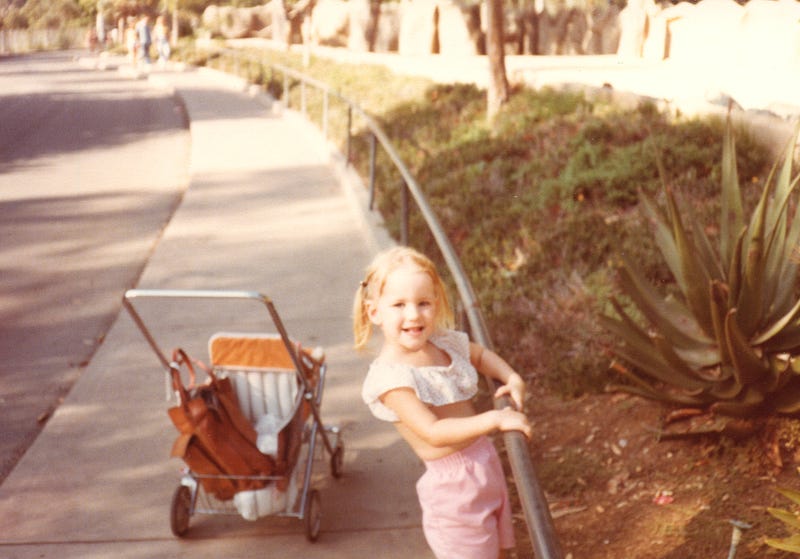
I climbed trees, got dirty, ripped my pants at the knees, ran as fast as I could, and spit watermelon seeds into the grass when my mother wasn’t looking. It was glorious.
I tried not to succumb to all the adults admonishing me to act more like a lady and stop trying to be so much like the boys. What was wrong with the boys?, I wondered. Why shouldn’t I want to be like them?
Unfortunately, by first grade, I was already feeling the expectations of those around me really press in on me. I started spending more time with female friends — and one, in particular. Her name was Alison. She lived just down the street from me and was an only child.
I climbed trees, got dirty, ripped my pants at the knees, ran as fast as I could, and spit watermelon seeds into the grass when my mother wasn’t looking.
I was in awe of her because she looked like a princess. Seriously. I am not at all joking or exaggerating when I say she wore white lace dresses every single day with ankle socks, black patent leather Mary Janes, and…a petticoat. Yes, seriously.
I remember watching her with my mouth hanging open when she slid down the pole at our school’s playground. She would jump on it and lean slightly to one side so her body would twist a bit, sending her dress and petticoat swinging out in a wide mushroom. I’d make her do this again and again, endlessly fascinated.
She was the most beautiful, perfect girl I had ever seen — so feminine and delicate. She never played in the dirt like I did. Her dresses never got stained or torn. Her Mary Janes were always shiny and unscuffed.
Because she lived nearby, I started going to her house to play. The first time I visited, I saw that Alison had a queen-sized bed with a white lace bedspread. Again, I’m dead serious. It looked like it belonged to a princess.
In her closet, there were the dresses and petticoats I loved so much, all hung up in a row, perfect and identical, as if in a department store. Beneath them, a row of perfectly polished Mary Janes.
But it was, perhaps, her collection of porcelain dolls that I loved the most. There were dozens of them, staring down at us. I say staring down because they were on a shelf far above our heads, that ran the length of three of her bedroom walls. I was sick with envy — I wanted even one porcelain doll and she had enough for all the first graders at our school.
Of course, at the time, it didn’t occur to me that she was clearly not allowed to play with those dolls, being as they were inaccessible to her. Nor did she have any other toys in her bedroom — something else I didn’t notice at the time.
She never played in the dirt like I did. Her dresses never got stained or torn. Her Mary Janes were always shiny and unscuffed.
Over the course of our short friendship, I became so jealous of her that I started behaving badly when we were together. I pushed boundaries, played too roughly, challenged her with exaggerated sass. One day, when we were playing in her backyard in our bathing suits (hers was covered in ruffles, of course), she put the hose in her mouth to take a drink. Even standing there, bent over the hose in her frilly bathing suit, she looked so perfect, so elegant, so regal, I became momentarily furious and I reached out and gave the hose a tug.
The metal end caught against her teeth, making a clinking sound, and though it didn’t do any damage, she began screaming. Her mother ran out and Alison appropriately tattled on me. I got a lot of stink eye from her mom that day, and was sent home.
The final straw came when we were doing crafts in her kitchen one afternoon. We were gluing glitter to our drawings. She had made a pink ballerina. I had drawn a Tyrannosaurus rex and I was annoyed she didn’t have any brown glitter.
We got into an argument about that or something else — I don’t remember — and just to piss her off, I yelled, “Vagina!”
Well, that was that. Her mother called my mother and yelled at her in horror to come get me. She was disgusted by my behavior and my vulgar mouth.
My mother came right away and defended me, reminding Alison’s mother that “vagina” is not a bad word, but the woman would have none of it. She said I was a bad influence on Alison and told my mom I could never come over again.
Looking back, I have great compassion for Alison — and for all the little girls I knew who lived some version of that life. All those perfect clothes. Toys they couldn’t play with. Clothes they couldn’t muss.
We got into an argument about that or something else — I don’t remember — and just to piss her off, I yelled, “Vagina!”
They were put into cages and tamed.
I think all women — and many men, really — have been forced into cages at some point in their lives. Usually more than once. Usually more than a hundred times.
The world wants us tame. We’re easier to deal with that way.
Shame is one of the most effective tools in taming a woman. “The word vagina is vulgar!” for instance. “Shame on you!”
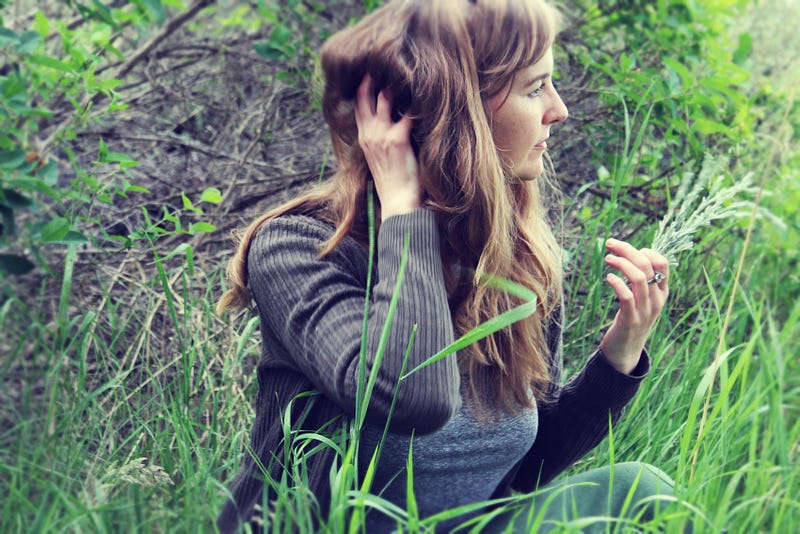
Or maybe it was the boyfriend who wanted to marry you so badly, even though he abused you, because he was so afraid that you would take your wildness somewhere else. Or maybe it was the boss who didn’t like that you rode your bike to work, showing up sweaty and wind-blown, unlike the other female employees who always looked like they stepped out of a catalog. Or maybe it was the lover who said you should wax all your body hair so you would look more feminine and sexy.
It’s happened a million times, and too often, I succumbed. Too often, it just seemed easier to do what the world was asking of me. Okay, fine, give me my polished rows of Mary Janes, my closetful of petticoats, and a shelf lined with porcelain dolls that I’m never allowed to touch. I’ll just sit here and look beautiful and never say anything vulgar, like “vagina.”
Interestingly, the Tame Game is really just a bait and switch. No matter how well our culture sells us on the idea of how much we’ll get out of playing that role, in the end, we are left starving, angry, and sometimes just plain broken.
The older I get, the wilder I want to be. Fuck the tame woman bullshit. Let me roam the forest as free as I want to be. Let me be a big, bad wolf. Clarissa Pinkola-Estes, Ph.D. says, “A healthy woman is much like a wolf: robust, chock-full, strong life force, life-giving, territorially aware, inventive, loyal, roving.”
Yes, to all of that. I want it. And I want it for everyone — particularly the young women of this world. Particularly the little girls like Alison who were never even allowed to roam wild in the first place.
That’s a theme I want to explore here in Wilder and I hope you will follow along. I don’t know where I’m going yet — I’m just roving, so far. But we’ll end up somewhere wild and free, I can promise you that.
© Yael Wolfe 2019


