
Lording it in Ludlow
Exploring the Shropshire town’s royal roots and literary links
In 1587, the Shropshire poet, Thomas Churchyard, wrote in his travelogue, The Worthiness of Wales
“The towne doth stand most part upon a hill,
Built well and fayre, with streates both large and wide.
And who that lists to walke the towne about,
Shall finde therein some rare and pleasant things.”
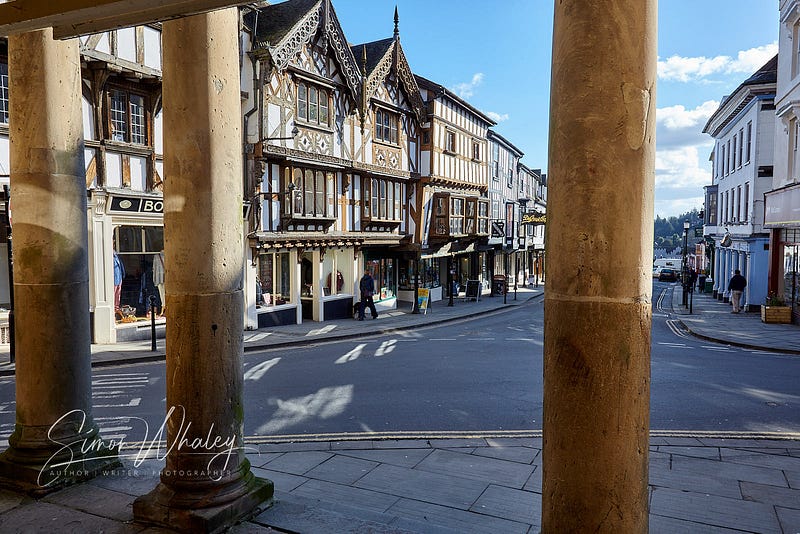
It’s a description that still holds true today, for over 500 of its buildings are either Grade I or Grade II listed, with many dating back to Thomas Churchyard’s time.
But as someone who spent several holidays near Ludlow, before moving to the Shropshire county in which it sits, I ought to clear up a little confusion. For although, Thomas wrote about Ludlow in his book, The Worthiness of Wales, Ludlow is most definitely in the English county of Shropshire.
Despite this, between the 15th and 17th centuries, Ludlow Castle was the base for the grandly named Council of Wales and the Marches. In other words, it was the administrative centre for the whole of Wales and the English border counties (Gloucestershire, Herefordshire, Worcestershire, Shropshire, and Cheshire — which were known as the Marches). Marches comes from the historical word marchlands, meaning borders.
The Welsh Borders is a little known area to most overseas travellers and, to be honest, many in the UK. The Welsh coastline is stunningly beautiful, and Wales has three national parks, so travellers frequently head straight across England, passing Birmingham, Chester, or Bristol eager to get into Wales. What they miss are the beautiful Welsh Borders and gorgeous gems like Ludlow.
Shropshire’s Shard
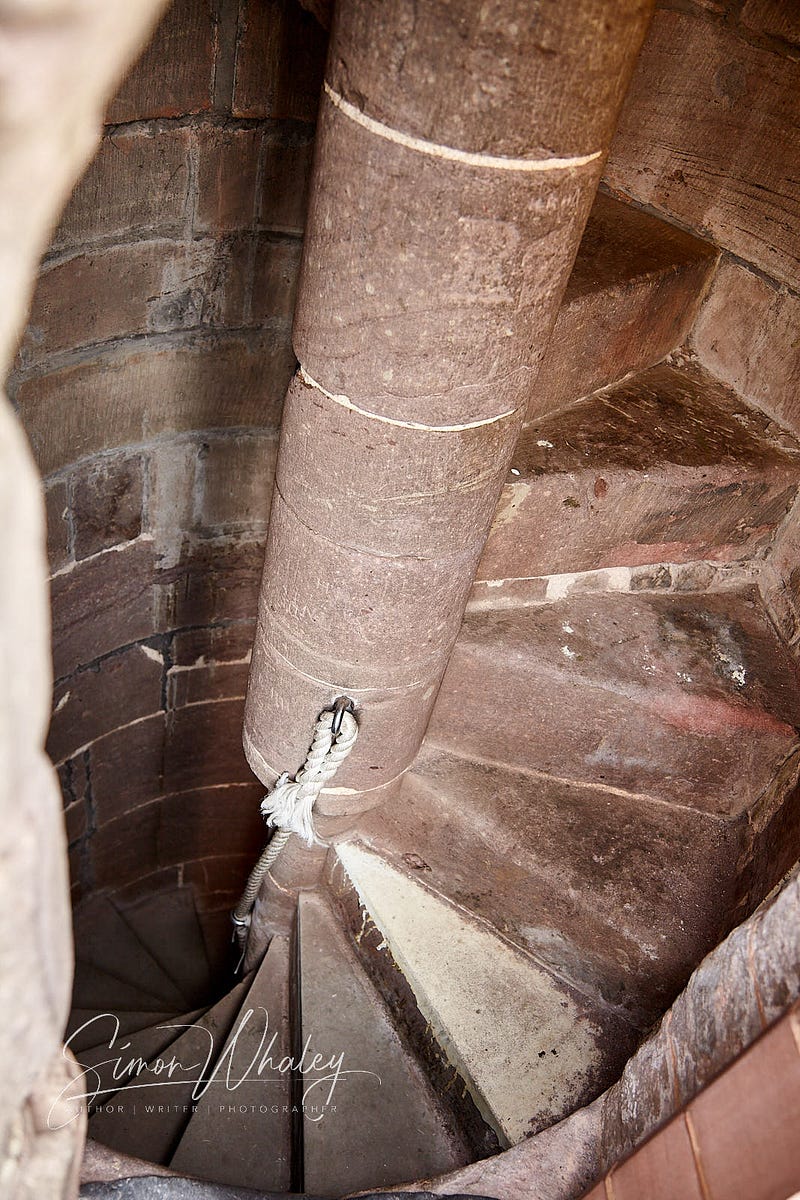
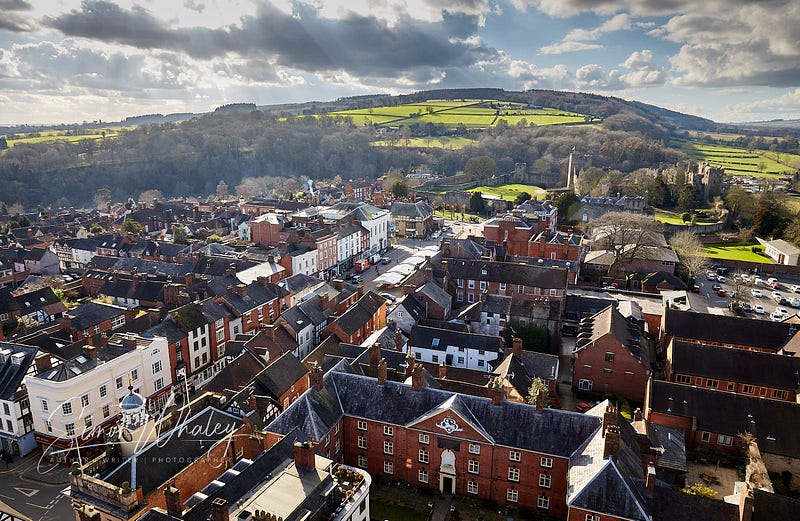
If you’ve never been to Ludlow, head to St Laurence’s church and climb the 200 steps to the top of its tower. (Or is it 201 steps? Or 203? I get a different figure every time I count them.) I call it Shropshire’s Shard, for this 135-feet tall, 15th century tower dominates the Ludlow skyline, and offers fantastic 360-degree views. Perfect for getting an overview of the town and its medieval grid-like street pattern.
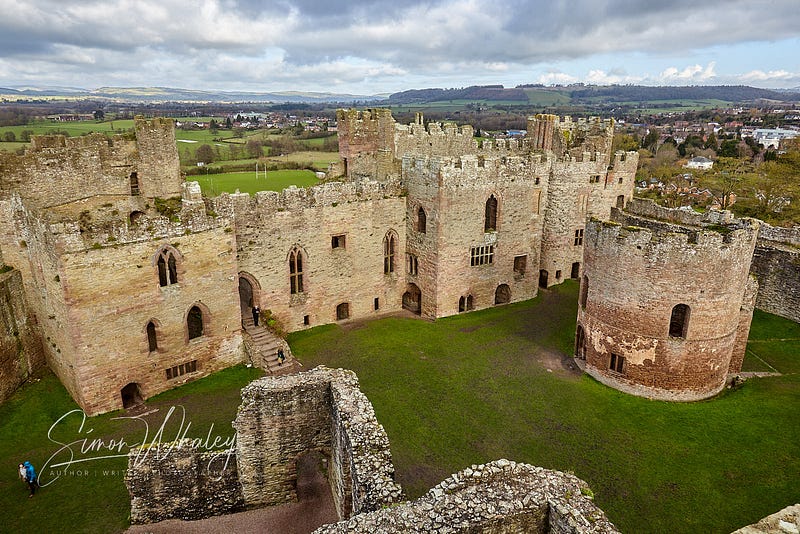
From here, you can see how the castle still dominates the town. Built on a rocky escarpment overlooking the River Teme, this defensive structure, first built soon after the Norman invasion, grew to become a Royal dwelling. Royalty connects the castle with St Laurence’s.
In 1502, Prince Arthur, son of Henry VII and older brother of Henry VIII, died at Ludlow Castle at the tender age of 15 years and 7 months. While the plaque in St Laurences claims his heart is buried here, it is believed that, actually, it’s not just his heart but most of his internal organs too. Because they couldn’t be embalmed, they had to be buried near to where he died. The rest of his body is buried at Worcester cathedral.
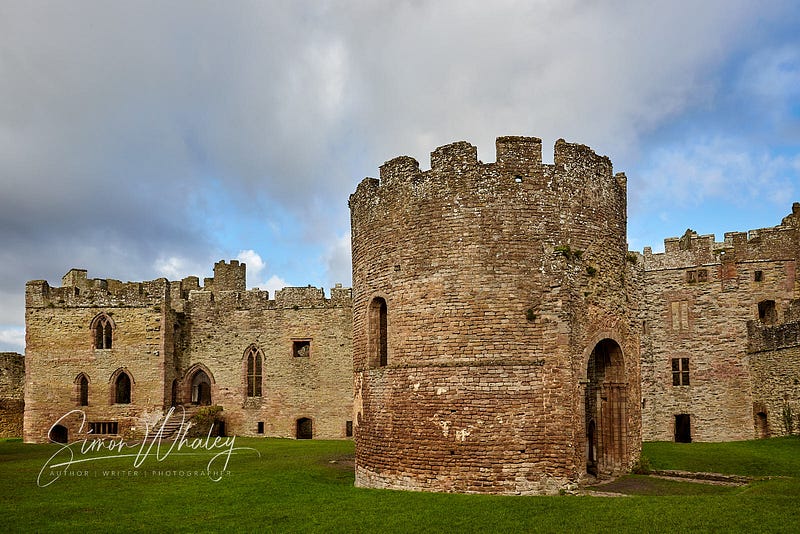
Ludlow Castle is home to the Round Chapel, which is dedicated to St Mary. Circular chapels are rare in the UK, and Ludlow Castle’s is one of only five in the UK. (It’s inspired by the Church of the Holy Sepulchre in Jerusalem.)
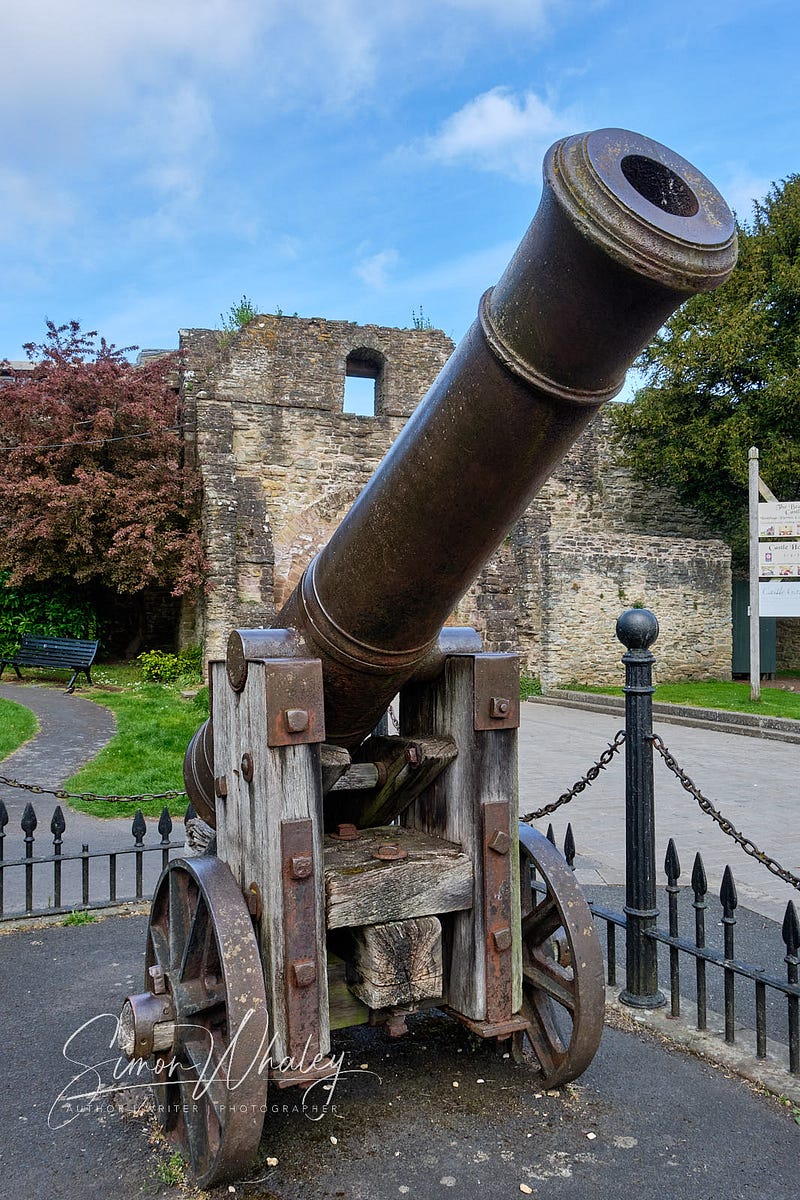
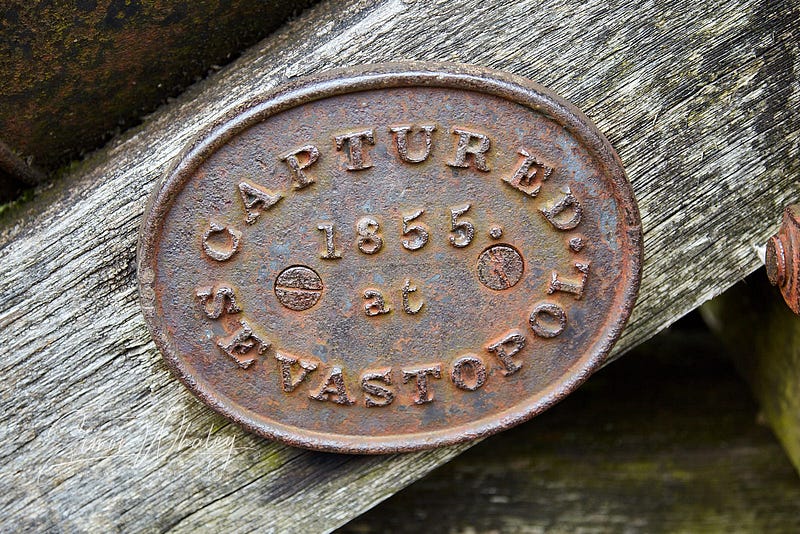
Just outside the main entrance is another international link. A huge canon guards the entrance, but this is no Welsh Border battle memorabilia. If you look closely, you’ll see the plaque commemorating its capture at the Battle of Sevastopol in 1855!
Honeymoon Hotel
So, why was Prince Arthur, heir to the throne, at Ludlow Castle, I hear you ask? Well, this fifteen-year-old prince was on his honeymoon. To whom was he married? A woman by the name of Catherine of Aragon. Anyone who knows their British History will recognise that name, for Catherine of Aragon became Henry VIII’s first wife. So, having married the older brother, she then married the younger brother seven years later! (Clearly this was a woman determined to marry a King. Actually, it was more to do with bringing two families and their wealth together.)
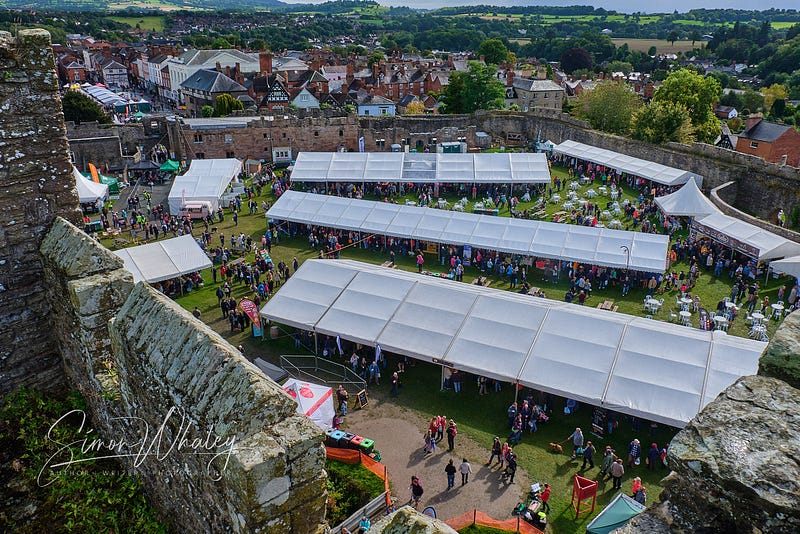
Such is the vastness of Ludlow Castle and its outer bailey grounds, that it plays hosts to several large events throughout the year. Time your visit to Ludlow in September, and you’ll share it with thousands of other tourists visiting the Food Festival. Come in May to visit the Spring festival, while in August, there’s the Ludlow Magnalonga (an 8-mile ramble and feast through the Ludlow town and countryside). But even on the busiest of festivals, there’s always somewhere quiet to escape to in Ludlow.
Woolly Wonders
Explore Ludlow’s wide streets and narrow alleys and the medieval architecture boasts about the town’s wealth, garnered between the 11th and 16th centuries, thanks to its woollen trade. At one time, eleven mills operated along the banks of the River Teme. In 1377, Ludlow’s population of about 1,700 people made it the 33rd largest town in England. Remaining constant for over four hundred years, it suddenly swelled to over 5,200 after the Napoleonic Wars, by those attracted to its prosperity.
If you think Ludlow looks familiar, perhaps you’ve seen it on television, or film? Castle Lodge, which sits adjacent to the castle, has been used for many period dramas, including a 1965 film adaptation of Moll Flanders starring Angela Lansbury. The town itself became a film set when Hollywood descended upon Ludlow in 2001, to use it as a backdrop for the film Unconditional Love starring Rupert Everett, Kathy Bates, and Jonathan Pryce.
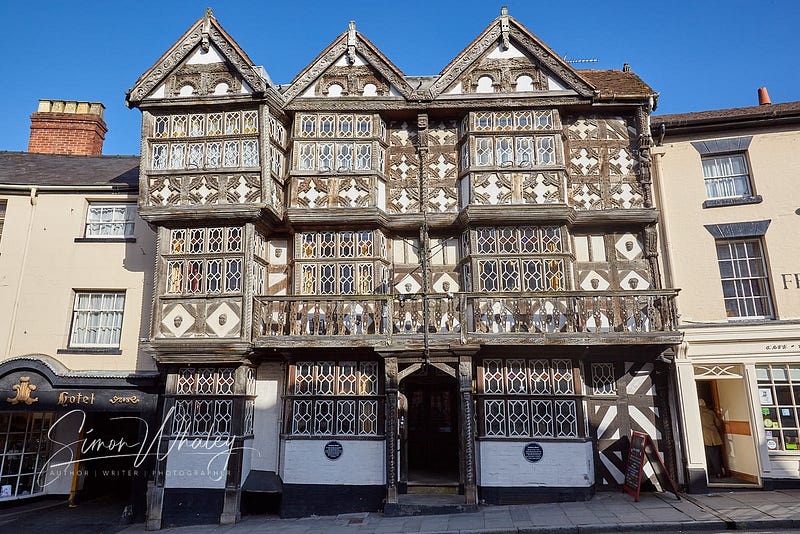
Perhaps Ludlow’s most famous hostelry is the Feathers Hotel, which Jan Morris said in the New York Times in 1983, “I daresay it is the most handsome inn in the world”. Praise indeed for a building rebuilt in 1619 as the private home of a lawyer, but converted in 1670 into an inn that continues to ply the trade today. Perfect for a relaxing afternoon tea.
Teme Travel
To experience the tranquility Ludlow can offer, take the perimeter walk to the right of the castle’s main grounds, and follow it around the castle’s curtain walls, and drop to Dinham Bridge.
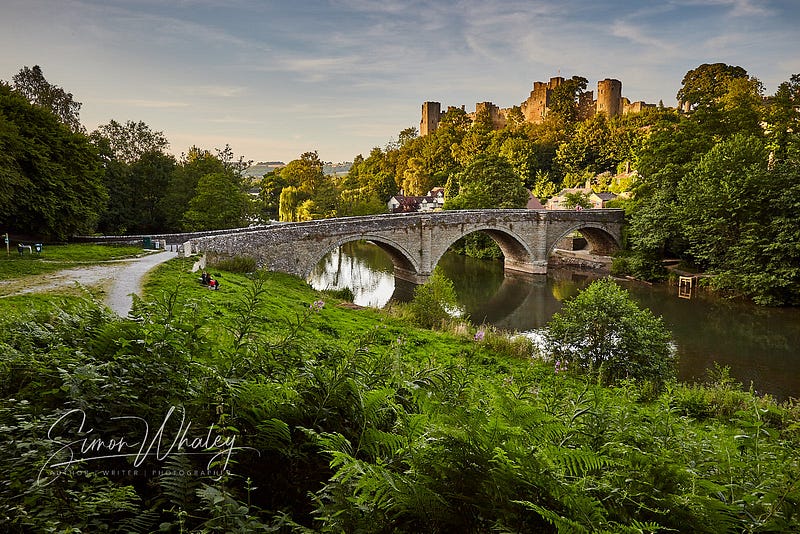
Cross over the narrow (barely wide enough for motor vehicles, but watch out because they do us it) bridge that spans the River Teme (look out for otters) and then head up the steps onto Whitcliffe Common.
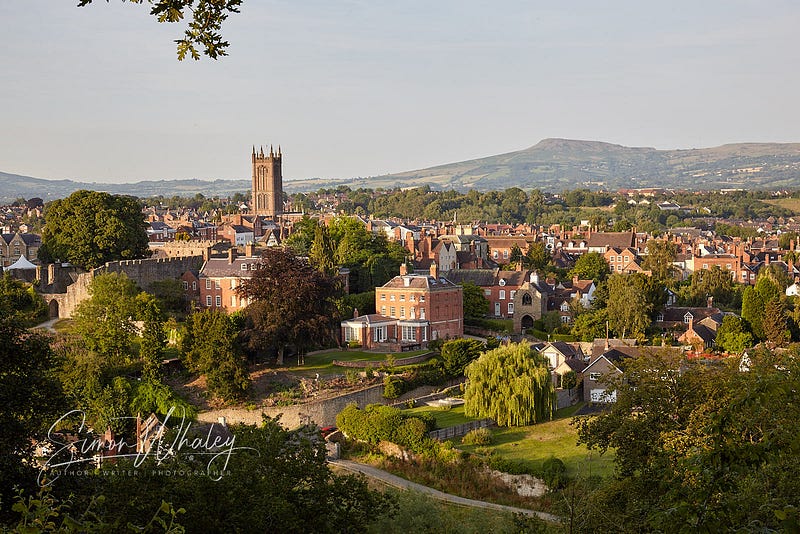
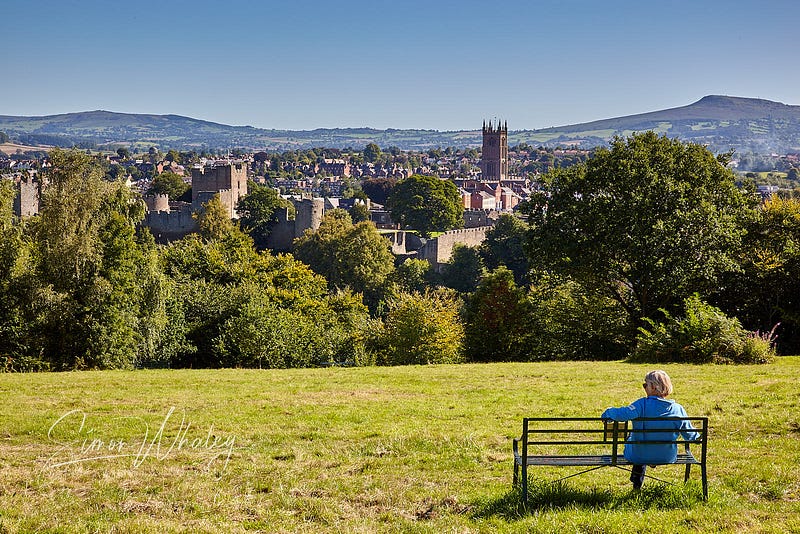
Climbing through the trees, the path eventually emerges into a large open grassy area, which is where you’ll find the iconic view of Ludlow: a skyline dominated by the castle, St Laurence’s church tower, and the enigmatic Titterstone Clee Hill in the background.
Drop back down to the river, and follow it downstream, as it curves, moat-like, around the southern shores of the town, and walk along what is known as the Break Walk. (The path was created by unemployed workers during Victorian times, who were paid in bread, so they could feed their family, rather than given cash to waste in the town’s hostelries!)
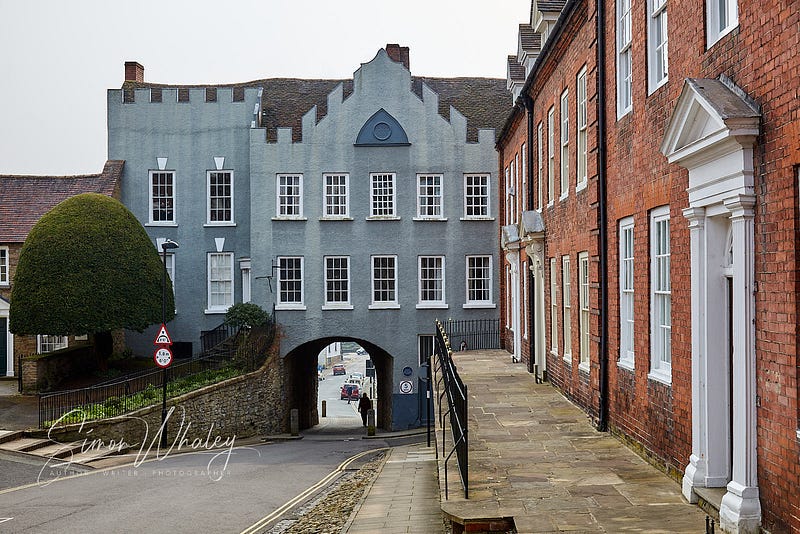
Cross back over the river, and climb Broad Street, and you’ll pass under Broad Gate, the only one of seven medieval gates giving access to the town that remains.
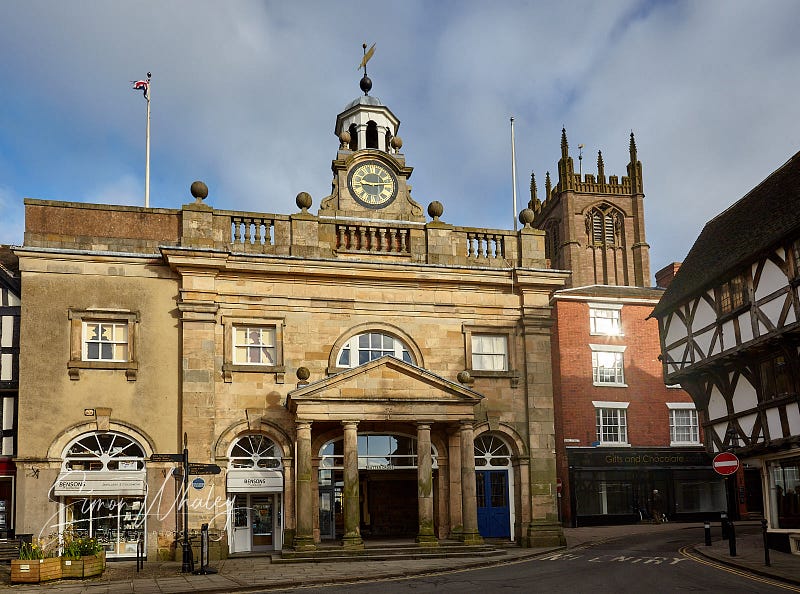
At the top, stands the Buttercross, where you’ll find the fascinating Ludlow Museum. And there behind, stands St Laurence’s Church.
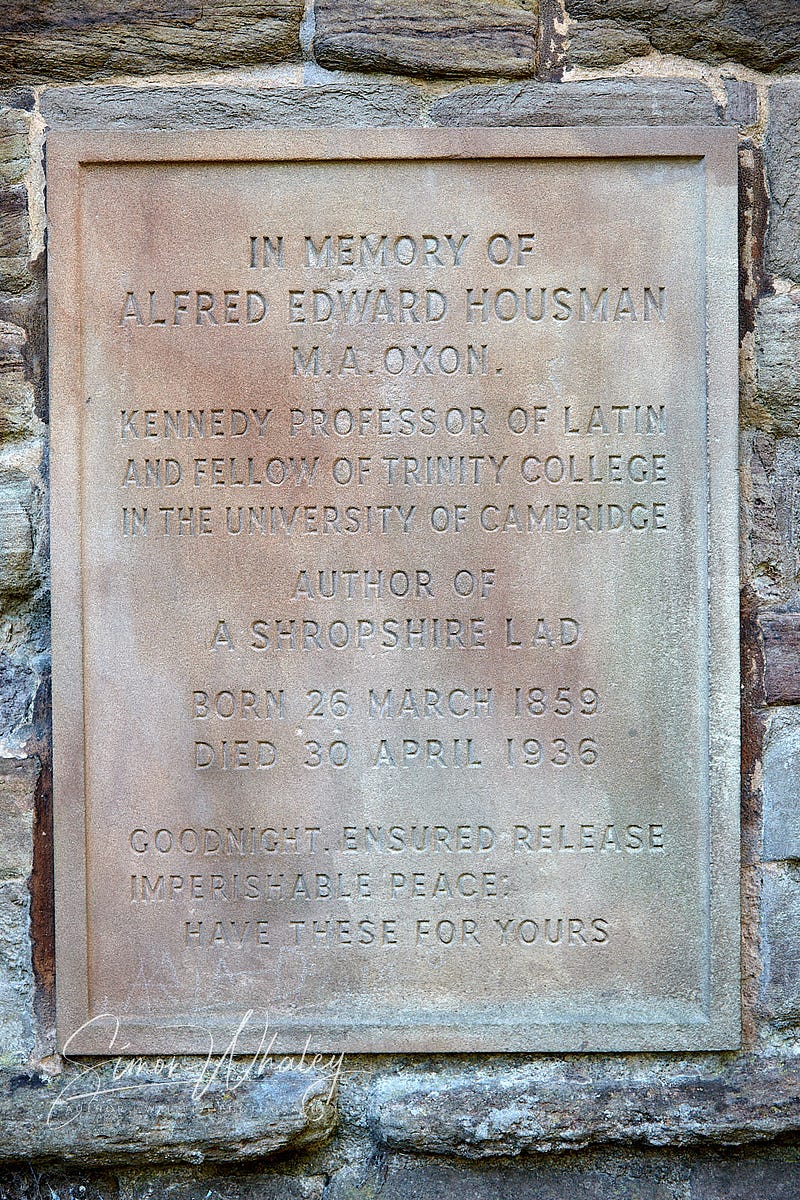
If you wander around to the rear of the church, you’ll find the memorial to the poet AE Housman, whose most famous collection is A Shropshire Lad, which was published in 1896. In it, he immortalised St Laurence’s Church Tower when he wrote:
“Come you home a hero,
Or come not home at all.
The lads you leave will mind you,
Till Ludlow Tower shall fall.”
Ludlow provides me with literary inspiration, for it’s the basis of my fictional town of Mortiforde in my humorous cosy crime series The Marquess of Mortiforde Mysteries.
A visit to Ludlow should not be rushed. Take your time to savour the surroundings and immerse yourself in its history. Remember, as Thomas Churchyard wrote:
”And who that lists to walke the towne about,
Shall finde therein some rare and pleasant things.”
Further Information
Ludlow lies on the main A49, 30 miles south of Shrewsbury and 25 miles north of Hereford. It’s served by trains on the Manchester to Cardiff line, as well as services from Holyhead, Swansea, and Milford Haven.
More from Simon on Globetrotters:


