
Escaping from Britain’s Smallest City
And discovering Britain’s Caribbean-like coastal waters
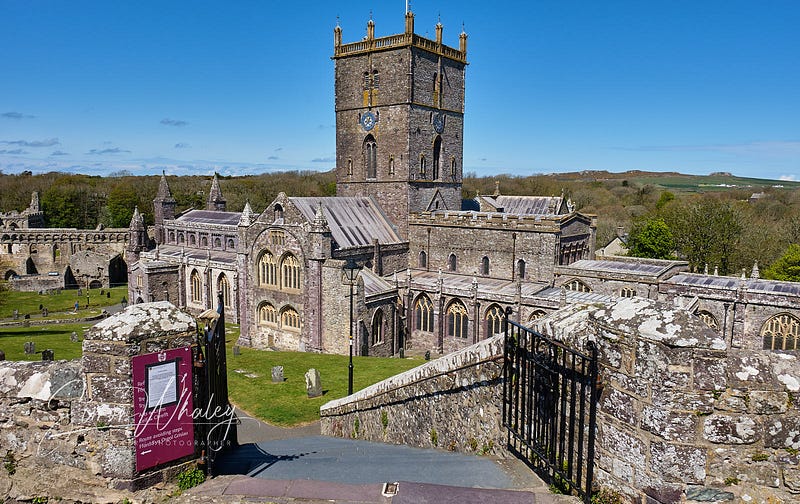
Britain smallest city (by population), St David’s, hides itself away on a peninsula of the Pembrokeshire coastline. It lies 260 miles west of London, and Rosslare, in the Republic of Ireland, lies barely 60 miles north-west across the Irish Sea.
You can’t visit St David’s without exploring its impressive cathedral, which, surprisingly, is not easy to see when you arrive, despite it being 115 feet tall. But don’t rush off searching for it. Instead, ignore all the other tourists heading down the main street.
Whether you come by car or bus, most people park or disembark at the Oriel Y Parc gallery and Visitor Centre. But instead of crossing over the road to this tourist sponge, turn left, down a road called Ffordd Caerfai. It’s a bit bungalow heaven on the right-hand side, but snatches of the sea ahead will attract your eyes’ attention. Don’t miss the road on the right, Maes-Y-Dre, and soon after, fork left onto a signed path.
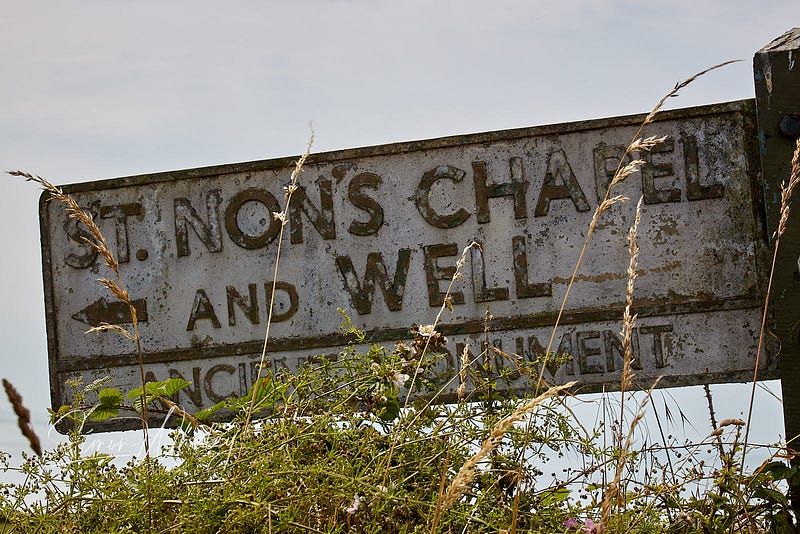
This path skirts St Davids, and within minutes there’s a path to the left signed to St Non’s. Take it.
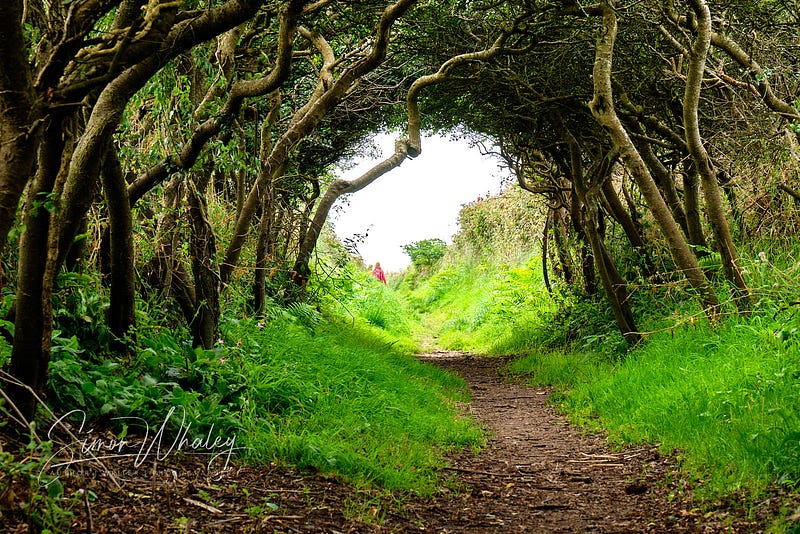
On a sunny day, the air is a cacophony of bird calls. High above the gulls screech, and buzzards mew, whilst the hedgerows between which this path meanders are buzzing with the short, sharp chirps and tweets of sparrows and finches. Briefly, the hedge completely envelops the path, cocooning its travellers in a brief moment of shade.
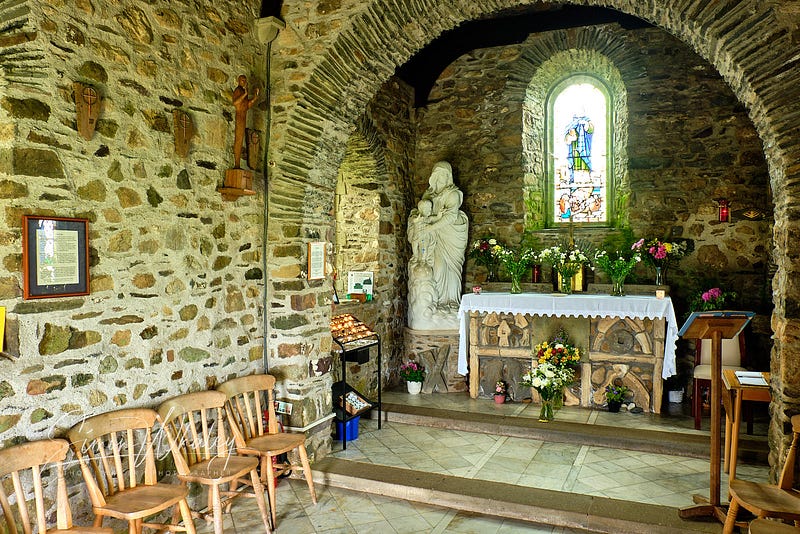
The route weaves its way around farmers’ fields, negotiation a never-ending series of gates, until suddenly, she appears . . . the Chapel of Our Lady and St Non.
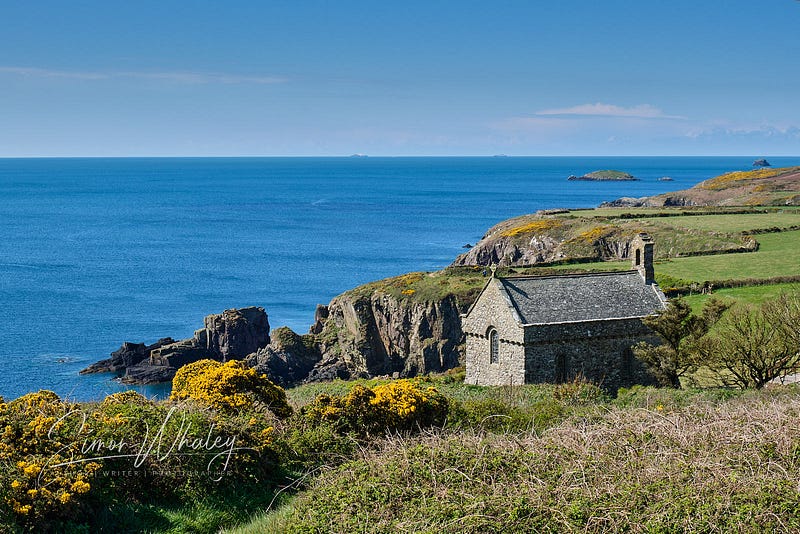
This tiny stone chapel is actually relatively new. Built in 1934, it became a place of worship for the owner of the large house in whose grounds it sits, overlooking the Irish Sea. Fed up with travelling 16 miles to the nearest Catholic Church he built his own. Measuring 25 feet long by 12 feet wide, its calming atmosphere envelops all those who step inside. A simple stained-glass window, a small font and a handful of chairs is sufficient to pause and contemplate, as the sound of the waves lapping the shore at the bottom of the nearby cliffs creates a mesmerising rhythm.
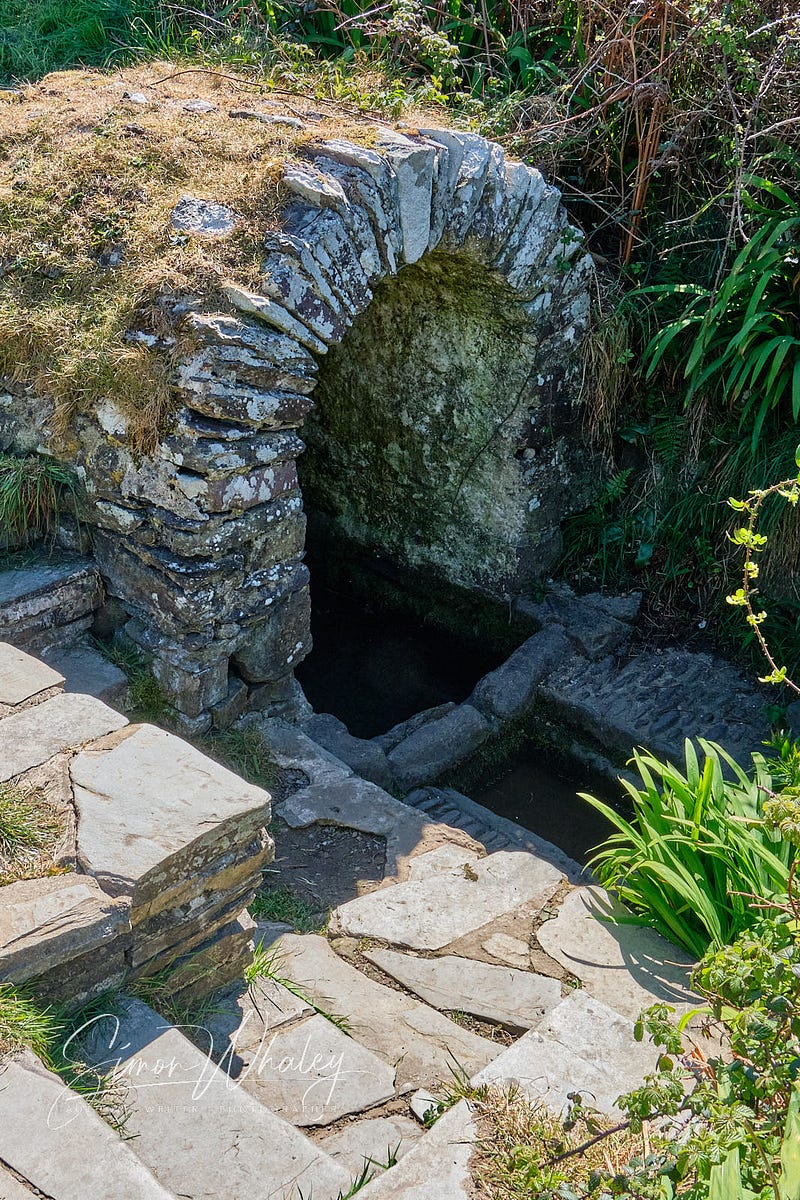
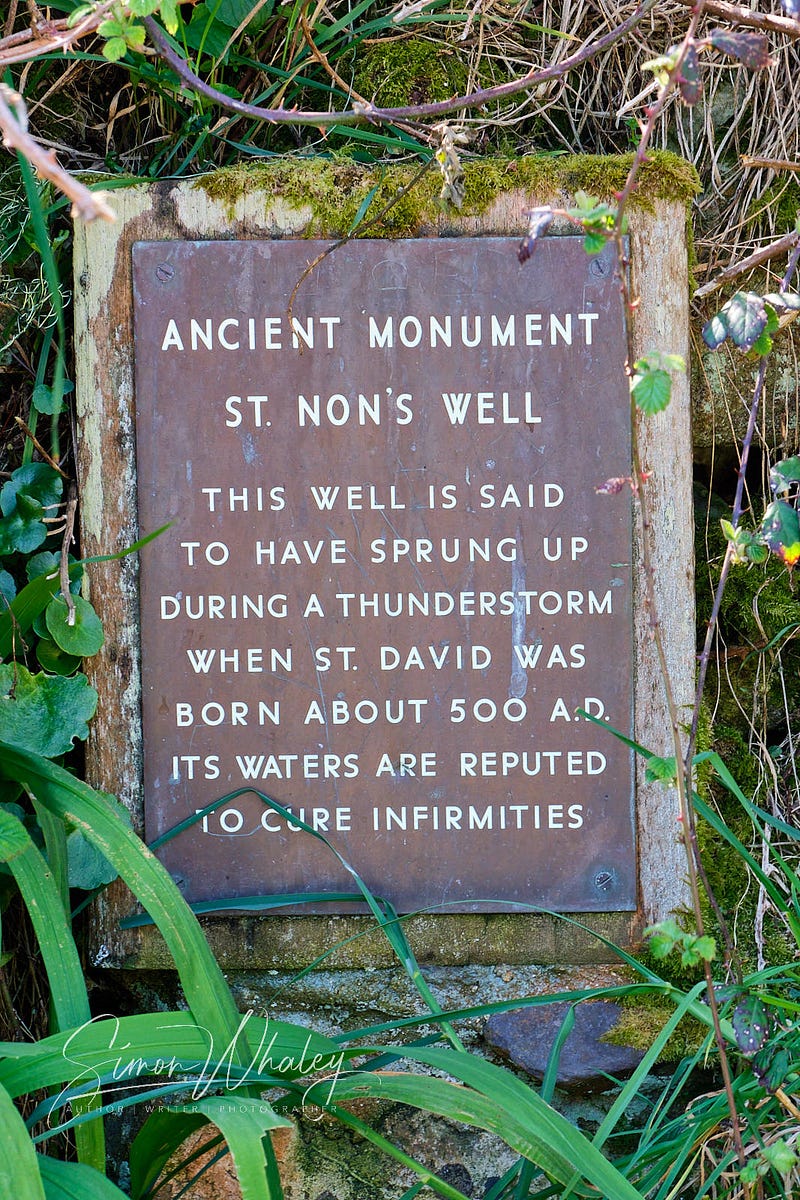
It’s tempting to head to the top of St Non’s Cliffs, but another path west travels to St Non’s Well. For it’s at this spot that a well is reputed to have sprung up during a fierce storm at the time when St David was born. (Its water is said to cure eye problems.)
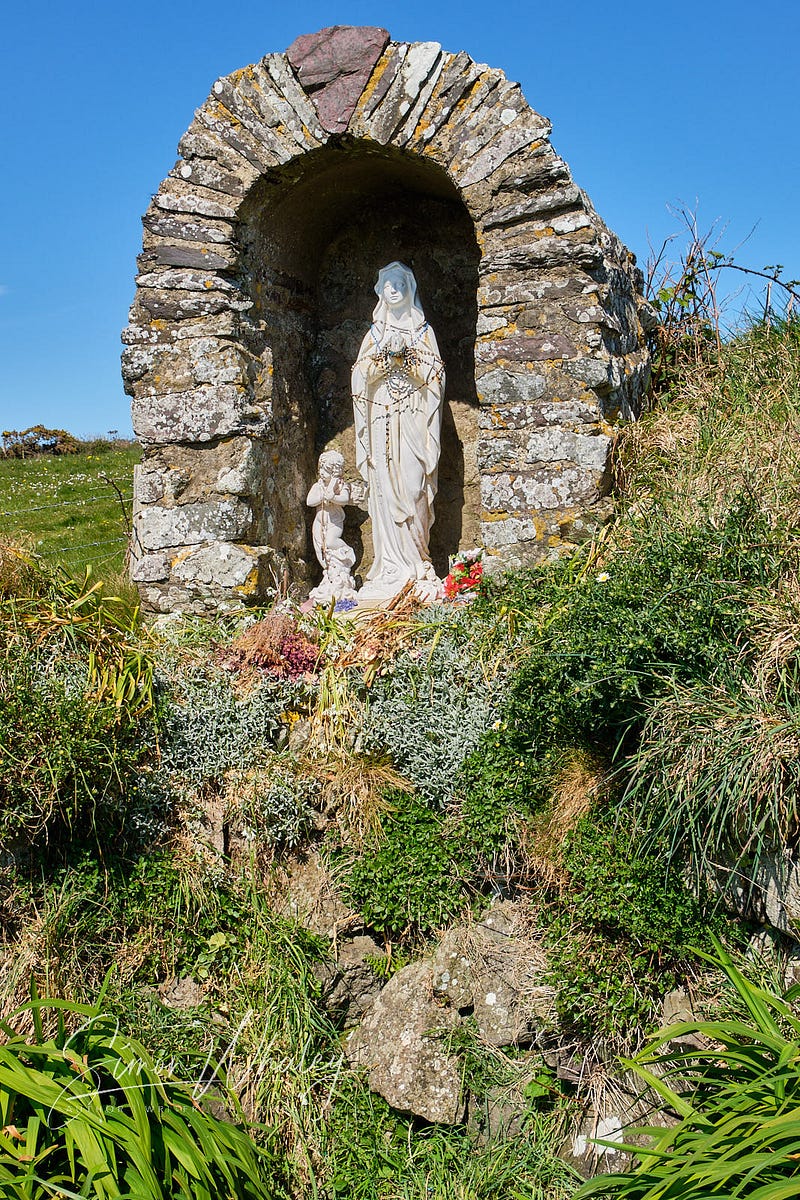
In the next field, lies the ruins of the original St Non’s Chapel. This is where St Non reputedly gave birth to St David, and so the site is one of the earliest Christian sites in Britain, although, unusually, it is orientated in a north-south direction, rather than the traditional east-west.
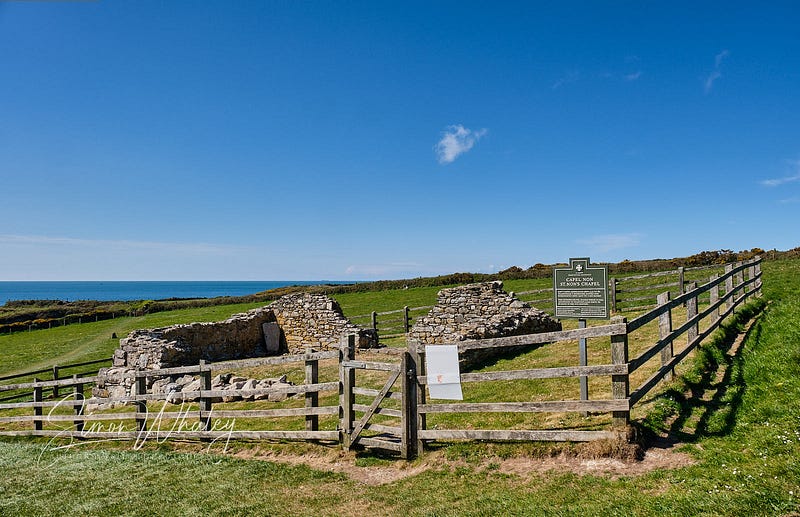
A footpath heads from this site to the field corner, where it joins the Pembrokeshire coast path.
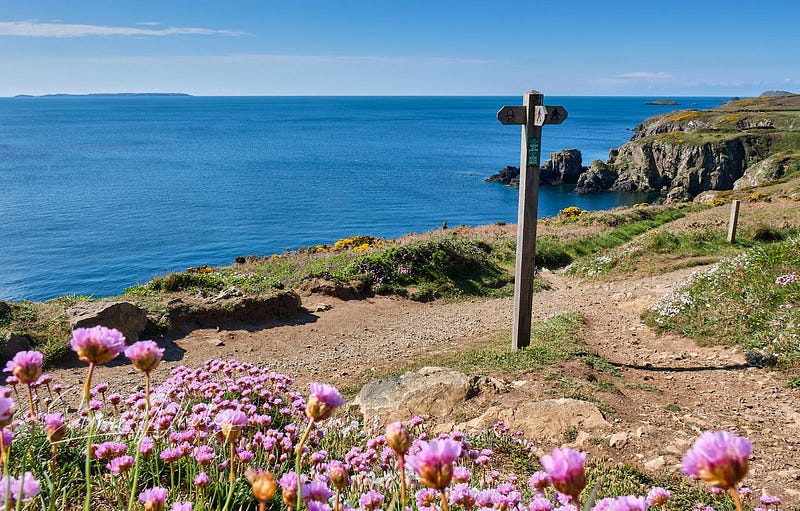
Such is the beauty of the coastal landscape here, Pembrokeshire is the only coastal national park in Britain. The coastal path along this section is some of the most beautiful, with far-reaching views across St Brides Bay and Skomer Island.
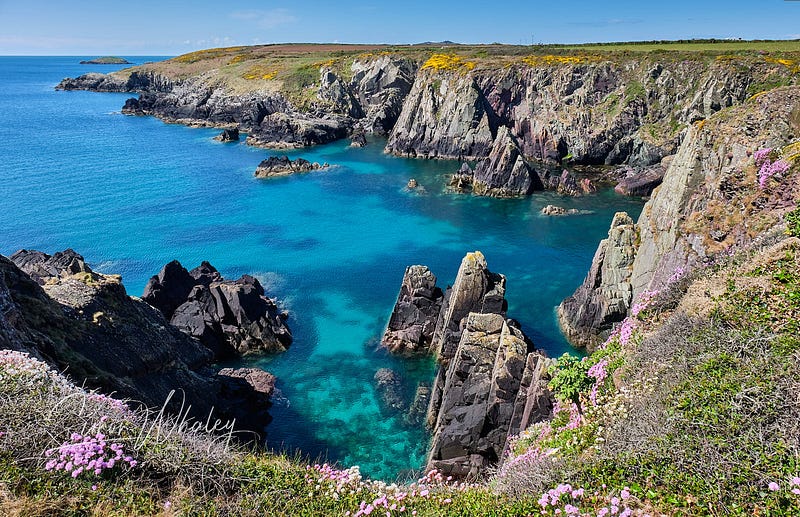
Sometimes the clarity of the sea here gives it the appearance and hue of a Caribbean sea, gently washing the feet of the pink sea-thrift and yellow gorse topped cliffs. Just make sure you keep an eye on where you put your feet because if you spend too much time gazing out to sea you might inadvertently walk over the edge.
The magic of Porth Clais is that it is so unexpected. The coast path turns inland, and a small path cuts off to the left. It’s a worthy diversion, dropping steeply, and a little awkwardly at times, to the harbour wall.
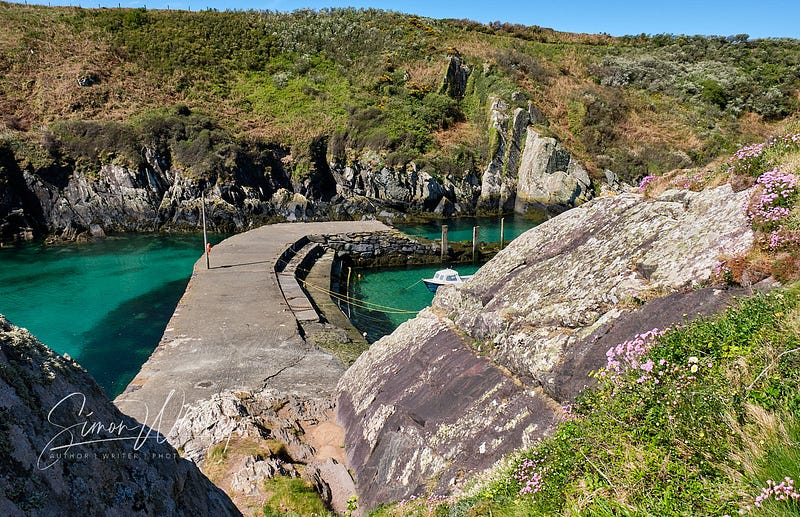
Returning to the path, this clifftop route offers fine views across the narrow inlet, where boats shelter from stormy weather, or simply sunbathe when all is calm. Opposite, the whitewashed Pembrokeshire cottage meets most people’s dreams of the perfect coastal dwelling.
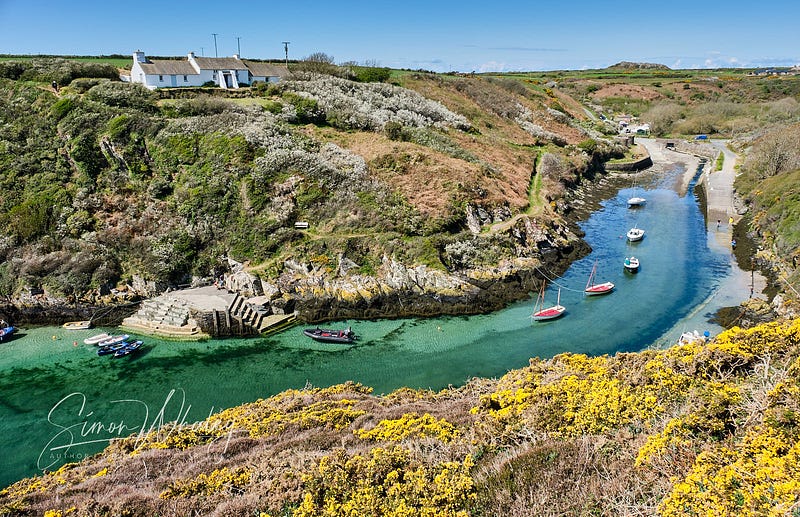
As the path drops to the road, a handful of picnic tables litter the harbour-side, hinting at the nearby National Trust kiosk selling light refreshments . . . a wonderful place to stop and pause, even if there are one or two more people about.
And now it’s time to head back towards St David’s, simply following the narrow tarmac lane, as it clambers back towards this tiny city. Approaching from this direction is like entering through the back door. There are no welcoming gateway signs as there are on the main road. Instead, a dwelling here, another there, become more frequent, as the cottages and houses become the city suburbs, albeit suburb being completely the wrong word. How can you call about 50 dwellings, ‘the suburbs’?
At a fork in the lane, the top of St David’s Cathedral punctures the skyline. Drop left, and at the next road junction, cross over and take the path opposite. It offers the best views of the Bishop’s Palace, and the cathedral. It’s time to take a deep breath, and mix once more with the tourists.
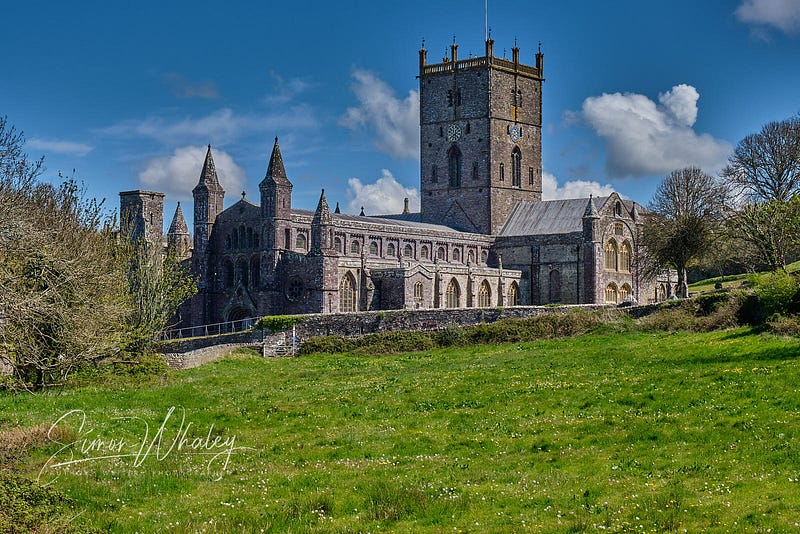
Step into the cathedral, where prayers have been said for over 1,500 years. Marvel at the Welsh Oak nave ceiling, constructed in the 1530s, pay your respects at St David’s Shrine (created in the 12th Century when Pope Calixtus II declared the cathedral as a place of pilgrimage).
Stone steps lead back up into town, through a gateway (now housing the Cathedral treasury), into The Pebbles, a narrow street leading to the city centre (a rather grand way of referring to the small square where market stalls occasionally gather.
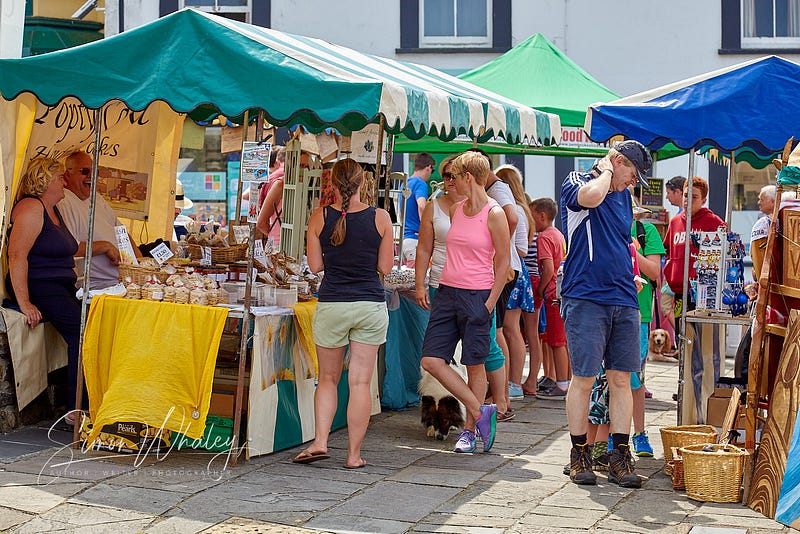
And then, it’s simply a question of following this main road back to the Oriel Y Parc, remembering to divert into the many tourist shops that line the route.
Let’s hope your next visit to St David’s is a happy St David’s day.


