
Looking for a Career Change in the Pandemic? Try Software Testing
It probably can’t be worse than what you’re doing now.

Do you have an energetic inner child who still enjoys destroying something just a little? Have you ever muttered, “I wonder what happens when I-”? Are you tired of your current occupation? Well, I have some excellent news for you! Come on down and become a software tester.
While you can test software as a side hustle, you may be surprised to know that it’s an entire (well paying) career.
I’m a QA Automation Engineer, which is just a fancy title for a software tester who writes code. I’ve worked in the field for five years and I focus on web-based apps. I’ve also been in charge of, or a part of the hiring process, for three very different companies as they hire QA.
Interestingly, my salary has increased in the last four years by over 150%.
Why Software Testing?
- Plenty of remote work opportunities. Indeed currently has 350 remote testing jobs for “software tester” in “Remote.”
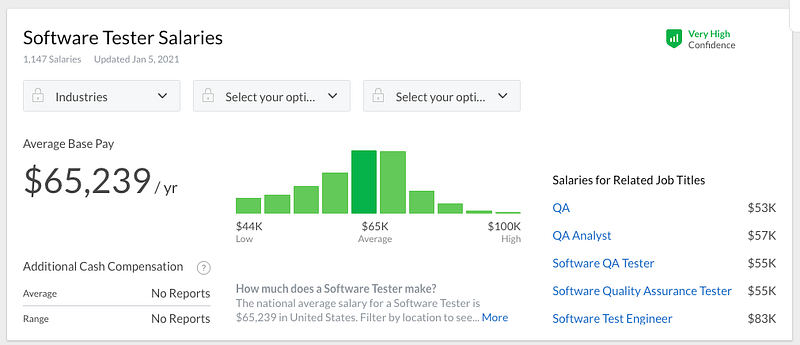
- Starting salary of $40,000-$60,000.
- Does not require a degree or specific certifications.
- Relatively quick training to reach a junior level.
- Software testers tend to have a good work-life balance (although this can vary by industry).
- Forbes listed Senior Quality Assurance Engineer as the number 2 happiest job with a bliss score of 4.23 (.03 points behind Real Estate Agent).
- The software testing industry is expected to grow 18% by 2024.
First of All, What is QA?
QA stands for Quality Assurance, and in software, the title can be interchanged with software tester. There are nuances between the two, but look for both QA and software tester position.
The point of the job is to channel your inner child into productive destruction. This generally translates to:
- Verifying work from developers is correct
- Finding bugs before clients find them
- Triaging bugs as they come in
- Writing automated tests
- Implementing testing policies
The exact duties can vary a lot depending on if you’re working for a testing shop or in an embedded testing department.
Disclaimer: I have not worked in testing shops. I have always decided to work for companies directly. So my experience and results could be different from others.
Is QA a Career Field?
Absolutely.
In the past, software testing was relegated to dark corners. Then most of the testers were trying to get a foot into the technology sphere. Now, companies realize that their previous processes do not scale. They need professional, skilled individuals to reduce the risk of continuous deployments.
Senior QA has the potential to earn a salary similar to senior developers.

Can I go from Software Testing to a Developer?
Yes. Quality Assurance can be used as a career stepping stone into development, DevOps, InfoSec, product manager/owner, or Agile coaches.
Testing touches every facet of software development. The experience gained from testing can lead to several new careers opening up.
Many of the junior testers that I’ve worked with chose to focus on testing as their career. That includes a few who had planned to pursue a career as a developer. Once they got in the job though, they realized they still wrote code every day.
How to Get Started as a Software Tester
Ok, you’re convinced, but where should you start?
There are three main tracks in software testing: manual, managerial, and automation.
Manual testers are what most junior positions start as. Staying a manual tester throughout your career can limit your earnings unless you specialize. Seasoned FinTech and HealthTech manual testers can earn similar amounts to automation engineers.
The managerial track is for those who want to move into a management role as soon as possible. A solid understanding of SDLC, Agile, and product-related tools (Jira, Miro, etc.) will be beneficial. If this track interests you, I would suggest becoming certified as a ScrumMaster.
Automation Engineers focus on writing code to make manual tester’s lives easier. This includes tests for API, automating manual tests, performance tests, or security tests. Most manual test cases can be automated (even if some shouldn’t be automated). This career path can lead to stepping into development or lead to a similar salary to developers with lower stress.
Many of the responsibilities for the career tracks overlap with each other.
I talk more about the steps that I personally took to become a tester in this article:
Getting Experience
Even if you don’t know yet how you want to specialize, the most challenging step to becoming a software tester is getting the initial experience. This becomes even more frustrating when job descriptions for junior positions require experience.
With just the three websites below, you can gain enough experience to either grab that first testing job or begin your freelance journey.
I cannot suggest highly enough to go ahead and begin applying to junior jobs while you’re getting experience. A junior position should not require much experience, and you may end up with an offer. Just be honest about your skills.

Helpful Resources for Becoming a Software Tester
Ministry of Testing was one of the few quality software testing websites when I began testing. They’ve recently been through some changes and a facelift, but they are a trustworthy source of information and training. They provide tutorials, interviews, news, events, and one of the best online testing communities.
Let’s Talk About Tests, Baby is a 100 episode podcast about software testing. No new episodes have been released since 2018, so it’s safe to say that the podcast is concluded. There is a ton of useful information in those 100 episodes. The episodes range from accessibility testing to mental health as a tester to bug reports.
FreeCodeCamp is a free online interactive coding course. Regardless of whether you’re interested in writing automated tests or not, being able to read code is invaluable as a tester. I always suggest that junior testers become somewhat proficient in HTML/CSS and one scripting language. FreeCodeCamp also offers a certification in quality assurance.
A Note on Certifications
If you aren’t an international tester, or your job doesn’t require it, then I’d skip the ISTQB. The ISTQB sets a good basic understanding of testing terms; however, it frames testing concepts and policies in a way that is significantly more static than real life.
Read more about software testing at the Software Testing Pipeline:
👉 Thanks for making my words part of your day! Leave a comment below if you have any questions.
👉 Be sure to join Hales’ publication, the Software Testing Pipeline, to get the latest tips, tricks, and news about writing on Medium.


