
MONTHLY CHALLENGE|TRAVEL|TRAVEL WRITING|WRITING|CREATIVE WRITING
London: a Deep Well of Spirituality
How my adopted city helps me reconnect with myself
As soon as Anne Bonfert announced December’s challenge, I knew I wanted to take part. Spirituality is a key part of who I am as a human being, even if I’ve always identified as an atheist, and in the last fifteen years as a humanist.
That’s not to say that my relationship with spirituality has always been easy. I think that the dictionary definition is too narrow and limiting. Dictionary.com defines spirituality as “the state or quality of being dedicated to God, religion, or spiritual things or values, esp as contrasted with material or temporal ones”. The Oxford English Dictionary tells us that spirituality is “the quality of being concerned with religion or the human spirit”. Meanwhile, Webster avers that spirituality is “sensitivity or attachment to religious values”. For me, spirituality is a lot more than that.
Assuming that we’re all functional human beings, it follows, then, that we all have a spiritual side. We might or might not be aware of it, but that we have it, there’s no doubt. The beauty of this is that when we’re conscious of this trait, we try to nurture it as much as we can. The immaterial nature of our spirituality runs counter to our more pragmatic decision-making self.
As a concept, spirituality goes beyond the narrow borders of religion or consumerism (the latter being another way to get some spirituality over the counter, preferably in small doses and with some aromatic oil essence thrown in). At the center of it lies language and emotions/feelings.
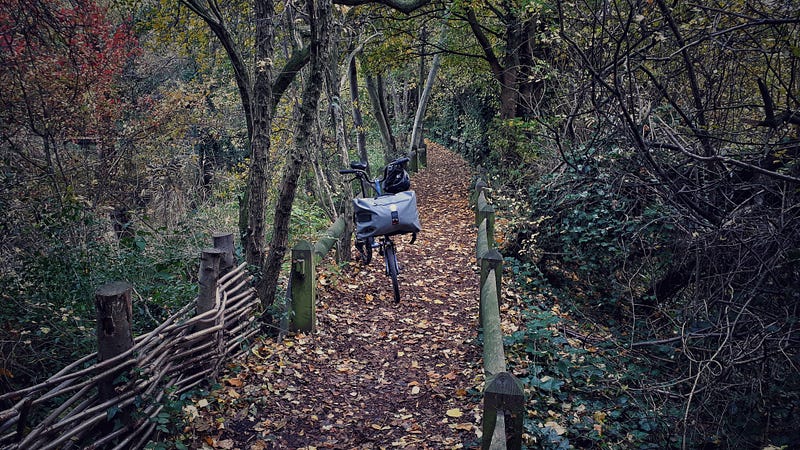
As will become clear later on when I describe what was going on inside me when I took the photos below (and the one above), spirituality can only be expressed in language that is by its own nature finite. How many different iterations of the word “beautiful” can I use to describe a sunset before my thesaurus runs dry? But the feelings triggered by said sunset linger on and multiply. They’re infinite. Also, they’re hard to explain. That, right there, the combination of the mystery of the moment and the urge to explain it is spirituality writ large for me.
As will also be evident, a lot of my spiritual moments in London are cycle-powered. Anyone familiar with my writing knows that I do a lot of cycling in London, both for work (I’m a cycling instructor) and for leisure. Except for one picture, taken last Sunday from the top of a double-decker, all the others were taken whilst out and about on my bike.
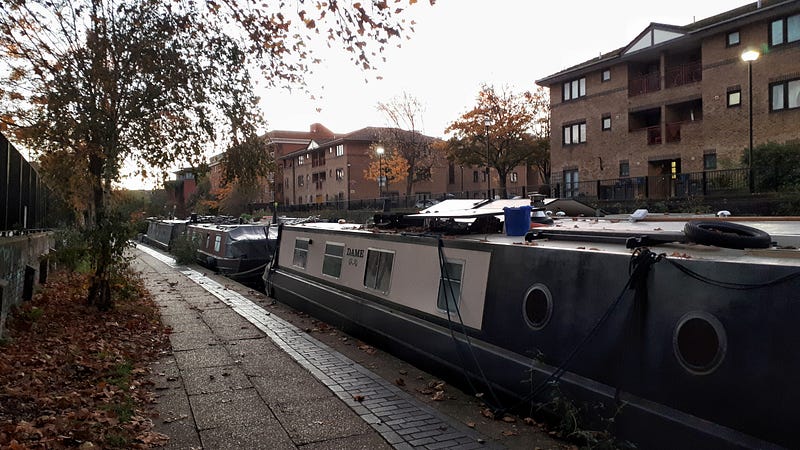
I’m kicking off with a sunrise. I took the photo at the top of this post two weeks ago on the towpath of the Regent’s Canal. My partner had just left in a rush in order to catch a train to Brighton and I stayed behind unfolding my Brompton outside her boat. Just as I was about to cycle off, the sun rose a little higher, but without much conviction, reminding me of Seamus Heaney’s “early autumn morning”. Like in the late Irish poet’s line, this one also “hesitated”. I thought the whole scene magic. Click!
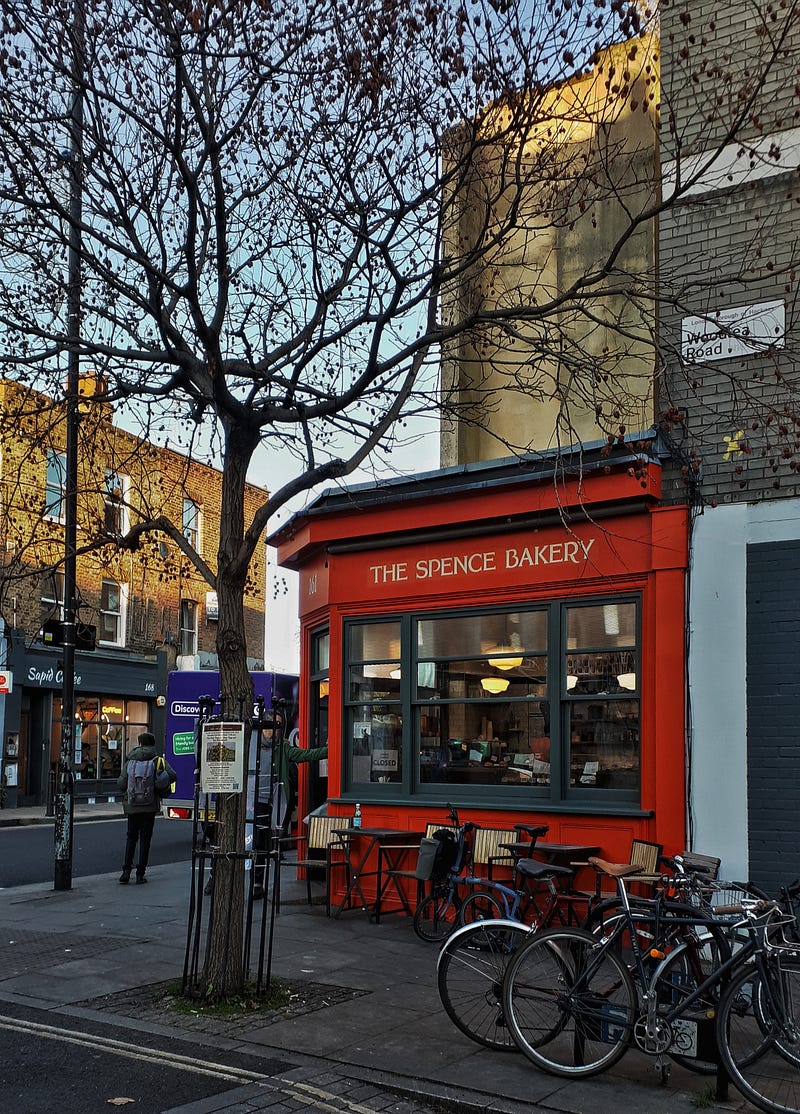
From sunrise to sunset. I love this bakery on Stoke Newington Church Street. I happened to be riding back home and stopped by to have a browse around. When I came out of the shop, I turned around and saw this marigold-coloured sunset. I couldn’t help myself. Plus, can you spot my Brompton? Click!
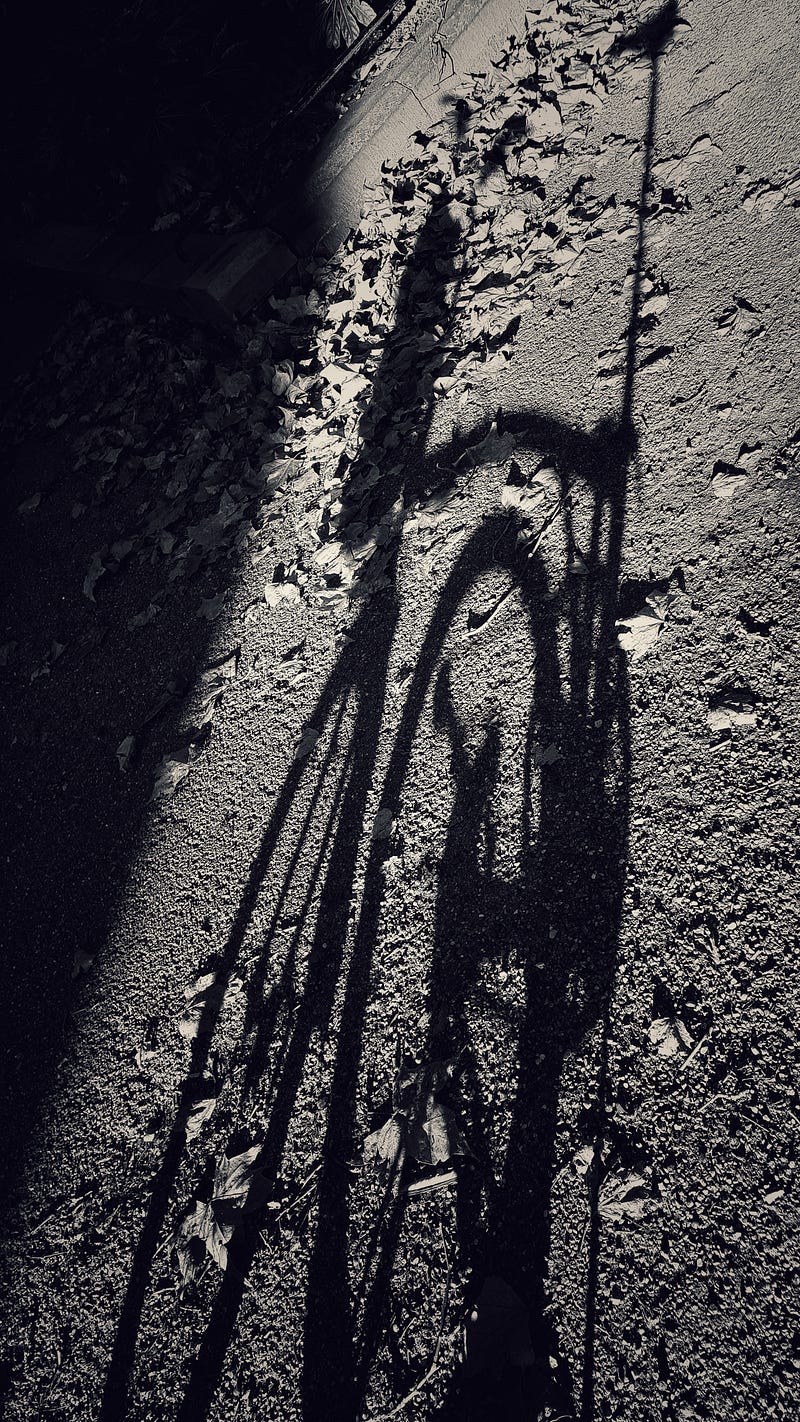
A few weeks ago I went on the usual walk I and other volunteers organise in support of refugees and asylum seekers. I brought my Brompton with me. At some point during the walk, I saw my bicycle’s shadow in the bright midday autumn sun with fallen leaves around it. Once again, I felt a deep sense of peace and gratitude to life. Click!
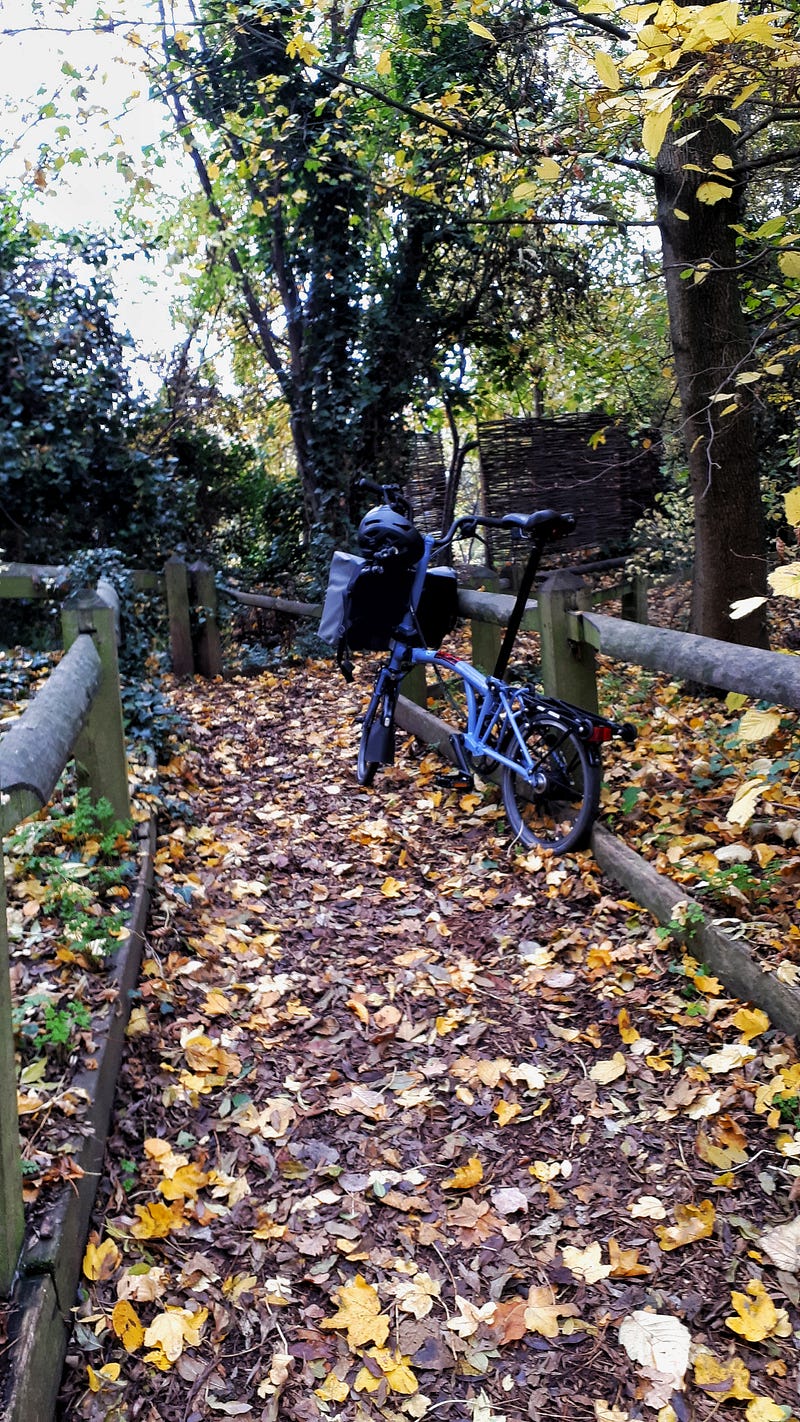
Camley Street Natural Park is a unique space I found recently, despite being part of my usual route to the West End. It’s hard to believe that this nature reserve sits in one of the busiest and noisiest parts of London. Yet, the park is an oasis of calm and peace. On the day I went, a group of children were visiting, too. People milled about. Once a coal drop for the railways into nearby King’s Cross, the building that occupied the site eventually came down, thus making way for nature. The London Wildlife Trust saved the site from redevelopment and created a nature reserve instead. Click!
The next three photos were taken in the same place: the Barbican Estate and Arts Centre. Whilst I’ve often discussed my lack of enthusiasm for anything brutalist, I do like taking a walk around the Barbican’s network of mazes, terraces, and roof gardens. If you look carefully, you will see part of the old Roman wall in the third photo. It’s in moments like this one when I feel most alive. As you will notice, my Brompton came with me on the trip. Click!
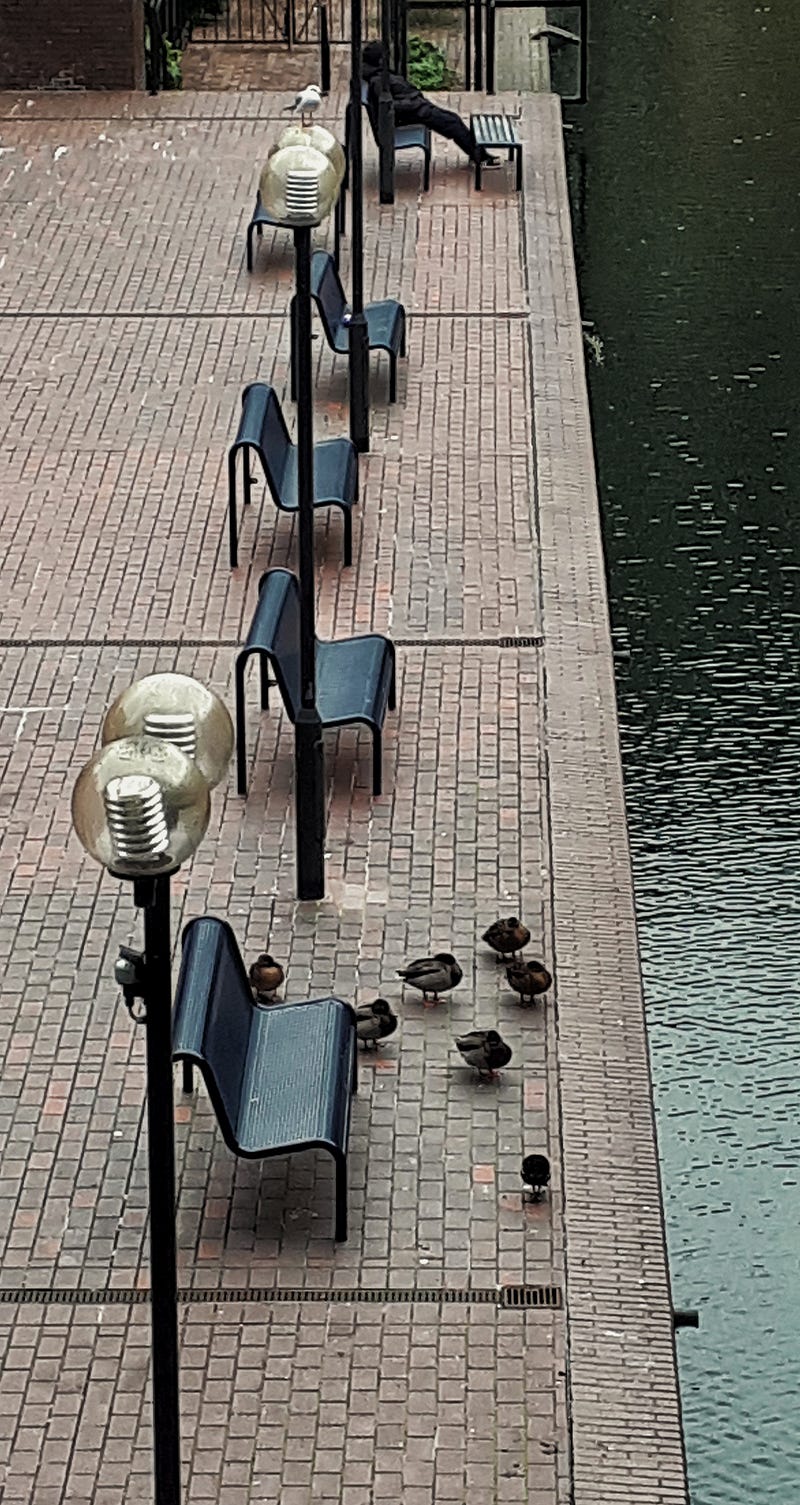
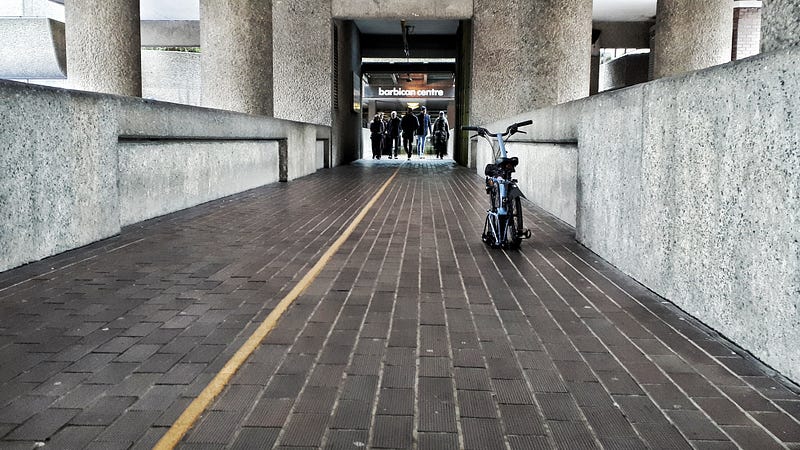
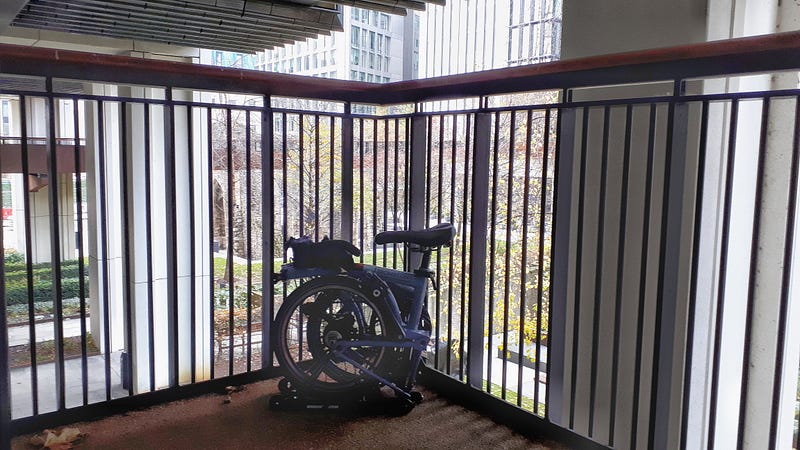
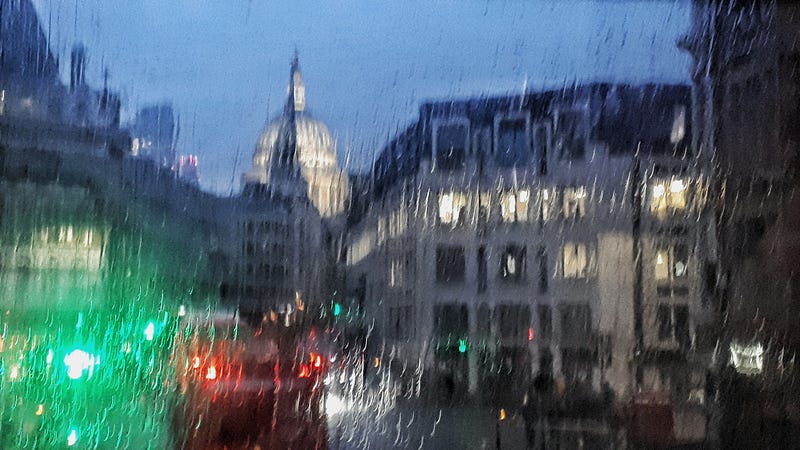
As mentioned before, my last photo was taken last Sunday on my way home from the recently reopened National Portrait Gallery, in Trafalgar Square. No sooner had we got on the bus than it started chucking down. As the bus neared St Paul’s Cathedral, I saw its unmistakable dome through a rain-battered window on the upper deck. When I checked the photo later on, I couldn’t help thinking that it resembled an impressionist painting. Impressionism happens to be one of my favourite movements and one that triggers moments of deep spirituality in me. Click!
The ‘Trotters I’d like to big up this time are Tara Torres and Warren Thurlow


