
The Magic of Antelope Canyon
One of the most photogenic places on Earth.
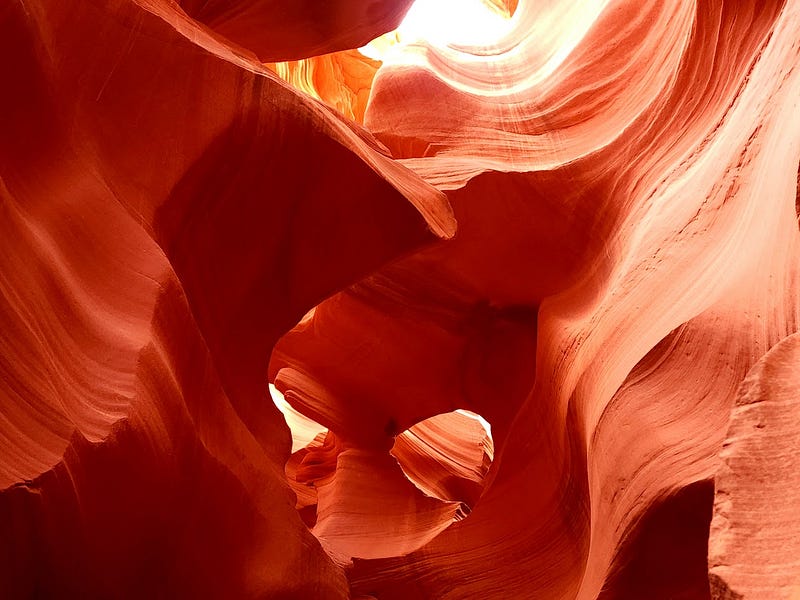
As I continued my quest to explore my own backyard, I decided to venture further with my road trips and head into the neighboring state of Arizona. After stopping in the Grand Canyon, I headed to the destination I was most excited about after seeing the Instagramable photos, Antelope Canyon.
The canyon was in the Navajo Nation, but I stayed in Page, Arizona. I booked a tour, as you are not allowed to wander the canyons on your own. I didn’t mind since the money went back to the tribe.
I opted for Ken’s Tours, as I wanted to drive up to where the tour started and walk in. Some tours will drive you in a truck to the canyon location. I was traveling alone, and not being loaded onto a truck felt less awkward.
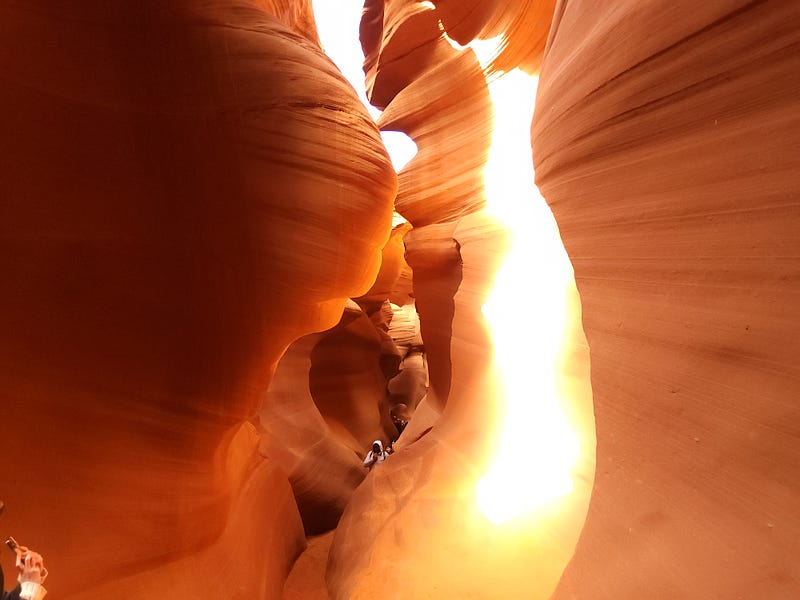
Antelope Canyon is a slot canyon where the wind and flashfloods have carved away at the sandstone, leaving the walls smooth and looking more like the water that carved them than stone.
Our guide told the sad story of a group of tourists in 1997 who were killed when a storm fifteen miles away caused a ten-foot wall of water to sweep the canyon. The same type of water that cuts those fantastic formations can be lethal. Those unfamiliar with flash floods can underestimate how dangerous and challenging they can be to predict.
I got there early, as requested and parked in the large dirt lot. A concession stand and store offered gifts, food, Navajo-made items, and photographs for sale. Since it was just me, they allowed me to go on an earlier tour. But I had to get rid of my backpack first, as they were not allowed. I ran to my car, dropped my bag, and joined the tour in the nick of time.
Masks were mandatory as the Navajo Nation had been hit hard by COVID-19, and over two thousand people died.
Our guide was a member of the Navajo Nation and told us the history of the tour company while we stood waiting for tours to move ahead. Ken started his company by holding a sign on the road and asking if people wanted to see a canyon. It became a significant operation with a sister company next door, literally run by his sister, Dixie’s Lower Canyon Tours.
We entered the canyon by descending a sturdy staircase meant to withstand the floods as previous stairs had been washed away. The canyon would open to large rooms and then narrow to passageways. There didn’t seem to be any pattern to it.
My black boots quickly became covered with red powdery sand. I stood in awe of how the sandstone had been sculpted around me. The walls were streaked as if created by a paintbrush.
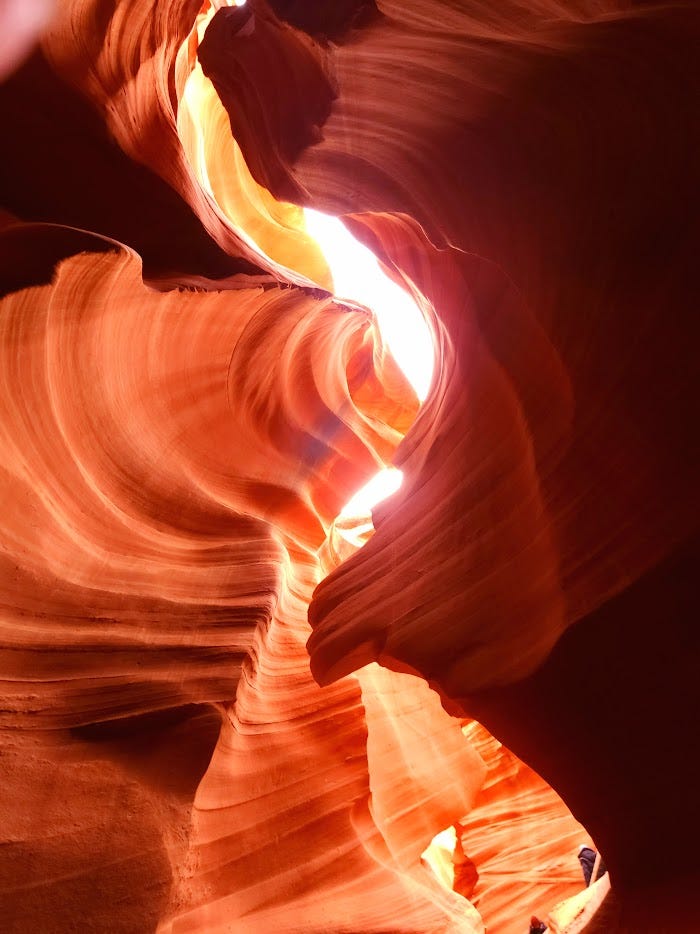
I was on the noon tour, which was more than just the warmest part of the day. It also was when the light streamed through the cracks of the top canyon. Looking up, I could see fissures of blue sky.
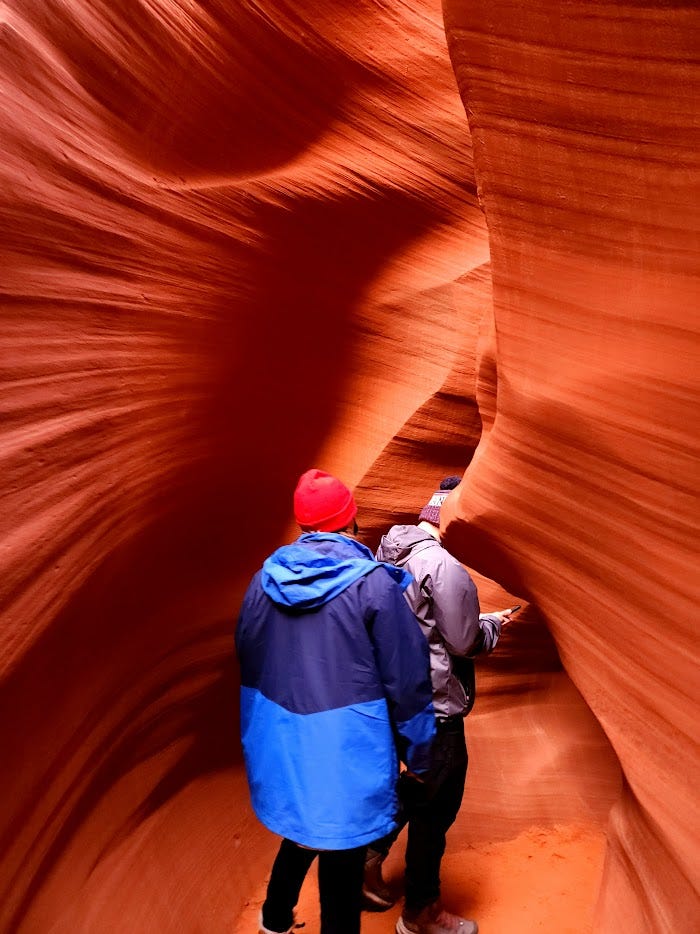
The herds of tourists didn’t bother me. It was a tribute to the popularity of the canyon. It was a random chilly day in January, yet it was still crowded. I couldn’t imagine how far in advance one needed to book a tour for the summertime.
I was concerned as I am claustrophobic, and the canyon was narrow in parts. But once below, I felt nothing but peace in the canyon and was so focused on the unpredictable curves and the striations of the wall. Why did some parts of the stone break down while others stood proud in their sculpture?
Our guide pointed out the different parts of the stone that resembled a woman with wind in her hair, a wave, and even a lion’s head. The canyon was sacred to the Navajos and quickly became sacred to me.
I imagined being alone in the canyon with the time to sit and look at the stones, looking for familiar images. It reminded me of when I was a kid and would look for shapes in the clouds. I was saddened to realize that today’s hustle doesn’t allow for such playtime for the imagination.
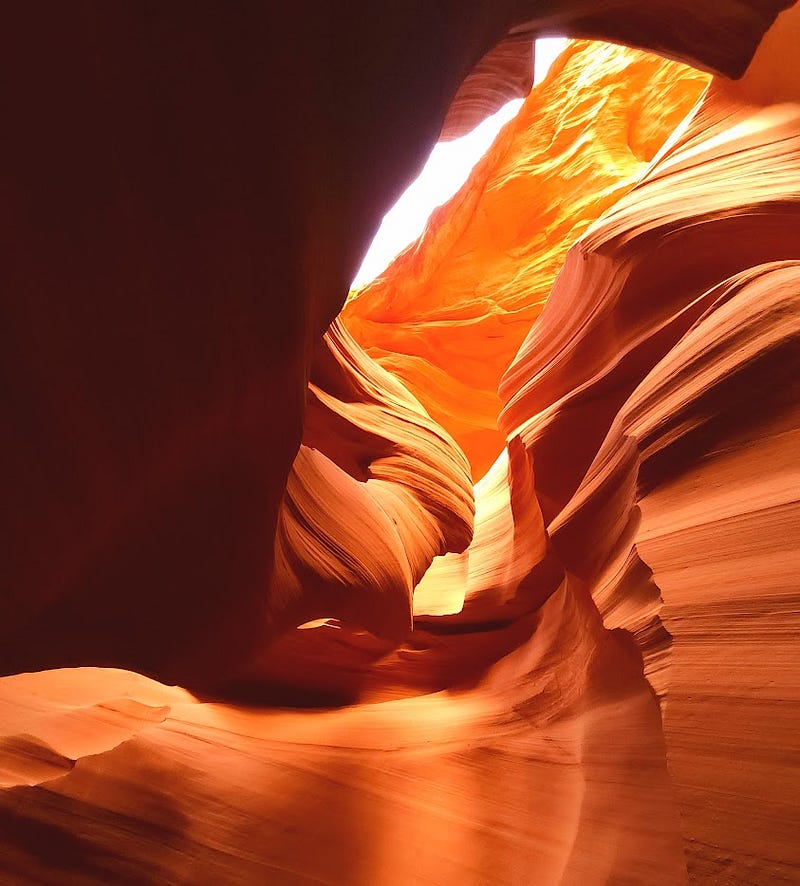
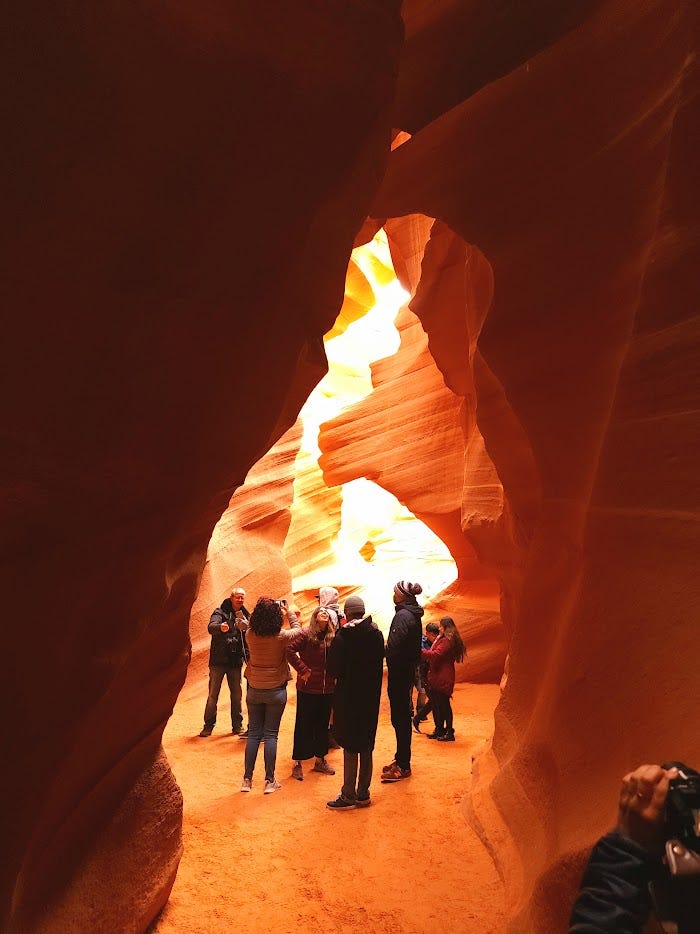
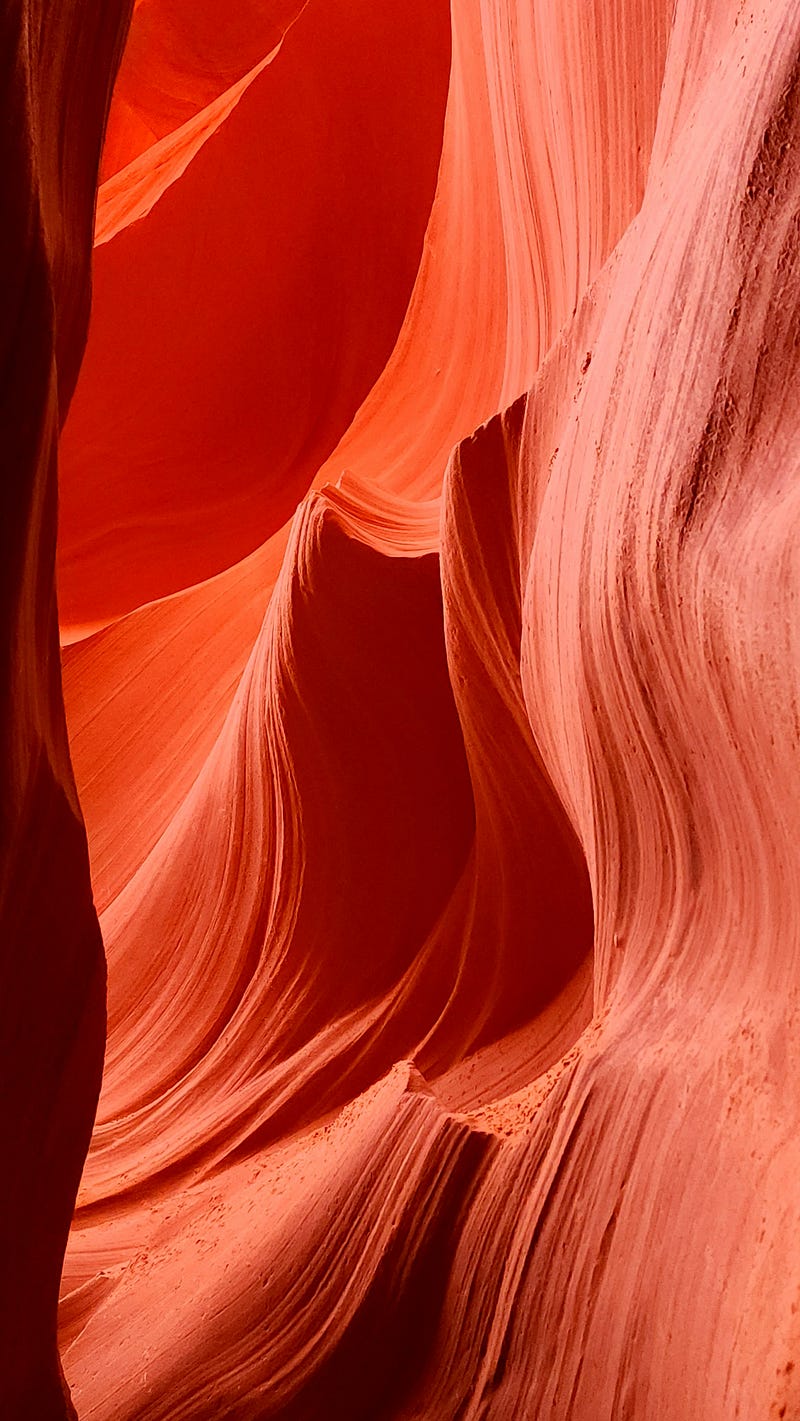
The guide helped us with the settings on our cameras to take in the colors properly. The regular settings made it look drab and didn’t do it justice. We stopped at areas that were particularly photogenic, and he would take our photo.
We wound our way through the canyon, often being held up by the tour group in front of us, and tours behind us would stack up. I didn’t mind the extra time in the canyon.
We occasionally climbed up and down steel stairs, but it wasn’t strenuous. In the end, we faced a ladder, which proved more challenging but still doable. I was glad to have left my backpack behind.
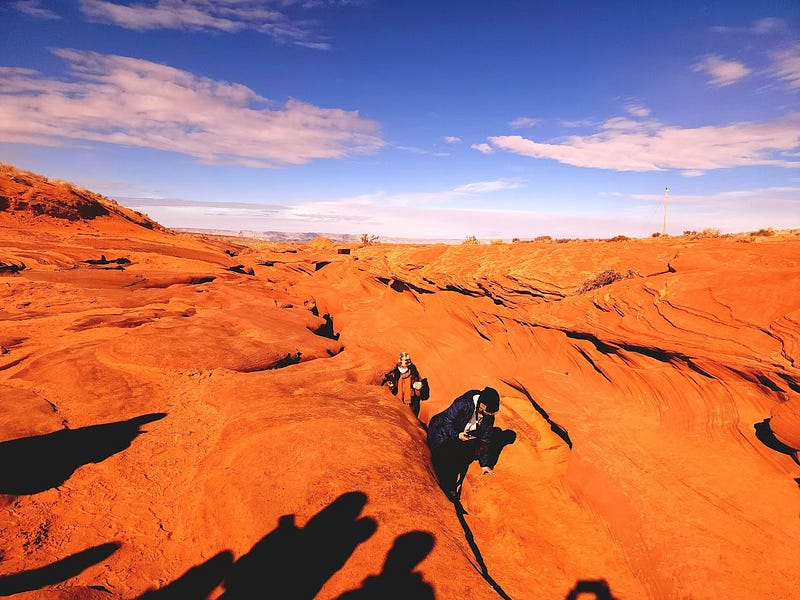
We finally exited into the sunlight, and I turned back, stunned that the small crevice in the ground was all you could see from the top. That such beauty was hidden below, formed by extreme and deadly forces. It reminds me that Mother Nature is the ultimate artist.
If you enjoyed this and would like to read more about my spiritual journeys in nature, please see the story linked below. Thank you for your support!


