Lockdown: What Just Happened to My Food Bill?
I’m a macro-economic financial analyst — surely I can work this out?
There’s not much you can rely on social media for in terms of facts, but it’s quite often spot on when it comes to general trends and a category I call ‘things you wonder if other people think’.
Since the lockdown began, there’s been one thing that almost everyone has agreed on — our food bills have gone crazy. One of the most popular memes doing the rounds on Facebook and Twitter (and which I’ve recreated here), says it all:
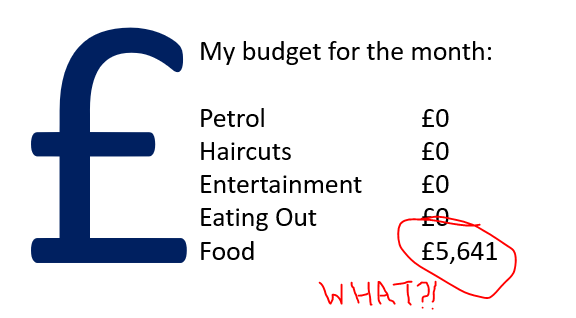
On the face of it, this doesn’t make any sense at all. Surely we’re still all eating breakfast, lunch and dinner as normal aren’t we? How is this possible?
I even have data, anecdotal as it is, from the people who sell us our food. My other half works for a posh design agency working on the packaging for a very large and very well known quality supermarket. Their sales are currently talked about using words like ‘record level’ and ‘unprecedented’. It seems we’re not imagining it at all.
Of course, since I make my living by analyzing global macro-economic data and then commenting on it to publications and, well, anyone who will listen, I couldn’t help but carrying out my own little control case to get to the bottom of it.
After all, this is important stuff.
The Control Group
We analysts like control groups. We like to know what happens in conditions we control exactly to compare with our trends and influences. My control group is, in fact, my family with whom I am currently incarcerated. (Although I am told ‘quarantined’ appears to be the more socially acceptable term).
So, that’s myself, my partner, and our children currently of the ages 13 and 11 (very soon to be 13 and 12), four of us in total.
Us parents both work from home in our own offices. I have done this for over two decades anyway, but my other half is usually based in a shiny corporate office in the local town with lots of glass, inexplicable breakout areas and funky hot desks.
The kids, meanwhile, have lessons sent directly to their school iPads each day and they work, pretty much unattended, until around 3pm when free time starts. We’re a typical middle class family in many respects in a pretty typically British middle class house. We’re in week seven of lockdown. We’ve got the hang of it now.
Of course, control groups are rarely perfect and this is also the case here. Arguably, it’s not even a control group since it’s the only one I have access to and I’m not influencing behavior in any way, but in these times of adjustment, we have to work with what we’ve got.
So, after all these weeks of literally not leaving the house, but with me secretly analyzing the shopping bill, what have we learned? And can it be applied to anyone else?
Snacking
I’m a terrible snacker, one of the worst. This annoys my other half because I rarely put on weight, but the fact is that if you put anything in front of me I WILL eat it. Except possibly Surströmming which is wrong on every level.
However, I am (mostly) a healthy snacker — nuts, raisins, fruit that sort of thing — and that may be why I’m able to avoid the worst of it. We’re also all vegetarian, effectively by accident as result of trying it for a period ‘to see what would happen’ over a decade ago and simply never going back. I was convinced I would die if I didn't get steak for breakfast every day, but it turns out you won’t. Who knew?
I wrote a lighthearted article about what happened here:
The kids decided to follow suit, admittedly unexpectedly, one day three years or so ago and here we are.
Like most kids, they also like to snack, but we’ve always been strict about this since they were tiny. They must ask first, and ‘proper’ treats — such as crisps or a chocolate bar — are only allowed once a day from the secret and mysterious ‘treat cupboard’. Fruit and yogurts are unlimited though so, predictably, this forms a big part of our bill.
However, asking around outside of the control group, it seems snacking and grazing has become quite the pastime in some groups, especially among those who have found themselves at home when usually working out on site or in one of those shiny offices somewhere.
It seems to be different if you’re still working because there’s enough distraction to stop constant visits to the fridge, but if you’re not, then, well, once you’ve done all those chores you’ve been meaning to get round to, then it’s time to nibble on a bit of cheese between meals.
And crisps. And crisps with lumps of cheese cut into them and shaken in the bag. And chocolate. And cocktail sausages. And whatever’s wrapped in that plastic stuff that seems strangely chewy and addictive. Anything, in fact.
Worse, I’m told those with pets have also been upping the feed as they’re at home.
So, right off the bat, we can safely say (using those economist terms that I like so much) that an ‘increased propensity to snack may result in a higher shopping bill.’
Coffees and Incidentals
“But wait” I hear you say “I’m not getting my daily coffee/sandwich/daily treat from [insert favorite shop here] at the moment, surely I should be saving money?”
It’s a fair point and, if you normally stop for a nice take away latte on the way to work everyday, you’re probably saving yourself around £60 a month. This may well be conservative because if you have more that one a day or have them at weekends too, it’ll be considerably more.
This one is all about psychology and how you account for your money. As we’ve established, you’re probably snacking more, so instead of buying each item from loose change in your pocket or tapping your phone without a second thought, you’re now including it as your part of your grocery spend, probably without realizing it.
You may not be saving as much as you think, especially if you treated yourself to a ‘proper coffee’ machine at home and now buy the refills as part of that spend. And even so, there’re never quite the same are they?
School dinners
Aha! Of course! With the kids home, they’re not having school dinners everyday, so you’re not paying for those. That saves around £80-£90 a month if you have 2 kids.
But, of course, they still need to eat. So that roughly £2 per child per day has actually just changed categories on your balance sheet, giving, yet again, the illusion of that grocery bill growing.
Here’s the thing though — are the meals you’re providing for your kids at home costing £2 per child per day? If they’re not, there MAY actually be a genuine saving, albeit hidden in that super-extra-long till receipt from the recently disinfected self service machine at the supermarket.
Breakfast is for losers
You know what it’s like. Sometimes, you’re so ‘busy and important’ at work that you just don’t have time to grab that lunch or have breakfast. You’ve probably skipped a few as a result and tried to fill up on that latte we were talking about.
Not quite the same at home though is it? Chances are you’re on breakfast detail even before Joe Wicks has finished his warm down. That’s going to add a few pounds to the bill over the month.
Overbuying ‘just in case’
I point blank refused to get involved with panic buying or even go to a supermarket when people started getting silly. Toilet roll? Really? What on earth was that about? I wrote about that too as it was so ridiculous.
Being an analyst and overly logical helps sometimes, although others (some within my own control group even) have described this trait as ‘irritating’. Can’t see why, myself. But then that’s my logical, analytical response that, by the very irony of making it, may actually prove the point.
Call it what you will, some quick searches on supply lines and manufacturers output made it abundantly clear that we were not going to starve. So we simply waited until the crowds subsided and survived on what we had in the meantime.
There’s two conclusions we can draw from this, each particular to how people acted in the first place:
First, those who DID go shopping early on cleared the place out. Long life products were most in demand, but, as it turned out, so was anything else when the long life stuff was gone. The result? People were stocked up to the gills with everything and anything.
That’s the problem with panic buying. Just what do you do with 20 cans of broad beans and chick peas, apart from store them neatly in the tin cupboard for the next five years before they end up as a Harvest Festival donation? And you never got through that fresh stuff that’s now out of date, so much of that got chucked. Well, according to tabloid news reports anyway, and sometimes they get their facts right. Law of averages and all that.
But even if these people didn’t throw it away, they’ll have munched through it at higher levels than they normally would for reasons we’ve seen, creating a new norm which means, in turn, a larger shopping trip to refill what now appear to be dwindling cupboards, but would in other times be considered normal. The cycle repeats until some sort of normality resumes.
For the second group, the people who didn’t panic buy and ran their supplies into the ground to the extent that beans on toast was considered the culinary height of luxury, they are now faced with a similar problem. The cupboards are now actually empty. There’s no panic buying, but you know it’ll be a huge shop involving multiple bags and, ironically, the disapproving stares of other people who assume you were in the first group to start with.
But then, like above, even though your shop is a measured, panic free affair, you also have a new norm. And, since it’s scary out there with what appears to be dozens of partially dressed medical personnel looking like extras out of a Mad Max film standing silently in spaced out lines, better to get a load and get home so you don’t have to come back again.
Which means more food.
And a higher chance of snacking.
‘Food’ doesn’t mean ‘food’
When we say ‘food’ we actually mean ‘groceries’ of course. It’s just that we lump it all together.
Have you noticed that the washing has increased if you have kids? And as for the dishwasher, that device appears to be on permanently, which would explain the constant absence of tea spoons when I fancy another yogurt. That’s ridiculous. There’s 12 spoons and only four of us. The maths doesn’t add up.
These machines also need feeding constantly, with tablets, salts and liquids. On these items go to the grocery bill, sneaking in the back door like a kid late for a maths class hoping the teacher doesn’t spot them and bumping up that £ number.
The same applies for alcohol and a myriad of other bits and pieces that you might usually pick up elsewhere in regular, smaller payments. It’s all now the same bill and, if you’ve found (as many have) that having a tipple more often now suits your current lifestyle, there may be a few extra bottles sneaking in behind that late maths kid.
Let’s not forget, after all, there’s barely anywhere else to spend your money right now. Supermarkets have the monopoly so more will naturally be channeled that way.
The [favorite celebrity chef] Effect
My other half likes experimenting with cooking as much as I like extrapolating behavior patterns from raw data. It’s all rock and roll in this house I can tell you.
Even though she’s working long hours, she’s watching more cooking shows and learning lots of new stuff. This is fantastic for the grateful brood that directly benefits from this, but that does mean an increase in certain ingredients that may only be used sparingly, sneaking another increase.
I have a feeling we may not be the only ones where this applies.
The ‘new’ psychology of the main meal
My views on eating together are well documented — it’s the backbone of a solid family unit. Even better, there’s real, hard science behind it which satisfies my desire for things to be explained in numerical terms as well as my desire to hang around with the ones I predominately share this world with.
It probably won’t surprise you to learn that I also wrote about this and this article has the added bonus of including my favorite ever picture of how I imagine every family meal to be. Sometimes it’s not far off.
However, the point is that the evening meal has become even more important.
We can’t eat out and we’re in no hurry to make it to activity clubs, appointments, parents’ evenings or, in fact, anything whatsoever. The meal then becomes the main event and we’ve noticed we’re more inclined to make each one as special and enjoyable as we can, possibly also as a result of the [insert favorite celebrity chef] effect discussed earlier.
Again, it seems unlikely we’re the only ones.
Conclusion
Whatever the cause, it’s clear that everyone is spending more on food (or, more precisely ‘groceries’) both anecdotally and factually, but some of that cost is hidden in the stuff we would normally have spent elsewhere anyway. It’s even possible your overall grocery related spend is lower than it was overall.
Note I said ‘possible, not ‘probable.’
So perhaps the question is ‘should we worry and will it change back to how it was later on?’
Well, only you can answer that based on your new habits and old routines. Perhaps we’ll all come out differently. Perhaps we’ll spend our money in totally new ways with an appreciation of how lucky we were to come though unscathed, assuming we do so.
On the other hand, perhaps we’ll just blow it as soon as we’re let off the leash.
And for exactly the same reason.