
Life Lessons I Learned from Playing Chess
Philosophical wisdom garnered from decades of playing the game.
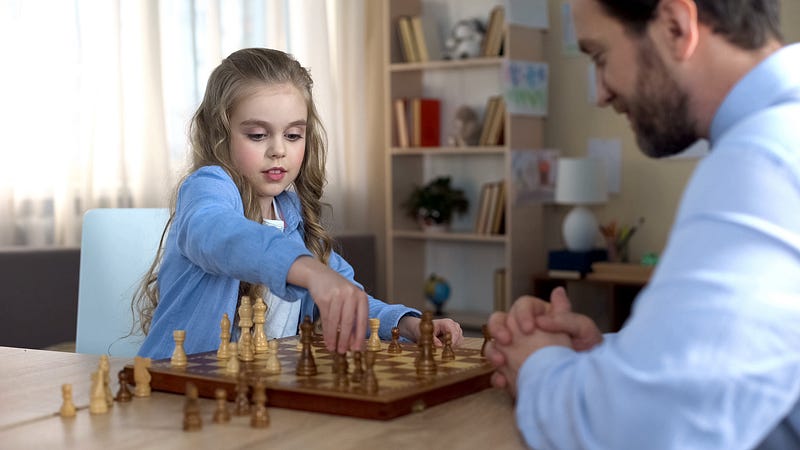
Looking back on my youth through the lens of what are now senior citizen eyes, the simple aspects of life from which I learned some of the most meaningful lessons are sometimes surprising to me. As with most children of the 1960s and 1970s, I grew up playing various board games. (Eventually, video games did come along. However, the in-home version of video games readily available to me at the time was more along the lines of Pong.) While I did not realize it then, one common board game did far more for my long-term philosophical development than I was capable of appreciating at the time. The game was chess. Compared with other board game alternatives of the time, it was not particularly exciting. At least, this was my perspective as a young child when I first learned the game roughly a half-century ago. However, something about the game stuck with me ever since. Even if they do not play chess themselves, most people today at least recognize the game. Dating back approximately 1,000 years, its dual-colored 8x8 grid playing board with 16 black and 16 white game pieces is readily recognizable. Most people are at least somewhat familiar with players referring to the game pieces by names such as king, queen, and pawn and utilizing terms such as checkmate in conjunction with playing the game. What most casual observers do not realize is that playing chess can help its players easily comprehend fundamental philosophical wisdom about life. Chess teaches its players about the inherent value found in a diverse population, about planning for future possibilities, and ways to approach the never-ending array of challenges that life throws our way. The following are five of what I consider to be the most valuable lessons I learned from playing chess: Everyone in an organization plays an important role. In life, as in chess, the most capable among us cannot survive without the assistance of others. In many cases, these “others” may be less capable in many ways. However, they are still vital to the overall functioning of the organization. As each game progresses, the value of even the lowly pawns becomes more and more pronounced. The bottom line is that even the best chess expert will have difficulty winning if he only has his king and queen left on the board. Similarly, a company’s CEO may have difficulty operating with just his top two engineers. Somebody has to take out the trash, repair broken items, operate the assembly line, etc. Value is a relative concept within organizations, and those organizations that lose sight of the individual value of each member will likely fail at some point. Exercise patience and critical thinking in all things. In a world characterized by instant gratification, 24-hour news, and knowledge at our beck and call via a search engine, many people struggle with the basic concepts of patience and critical thinking. The game of chess will teach you that without patience and forethought, a player stands little chance of succeeding. If the players are not operating under tournament-style time restrictions, a chess game can go on for hours or days. Sometimes, one player’s overall strategy is to simply wear down his opponent until his opponent makes a critical mistake. Similarly, in life, perseverance may ultimately be a winning strategy. Worthy pursuits come at a cost. Most of us know the old adage that “there is no free lunch.” This concept is very true in life as well as in chess. That which we want (our goals, objectives, etc.) almost always comes at a cost and with some associated risk. Sometimes, sacrifice is necessary and unavoidable to achieve a higher-level objective. Chess is a simulated battlefield, and calculated losses are a necessary part of the game. So are accepting certain risks. If you owned an extremely rare, high-performance automobile, you might be tempted to keep it safely locked away in a garage at all times. However, what were your original objectives behind acquiring it? Did you wish to own such a car in order to hide it safely away, or did you want to experience the thrill of driving the machine? The rules of chess make it virtually impossible always to play it safe and maintain a strictly defensive posture. After all, each player must begin by moving a pawn, and those pawns cannot move backward. Remaining calm during stressful situations is a benefit. Stress is a part of life, an aspect of battle, and a component of chess. A player who becomes emotionally flustered and begins to lose control during a game will almost certainly not win. Calm and composure are vital qualities one must maintain to maximize the potential for success. While everyone is different and everyone’s threshold for stress is not the same, those who learn to channel their stress into energy are more likely to be successful. Whether it be excitement at taking an opponent’s piece or anger at your opponent taking one of yours, controlling one’s emotions is vital to a winning strategy. That which looks too good probably is. A time-tested strategy in battle, as in chess, is to bait your opponent into a trap. Typically, the trap looks like an easy chance to take an opponent’s piece. However, by taking the piece, the player opens himself up to a crippling flanking maneuver or similar technique. One must always exercise caution and examine opportunities from every perspective. It is often possible to avoid a trap simply by recognizing it in the first place. Similarly, players should beware of arrogance as arrogance is a trap one sets for himself. If a player begins to believe that he is invincible, that pride and arrogance may lead to his own loss. After all, a clever player might play poorly at first to allow his opponent to fall into his own arrogance trap.
Chess is rife with wisdom, just waiting for players to acquire. Unfortunately, it takes most players decades to recognize this insight, if they can recognize it at all. In my case, I probably played the game for more than 20 years before some of these simple concepts began to gel in my conscious mind. If nothing else, they were silently, subconsciously seating themselves in the back of my mind and helping to shape me into the person I am today. If I am truly fortunate, I will have an opportunity to pass on some of this wisdom to my grandchildren through chess and allow them to benefit from it sooner in their lives. I will undoubtedly have to fight against the lure of technologically based alternatives in order to do so. However, the value of the available wisdom inherent to the game of chess will make the struggle worth it. Copyright © J.K.Hammond, 2024 Thank you for reading! Please respond to this article if you care to add to the discussion. Insightful thoughts and opinions are always welcome. Here is another article that you might enjoy:
J.K.Hammond is a disabled wartime veteran, a grandfather, a professional mentor, and an advocate for autistic individuals. You may reach out directly to the author at [email protected]


