
Life Is Not Linear, It’s Circular. And Change Is The Only Constant
I changed so many times, that I’m finally starting to take shape (or not)
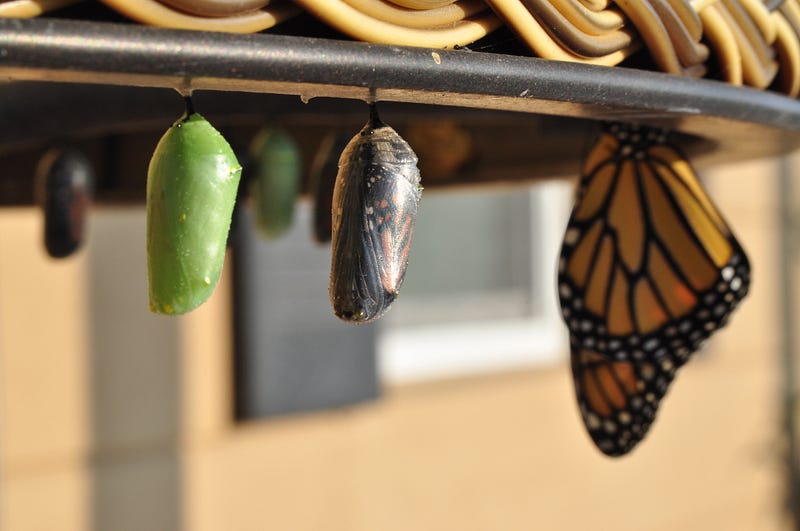
We change every 7 years, did you know that?
At first, I thought that there was something wrong with me. I blamed myself for being such inconsistent and unfocused that my priorities and plans changed periodically, after some years.
I found out that it’s not about me. It’s about the way we develop as human beings, according to some human development theories.
Life is not linear, it’s circular.
Every 7 years we experience a significant change that shifts our priorities and focus to the next stage of self-evolution.
Change is the only constant.
Professor Anne Pryor, M.A. in Human Development at St. Mary’s University, reports that 70% of People Experience a Major Life Change Every 7 Years.
Did you know that our body and mind go through stages of evolution every 7 years throughout our entire lifespan? This is not a myth but rather a scientifically proven fact. — Anne Pryor on LinkedIn
Think about your own experience: you may have changed jobs between one phase and another, or you could have experienced a loss.
Each life phase comes with a lesson that we need to learn, and that will make us wiser and more ready to continue our journey.
Jungian psychoanalyst and poet Clarissa Pinkola Estés also wrote about this theory in her best-seller Women Who Run With the Wolves: Myths and Stories of the Wild Woman Archetype.
A woman’s life is divided into phases of seven years each. Every seven-year period stands for a certain set of experiences and learnings. These phases can be understood concretely as terms of adult development, but they may more so be understood as spiritual stages of development that do not necessarily correspond to a woman’s chronological age, although sometimes that is so.
— Clarissa Pinkola Estés, “Women Who Run With the Wolves: Myths and Stories of the Wild Woman Archetype”, (p. 304)
Let’s see together what these 7-year phases usually consist of.
0–7 years: Childhood
At this stage, the child is experimenting with major changes and developments.
The aim of this stage is basically to get to know the world. The number one priority is to develop deep relationships with the family so that the world looks like a safe place.
In my case, this phase coincided with the years when I was an only child, as my brother was born 6 years after me.
7–14: Preadolescence
During this stage we begin to develop our voices as individuals, we discover what we like to do and what we don’t like to do.
Often we start to do sports consistently or play an instrument. Sometimes we lay the foundations for some skills that become part of who we are as individuals.
I started rhythmic gymnastics at the age of 6 and continued until I started high school. Playing this sport has had a profound influence on my personality development.
14–21: Adolescence
This phase is about learning to make our own decisions, taking risks, and getting to know ourselves, often in contrast to other people. It’s a very intense phase, as we all know, and a fundamental stage in the development of our personality.
As for me, I started taking drama classes and discovered how much I love the theatre.
21–28: Young adulthood
In this cycle, we begin to establish ourselves in the world and build a foundation for our future. For example, we (hopefully) begin to lay the foundations for our financial stability.
As we enter the world of work, we understand that we are entering a completely different phase of our lives. We have all been there, haven’t we?
28–35: Finding meaning
As we become established in our work, we sometimes begin to feel the need to find more meaning in what we do and beyond.
For some people, this cycle includes the moment when they start to want to become parents. For others, the search for meaning may lead them to start their own business. There is no one way for everyone. Everyone finds meaning in their own way.
According to this article on NCB News, the U.S. median age for giving birth hits 30 (May 2022).
I became a mother in 2020, at the age of 33. One of the biggest challenges I faced as a new mother during the pandemic was learning how to breastfeed.
35–42 years: Making a difference
At this stage, our focus usually shifts to the impact we have on the community or society, says Anne Pryor.
This could include starting to give back to our community, taking on a leadership role at work, or mentoring others.
I’m currently in this stage, and I have written about my experience as a first-time manager and what this shift is teaching me.
As for the cycles of life that I haven’t experienced yet, I will literally refer to Anne Pryor’s article on LinkedIn:
42–49 years: Embracing change
This cycle is about embracing change and letting go of the past. Tips for this cycle include taking risks, trying new things, and embracing new opportunities.
49–56 years: Taking stock of our lives and re-evaluating our priorities. Tips for this cycle include reflecting on past experiences, setting new goals, and pursuing new interests.
56–63 years: Sharing wisdom
During this cycle, we begin to share our knowledge and wisdom with others. Tips for this cycle include mentoring others, volunteering, and pursuing hobbies that allow us to share our expertise.
63–70 years: Embracing change
This cycle is about embracing change and letting go of old habits and beliefs. Tips for this cycle include trying new things, taking risks, and embracing new opportunities.
70–77 years: Simplifying life
During this cycle, we begin to simplify our lives and focus on what truly matters. Tips for this cycle include decluttering our homes and minds, spending time with loved ones, and pursuing activities that bring us joy.
77–84 years: Finding peace
This cycle is about finding peace and contentment in our lives. Tips for this cycle include practising mindfulness, spending time in nature, and pursuing spiritual practices that bring us peace.
84–91 years: Letting go
During this cycle, we begin to let go of our physical bodies and prepare for the next stage of our journey. Tips for this cycle include spending time with loved ones, reflecting on our lives, and finding peace in the present moment.
Does this theory match with your experience? Could you relate that our lives actually change so much every 7 years? I would love to know your thoughts about it.
Thanks for reading. If you enjoyed this article, please follow me on Medium or join my newsletter. You can find out more about my writing here.