
Let’s talk about breastfeeding
My experience with breast feeding is that we need to speak more about it.
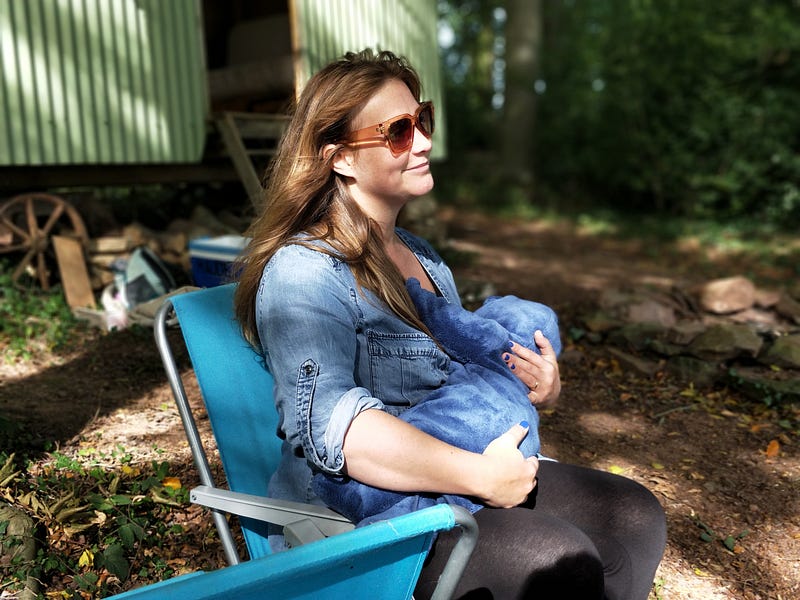
When I was expecting my daughter, about four years ago, I tried to gather as much information as possible. Partly because I knew I was embarking on an entirely new journey, and partly to calm my nerves and face the unknown.
I came across a book on breastfeeding, ‘Breastfeeding Made Easy: A Gift for Life for You and Your Baby,’ by the renowned Spanish paediatrician Carlos Gonzalez. It’s a very comprehensive and interesting book with a clear pro-breastfeeding stance. I highly recommend it.
Today, at least here in Spain, opinions about breastfeeding are quite uniform: almost the entire medical and paediatric world openly supports and promotes breastfeeding as a fundamental experience for both the newborn and the mother.
I completely agree; this is true. Breastfeeding is the most effective strategy to ensure that the baby receives essential nutrients from the very first day to build a strong and robust immune system and to establish a strong bond between mother and child. There are significant physiological, psychological, and emotional benefits.
However, I find that doctors talk a lot about breastfeeding, but we mothers talk about it less. Before becoming a mother, I believe it’s important to receive information from both sources to have a realistic idea of breastfeeding.
I’m not a doctor. I breastfed for three years, and I hope my experience can be of help if shared.
As for me, I had idealized the experience of breastfeeding. It’s a wonderful moment of connection between mother and child, undoubtedly. It creates a strong bond between mother and child. But sometimes, it’s not as easy as it sounds. It takes time. It takes learning.
Unfortunately, as mothers, we have to learn during the postpartum period, when we are at our most vulnerable and sensitive. There are no one-size-fits-all solutions. In my case, the prenatal course was as useful as a theoretical driving lesson: it’s a whole different story when you’re behind the wheel in traffic.
When I first tried to breastfeed Livia, it wasn’t pleasant. The sensation of sore nipples is the first real experience of breastfeeding. It’s a necessary step. Then comes the connection with the baby, with that little one who is nourishing from your body. And for me, it was an intense, beautiful moment, but also a bit uncomfortable.
A mother’s body is miraculous: it can adapt unexpectedly and deeply. This is evident during pregnancy when all the organs in the lower abdomen adjust to make room for the growing fetus. However, transformations continue even after childbirth: the breast changes while you breastfeed.
In the first seven days after childbirth, the mammary glands should produce colostrum, a highly nutritious and energetic fluid that helps the baby recover from the exertion of birth. Colostrum also contains essential nutrients that boost the baby’s immune system from the start.
In my case, I didn’t have colostrum, or if I did, I produced such minimal amounts that I didn’t even realize it.
Five days after giving birth, I was worried because the baby wasn’t latching well, my milk hadn’t come in yet, and I was in pain all over. It was just the beginning.
I became a mother in March 2020, right in the middle of a lockdown.
I learned to breastfeed by watching YouTube videos, with the help of family from a distance and my best friend sending messages of love and support at all hours of the day and night.
I was in a bubble separated from the world. The pandemic intensified the sense of isolation that is already felt when you’ve just given birth.
For two months, I breastfed, alternating with bottle-feeding because the baby couldn’t latch properly. Livia cried out of frustration and hunger during feedings. I had terrible cracked nipples, deep cuts that made me scream every time the baby latched on.
For a week, I even breastfed while taking painkillers every six hours because of the pain. But there’s a remedy for everything. If you find yourself in this phase, I hug you from a distance: it will get better.
Thanks to the incredibly useful LactApp mobile app, I received the first professional advice on treating cracked nipples and how to heal them through chat. And then, fortunately, a midwife, to whom I am eternally grateful, saw me in her clinic and gave me essential advice on improving the latch.
After that session, things improved: the cracked nipples gradually healed, and I learned how to breastfeed without excruciating pain.
If breastfeeding is painful, something is wrong. If this is your case, seek professional help as soon as possible.
After those first two challenging months, I continued to breastfeed for another two years. My daughter woke up two or three times at night, at intervals of two or three hours. I was very tired. Breastfeeding is the only activity we mothers can’t delegate to our partners. So, I breastfed my daughter several times a night to help her fall back asleep.
I later read that this practice is not recommended: helping your baby fall asleep by breastfeeding is effective, but it creates a strong dependence on the breast. The baby can’t fall back asleep on their own without the breast.
In my case, it was the only method that worked. I couldn’t let my daughter cry for hours in the middle of the night until she learned to sleep on her own. In the end, you do what you can, especially when you become a mother for the first time.
A discovery that greatly helped improve my quality of life during breastfeeding and my hours of sleep was learning to breastfeed lying down. Just lie on your side and place the baby close enough for him or her to latch. The only downside in this case is that you might fall asleep crooked and wake up with a sore arm.
After turning two, fortunately, my daughter started sleeping through the night — and so did I. We continued to have our sweet breastfeeding moments before bed and upon waking, but at least we could enjoy eight hours of continuous sleep (or almost). And month after month, we completed the third year of breastfeeding.
If I could go back, I would do everything exactly as I experienced it. I would choose to breastfeed again because, for me, it’s the most intimate and intense experience between mother and child. However, it’s important to support breastfeeding mothers because it’s not an easy choice. Without judging, without giving unsolicited advice. Please refrain from saying things like:
‘This baby is using you as a pacifier.’
‘Are you still breastfeeding? Isn’t it time to stop?’
Comments like these don’t help and only make the mother feel even more alone and misunderstood. Support. Be there. Each breastfeeding mother lives her own unique and personal experience with breastfeeding. Choosing when and how to end it is solely up to her and her child.
In conclusion, I leave you with the video that helped me the most when I was learning to breastfeed. If you’re going through the ordeal of cracked nipples, I hope it can help you.
A big hug.
Thanks for reading. If you enjoyed this article, please follow me on Medium or leave a comment. You can find out more about my writing here.