
Life in Death’s Wake
Mourning a Loved One
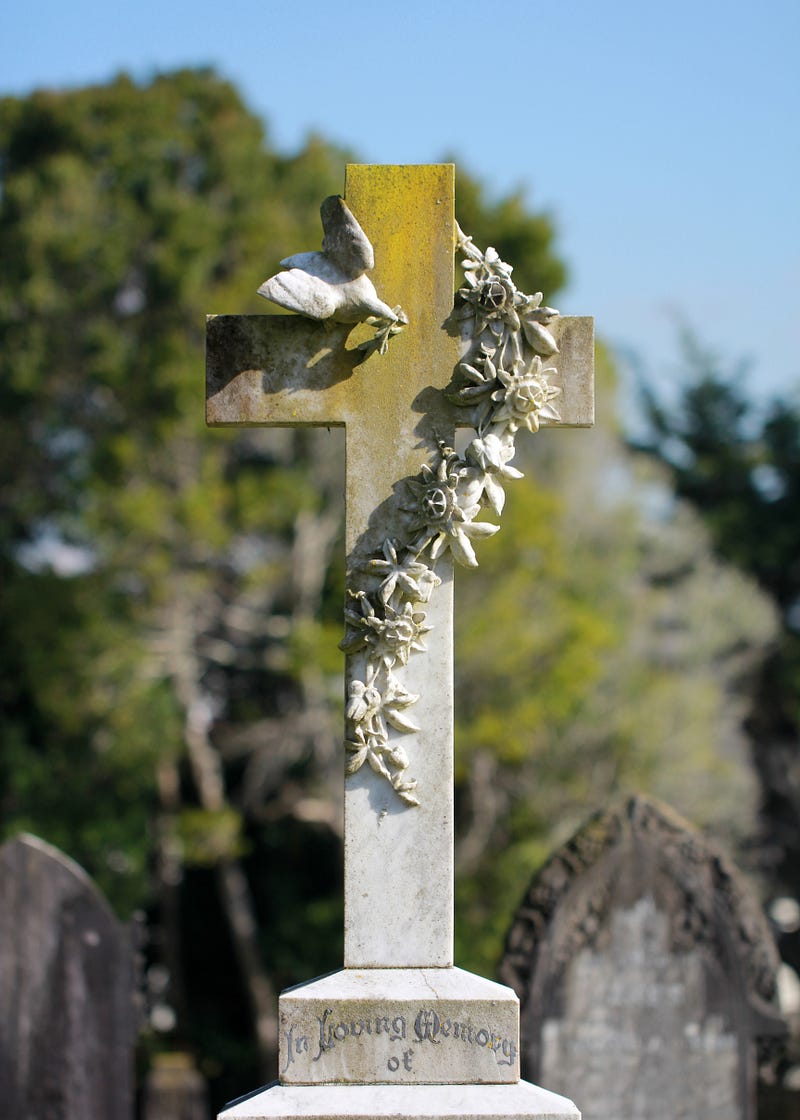
Some deaths force us to relearn how to live. When my mother first passed away, I felt that to maintain anything less than a state of perpetual sorrow for the rest of my life would be to dishonor her memory. But I also knew she’d want me to rediscover my joy. So then I spent years feeling guilty for wallowing and guilty for feeling happy. My mother died in 2001, and I still sometimes struggle to bear my mourning for her.
I’ve had to let go of what I used to think mourning a loved one meant. I’ve had to make sure that I didn’t stop living on behalf of her death — because for a while, there, I stopped actively participating in my life. I put everything on pause internally while I waited for “the real me” to return to myself — the person I was before she died.
I was in a sad state. The pursuit of sanity was driving me crazy. Trying to seem stable while I was still emotionally raw and psychologically fragile was exhausting. I’d wake up every day and search the ceiling above my bed for a reason to get up. Keeping up appearances (and holding on to my job) became my only modicum of motivation. I’d go through the motions, but I was just a shell. Living felt like dying. I was suffocating in a world full of air. The simplest task — getting dressed, showering, or cooking a meal — felt like climbing a mountain. Any happiness I managed to scrounge up would quickly evaporate.
For me, mourning has been like surviving a botched amputation. First there was pain — acute, debilitating pain. Then grief spread like gangrene — making everything dark and black. My mind would play tricks on me at first. I’d think I heard my mother calling my name or her key in the front door. I’d see a woman who, from a distance, looked like her. Time passed — months upon months — years — and those phantom sensations began to occur less and less.
I began to have moments of relief. Some light started to filter into the occasional day. Eventually I learned to manage (as opposed to faking it). I found emotional crutches and relational prostheses. It all took some getting used to, but it helped. Some days I felt like I might be able to regain my pre-loss self, but other days I was keenly aware of being incomplete — forever changed. On the worst days the wound felt fresh. Eventually I came to accept that reclaiming who I once was had become impossible. My pre-loss self was now a mirage. I could only proceed as a new version — one that would have to visit her in memory.
My mother was an amazing woman. She spoke her mind with complete (and loving) honesty. She was beautiful and smart and funny. She had her imperfections, but she wore them flawlessly. Her eyes lit up when she smiled — eyes that looked like mine, but not as squinty. Her faith humbled me. I marveled at her ability to spend hours in the “boring” chapters of the Bible. She knew how to splurge, save, and give generously. I miss her for a lifetime full of reasons.
I didn’t take a master class in mourning. I experimented. I spent a lot of time failing and flailing and pulling away from the world. But I was fortunate to have some loved ones faithfully waiting in the wings for me until I reemerged.
Now I’m an emotional amputee; I’ve lost a loved one. I move through life with a limp, but I can walk. Even though it pains me to admit it, life in the wake of my mother’s death has become the new normal. I am who I am because of and without her. I’ve stopped trying to figure out how different I’d be if she were still living. Her death forever changed my life’s trajectory, but her life affected me even more deeply.
A version of this piece originally appeared on the blog Write Away.


