
Getting to Know My Mother
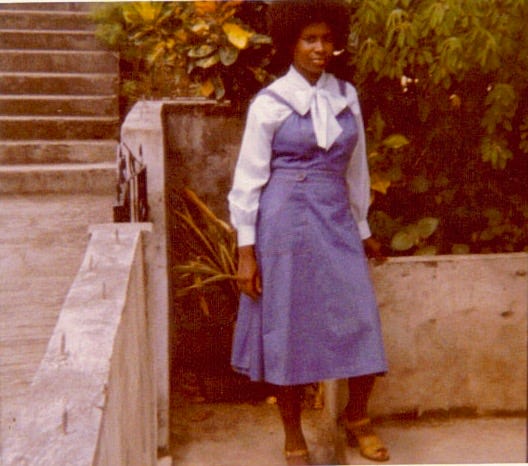
I recently rediscovered one of my mother’s DayMinder appointment books. It’s from 1998. Back then the Twin Towers still had three years left. We were watching Seventh Heaven, ER, and Friends. I was a sophomore in college — my brother and sister seven and eight years younger. It was the age of Titanic, Saving Private Ryan, and Armageddon. Finding this snapshot of my mother’s life means a great deal to me, for in September of 2001 death would claim her suddenly.
My mother used this appointment book as a calendar and an address book, but she also used it as a to-do list, a gratitude journal, a record of her thoughts, feelings, and prayers (and praises when her prayers were answered), a catalog of day-to-day occurrences such as the price she paid for tomatoes at a Rhode Island farmers’ market or ground beef at our neighborhood grocery store in Brooklyn. She outlined the chores she’d accomplished as well as the concerns she had for my father, siblings, and me, and for the members of our church. So it’s not just a lifeless record of her appointments and contacts, it’s a handwritten time capsule — an engaging way of getting to know her — a way of getting to know my mother years after she died from a brain aneurysm.
I knew my mother to be funny, loving, and wise. She read her Bible like a scholar and had a faith that I lived in awe of. She was not one to sugarcoat or flatter. She would give the same respect and frankness to a billionaire and a pauper. Both she and my father had exceptional memories — managing to keep track of all my school and extracurricular obligations and activities. My mother was always honest with me. No topic was taboo, but she passed away before we covered certain issues. There are so many discussions that will remain beyond the horizon of our relationship. So many unasked questions I must live with.
Reading her journal is giving me a chance to encounter parts of my mother I never fully grasped when she was alive. I was aware of her diagnosis (bipolar disorder, then called manic-depression) and some of the side effects she suffered from her prescription of lithium (the weight-gain, for example). I knew what her manic episodes looked like, that she was often “sad” and teary months before them, that her sense of humor would change, and that her full-blown mania tended to coincide with specific seasons. But I had no idea what either end of the pendulum swing felt like from her perspective. I was too young and/or too afraid to ask for details.
There were also parts of my mother’s life that I never saw. I didn’t observe any cracks or imperfections in her marriage with my father. I didn’t know what depression was — only realizing later that that’s what made my junior year of high school so difficult. I had no hint of how hard it was for her to get out of bed some days or fall asleep some nights. Aside from financial concerns, I had no awareness about what worries filled her prayers. I was ignorant of her struggles with anger — in general or with anyone in particular.
I also didn’t know all the ways in which we were similar. I knew I’d inherited her average height (unlike my siblings who gained the genes for much more impressive statures from our father). I have my mother’s gap between my two front teeth, her irreverent personality, aversion to makeup, desire to go gray naturally, and willingness to debate. But I am also like her in ways I didn’t consider before. Many of her prayers then are prayers I utter now: prayers for provision and wisdom, for help with fear and anger, or to say the right things in a difficult situation — in short, to be a loving and faithful Christian.
This appointment book is only one year of my mother’s life, but it is giving me so much. I’ve lost her smell, the taste of her cooking, and the sound of her singing off key. I haven’t hugged her in over a decade or seen her unique sway walking down the street. But this journal is returning some of what time has taken and giving new insights into her thoughts. It’s full of things I never knew and others I forgot. Each page I read is a brilliant gift — illuminating how she felt, how she loved, and how she lived.
Aabye-Gayle is a freelance editor and writer. She is a graduate of the Nightingale-Bamford School and Wellesley College, and was on the editorial staff of Nickelodeon Magazine. She has written for numerous publications, including MAD Magazine, The Establishment, Grok Nation, and Place & Identity: An Anthology of Personal Essays. She also maintains her own blog. Aabye-Gayle lives in New York City with her husband and two cats — but, for the record, she’s a dog person.
This piece originally appeared on Write Away.


