
Life before the Internet: how I Created and sold a Game 25 years ago.
Or how I randomly sold 365.000 CD-ROMS of my side-hustle game coded in 1996
In 1995 I just immigrated with my parents from Russia to Paris, France. Had no friends, and spoke no French. To worsen my case, I was shy.
In the school playground, freshly arrived in the middle of the year, the only person willing to communicate, was Ouss, a young immigrant who flew the first Gulf War from Koweit.
We shared rootless life in France and a passion for video games.
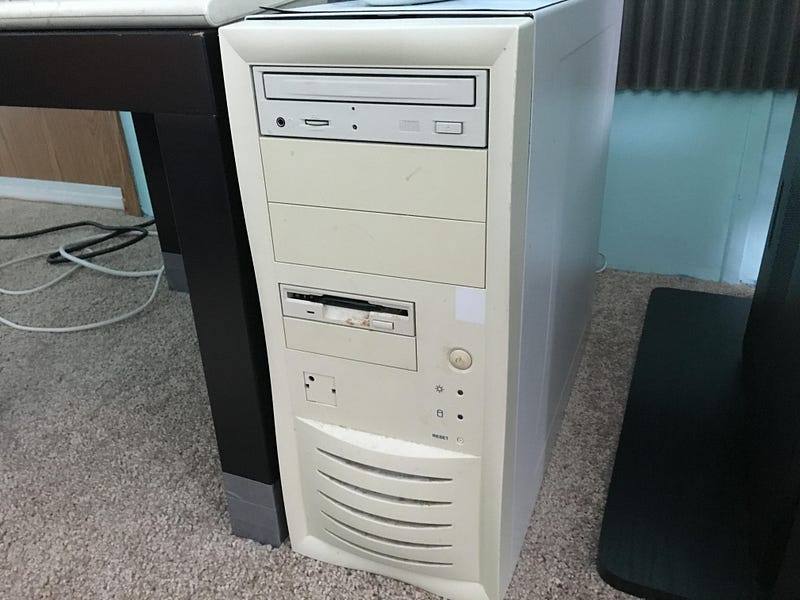
We begged our parents to buy us the most expensive and powerful computer: Pentium III 800Mhz, 4MB of RAM (yes, this 35$ phone is more powerful than the 2000$ PC I had)
We used to play one more than others: a shoot’em up game named R-Type. It was one of the best shooting games, with tons of guns and lasers you upgraded through a few dozens of levels all designed in different styles and universes.
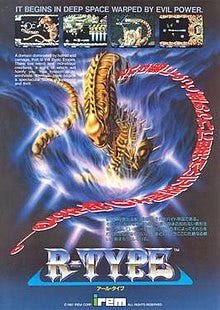
August 96' was melting asphalt in our cosmopolitan, yet poor suburb. Macarena was the hit of this summer and without anything else to do, Ouss and myself made a bet: let’s do a better game than R-Type.
We actually didn’t really hope anything, it was a boredom joke of two teenagers. We knew no coding and never did anything similar.
First, we bought a 1000 pages book on C and started to learn it.
For the young developers out there, you have to understand that we didn’t have StackOverflow or GitHub, the internet was extremely slow and you paid for it around 6 cents per minute.
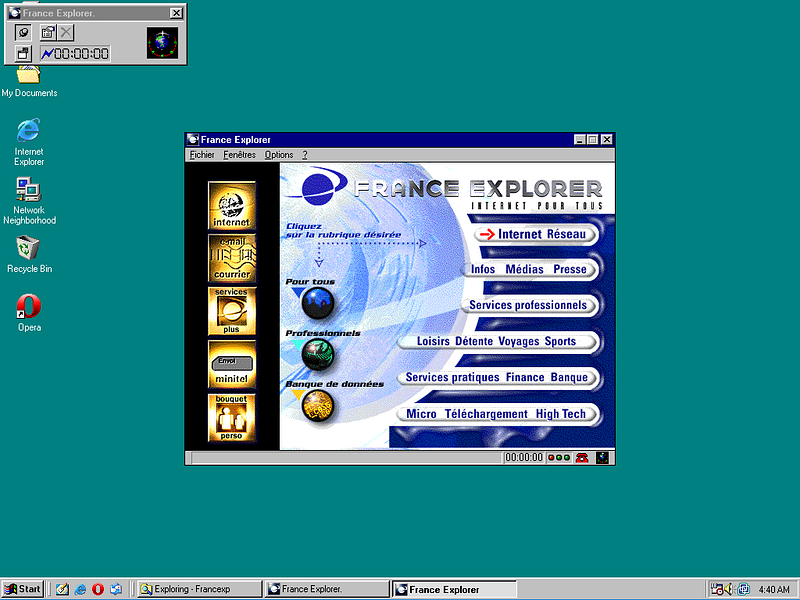
The first problem we were facing is how to actually show sprites on the screen. It might seem obvious today but in earlier days there were multiple graphic cards and drivers that had to be supported, with a very slow single-core CPU and few megabytes of RAM.
After spending hours (and a few bucks) on the internet, we found Allegro Library. Allegro was a wonderful library to show and animate sprites, interact with the keyboard and perform math calculations.
You need to know that something as simple as calculating sin(x) wasn’t possible on a Pentium II. Math calculations were performed by the FPU, therefore extremely slow. Allegro offered a set of recalculated tables for sin, cos, tan, and atan. Functions that are used thousands of times per second to rotate planes, bullets, and lasers.
Designing game assets
The second problem we were facing is how to actually design each single element in the game. Our resolution was 320x240 (we then upgraded it to the 640x480). But I was not a pixel art designer, and had no patience to create up to 24 frames for each asset, pixel by pixel. So I found a cracked version of 3D Studio Max and started designing assets. I downloaded 3D models from different forums and IRC channels.
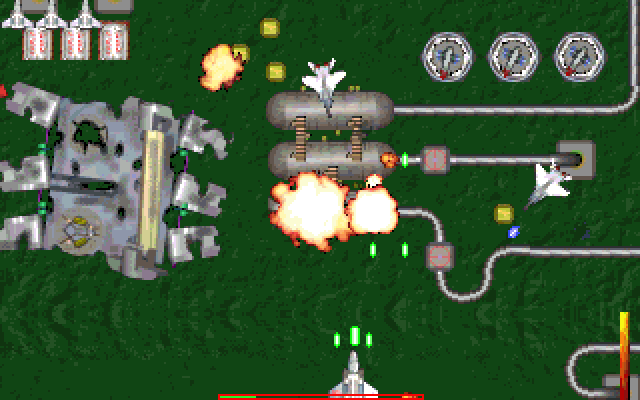
I made towers, buildings, planes, pipes and explosions.
We created repeating backgrounds with mountains and planes.
Finally I wrote a simple program to design levels. Where each asset was positioned on a precise location.
We’ve worked then to create animations and patterns of arrival of each enemy. Ouss created a dozen different type of guns.
After a year of work, every single night and week-end, the game was ready. We managed to create something as great as R-Type, but with only one level.
Money time
The game was done, so we just distributed it on floppy disks in our school.
One day, mate comes to us, saying he showed the game to his brother who used to work for a game editor. They liked our game and wanted to meet us.
It was our first ever business meeting and first time we get screwed too :)
We discussed about pricing — 20Francs (aka around 6€)
We discussed about levels — agreed to create 12 levels in 4 different universes.
We discussed about our price to give-away all the rights on the game…
They proposed an upfront payment of 50.000 Francs (around $8.000) and 10% of revenues. Or so we thought.
We accepted immediately.
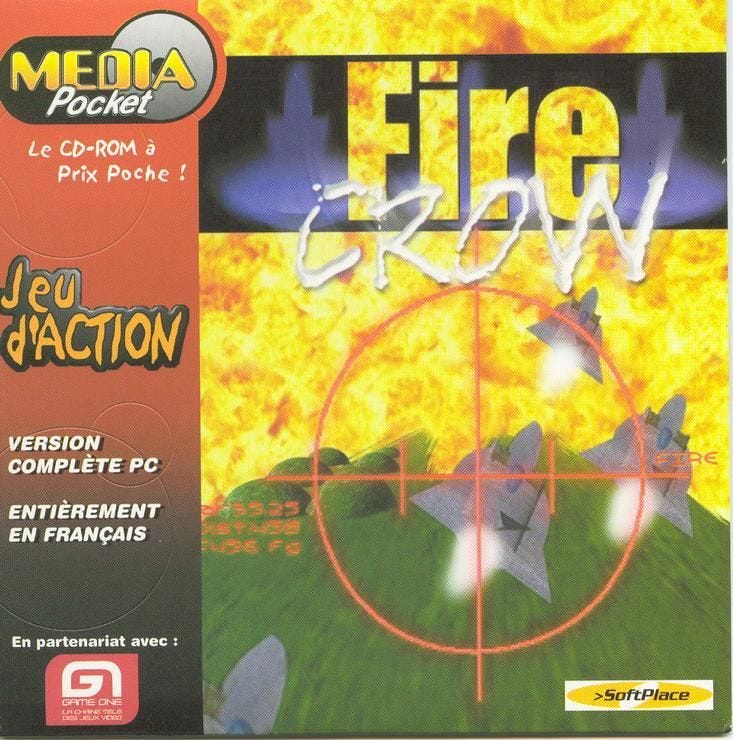
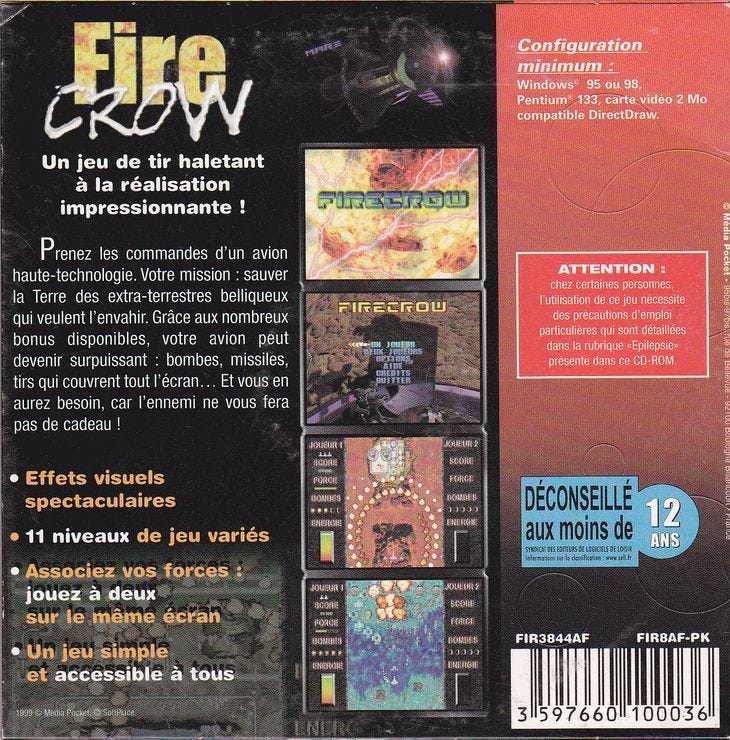
Oops moment
We spent 6 more month doing 12 levels, finalizing details and installation procedure, user guide (sic!) and testing in all possible PCs, Windows versions and CPU/RAM configuration (yep we had to do all that).
But the game was distributed, in many supermarkets all around France.
A year later we finally received reports, waiting to become millionaires at 17 years :)
Sold copies : 365.000
Yahhoooooo
Total Revenue for the editor : 2.345.000 Francs (aka around 500K$)
Yahhooooooooo
Net amount for us : 0$
Shit? What? Why?!
We should have been paid at least 50K$?! We call the editor.
During the call, we understand that our contact is quite uncomfortable about the question. But he explains that we actually get 10% of the revenues once all the expenses of the editors are subtracted. And it seems that they’ve almost everything on advertisement, testing, project management… Screwed.
Lesson learned: before signing a contract, talk to fucking lawyer.


