
Letting Go
How do we let go of a lifetime of achievement?

Moving out of a space of intense and successful professional work is not a question I thought of asking myself. And then, all of a sudden, there it was. And I have not been prepared for it. Not remotely, even though I have been downsizing over the past few years. And so, as this understanding, knowing that I will retire soon, is not new, my thoughts about it and what it means are always changing.
Today I spent four hours clearing out 20 years of a successful career from my university office — ditching 100+ books I’ve owned for decades, trashing beautifully adorned certificates and accolades for accomplishments as a well-known refugee researcher, throwing away sentimental thank-you notes from students and faculty for all kinds of work that, for me, were just part of the job.
I’ve been culling the stash for several years. So when it came to giving up my office today, after throwing away most of the items that had managed to stay in the “keep” pile for so long, I was able to put what remained into four boxes in my little Prius C, along with five framed pieces I just couldn’t part with.
Arriving home, I tossed another handful of treasured books and more framed certificates to make everything fit in my home office.
Feeling a bit shell-shocked — maybe open-heart surgery without anesthesia is a better description — here I sit, taking it all in.
Funny thing is, I’m not retiring — not yet. But I’ve rarely used my office since COVID, and we’re low on office space. Given that I currently spend months on research in Europe while I teach online, I felt that someone else could make better use of the space.
Still, I know it’s a step towards the end of a long and wonderful career. I have warm memories of so much camaraderie in past years, my time as Faculty Senate President, chair of many committees. I’ve been there long enough to see at least half of my friends retire, and I admit I haven’t kept up with the new faculty.
I give myself another two years, tops.
Identity
International research is a major part of my work. It has allowed me the privilege of living in other countries; among them, New Zealand, Japan, Ireland, and France, with months spent in post-war Uganda. These opportunities have helped me see how other cultures shape identity.
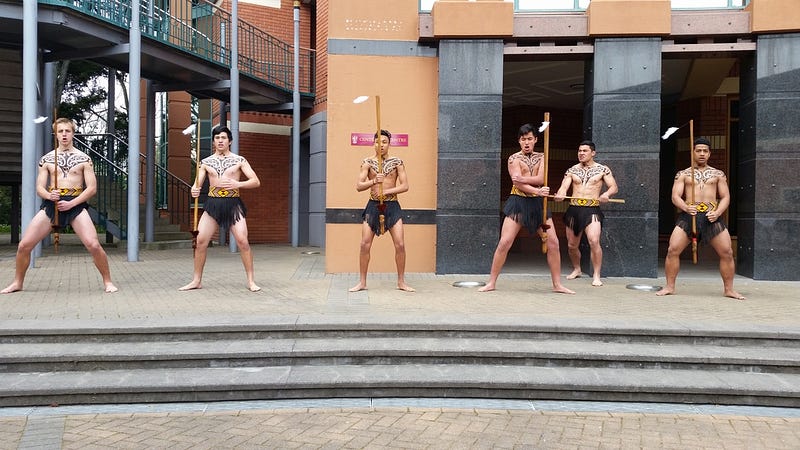
In New Zealand, I loved that Māori traditions were a part of formal business meetings. So, for instance, when I gave a keynote speech, I began with a Māori introduction, which I created with the help of a native Māori woman.
I love this introduction. In the US, we shake hands and say, “Hi, I’m (name), and I’m (whatever our occupation is).” In other words, we are what we do. But in the Māori culture, one introduces oneself by stating what your river is, what your mountain is, who your ancestors are. Your identity is not your job. You don’t even mention your name until half-way through the introduction.
In France, I have also found that people don’t identify primarily by their occupation. It’s important, but it’s not who you are.
I’m getting to be an old-timer, hard as that is to say, so maybe things are changing for young people. I became a young woman on the heels of the women’s liberation movement. Women were making strides in professional jobs, and it was common to be dissatisfied with being “just” a homemaker and mother (yes, we used the word “just” then! I am far more aware of the difficulties and the beauties of that unpaid labor now.) For me and my generation, paid work has been identification. Again, we are what we do.
I think that’s too bad. Yes, I’m proud of my work. But I’m also a painter, a ballroom dancer, a traveler, a photographer, and a crazy person who has thrived on extreme sport (horse sports, white water rafting, and once-off fun with parachuting, paragliding, and a handful of other adventures where many would fear to tread).
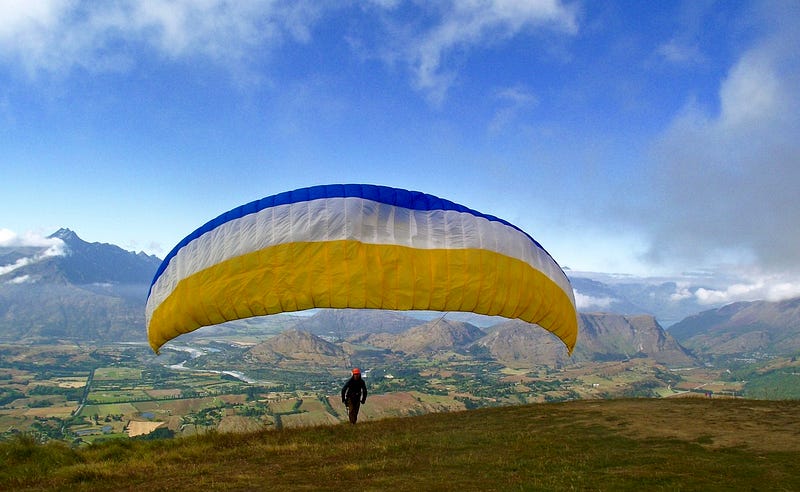
But as I see myself preparing to leave that high-powered employment that has earned my fellowships, grants, publications, and more, I find myself in a space of anxious loss. Who am I now? What is my identity? With so much change upon me as a woman in my mid-60s — reduction in career success, loss of youth, no constant achievements to attain — how do I go forward without a sense of loss? Such a new — and often frightening — perspective for me.
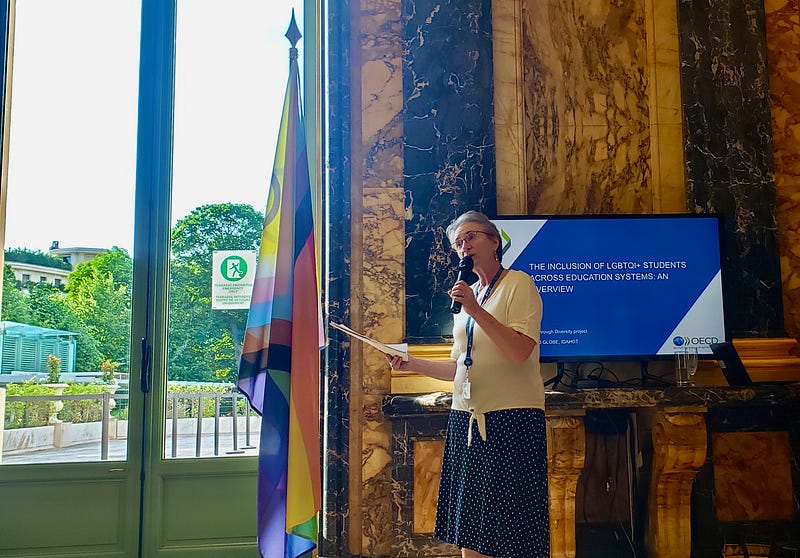
In 2020, I received a prestigious fellowship from the Council on Foreign Relations that brought me to Paris for a year to work at the OECD. I’d previously received a Fulbright and an Ian Axford Fellowship to research refugee resettlement in New Zealand. My first big award was a Rotary Fellowship that brought me to Dublin for a year. When I completed the CFR fellowship, it really struck me: this is the last of these awards. There won’t be another. This won’t be who I am anymore.
I am looking around my home office. Opposite my desk I have 12 framed pictures reminding me of my adventures with refugee children in Ghana, resettled refugee children in the US, my favorite quote from the novel Middlemarch, my remarkable blind horse Magic who died in 2022, attending La Scala on my husband’s birthday in 2017, a painting from Athens, and my beloved Paris. The wall to the right — my family. To the left — ballroom dance, African safaris, and my daughter’s wedding.
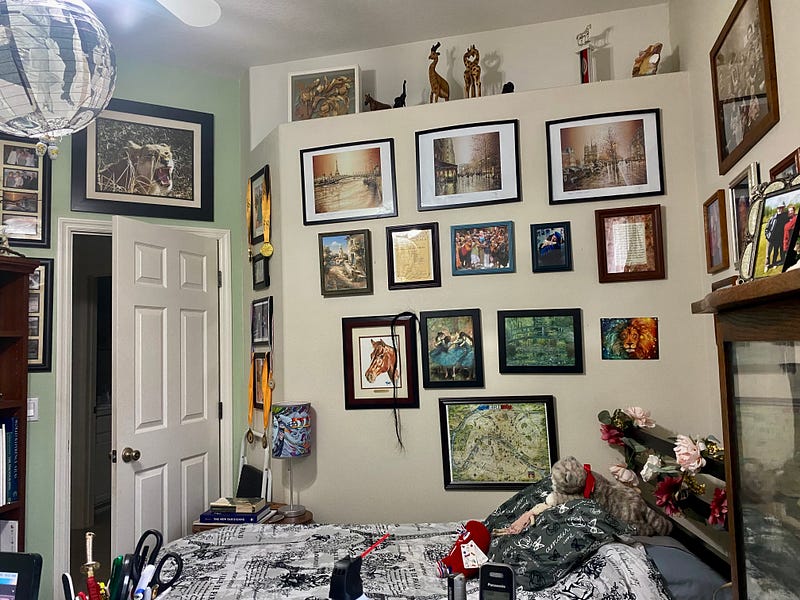
In a way, my home office is a kind of repository of 20 years of the most amazing professional life anyone could want. And even that is only from my mid 40’s. There was a world of life before that — my own childhood, raising children, and early career, among them. Those years included one in which I spent my first year out of the US, in Dublin, Ireland, as a graduate student at Trinity College Dublin. That was a year of remarkable learning on so many fronts — seeing how people did just fine without cars or central heat, learning about homelessness, and traveling to stunning vistas throughout the country.
Motherhood and a poorly matched marriage brought some years of lessons that were frequently painful. I made my share of mistakes in those decades but am grateful that I persisted out of love for my children, and the result has been that we are loving and close.
Ever Increasing Losses
Speaking of my loving children, as I write, I just heard from my daughter. One of her aunts from my first marriage just died a few days ago. She was younger than I, 63. We were never close, but she was clearly loved by friends and family.
These losses keep piling up. I think to myself of the days when the announcements were weddings and births of friends and family, not funerals. Two years ago, one of my dearest friends died alone in a nursing home. I was the last to see her, the day before she died. Louise had a remarkable life as an actress and model in the 50s, and a renowned family — her father was president of Columbia University during the Vietnam War and had been instrumental in the early years of the United Nations. Louise was magnanimous and well-loved but in her last couple years, she had things happen in her life that I cannot share. The result was a lonely and sad end to a beautiful life.
There have been others that I am always shocked to learn about. I see myself unwillingly arrived at that cycle of life in which I have lived more years than I have left. My mom’s family live notoriously long lives, so unless there is a freak accident, I figure I have a long ways to go. And there will be more letting go to do.
Part of that is letting go of what is so valued in US culture, and many world cultures — youth, career reputation, ever-growing accomplishments. Those things that many of us think of as our identity.
As I — tearfully — begin to let go of all I worked so hard to achieve in the first six decades of my live, I am reminded that there is also opportunity. We can choose to remake ourselves in our senior years, learn to enjoy a less stressful life and take up hobbies that work always precluded.
To do that involves packing away the career ambitions and goals along with the books and certificates of that youthful past — even allowing time to grieve their loss, perhaps — and embracing age and a very new path.
Ugh! Not quite there yet. But I’m working on it. Ah, the irony of “working” on it. Indeed, I am still working professionally and need to for another couple years to feel a little secure in retirement. I can hope that these years help me replace the word “work” with “embrace” and move joyfully into what currently both scares and welcomes me — these remaining years of life and all the beauty that they hold.
If you enjoyed what you read, please clap, comment, and follow me!


