avatarAvi Kotzer

Free AI web copilot to create summaries, insights and extended knowledge, download it at here

3842

Abstract

not <a href="https://www.imdb.com/title/tt0210945/">Remember the Titans</a>. That one is about a different type of battle. <a href="https://www.warnerbros.com/movies/clash-titans-2010"><i>Clash of the Titans</i></a> was originally released in 1981 and then remade in 2010. Perhaps the most memorable thing about the remake is Liam Neeson uttering this very meme-able line:</p> <figure id="133e"> <div> <div> <img class="ratio" src="http://placehold.it/16x9"> <iframe class="" src="https://cdn.embedly.com/widgets/media.html?src=https%3A%2F%2Fwww.youtube.com%2Fembed%2FWEfBssb1FY8%3Ffeature%3Doembed&amp;display_name=YouTube&amp;url=https%3A%2F%2Fwww.youtube.com%2Fwatch%3Fv%3DWEfBssb1FY8&amp;image=https%3A%2F%2Fi.ytimg.com%2Fvi%2FWEfBssb1FY8%2Fhqdefault.jpg&amp;key=a19fcc184b9711e1b4764040d3dc5c07&amp;type=text%2Fhtml&amp;schema=youtube" allowfullscreen="" frameborder="0" height="480" width="640"> </div> </div> </figure></iframe></div></div></figure><p id="a052">Anyhoo… Hades got screwed by Zeus and Poseidon, who took the sky and sea, respectively. So all that was left for him was the underworld. Which still may bear fruit once the zombiepocalypse arrives.</p><p id="8ebf">Hades’s realm included five rivers:</p><ul><li><b>Styx</b>, considered the most prominent and famous river of the underworld. It was named after the goddess Styx and was known as the “river of hate”. And for its <a href="https://styxworld.com/?redirect=false">power ballads</a>.</li><li><b>Acheron</b>, the river of pain. This is the one that features Charon — “the Ferryman” — who rows the dead over.</li><li><b>Phlegethon</b>, or river of fire.</li><li><b>Cocytus</b>, the river of wailing.</li><li><b>Lethe</b>, or “river of forgetfulness”. It is associated with the goddess Lethe, the goddess of… forgetfulness and oblivion. What a coincidence!</li></ul><p id="ab2e">First accounts claimed the Lethe flowed around the cave of <b>Hypnos</b>, the god of sleep. Whoever drank from its waters (the river’s, not Hypnos’s!) would completely forget everything. It’s rumored that there is a reservoir of water from the Lethe river that every political candidate drinks from after winning an election.</p><p id="d7b5">Later Ovid wrote that the Lethe river flowed <b>through</b> Hypnos’s cave, not around it. Why did Ovid do that? Probably because he felt like it and… he was effin’ <a href="https://www.gutenberg.org/ebooks/author/2868">Ovid</a>! You gonna argue with him about that?</p><p id="0ed9">Even later, much later, <i>lethe</i> became a lowercase word used as a synonym for “forgetfulness” or “oblivion”. For example, William Rathbone Greg, known as W.R. to friends and family, wrote “severances of soul for which there is neither balm nor lethe”. I still haven’t been able to locate that phrase outside of the dictionary’s example sentence.</p><p id="0931">But you should trust W.R. First of all, his middle name is the cool “Rathbone”. And secondly, he was a member of the short-lived 19th-century <a href="https://en.wikipedia.org/wiki/Metaphysical_Society">Metaphysical Society</a>. And you can’t get much more metaphysical than oblivion.</p><h2 id="27a6">A river in Spain</h2><p id="ad56">Beginning in 711 A.D., the Umayyad Caliphate began its conquest of most of the Iberian peninsula (composed mainly of Spain and Portugal). By 719 the <b>Al-Andalus</b>, or Muslim-ruled area, achieved its greatest extent, reaching into what is today modern France. <b>Andalucía</b>, the name of the current autonomous community (state) in southern Spain, comes from that Arabic term whose exact meaning has a few theories but no agreed-upon conclusion.</p><p id="2c77">The Spaniard <b>Reconquista</b>, or “re-conquering” of Spain and Portugal by the Christian Kin

Options

gdoms, was completed in 1492. However, Arab and Muslim influence in Spain is still noticeable, especially when it comes to architecture names. One of the many “prefixes” you’ll hear in proper nouns is “guada-”, which comes from the Arabic wadi, meaning (1) valley or depression in a desert; (2) a river, especially one that is usually dry except for the rainy season.</p><p id="6b0a">There is a province northwest of Madrid called <b>Guadalajara</b>, which comes from the Arabic phrase meaning “river of rocks”. And the province of Cádiz, in Andalucía, has a river called <b>Guadalete</b>.</p><figure id="9cf0"><img src="https://cdn-images-1.readmedium.com/v2/resize:fit:800/0*mbIyhF2DLrpFYEU5.JPG"><figcaption>Photo by Emilio J. Rodríguez Posada</figcaption></figure><p id="bbb9">The river’s basin contains evidence of prehistoric civilization and large mammals, including the hippopotamus. Some of its remains include a large hydraulic structure and a rare Roman mill in Jérez de la Frontera. Now, there is a theory that the original name of the river was inspired by the eponymous Lethe of Greek mythology.</p><p id="55ff">Back then, the Phoenicians settled in the present-day coastal city of Cádiz (southwestern Spain) were about to battle their Greek neighbors living at the mouth of the river in the port city known today as El Puerto de Santa María — where the above photo was taken.</p><p id="2b7d">Thanks to diplomatic efforts, however, the battle never took place.</p><p id="cff7">The Phoenicians and Greeks decided to have a peace ceremony in which they committed to “forgetting past offenses”. And so this river became known as the river of oblivion. It was called Lethe or Letho for some time. When the Umayyad Caliphate took over Andalucía, it was referred to as the “wadi Letho”, or River Letho. That eventually became Guadaletho and later <b>Guadalete</b>.</p><p id="f05e">Another theory posits that there was a nearby town or lake named Lakka that was later called “wadi Lakka” and finally Guadalete.</p><p id="176b">I kinda prefer that first kumbaya-ish story myself. How about you?</p><p id="b0df">Anyway… despite Mike Tyson, Hades, Styx, Liam Neeson, the Greeks and Phoenicians making peace, and the Guadalete river in southwest Spain — even despite William Rathbone Greg — the editors of the Spelling Bee decided that the word <i>lethe</i> is a <a href="https://www.merriam-webster.com/words-at-play/dord-a-ghost-word"><b>dord</b></a><b>.</b></p><p id="8931">You can check out my previous entry on another <b>dord </b>here:</p><div id="31c5" class="link-block"> <a href="https://readmedium.com/blite-72db939fe96f"> <div> <div> <h2>Blite</h2> <div><h3>The Spelling Bee wiped out at least six plants with its rejection</h3></div> <div><p>medium.com</p></div> </div> <div> <div style="background-image: url(https://miro.readmedium.com/v2/resize:fit:320/0*AfCFgyI4xMIeUjmk)"></div> </div> </div> </a> </div><p id="503a">*What the heck is a <b>dord, </b>you ask? Here’s the answer:</p><div id="4e88" class="link-block"> <a href="https://www.merriam-webster.com/words-at-play/dord-a-ghost-word"> <div> <div> <h2>'Dord': A Ghost Word</h2> <div><h3>One of the questions people like to ask lexicographers is this: Can you sneak something into the dictionary? Can you…</h3></div> <div><p>www.merriam-webster.com</p></div> </div> <div> <div style="background-image: url(https://miro.readmedium.com/v2/resize:fit:320/0*3l23t_WCjO_5_9db)"></div> </div> </div> </a> </div></article></body>

Lethe

Can we forgive the Spelling Bee for forgetting about this word?

Photo by Yaopey Yong on Unsplash

Today’s New York Times Spelling Bee letters:
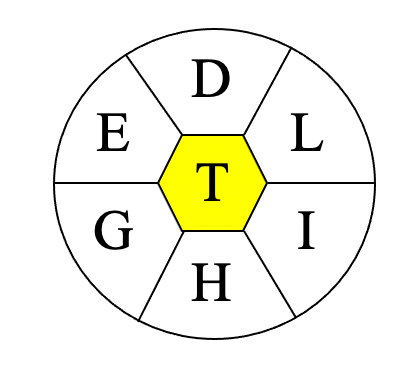
Art: Iva Reztok

D, E, G, H, I, L, and center T (all words must include T)

Merriam-Webster says…
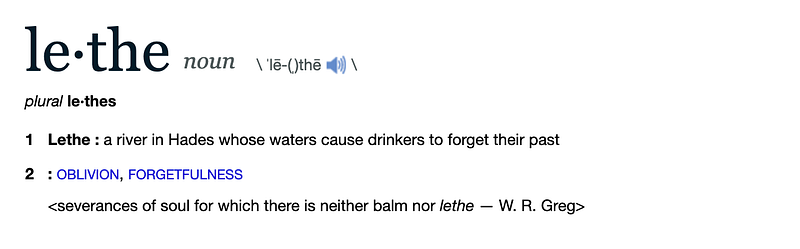
Credit: merriam-webster.com

Silly little dictionary! Don’t you know that lethe can’t possibly be a word if the New York Times says it ain’t?

For further fascinating facts, check out the Spelling Bee Master.

What’s your favorite dord* from today’s puzzle?

My Two Cents

On June 8th, 2002, Lennox Lewis defended his unified boxing heavyweight title against Mike Tyson at The Pyramid arena in Memphis Tennessee in the highest-grossing event in pay-per-view history (at the time). The fight wasn’t close and Lewis won by knocking out the former champ with less than a minute left in the eighth round.

After the bout, famed sportswriter, reporter, and author Jeremy Schaap asked Tyson, “Where do you go from here Mike?”

Tyson’s reply was, “I don’t know, man, I guess I’m gonna fade into Bolivian.

Obviously Iron Mike meant “oblivion”, as in the expression “fading into oblivion”. The quote became yet another malapropism added to the former boxer’s growing list of quotes.

Since 2002, that phrase is the first thing that pops into my mind every time I hear the word “oblivion”. And “Bolivian”, for that matter. In fact, I think that should be the title of the definitive Mike Tyson (auto)biography, if it’s ever written.

And you read it here first. If that book is ever written, they should credit me. If they don’t, I’ll sue them! Do you know any lawyer who might be willing to accept payment in Medium earnings?

There is, in fact, a book of poems with a very similar title. I haven’t read it, but since discovering it about seven minutes ago, I’m curious.

A river in Hell

Our friends at Merriam-Webster explain that lethe comes from “Latin, from Greek lēthē, from lēthē forgetfulness; akin to Greek lanthanein to escape notice, lanthanesthai to forget”.

In Greek mythology, Hades — son of Cronus and his older sister Rhea (yuck!) — was the official sponsor of the dead and overlord of the underworld, which is often called Hades, too. Hades and his brothers Zeus and Poseidon defeated the Titans and became the new champs.

The Hollywood made a movie that vaguely mentions this. No, not Remember the Titans. That one is about a different type of battle. Clash of the Titans was originally released in 1981 and then remade in 2010. Perhaps the most memorable thing about the remake is Liam Neeson uttering this very meme-able line:

Anyhoo… Hades got screwed by Zeus and Poseidon, who took the sky and sea, respectively. So all that was left for him was the underworld. Which still may bear fruit once the zombiepocalypse arrives.

Hades’s realm included five rivers:

  • Styx, considered the most prominent and famous river of the underworld. It was named after the goddess Styx and was known as the “river of hate”. And for its power ballads.
  • Acheron, the river of pain. This is the one that features Charon — “the Ferryman” — who rows the dead over.
  • Phlegethon, or river of fire.
  • Cocytus, the river of wailing.
  • Lethe, or “river of forgetfulness”. It is associated with the goddess Lethe, the goddess of… forgetfulness and oblivion. What a coincidence!

First accounts claimed the Lethe flowed around the cave of Hypnos, the god of sleep. Whoever drank from its waters (the river’s, not Hypnos’s!) would completely forget everything. It’s rumored that there is a reservoir of water from the Lethe river that every political candidate drinks from after winning an election.

Later Ovid wrote that the Lethe river flowed through Hypnos’s cave, not around it. Why did Ovid do that? Probably because he felt like it and… he was effin’ Ovid! You gonna argue with him about that?

Even later, much later, lethe became a lowercase word used as a synonym for “forgetfulness” or “oblivion”. For example, William Rathbone Greg, known as W.R. to friends and family, wrote “severances of soul for which there is neither balm nor lethe”. I still haven’t been able to locate that phrase outside of the dictionary’s example sentence.

But you should trust W.R. First of all, his middle name is the cool “Rathbone”. And secondly, he was a member of the short-lived 19th-century Metaphysical Society. And you can’t get much more metaphysical than oblivion.

A river in Spain

Beginning in 711 A.D., the Umayyad Caliphate began its conquest of most of the Iberian peninsula (composed mainly of Spain and Portugal). By 719 the Al-Andalus, or Muslim-ruled area, achieved its greatest extent, reaching into what is today modern France. Andalucía, the name of the current autonomous community (state) in southern Spain, comes from that Arabic term whose exact meaning has a few theories but no agreed-upon conclusion.

The Spaniard Reconquista, or “re-conquering” of Spain and Portugal by the Christian Kingdoms, was completed in 1492. However, Arab and Muslim influence in Spain is still noticeable, especially when it comes to architecture names. One of the many “prefixes” you’ll hear in proper nouns is “guada-”, which comes from the Arabic wadi, meaning (1) valley or depression in a desert; (2) a river, especially one that is usually dry except for the rainy season.

There is a province northwest of Madrid called Guadalajara, which comes from the Arabic phrase meaning “river of rocks”. And the province of Cádiz, in Andalucía, has a river called Guadalete.
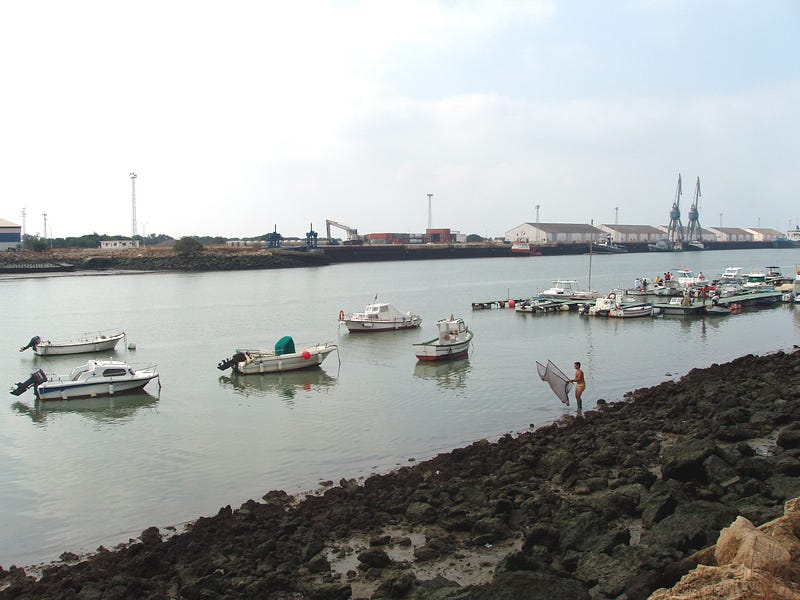
Photo by Emilio J. Rodríguez Posada

The river’s basin contains evidence of prehistoric civilization and large mammals, including the hippopotamus. Some of its remains include a large hydraulic structure and a rare Roman mill in Jérez de la Frontera. Now, there is a theory that the original name of the river was inspired by the eponymous Lethe of Greek mythology.

Back then, the Phoenicians settled in the present-day coastal city of Cádiz (southwestern Spain) were about to battle their Greek neighbors living at the mouth of the river in the port city known today as El Puerto de Santa María — where the above photo was taken.

Thanks to diplomatic efforts, however, the battle never took place.

The Phoenicians and Greeks decided to have a peace ceremony in which they committed to “forgetting past offenses”. And so this river became known as the river of oblivion. It was called Lethe or Letho for some time. When the Umayyad Caliphate took over Andalucía, it was referred to as the “wadi Letho”, or River Letho. That eventually became Guadaletho and later Guadalete.

Another theory posits that there was a nearby town or lake named Lakka that was later called “wadi Lakka” and finally Guadalete.

I kinda prefer that first kumbaya-ish story myself. How about you?

Anyway… despite Mike Tyson, Hades, Styx, Liam Neeson, the Greeks and Phoenicians making peace, and the Guadalete river in southwest Spain — even despite William Rathbone Greg — the editors of the Spelling Bee decided that the word lethe is a dord.*

You can check out my previous entry on another dord* here:

*What the heck is a dord, you ask? Here’s the answer:

Spelling Bee
Language
History
Film
Spain
Recommended from ReadMedium