
Let There Be Light: And There Was Light
Day one: A reexamination of the first of the seven days of creation
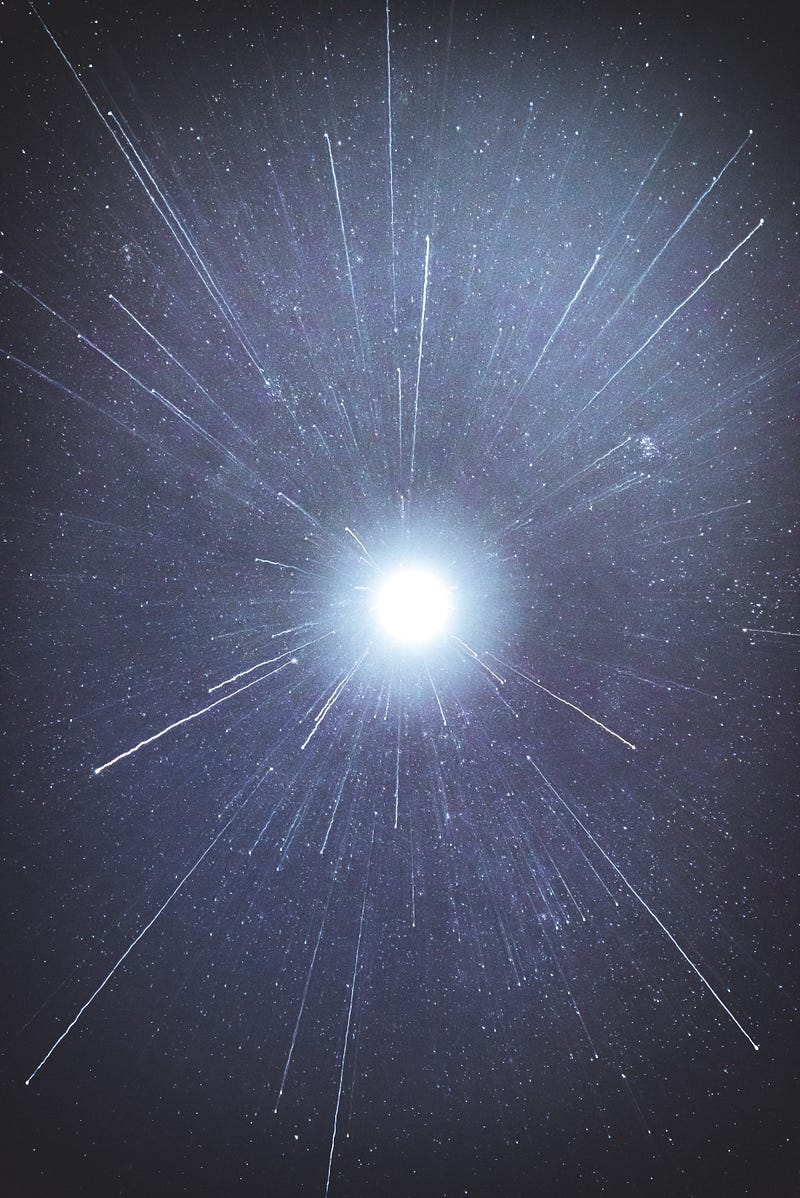
3 And God said, Let there be light: and there was light. 4 And God saw the light, that it was good: and God divided the light from the darkness. 5 And God called the light Day, and the darkness he called Night. And the evening and the morning were the first day. (Gen 1:3–5 KJV)
This is it, the ignition of the Sun!
What’s that you say? The Sun wasn’t created until the fourth day? That’s a good point but one I’d prefer to argue on the fourth day.
There isn’t a lot going on for this day. There is one method of encryption that I failed to mention in the article on Day Zero. This involves using balls to determine hidden aspects of the various days.
So first we had Day Zero when God created heaven and earth. This is represented by a single sphere, which could be a pearl or a simple ball of clay. What matters is that there is only one.
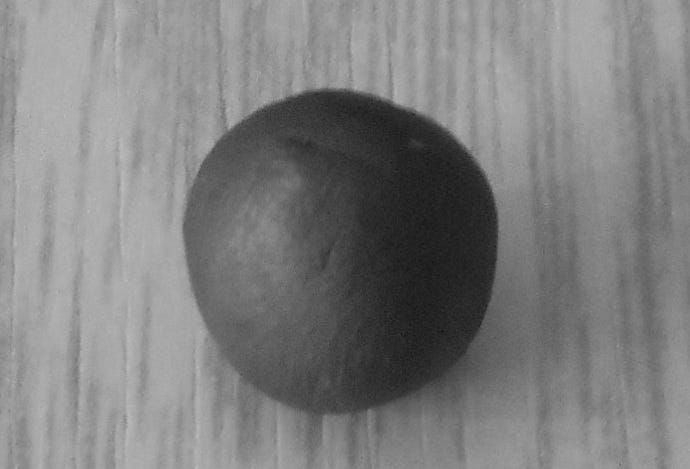
Imagine that this ball is all that exists (please ignore the cedar wood veneer). This ball cannot move from point to point because such movement is relative. If only the ball exists, then there is nothing by which to judge its movement.
There is also no time because time requires some sort of regularly repeating event by which to measure its passage.
But there is only the ball, surrounded by nothingness, lost in a timeless moment.
Then on Day One, we add another ball. Now we have two balls. We can put them together, and roll them, one around the other. One ball can be stationary and the other ball rolls around it, or both balls can roll together, in opposite directions.
More importantly, with two balls, we can demonstrate why areas on the earth experience alternating periods of light and darkness. It becomes especially easy if we designate one ball as light and the other ball as the earth. Also, it helps if we designate one spot on the earth ball that marks where we are.

Then as we roll the light ball and the earth ball together, we discover that darkness is caused by the earth's shadow as the world rolls between our location and the light.
Finding I-Ching Hexagrams in All the Wrong Places
For each day I also hope to find at least one or two hexagrams. For Day Zero, the hexagram was explicitly identified in the text with the spirit of God moving over the waters. On this day, there are no hexagrams being explicitly identified. However, it can be argued that two hexagrams are implicitly being referred to.
The text identifies two states: Day and Night. We can use the two balls to model Day and Night. Day is when the light ball is above the earth ball and Night is when the light ball is below the earth ball.
In the terminology of the I-Ching, Day is Fire over Earth while Night is Earth over Fire.

35. Chin / Progress¹
above LI THE CLINGING, FIRE below K’UN THE RECEPTIVE, EARTH
The hexagram represents the sun rising over the earth. It is therefore the symbol of rapid, easy progress, which at the same time means ever widening expansion and clarity.
THE JUDGMENT
PROGRESS. The powerful prince Is honored with horses in large numbers. In a single day he is granted audience three times.
THE IMAGE
The sun rises over the earth: The image of PROGRESS. Thus the superior man himself Brightens his bright virtue.
36. Ming I / Darkening of the Light²
above K’UN THE RECEPTIVE, EARTH below LI THE CLINGING, FIRE
Here the sun has sunk under the earth and is therefore darkened. The name of the hexagram means literally “wounding of the bright”; hence the individual lines contain frequent references to wounding. The situation is the exact opposite of that in the foregoing hexagram. In the latter a wise man at the head of affairs has able helpers, and in company with them makes progress; here a man of dark nature is in a position of authority and brings harm to the wise and able man.
THE JUDGMENT
DARKENING OF THE LIGHT. In adversity It furthers one to be persevering.
THE IMAGE
The light has sunk into the earth: The image of DARKENING OF THE LIGHT. Thus does the superior man live with the great mass: He veils his light, yet still shines.
This day references a time about four and a half billion years ago when the Sun entered the main sequence for a yellow-dwarf star. It should be noted that due to the changing balance of hydrogen and helium in the star’s core that today’s Sun is 30 percent brighter than it was four and a half billion years ago.


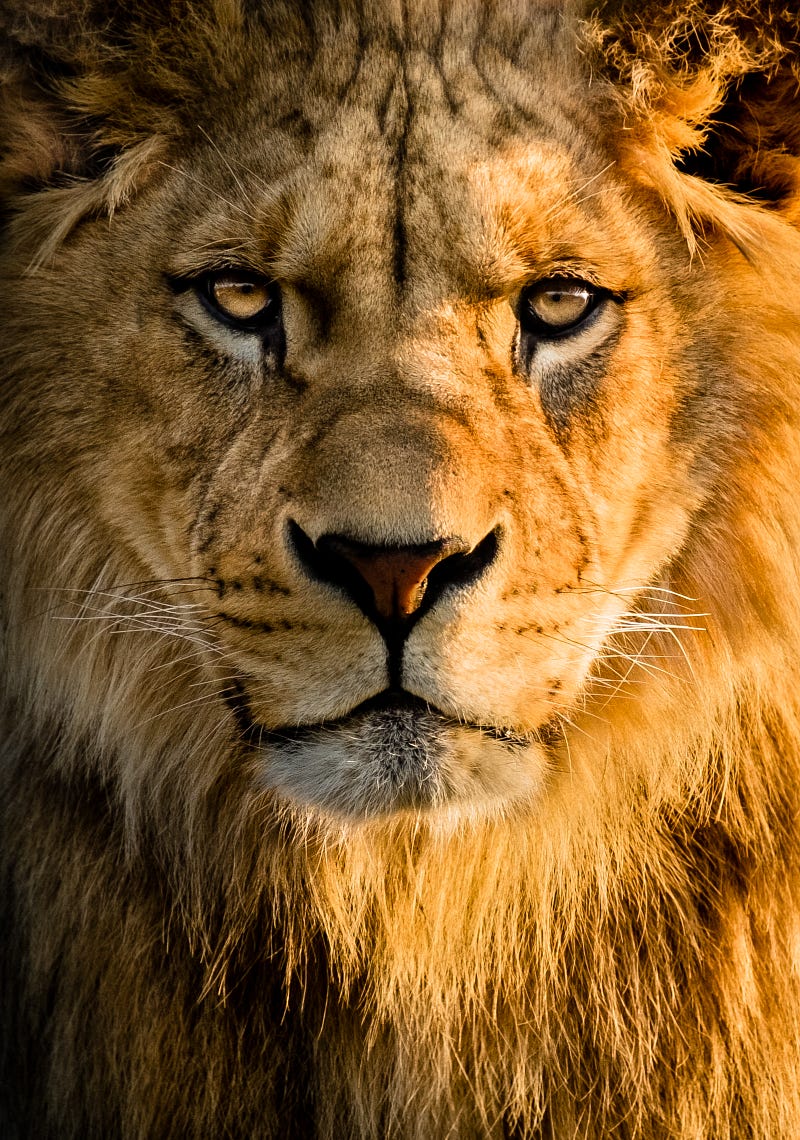
In astrology, the Sun rules the sign of Leo, the lion. There were no lions on the earth when the Sun finally entered adulthood. In time, however, the Earth responded with an appropriate form of life.




Some of you may have read the article above. If so, you’ll recall how the Gospel of Thomas³ rolled time all the way back to the first day of creation and then asked:
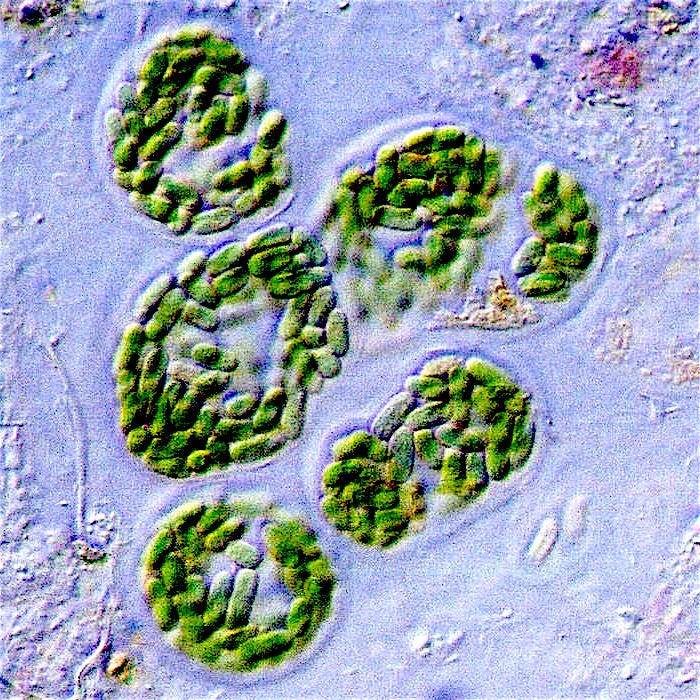

In the days when you ate what was dead, you made it alive. When you’re in the light, what will you do? On the day when you were one, you became two. But when you become two, what will you do?
In that article, I suggested that the form of life being described was cyanobacteria, also known as blue-green algae. This photosynthetic bacteria is the earliest form of life to enter the fossil record.
According to the traditional astrological descriptions, Leos thrive only while at the center of attention, within the spotlight. Just as cyanobacteria requires a steady diet of sunlight.

- Baynes, C. F., & Wilhelm, R. (1950). The I Ching, Or, Book of Changes: The Richard Wilhelm Translation. New York: Pantheon Books.
- Ibid.
- https://www.gospels.net/thomas