
Lessons of life
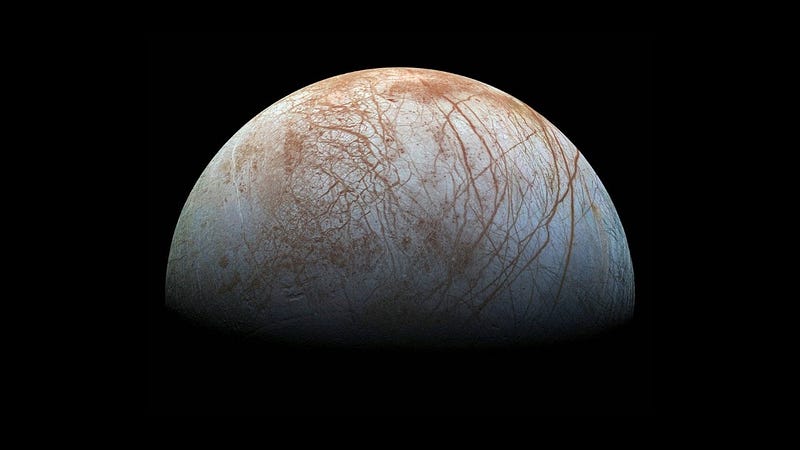
Unlike the daily news reports from hotspots in other countries, the news from space has its own rhythm. The planets quietly make their trips around the sun, all in their own lane, at their own speed, and in their own self-defined years. Planets are not troubled by pandemics or hostile takeovers, nor do they invade their neighbor. Still, two of our neighbors, Mars and Jupiter’s moon Europa, received more attention in the media last week.
Perseverance
On the Red Planet, NASA’s Perseverance Rover had a good week; it broke the local speed record by driving a lightning tenth of a mile per hour across the bed of the Jezero crater. At this speed, the cute little explorer moved towards its new home for the next half (Earth) year. The first campaign on Mars, on the crater floor, has now officially ended, and the Delta Front Campaign officially started some ten days ago.
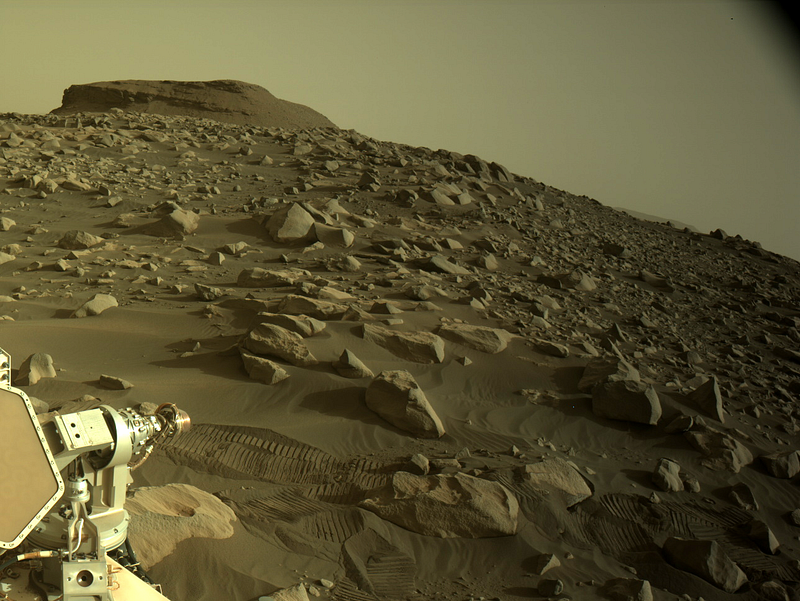
Perseverance is now on its way to a spot called Three Forks, where once a river flowed into a lake and where scientists hope that the now disappeared river has dropped the rocks that it transported. The rover will drill cores at several places, and hopefully, it finds at this location a treasure trove of deposited material that is usually out of reach for Perseverance. And if we are lucky, scientists may discover rocks with signs of ancient organisms. Just imagine that: finding indications of life on another planet; I find this fascinating.
Admittedly, we’re not talking about exotic intelligent green creatures with some human characteristics that will welcome visitors from Earth (and why would they?). Instead, if Perseverance finds any sign of life on the dry planet, it will likely be dead and undoubtedly tiny. But still, finding traces of ancient dead microbes on another planet must be unique.
Life on Europa
And that is not all the space news of this week. Astrobiologists got excited this week about Europa. It is of the moons of Jupiter, which is a prime candidate for extraterrestrial habitability in our solar system. It is covered with many double ridges, and scientists still don’t fully understand how these got all over the surface of this icy moon.
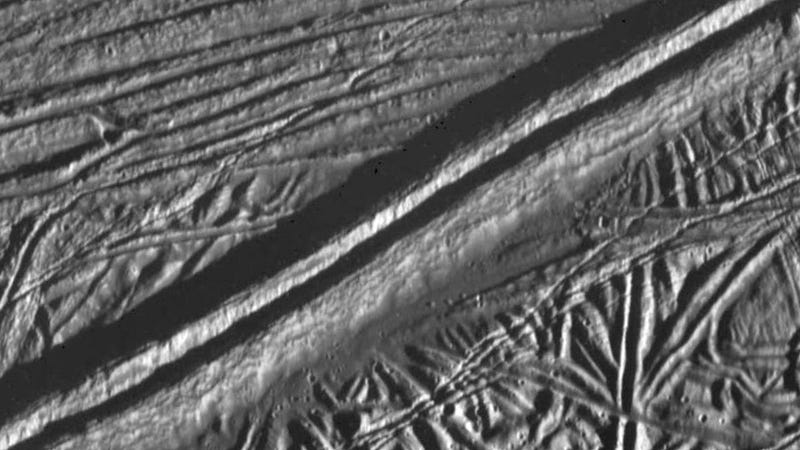
But this week, scientists presented in Nature Communications the discovery and analysis of a double ridge in Northwest Greenland that looks remarkably like the ones on Europa. However, this one is easier to study, and its geological formation is better understood. It was formed by successive refreezing, pressurization, and fracture of a shallow water sill within the ice sheet.
The scientists suggest that the same process may be responsible for Europa’s double ridges and that shallow liquid water is spatially and temporally ubiquitous across Europa’s ice shell. As we all learned at school (let me reformulate that: as we all should have learned at school in the same biology classes where every kid should have been taught about evolution), early microbial life on Earth evolved in the liquid saltwater. Add all this information up, and then the possibility of life on Europa suddenly looks more promising.
If there has ever been life on Mars, or if we would someday find life on Europa, the question pops up how it got there. And it seems we got one small step further in that quest as well. This week, an article was published about how scientists just found the two missing of the five informational units of DNA and RNA in meteorites. All DNA and RNA contain five informational components called nucleobases. Scientists had already found three of these in meteorites, but now a team of Japanese scientists found the missing two in extraterrestrial samples. This strengthens the theory that chemical reactions in asteroids could have provided essential building blocks for life on places like Earth, Mars, or on Europa.
Life in Europe
Scale down from the universal level to life on Earth, and the picture dramatically changes. The possibility of finding life on the moon Europa sounds exciting, but life in some parts of Europe on our planet is a terrible nightmare for millions. Every day, I am shocked, saddened, angry, and frustrated about the horrific events in Ukraine. And unfortunately, reading today’s news doesn’t give much hope for an end to the people’s suffering.
Wars are always hard to understand, and this one is exemplary in that aspect; why? So let me give a word of advice to those microbes on icy Europa: stay put. And in case you have any evolutionary ambitions for the next billion years: be inspired by koalas, pandas, or cute little piglets. Don’t develop your brain any further, don’t believe that two legs are better; your moon will thank you for that.
If you find articles like this valuable and want to support my work, consider signing up to Medium. It’s $5 a month, giving you unlimited access to all my articles AND all stories on Medium.
If you sign up using my link, I’ll earn a small commission, at no additional cost to you.
Notes:
https://www.inverse.com/science/perseverance-second-science-campaign
https://www.nature.com/articles/s41467-022-29458-3
https://mars.nasa.gov/mars2020/mission/status/377/campaign-2-the-delta-front/


