
Left-Handedness May Be Linked to an Advantage with Verbal Tasks.
While reveling in our uniqueness, we still have an important connection to those who came before us.
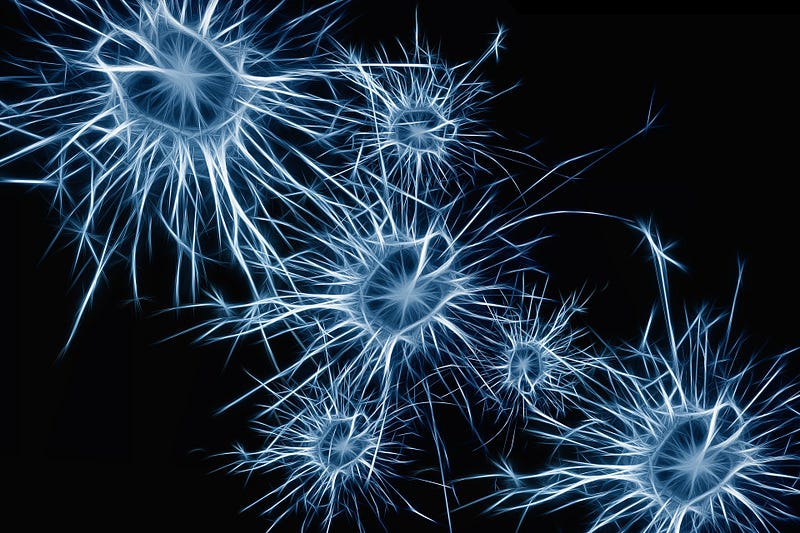
Do the genes that relate to left-handedness also give an advantage with verbal tasks? Scientists think they might.
Scientists have published a paper on the Oxford Academic online journal Brain. In it, they document the identification of the first genetic markers for left-handedness. Three of the four genes found encode proteins involved in brain development.
The researchers also analyzed brain scans of about 10,000 participants and found that these genetic markers are linked with differences in the brain’s white matter — long nerve fibers that allow areas of the brain to communicate. In particular, the differences were most pronounced in tracts connecting language-related regions in the brain.
What’s more, brain activity between language-related regions was more “in sync” among left-handed participants compared with right-handed participants. 1st Genetic Markers Tied to Being Left-Handed Found
In other words, the left-handed participants in the study have language areas in their brains that communicate and coordinate with each other better. This may mean they have an advantage with verbal tasks.
I can hear my husband thinking “That explains why you talk so much!” I doubt it does but there must be some gene responsible for my chattiness.
It is important to note that these findings were averages derived from many people in the study. A specific individual’s mileage will vary.
My father was left-handed. He was born in 1921 and at that time there was a strong bias towards right-handedness. Once he entered school, he was forced by his teachers to write with his right hand. That seems very cruel to me, as a left-hander myself.
The left- or right-handed preference emerges when we are embryos.
Handedness is first demonstrated between 9–10 weeks gestation, as embryos begin to exhibit single arm movements. Genetic influences on handedness: data from 25,732 Australian and Dutch twin families
It makes sense that wiring in the brain is responsible.
The study also found that the genetic markers for left-handedness are linked with a slightly increased risk of developing schizophrenia and a slightly lower risk of developing Parkinson’s disease. However, this is only an association and doesn’t prove that these genetic markers cause either psychiatric condition. . 1st Genetic Markers Tied to Being Left-Handed Found
I have found the opposite connections to disease in my own family.
I am unaware of anyone diagnosed with schizophrenia. My paternal grandfather died of Parkinson’s, though. Clearly, these genes aren’t the whole picture.
I am not the only left-hander in my family, which fits with this study. My father and half-brother were both lefties. Which of my father’s ancestors passed on the left-handedness?
I have tracked each of my grandparent’s families back hundreds of years on Ancestry.com. It would be intriguing to have each ancestor’s handedness noted, along with other traits. Sure, I can see my grandmother’s hair color in photos but not her mother’s.
Where does my blonde hair originate? I also shared my hair color and skin tone with my half-brother. Which ancestor gave us the fair skin and golden blonde hair?
Was it from the wife of one of our many generations back grandfathers? Maybe it traces back to our first ancestor to set foot on our shores. I will never know, but I wonder.
Was it William C. Drennen? He was found guilty of crimes against the King and deported to New York from Belfast, Ireland in 1685. Sentenced to work on the King’s plantation as a prisoner, was he left-handed? And, an unsettling thought, did he suffer from hallucinations or schizophrenia?
There is no way to know the answer to these sorts of questions. I still find the information scientists are discovering about our genetic fingerprints fascinating. That they can follow the networks of connections in our brains is exciting.
My two daughters inherited my verbal skills. They were talking in full sentences much faster than the average child but took longer to walk. Neither inherited my left-handedness or my blood type.
They did inherit their father’s right-handedness. They didn’t get his blood type, either.
As I am AB- and he is B+, the doctors said our children could inherit any combination. The girls don’t even share the same blood type. One is an A- and the other B-.
This as a great example of the way genetics work in the real world. You inherit this part and that part. Sometimes you create a new combination.
One daughter has my skin and hair color. The other daughter has her father’s skill in math and science. All four of us have blue eyes.
Whether we are lefties or righties, blondes or brunettes, we are unique. While reveling in our uniqueness, we still have an important connection to those who came before us. Those connections are beautiful.
You may like:


