avatarAvi Kotzer

Free AI web copilot to create summaries, insights and extended knowledge, download it at here

2362

Abstract

ture. The consensus is that the older we get the less we favor sweetness. We tend to drift more to the savory and exotic flavors. Which is fine by me. I’m hoping I can end up loving yogurt by the time I’m 140 and toothless.</p><p id="1707">Of course, complete loss of taste and smell has been on the news for the last year or so. One of the better-known side effects of Covid-19 has been wiping out the two interconnected senses. This can also be caused by other illnesses and conditions, some of which can be very serious. Like cancer. Also age, which is a very serious condition for some people, especially those in Hollywood.</p><p id="1f82">Wait… what the heck were we talking about here? Oh, yeah…</p><h2 id="813b">Yogurt or yoghurt or yoghourt</h2><p id="2d12">The debate about the spelling of yogurt is almost as old as yogurt itself. The word comes from the Turkish <i>yoğurt </i>and the Armenian: մածուն. (I’m trusting google translate on this and hoping I’m not cursing you out.)</p><p id="1e34">Yogurt is basically milk fermented by bacteria. These are the nice, friendly bacteria, not the flesh-eating ones that anchors yell about on the six o’clock news. The most commonly used milk is that of cows, but water buffalo, goats, sheep, horses, camels, yaks, and even some plants can be a source of milk.</p><p id="e0dc">There’s even a trend of making yogurt from human breast milk. Don’t believe me? Ask <a href="https://mamalift.com/breast-milk-yogurt-can-you-really-make-one-from-breast-milk/">Mama Lift</a>.</p><p id="01d2">Why are we talking about yogurt, you may ask? First of all, thank you for still staying with me throughout this meandering article. Secondly, our word for today, <i>leben</i>, means yogurt. <i>Leben</i> comes from the Arabic لبن‎, or <i>l(a)b(a)n, </i>which I thought might be connected to the color white, since I speak Hebrew and <i>lavan</i> in Hebrew means white. But <i>laban</i> means “milk”.</p><p id="39df"><i>Leben</i> means yogurt… sometimes. And other times, it means:</p><h2 id="3a77">Buttermilk or… buttermilk</h2><p id="3133">There is no debate about the spelling of the above word. At least, I think there isn’t. If you want to debate me about that, feel free to do so in the comments section.</p><p id="0d6b">In many areas of the Levant (a trending, cultured name for what many call the Middle East) <i>leben<

Options

/i> means yogurt, yes. But in parts of North Africa and the Arabic peninsula, it means buttermilk.</p><p id="ca98">In its buttermilk form, <i>leben</i> is served as a drink and is prepared by churning and removing butter from milk that has been fermented for a day or so. The buttermilk keeps for several days at room temperature, a very practical advantage when <i>leben</i> was being made hundreds and thousands of years before the awesome <a href="https://en.wikipedia.org/wiki/Thomas_Elkins">Thomas Elkins</a> was born.</p><p id="07c5">Today most buttermilk is also cultured. By that I mean fermented with bacteria, not well-read.</p><p id="cc3d">Milk used for yogurt and buttermilk can be homogenized or not; pasteurized or raw. Each type of milk will produce a different kind of product as far as taste and consistency.</p><p id="f1f8">Personally, I love making buttermilk biscuits from a recipe that I got from Laura Ingalls, of <a href="https://littlehouseontheprairie.com/little-house-on-the-prairie-tv-show/">Little House on the Prairie</a> fame. In a book she wrote, of course. What, you thought I had actually met her? However, I haven’t been able to make said biscuits since I moved to Spain. That’s because it’s a challenge to find authentic buttermilk here. It’s just not part of their… ahem… culture.</p><p id="ea79">Thank you, I’m here all week.</p><p id="d13a">With an Arab population hovering around a million and a half people, however, Spain <i>is</i> a very good place to find <i>leben</i>. So maybe I’ll give this whole yogurt thing another shot.</p><p id="9777">After all, I’m not constrained by the editors of the Spelling Bee, who saw <i>leben</i> and said: “<b>G</b>ee, <b>N</b>ot <b>A</b> <b>W</b>ord”.</p><p id="1308">Check out my previous entry on words that g.n.a.w. at you:</p><div id="9e46" class="link-block"> <a href="https://readmedium.com/vagal-40dbb37e207"> <div> <div> <h2>Vagal</h2> <div><h3>Calmly wandering about in the nervous system</h3></div> <div><p>medium.com</p></div> </div> <div> <div style="background-image: url(https://miro.readmedium.com/v2/resize:fit:320/1*1Kpq34QqcWsi5vE2hFwmtg.jpeg)"></div> </div> </div> </a> </div></article></body>

Leben

Fermenting our lexigraphic juices
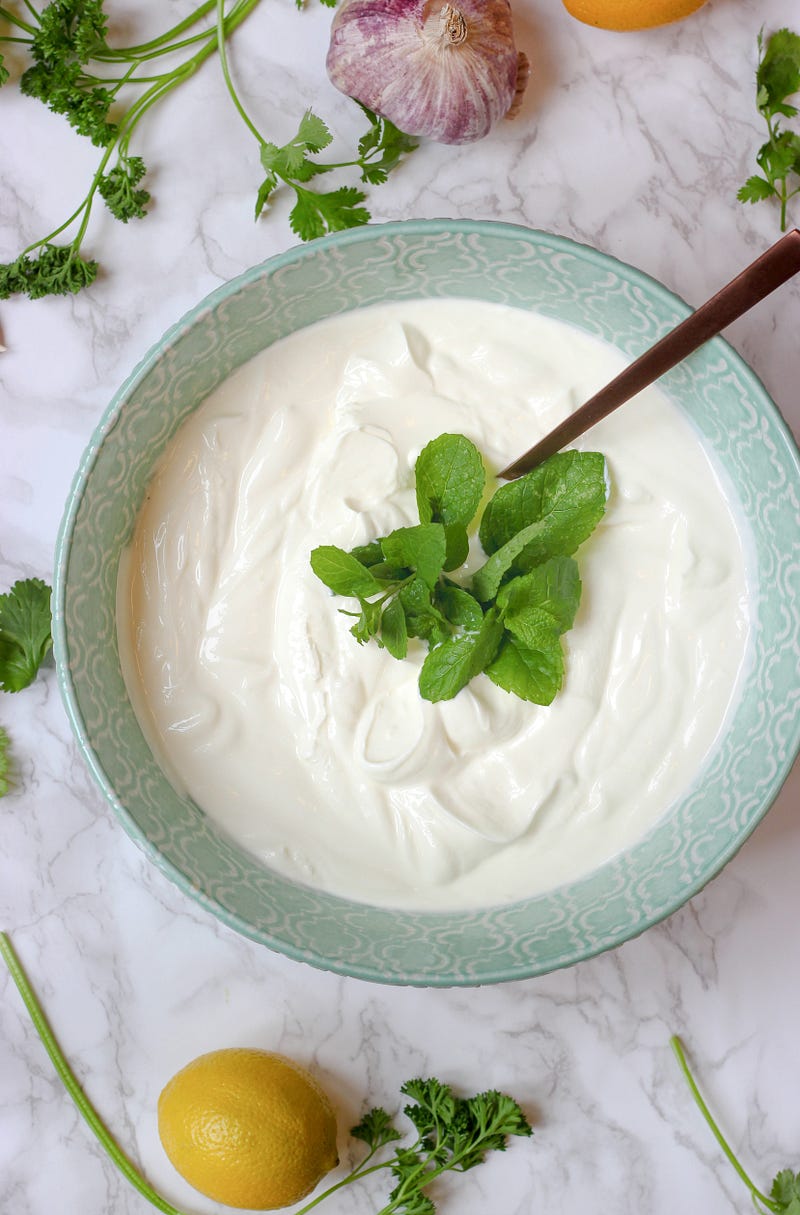
Photo by Micheile Henderson on Unsplash

Today’s New York Times Spelling Bee letters: B, E, I, L, M, T, and center N (all words must include N).

Merriam-Webster says…
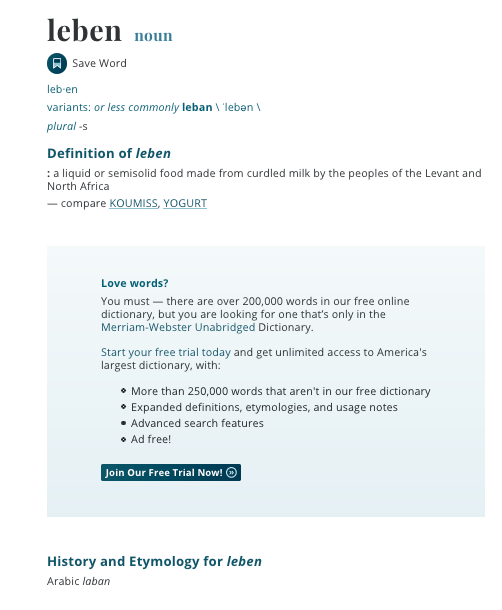
Credit: merriam-webster.com

Silly little dictionary! Don’t you know leben can’t possibly be a word if the New York Times says it ain’t?

For further fascinating facts, check out the Spelling Bee Master.

What’s your favorite g.n.a.w. from today’s puzzle?

My Two Cents

I am so so sorry-not-sorry to disappoint those yogurt lovers who may be reading this column, but I am not a big fan. I’m not against it and I have eaten it and I continue to do so… on occasion.

Trust me, it’s an improvement, considering I could not stand the stuff when I was kid. That probably had to do with the fact that my parents bought the all-natural version. Meaning it was tart and sour and just oh-so-gross for the palate of an eight-year-old. I much preferred eating a slice of chocolate cake my mom used to bake, which I would then cover in a thick coat powdered sugar to make sure it was sweet enough for my budding taste buds.

Now I consume tart Cry Baby Extra Sour Tears candy by the kilos (pounds, for those of you not living in Spain) and wash them down with sour bourbon on the hour every hour.

Kidding, kidding. It’s a measly nightcap of Booker’s or Elijah Craig per evening.

Tastes change as we mature. The consensus is that the older we get the less we favor sweetness. We tend to drift more to the savory and exotic flavors. Which is fine by me. I’m hoping I can end up loving yogurt by the time I’m 140 and toothless.

Of course, complete loss of taste and smell has been on the news for the last year or so. One of the better-known side effects of Covid-19 has been wiping out the two interconnected senses. This can also be caused by other illnesses and conditions, some of which can be very serious. Like cancer. Also age, which is a very serious condition for some people, especially those in Hollywood.

Wait… what the heck were we talking about here? Oh, yeah…

Yogurt or yoghurt or yoghourt

The debate about the spelling of yogurt is almost as old as yogurt itself. The word comes from the Turkish yoğurt and the Armenian: մածուն. (I’m trusting google translate on this and hoping I’m not cursing you out.)

Yogurt is basically milk fermented by bacteria. These are the nice, friendly bacteria, not the flesh-eating ones that anchors yell about on the six o’clock news. The most commonly used milk is that of cows, but water buffalo, goats, sheep, horses, camels, yaks, and even some plants can be a source of milk.

There’s even a trend of making yogurt from human breast milk. Don’t believe me? Ask Mama Lift.

Why are we talking about yogurt, you may ask? First of all, thank you for still staying with me throughout this meandering article. Secondly, our word for today, leben, means yogurt. Leben comes from the Arabic لبن‎, or l(a)b(a)n, which I thought might be connected to the color white, since I speak Hebrew and lavan in Hebrew means white. But laban means “milk”.

Leben means yogurt… sometimes. And other times, it means:

Buttermilk or… buttermilk

There is no debate about the spelling of the above word. At least, I think there isn’t. If you want to debate me about that, feel free to do so in the comments section.

In many areas of the Levant (a trending, cultured name for what many call the Middle East) leben means yogurt, yes. But in parts of North Africa and the Arabic peninsula, it means buttermilk.

In its buttermilk form, leben is served as a drink and is prepared by churning and removing butter from milk that has been fermented for a day or so. The buttermilk keeps for several days at room temperature, a very practical advantage when leben was being made hundreds and thousands of years before the awesome Thomas Elkins was born.

Today most buttermilk is also cultured. By that I mean fermented with bacteria, not well-read.

Milk used for yogurt and buttermilk can be homogenized or not; pasteurized or raw. Each type of milk will produce a different kind of product as far as taste and consistency.

Personally, I love making buttermilk biscuits from a recipe that I got from Laura Ingalls, of Little House on the Prairie fame. In a book she wrote, of course. What, you thought I had actually met her? However, I haven’t been able to make said biscuits since I moved to Spain. That’s because it’s a challenge to find authentic buttermilk here. It’s just not part of their… ahem… culture.

Thank you, I’m here all week.

With an Arab population hovering around a million and a half people, however, Spain is a very good place to find leben. So maybe I’ll give this whole yogurt thing another shot.

After all, I’m not constrained by the editors of the Spelling Bee, who saw leben and said: “Gee, Not A Word”.

Check out my previous entry on words that g.n.a.w. at you:

Leben
Yogurt
Arabic
Spelling Bee
Middle East
Recommended from ReadMedium