Learning in the Face of Misconceptions: What the Science Tells Us
Learning Science 101: Misconceptions
Learning, like all other cognitive functions, may never be a perfect science. But as we conduct more research into how the brain processes new information, we can begin to uncover the best ways to present that information — ways that can encourage and nourish the adoption of new ideas. This is what the science of learning is all about.
In our video series, Learning Science 101, we translate the wealth of research and data on how students learn into purposeful strategies educators can use to make the most of every learning moment. You’ve seen how to leverage Cognitive Load Theory and Spaced Practice to improve student performance. Now, in our third installment of our series, we are focusing on misconceptions in the classroom: where they come from, why they form, and how they can make it a little more challenging to learn something new.
Why Do Misconceptions Develop?
Broad conceptual understandings are a fundamental way that we identify patterns and absorb information. They are like a kind of biological shorthand for how we make sense of the world. But, when a construct is based on faulty logic or missing data, the resulting misconception can become a barrier to fact-supported learning.
Misconceptions can be deeply-rooted — and strongly held — beliefs that are not easily or quickly corrected. And, for teachers, overcoming them is not as intuitive as one might think.
Learning science can help us recognize the various ways misconceptions can form — and how to address them.
There are five common types of misconceptions:
- A preconceived notion is when you come into a topic already believing something that appears to make sense based on what you observe — like, believing that the sun rises and sets in the sky, even though the sun’s perceived movement is actually a product of the earth’s orbit around the sun.
- Non-scientific beliefs are misconceptions that come from learning something from a non-scientific source.
- Conceptual misunderstanding occurs when learners fill gaps in their own understanding and will defend that understanding, even though it has no basis.
- Vernacular misconceptions can develop when a student mistakes the meaning of a word given its context — for instance, a retreating glacier isn’t moving the same way a retreating army is.
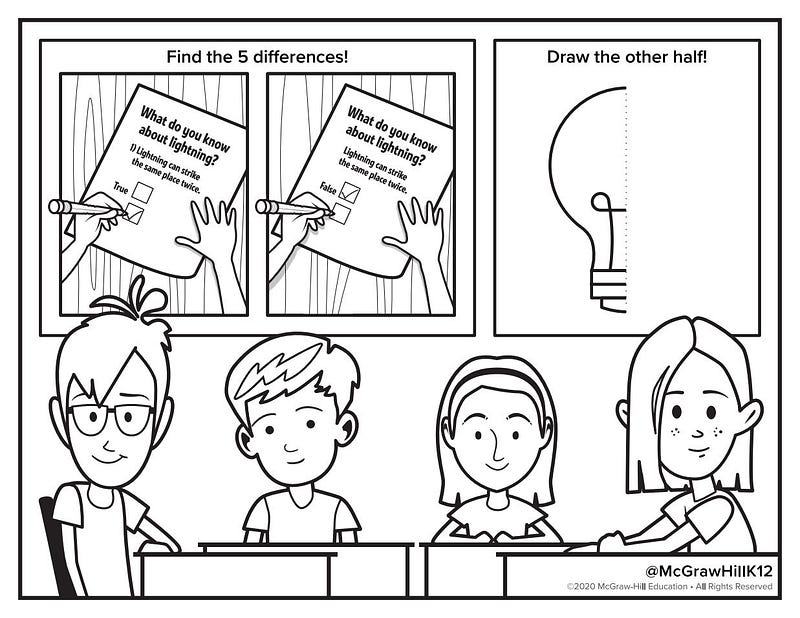
- Factual misconceptions are based on inaccurate information that a student may have seen or heard — like “lightning can’t strike the same place twice.”
How Do We Overcome Misconceptions in the Classroom?
On the surface, all these types of misconceptions seem fairly innocuous. But research into the science of learning is helping us understand how misconceptions can derail the adoption of new ideas in learners.
So, armed with the understanding that misconceptions make learning harder, what do we do to overcome them?
We are all wired to hold onto beliefs, even in the face of confrontation. But addressing a misconception head-on can actually serve to reinforce it in the mind of a learner. Instead, strategies like the O-SIRE method can help establish a framework for students to understand that their misconceptions actually contradict the evidence. :
1. Open with the facts
2. Show how the misconception is counter to the facts
3. Illustrate how the facts can provide a better framework for predicting future outcomes
4. Reinforce the facts
5. Expose the architecture of the misconception so the learner can recognize it in the future
We all hold onto misconceptions, and we will all have to confront them at one point or another. By employing research-based strategies, teachers can help students correct their misconceptions with fact-supported learning, and also use them as opportunities for critical thinking development.
Refutational teaching methods like O-SIRE are just one way educators can work with students’ cognitive brain functions to make the most of every learning moment. For more on learning science research, and to see the O-SIRE method in action, see the resources below.
Download this free activity sheet!