
Lean Project Management In Healthcare
A Patient-Physician Centered Methodology For A Modern Medical Practice

Medical practice, healthcare, overall, is a high-stake project with multiple facets and determinants. Unlike many industries, such as Software as a service (SAAS) or medical devices, the medical practice's quality and efficiency rely on many variables and determinants. The complexity of managing a medical Practice is increasing by the year. The larger organizations, by trait, are familiar with such complexity merely owing to the scope of responsibilities and size. However, in recent years after the advancement of the merit-based physician reimbursement model, smaller independent clinics are also facing similar challenges.
Despite the overwhelming reluctance of mainstream physicians to adopt a more comprehensive practice management model (or project management methodology), they must realize their mistake.
The traditional medical clinic management is becoming outdated, while relatively speaking, smaller systems must follow similar guidelines set by the current healthcare policies for their peers in large organizations.
In today's healthcare arena, utilizing a project management methodology is more than just an option for independent physicians. But then again, choosing the correct method carries its challenges.
In my past writings, I tried to shine a light on the Agile project management methodology and its utility in medical practice. At the moment, I plan to discuss another pervasive project management scheme and shed light on some of its potential and pitfalls.
The Concept of Project and Project Management in Medical Practice
Today, practicing medicine is fierce, as the stakes are loftier. Like other institutions, such as hospitals that are familiar with practicing effective project management, they too will benefit from lower costs and improved outcomes.
In medical practice, patient well-being remains a distinctive element of the project, which makes it further complicated — and crucial. Investing in something that will assure increased revenue, decrease costs, and maintain compliance is worth the price and effort to make sure it's done right; because the clinics and patients using it will invariably prosper.
Physicians that exercise powerful project management will benefit from lower costs and improved outcomes.
As trivial as it may sound, defining the phrase "project" is one of the critical strides a medical practice requires to put up with- when initiating the project management practice within their walls. If not defined appropriately, a project can unwittingly become puzzling because everyone may speculate that everybody else typifies it identically where it is not necessarily true. Indeed, anything could be classified as a project. Yet the project differs from a task, program, or strategy. For simplicity, every physician should create a comprehensive, particular portrayal of what is interpreted as a project. However, In contrast to a program or objective, one necessary criterion of a project is that it must have a start and end date. Therefore, it compels project management discipline to control and coordinate the beginning, the end, and everything that transpires. A typical project should again have an accountable owner and a fiscal appropriation. A fund implies tangible reserves allocated to this project.
The Four Stages of Project Management
It's always convenient to assume that there is a necessity to "redesign the way our medical practice works or launch a project to enhance the billing process. But to be effective, plans must go from a one-sentence hypothesis to an entirely governed system.
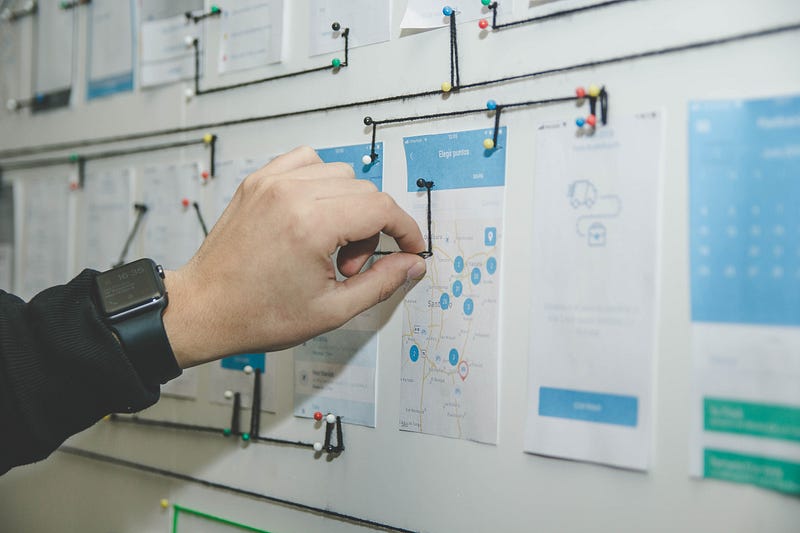
There are many methodologies to establish optimal project management tools; however, irrespective of the choice of the scheme; all approaches implicate the following four foundational stages:
Initiation- Defines the approved scope of the project, including projected costs, outcomes, and risks.
Planing includes designing each step of the project, establishing deadlines, formulating a budget, and appointing responsibilities. The planning phase includes making decisions on measuring the project's progress and return on investment.
Execution and monitoring- This is the start of committing to the steps summarized in the planning phase. This stage is dedicated to tracking and measuring progress regularly to ensure the project is en route. Managers adjust the project plan, schedule, and budget during the execution phase to minimize negative ramifications. This phase is unique in medical practice management, as there are added layers of stakeholders who want to sign off on every aspect of the process.
Closure- Properly concluding a project is done in the closure stage. That is done by creating a document that summarizes outcomes, deliverables, and lessons learned. Hence, evaluating particular circumstances with leadership and the project team will improve the project management process in the prospect.

The typical Challenges particular to Medical Practice and Healthcare
In real life, every organization engages in some project management. The latter can refer to a highly systematic scheme and well-resourced or haphazard and bootstrapped.
Project management in medical practice has unicity as it takes complicatedness and obstacles to an entirely different level. Some of the significant rationales that make healthcare much harder to manage versus other industries include:
High Stakes
There are harsher implications if projects go over budget or off schedule because patients' well-being may be stuck. Any mistake or lack of process can potentially hurt patients.
Hefty Regulation
Currently, there's a sharp requirement to protect sensitive patient information. To ensure that, facilities tend to add layers of consent, often necessitating sign-off by the practice administration, local, and national administrations. This leads to more compound ventures and more rigorous project management requirements. The healthcare industry confronts more legislation than other sectors, together with HIPPA's patient confidentiality laws.
Surging Expenses
The proportion of insureds anywhere in the world is the highest it's ever been. The increased need for healthcare with soaring costs has put more burden on the healthcare industry and medical practices to deliver discreet, high-quality services. Finding the balance between efficiency and quality places even more importance on the need for proper project management.
Continual Shifting Industry
The healthcare and medical practice initiative is service-oriented and made up mainly of highly-skilled people who can't effortlessly be restored by technology. While there is boosting demand for healthcare, there seems to be a shortage of healthcare experts, which is undesirably impacting yield. Effective project management can support widening that gap.
Increased Litigation Risk
One of the potencies of project management is that it helps mitigate risk, which is vital in litigation-prone medical practice. Establishing healthy, productive processes is the primary way project management reduces or eliminates risk by limiting mistakes made by the operating team.
Diverse Stakeholders
Many of the physician practice challenges, from massive regulation to elevated risk, translate to the engagement of many stakeholders in the system. Some projects in medical practice require approval from the board of directors, physicians, patients, and state and national governments, which can barely be dealt with well with appropriate project management.
Benefits Of Project Management in Medical Practice
When done carefully, project management practices are valuable to healthcare providers. It helps groups improve and operate more effectively in various areas, including Processes, Planning, Budgeting, Communication, and Stakeholder Relations.
Conventional Project Management Methodologies in Healthcare
There is an assortment of project management procedures formulated for many businesses that can be pertained to in a healthcare environment, including waterfall, Agile, Lean, etc. The most common are Agile and Waterfall and Lean project management. Although many establishments see this as an either-or choice, there are ways to utilize these systems in a hybrid to realize the best of two or more methodologies.
The Lean Methodology
Besides being a tool, Lean is a business philosophy for advancement. This doctrine was derived from Toyota's manufacturing experiences.
The lean focus is on curtailing waste in all business procedures, intending to reduce cost and lead-time and boosted quality. Lean techniques minimize project waste, generate greater client satisfaction, and improve profit margin.
The Lean Objectives
The lean methodology objective is to identify the five basic principles of Lean, discover how Lean principles can be applied to given project management, and determine the various kinds of waste in projects.
Organizations today must be able to do extra with a smaller amount. Several organizations are often looking for means to become more robust in the marketplace. Every new product idea must have a solid business case to support it. Otherwise, management would not authorize that project to proceed.
The Five Principles of Lean Process
Lean was invented for manufacturing exercises but, in recent times, has transformed the world of knowledge work and administration. It encourages the practice of unceasing perfection and is based on the fundamental idea of respect for people.
Womack and Jones distinguished the five principles of the Lean process, which are considered a recipe for improving workplace efficiency; these include: 1) definition of value, 2) planning the value stream, 3) generating flow, 4) utilization of the pull system and 5) trailing perfection. The following section provides a detailed overview of each principle.
To better comprehend the tenet of specifying client value, it is vital to appreciate what value stands for.
Value is what the client or patient is inclined to pay for a service or product. To discover that, one must learn the actual or latent needs of the patient. Occasionally patients, physicians, and clients may not know what they want or cannot articulate what they need. This is particularly widespread when it comes to novel products or technologies.
The goal of identifying and mapping the value stream is to use the patient or client's value as a point of reference and remember all the activities that contribute to these values. Functions that fail to add value to the end client are well-thought-out waste. We can break the latter surplus into two groups; non-valued but necessary and non-value and redundant. The last is pure waste and should be eradicated, while the former should be reduced as conceivable.
After eliminating the wastes from the value stream, the following action is to ensure that the flow of the lingering steps runs smoothly without pauses or pauses.
Some techniques for securing that value-adding activity flow smoothly include: breaking down phases, reconfiguring the production stages, leveling out the workload, creating cross-functional departments, and training employees to be multi-skilled and adaptive.
Inventory is measured as one of the biggest wastes in any production system. The objective of a pull-based strategy is to restrict inventories while working on process (WIP) items safeguarding that the essential materials and information are accessible for a smooth flow of work. In other words, a pull-based system permits for Just-in-time delivery and manufacturing where products are built at the time that they are desired and in just the quantities wanted. Pull-based designs are always created from the desires of the end clients. By following the value stream and working backward through the production system, you can ensure that the products produced will be able to fulfill the demands of clients.
Wastes are staved off through the accomplishment of identifying value, mapping the value stream, creating flow, and adopting a pull system. (the first four phases) However, the fifth step, pursuing perfection, is the most crucial.
Pursuing perfection makes Lean thinking and continuous process growth a part of the organizational culture. Every employee should strive towards the end while providing products based on client desires. The company should be a learning institution and always find ways to get a little better each day.

The Lean Medical Practice
One of the significant characteristics of the Lean process that makes the methodology ideal for medical practice is that it starts with the patient or physician and what they expect in terms of value. Only after, think Lean continues throwing out waste so that all work adds value and serves the patient's needs, which is the core objective of a typical value-based reimbursement. Hence, recognizing value-added and non-value-added steps in every process is the beginning of the drive toward lean processes.
For the lean methodology to be effective, medical practice leadership must first strive to create an organizational culture that is amenable to lean thinking. The pledge to lean must start at the very top of the organization, and all staff should be committed to helping to redesign methods to improve flow and reduce waste. Medical practices' culture is the set of values and beliefs that cause people to behave in specific directions. That is how staff behave and continuously get the returns they anticipate. The set behaviors reinforce these values and beliefs, creating a self-reinforcing cycle called "culture."
Leaders willing to change their organizational culture can't do so by merely announcing their intention. Instead, their responsibility under the lean methodology would be to intervene and expect staff to behave differently, letting them experience a better set of upshots. As this process is repeated, a different assortment of values and beliefs will evolve, thus creating a new culture.
In rendering medical care for a patient, staff must rely on varied, sophisticated methods to accomplish their responsibilities and contribute value to the client or, in the case of medical practice, the patient. Everyone must relive at all times; waste of money, time, supplies, or goodwill decreases the value. Consequently, when applied rigorously and everywhere within the system, lean policies can positively impact productivity, cost, quality, and timely rendition of services.
Examples of Lean thinking in Modern Healthcare
Virginia Mason Medical Center (VMMC) is an integrated healthcare system in Seattle, Washington. The company has efficiently implemented a lean culture based on six principles, including- placing patients as the driver for all their processes; the company has pushed an environment in which people feel safe and clear to engage in improvement that embraces the adoption of a "No-Layoff Policy" of its employees. The healthcare system also has Implemented a company-wide error alert system called "The Patient Safety Alert System." Interestingly enough, VMMC supports the encouragement of innovation via the concept of "try storming," which, according to it, starts and goes beyond what we typically have known as "brainstorming." In contrast to the latter, try storming involves swiftly seeking new ideas or principles.
The fifth and one of the most fundamental of all fundamentals of the lean methodology adapted by VMMC is creating a well-off economic system by eliminating waste.
Last but not least, the healthcare organization believes in accountable leadership.
ThedaCare, Inc. is a health delivery system based in Wisconsin. The company is nationally recognized for its quality achievements, among the nation's "most technology savvy, healthcare organizations.
ThedaCare leaders also have set driving and distinct objectives to ignite a culture transformation to Improve quality to "world-class" levels. The three missions of the ThedaCare Improvement System are; Improved staff morale, quality, and productivity. In the company's project management structure, the new culture expects new attitudes, including the use of more minor, "right-sized" groups of staffers or technologies in "cells" rather than extensive, cumbersome processes; strong, sometimes directive leadership, enhancing more traditional team approaches; and less batching of work in favor of "right now" real-time effort.
The new culture of lean means that some roles shift. For instance, managers act as teachers, mentors, and facilitators rather than directors or regulators.
Is Lean Project Management Methodology Right for your Medical Practice?
Lean is designed and used in healthcare and other industries to establish growth. The methodology strives to optimize operations and increase value for patients, physicians, and staff by eliminating wasteful spending. Nevertheless, deprived of a willing culture, lean principles will cease to function appropriately and thus fail.
In contrast to the lean scheme, methodologies like agile methodology aim to deliver as quickly and frequently as possible while maintaining flexibility by allowing teams to rapidly utilize any feedback from clients when making changes to future work. That is why, more often than not, every individual medical practice will require its unique project management tool to deliver its expected outcome. The latter is achieved by selecting at least one, but most likely a hybrid of the two or more methodologies for a given project at a given time and place.
All in all,- Lean principles are rooted in widespread" respect" for the patient, and clients, with particular regard for fellow employees and appreciation for the current and future state of the institution. That is why Lean is lenient to implementation in hypothesis but frequently far more challenging to execute in practice, especially across larger establishments. Still, it is much easier to implement for small systems seeking potential growth in the future where Lean and medical practice cultures grow in tandem.
This Story was originally published on Data Driven Investor.
Some of the related articles I enjoyed reading
By Quantum
By Marija Basic